Furoshiki: how to wrap gifts in cloth
How to wrap a gift in a square of cloth the Japanese way, from the basic carry wrap to bottle and book wraps, with a little history and etiquette.
Quick answer
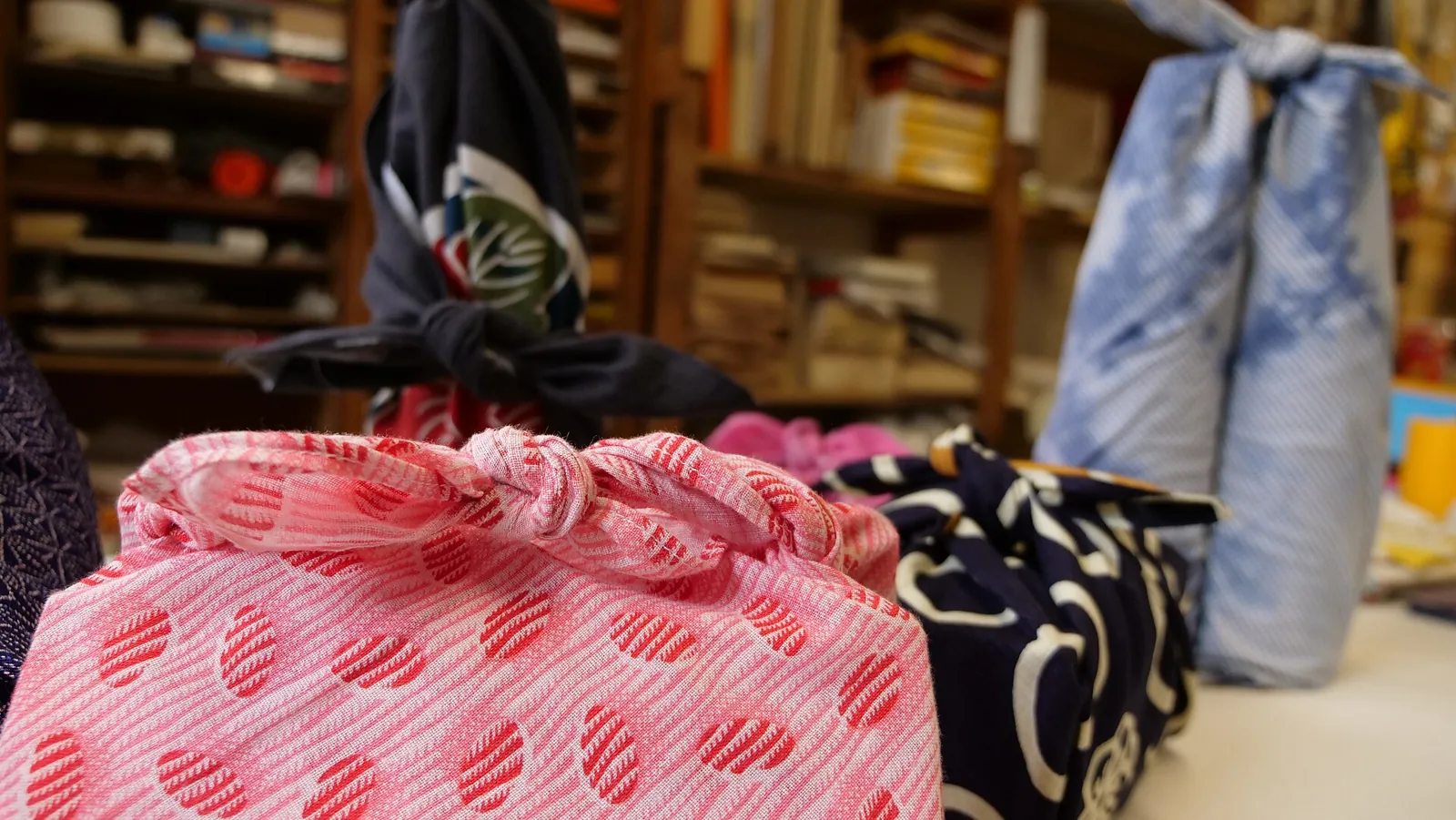
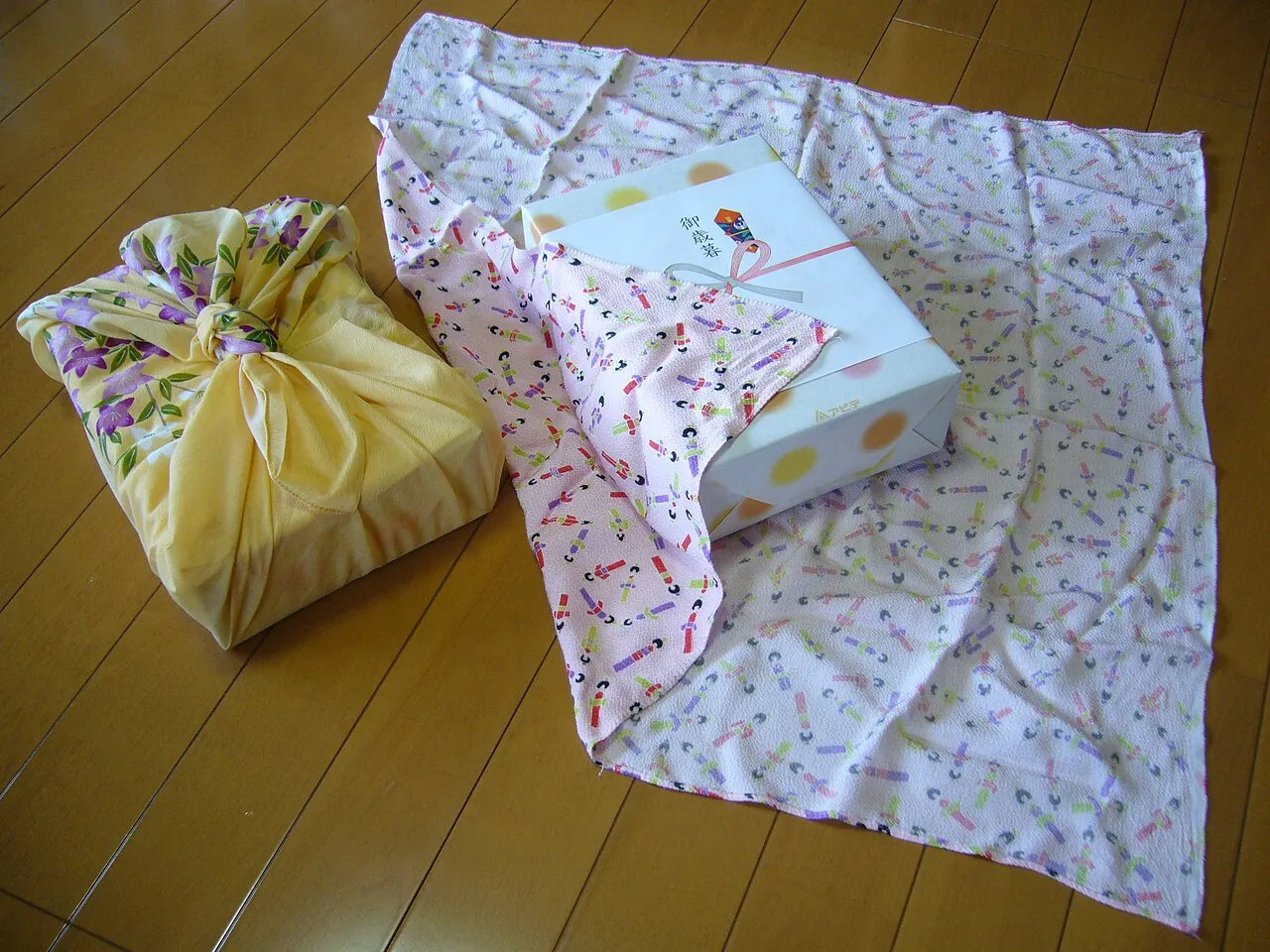
Furoshiki is the Japanese practice of wrapping and carrying things in a square of cloth. For most boxed gifts you need just one technique, the basic carry wrap (otsukai tsutsumi): set the box diagonally in the middle of the cloth, fold two opposite corners over it, and tie the other two corners in a square knot on top. With a few more knots the same cloth wraps bottles, books, round fruit and long items, and it can be reused or kept as part of the gift.
- Time 2 – 5 minutes per gift once you've practiced
- Difficulty Easy
- Cost Free with a scarf or fabric you own; about $10 – $40 for a printed cotton or silk furoshiki
- Makes A reusable, tape-free gift wrap
A little background
Wrapping cloths have a long history in Japan. Kikkoman's Japanese Style series traces them to the 8th century, when they were called tsutsumi ("to wrap"), and links the name furoshiki ("bath spread") to public bathhouses, where people used cloths to carry and lay out their belongings. Nippon.com notes that the Edo period (1603–1868) made them an everyday carrier, used by bathers and peddlers alike. In recent years they've been promoted again as reusable, low-waste wrapping; Japan's Ministry of the Environment published an illustrated chart of 14 wraps as part of that effort.
If you're giving a gift to someone in Japan or from a Japanese family, read our guide to gift etiquette in Japan as well; wrapping is only one part of how gifts are presented there.
What you'll need
- A square cloth. Modern furoshiki are commonly sold in about 50 cm, 70 cm and 100 cm squares (roughly 20, 28 and 39 inches); a 70 cm cloth suits many small and medium gifts.
- Thin, soft fabric: cotton, linen, silk, rayon or polyester. Cotton is easiest for beginners because it knots firmly and doesn't slip.
- Alternatives: a large square scarf, a bandana for small gifts, or a hemmed square of quilting cotton.
- Optional: a gift tag tied to the knot, or a sprig of greenery tucked in.
As a rough rule of thumb, choose a cloth whose diagonal is about three times the longest side of the box, then do a trial fold before you commit.
The basic carry wrap (otsukai tsutsumi), step by step
Lay out the cloth
Spread the cloth face down on a table so it forms a diamond, with one corner pointing toward you.
Place the gift
Set the box in the center, square to the edge of the table, so it sits at an angle to the cloth and each corner of the cloth points at the middle of one side of the box.
Fold the near corner
Bring the corner closest to you up over the box. Tuck any excess under the box if it reaches past the far side.
Fold the far corner
Bring the opposite corner over the box toward you so it covers the first fold. Smooth the fabric flat.
Lift the side corners
Pick up the left and right corners and draw them up over the top of the box. Pull gently so the cloth sits snugly against the sides.
Tie a square knot
Cross the right corner over the left and tuck it under, then cross the (new) left corner over the right and tuck it under. Pull both ends evenly. A correct square knot lies flat with the ends pointing to either side; if the ends stand up vertically, untie it and reverse the second cross.
Tidy the ends
Spread the two "ears" of the knot so they sit neatly, and straighten the folds at the box corners. Tie a tag around the knot if you like.
Tip: To untie a square knot quickly, hold one end and its neighboring strand and pull them straight apart; the knot slips loose and the cloth opens cleanly.
Other common furoshiki wraps
These are among the wraps shown on the Ministry of the Environment's chart. All start with the cloth laid out as a diamond.
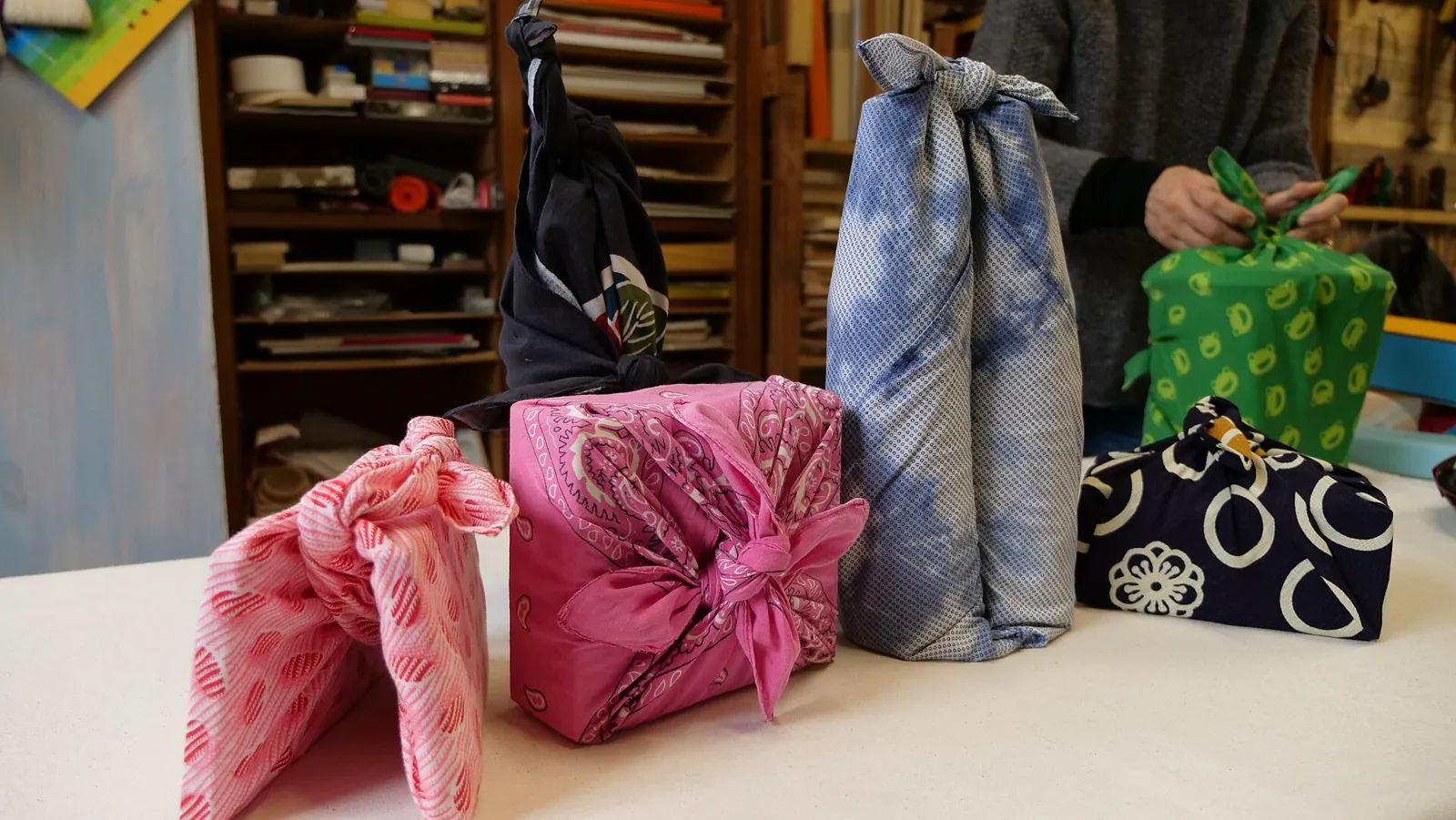
Four-tie wrap (yotsu musubi)
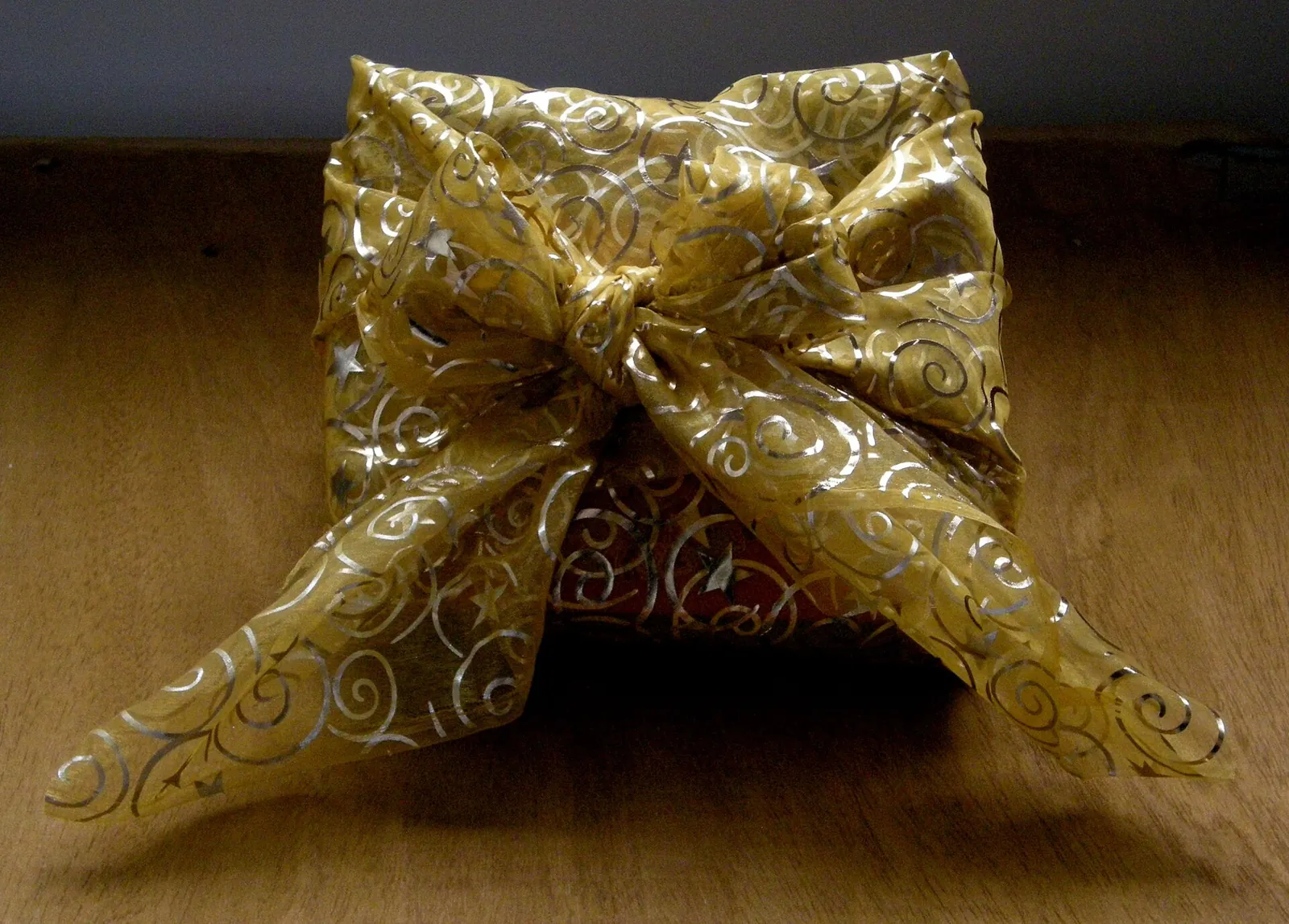
Place the box in the center. Tie two opposite corners in a square knot over the top, then tie the other two corners in a second square knot over the first. It makes a pretty double bow and suits taller boxes.
Watermelon carry wrap (suika tsutsumi)
For round items like a melon, a ball or a pot. Tie each pair of neighboring corners together with a knot near the tip, giving you two knotted loops on opposite sides. Set the item in the center, lift both loops, pass one through the other, and tie the ends together to form a carrying handle.
Bottle wraps (bin tsutsumi)
For one bottle, stand it in the center, tie two opposite corners in a knot above the cap, then wrap the other two corners around the bottle and tie them at the front. For two bottles, lay them on the diagonal bottom to bottom with a little gap, roll them up in the cloth, stand the roll up so the bottles sit side by side, and tie the two ends together as a handle.
Long object wrap (entou tsutsumi)
For rolled posters or long boxes. Lay the item across the diagonal, roll it up in the cloth, and tie the two loose ends around the item or to each other.
Two-book wrap (hon tsutsumi)
Place two books side by side with a small gap along the diagonal, fold the cloth over both, and fold the books together like a closing book so they're stacked, then tie the corners on top.
Hidden knot wrap (kakushi tsutsumi)
Wrap as for the basic carry wrap, but tuck the knot and its ends under the top fold so the package looks smooth and formal.
Gift etiquette with furoshiki
- Tell the recipient whether the cloth is part of the gift. Traditionally, Kikkoman notes, the giver takes the cloth home after the gift is unwrapped; many people now give the furoshiki as a keepsake.
- Choose a cloth that suits the occasion: bright prints for birthdays, subdued colors for condolences.
- Present the wrapped gift with both hands if you're following Japanese custom.
- Don't knot money in a furoshiki for a wedding or funeral; in Japan, monetary gifts are traditionally carried in a special envelope wrapped in a smaller cloth called a fukusa.
- Don't use a cloth so slippery that the knot comes undone in transit.
Using furoshiki as a gift in itself
A good-quality cloth is a lovely gift on its own: it can be reused as wrapping, a shopping bag, a table runner or a wall hanging. It fits naturally in a low-waste wrapping kit; see our eco-friendly gift wrapping ideas and how to wrap gifts without tape. For awkward items, the knots here pair well with tips in how to wrap odd-shaped gifts, and more ideas live in our gift wrapping section.
Frequently asked questions
What size furoshiki do I need?
Common sizes are about 50, 70 and 100 cm square. A 70 cm cloth suits many small and medium gifts. As a rule of thumb, the cloth's diagonal should be about three times the box's longest side.
Can I use a scarf as furoshiki?
Yes. Any thin, square fabric that knots well works. Cotton and silk scarves are popular choices.
Does the recipient keep the furoshiki?
Traditionally the cloth went back to the giver, but today it's often meant as part of the gift. Say so when you hand it over.
What knot is used in furoshiki?
Most wraps use a square knot: right over left, then left over right. It holds firmly and unties easily.
Sources
- Ministry of the Environment, Government of Japan — How to Wrap with Furoshiki (illustrated chart). env.go.jp
- Kikkoman — Japanese Style Vol. 26 No. 2: Furoshiki. kikkoman.com
- Nippon.com — The Furoshiki: A Versatile Treasure. nippon.com
Image credits. Top image: Traditional Japanese wrapping cloth,huroshiki,katori-city,japan by katorisi, CC BY 3.0, via Wikimedia Commons · In-article image: Furoshiki, traditional japanese wrapping technique with cloths (4) by Culture Japon, CC BY-SA 4.0, via Wikimedia Commons
Spotted something out of date or a gift that's no longer available? Tell our editors — we review every correction.