How to wrap gifts without tape
Three tape-free wrapping methods, from a string-tied box to a knotted fabric wrap and a folded paper pouch, plus more ideas that skip adhesive.
Quick answer
You can wrap almost any gift without tape by letting folds and ties do the work. For boxes, fold the paper snugly with the seam underneath and hold everything with string tied in a cross over both ends. For anything else, knot a square of fabric around it furoshiki-style, or tuck the gift into a folded paper pouch. A firm crease, a little extra paper to tuck under, and a tight tie are all you need.
- Time 5 – 10 minutes per gift
- Difficulty Easy
- Cost Free to under $10
- Makes Tape-free wrapping for boxes, books, bottles and soft gifts
What you'll need
- Wrapping paper, kraft paper or reused paper (medium weight creases best)
- Twine, cotton string, ribbon or yarn, about four to five times the box's length
- A square of fabric such as a scarf, tea towel or furoshiki cloth
- Scissors
- Optional: a gift tag, a sprig of greenery, a hole punch
Method 1: the folded-and-tied box
Cut a generous sheet
Measure paper that goes around the box with about 3 inches of overlap (a little more than usual, so the seam can be tucked) and extends past each end by about two-thirds of the box's height.
Make the bottom seam
Place the box face down in the center. Bring one long side up and over. Fold the other long edge under by about 1 inch, then pull it over the first side so it overlaps tightly along the middle of the box. The weight of the box will hold the seam once you flip it.
Fold the ends
At each end, push the side flaps in, crease the diagonals firmly, fold the top flap down, then fold the bottom flap's edge under and bring it up over the top flap. Hold it with a thumb.
Tie the string lengthwise
Still holding the end, turn the box right side up. Lay the middle of the string across the top, run both ends down and around the box lengthwise so the string passes over both end flaps, and bring them back to the top.
Cross and tie widthwise
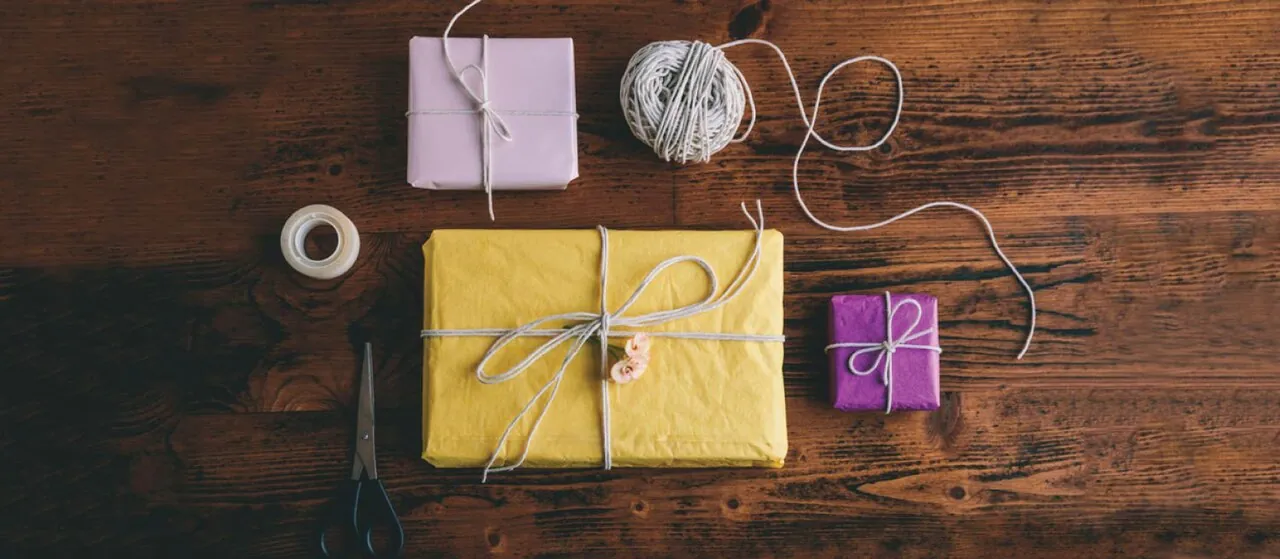
Twist the two ends around each other at the center of the box top, turn them 90 degrees, run them around the box widthwise, and tie a firm knot or bow on top. The string now presses down on every flap and the seam.
Tuck in a tag
Slide a tag or a sprig of greenery under the string at the knot. Nothing needs gluing.
Method 2: the fabric knot wrap
Lay the cloth as a diamond
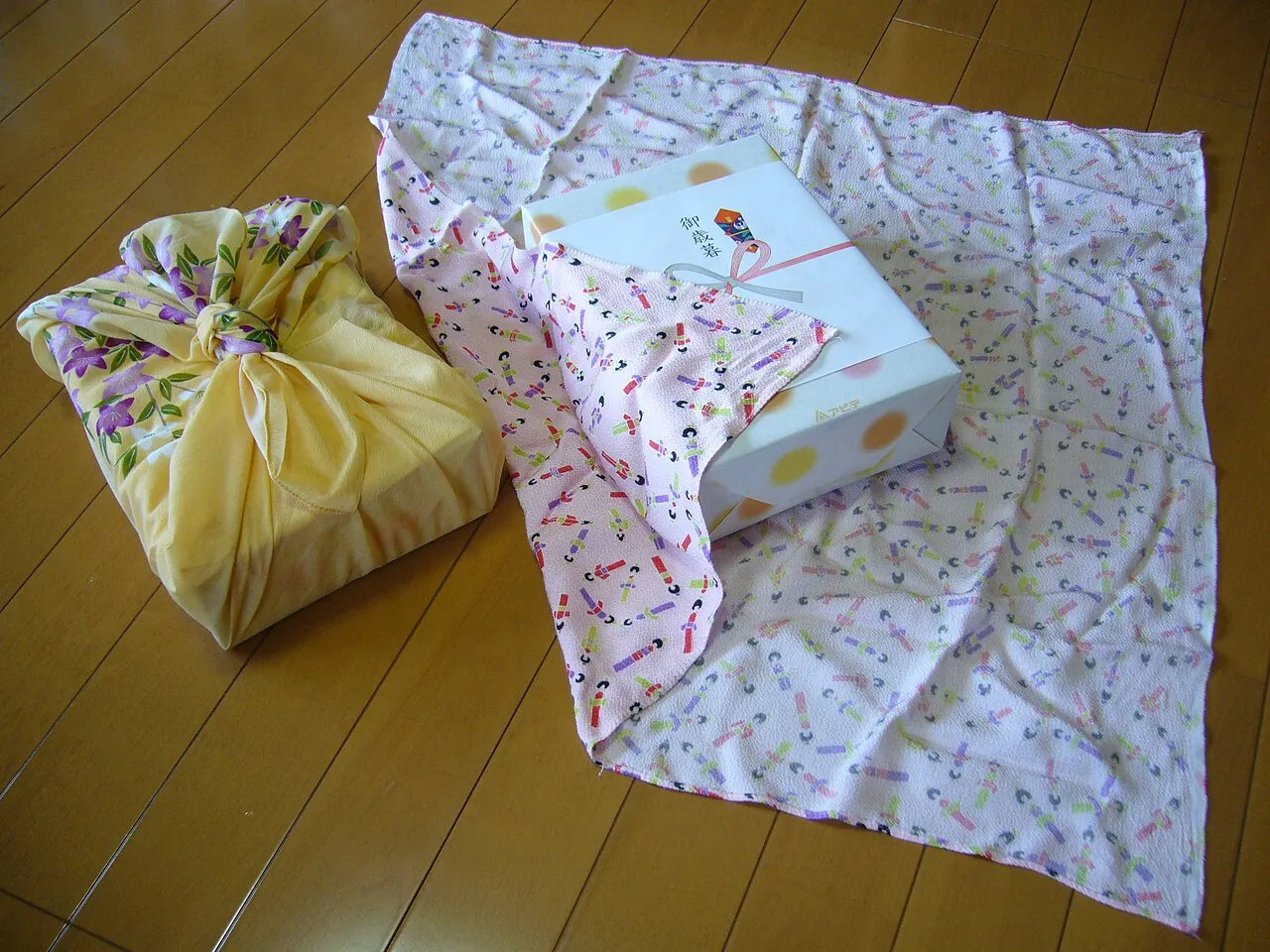
Spread a square of fabric face down with one corner pointing toward you.
Center the gift
Put the gift in the middle, square to the edge of the table.
Fold two corners over
Fold the near corner over the gift, then the far corner over that.
Knot the remaining corners
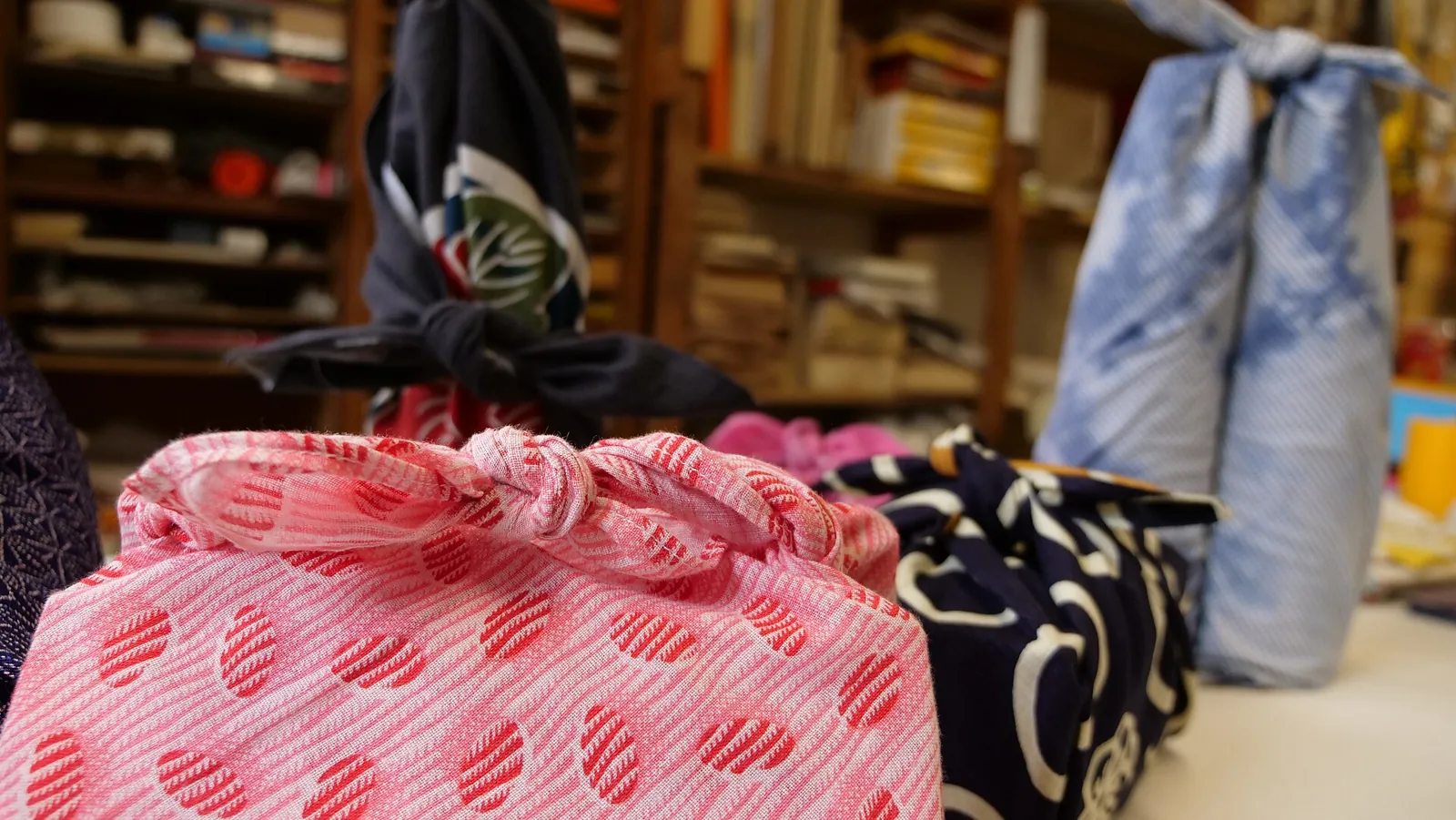
Bring the left and right corners up and tie them in a square knot on top: right over left, then left over right. This is the basic carry wrap (otsukai tsutsumi) shown on the Japanese Ministry of the Environment's furoshiki chart. See our furoshiki guide for bottle, book and round-item variations.
Method 3: the paper pouch
Fold a sleeve
For flat or soft gifts, fold a sheet of paper into thirds lengthwise around the gift, like a letter, so the edges overlap on the back.
Close the bottom
Fold the bottom edge up by 2 inches, then fold it up again so the double fold locks.
Close the top
Fold the top down twice in the same way, then hold the pouch shut with a band of ribbon tied around it, or a strip of paper wrapped round and tucked into itself.
Tip: Creasing is what makes tape-free wrapping work. Run your fingernail or a bone folder along every fold; sharply creased paper holds its shape and resists springing open.
More tape-free ideas
- Gift bags and boxes with lids: a sturdy decorated box with a lid, or a gift bag with tissue, needs no wrapping and can be reused year after year.
- Jars and tins: food gifts in a jar need only a fabric circle tied over the lid with string.
- Baskets: line a basket with a tea towel and gather a large square of fabric up over the gifts, tied at the handle.
- Paper bag wrap: slip a gift into a paper bag, fold the top down twice and punch two holes to thread a ribbon through. A hole punch replaces tape.
- Bottles: roll the bottle in paper, gather the paper at the neck and tie it with ribbon.
Why skip the tape?
Tape-free wrapping is quicker to open, easier to reuse and kinder to paper you want to save. Removing tape also matters for recycling: some local programs, such as West Sussex County Council in the UK, ask you to remove ribbons, bows and excess sticky tape before putting paper in the recycling bin. It's also useful when you run out of tape mid-wrap, or when you're wrapping in a place where tape is hard to find.
Safety notes
Keep string, ribbon and fabric ties away from babies and young children, and remove long ties before giving toys to toddlers. Use scissors away from your body and supervise children if they help.
For more low-waste ideas, see eco-friendly gift wrapping; for crisp folds with standard paper, our guide to wrapping a box neatly helps; and more tutorials live in our gift wrapping section.
Frequently asked questions
How do you wrap a present with no tape?
Fold the paper with the seam underneath, fold the ends neatly and tie string around the box in a cross so it holds every flap. Or wrap it in fabric and knot the corners.
What can I use instead of tape?
String, ribbon, twine, a fabric wrap, a hole punch with ribbon threaded through, or folds that lock into themselves.
Will the paper stay closed without tape?
Yes, if you crease firmly and tie tightly in both directions. Slightly thicker paper holds folds better than thin tissue-like paper.
Is washi tape a good alternative?
Many washi tapes are paper-based and easy to peel. Check the label if you plan to recycle the paper.
Sources
- Ministry of the Environment, Government of Japan — How to Wrap with Furoshiki (illustrated chart). env.go.jp
- West Sussex County Council — Greeting cards and wrapping. westsussex.gov.uk
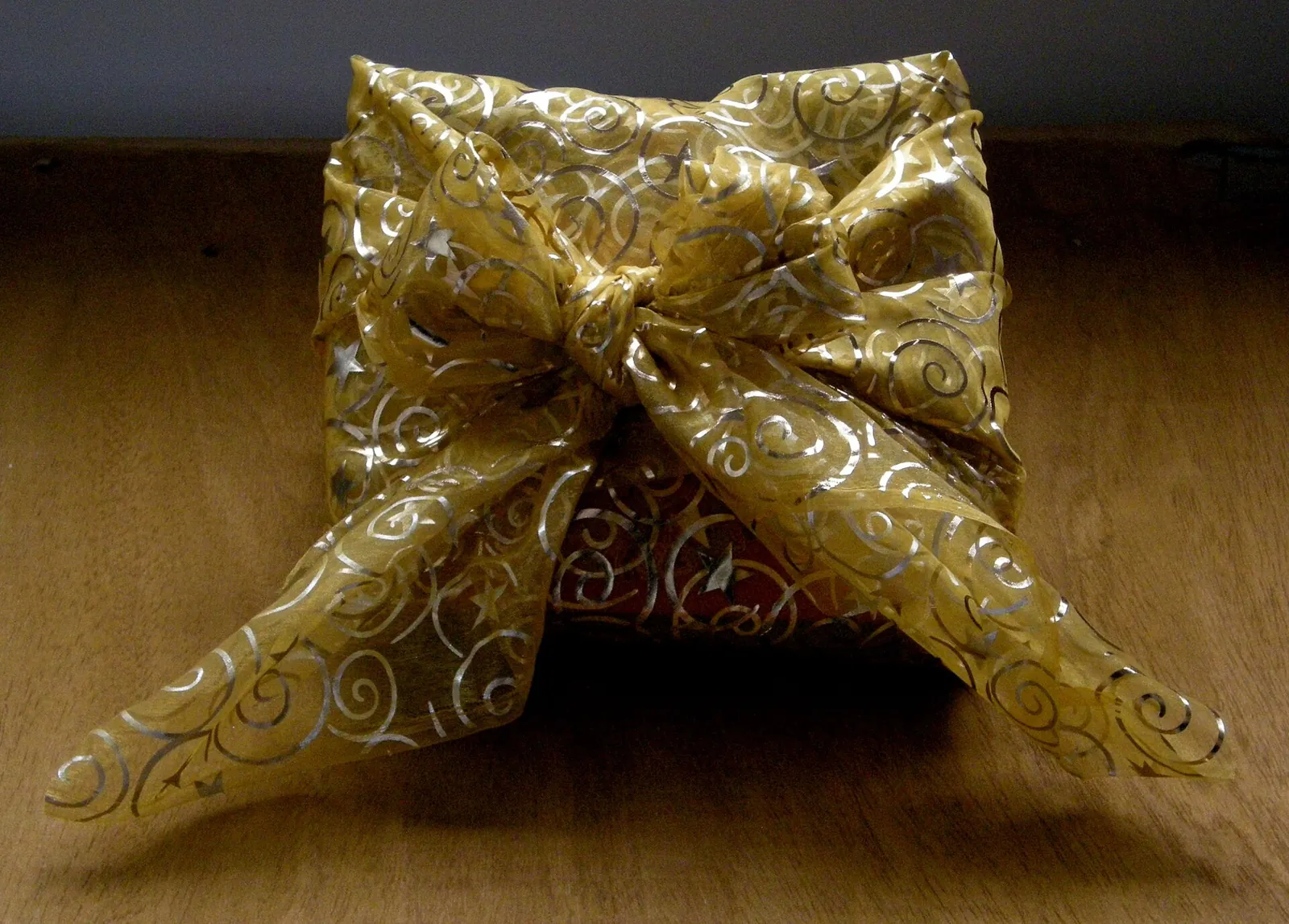
Image credits. Top image: Furoshiki-wrapped Christmas gift by me!, CC BY-SA 3.0, via Wikimedia Commons
Spotted something out of date or a gift that's no longer available? Tell our editors — we review every correction.