Red envelopes (hongbao, lì xì, sebaetdon): how much to give and how
Sourced amount ranges for hongbao, lì xì and Korean sebaetdon, plus the numbers to avoid and how to give and receive envelopes politely.
We independently research every pick. If you buy through our links we may earn a small commission, at no extra cost to you. Affiliate disclosure.
Quick answer
There is no fixed amount for a red envelope. What matters is new, crisp bills, a lucky-looking number (Chinese families avoid anything with a 4), and an amount that fits how close you are. Published guides suggest roughly RMB 50 to 1,000 for children in China, 20,000 to 100,000 dong for Vietnamese lì xì, and 30,000 to 100,000 won for Korean sebaetdon, depending on the child's age. In the US, follow your family's lead.
- Lunar New Year 2027 Saturday, February 6 (Seollal in Korea falls on Sunday, February 7)
- Who usually receives Children, unmarried younger relatives, and elders
- Golden rules New bills, no 4s, give with both hands, don't open in front of the giver
Three traditions, one gesture
Money gifts at the new year are shared across several cultures, but the names, envelopes and rituals differ. Knowing which tradition your family or host follows saves most of the awkward moments.
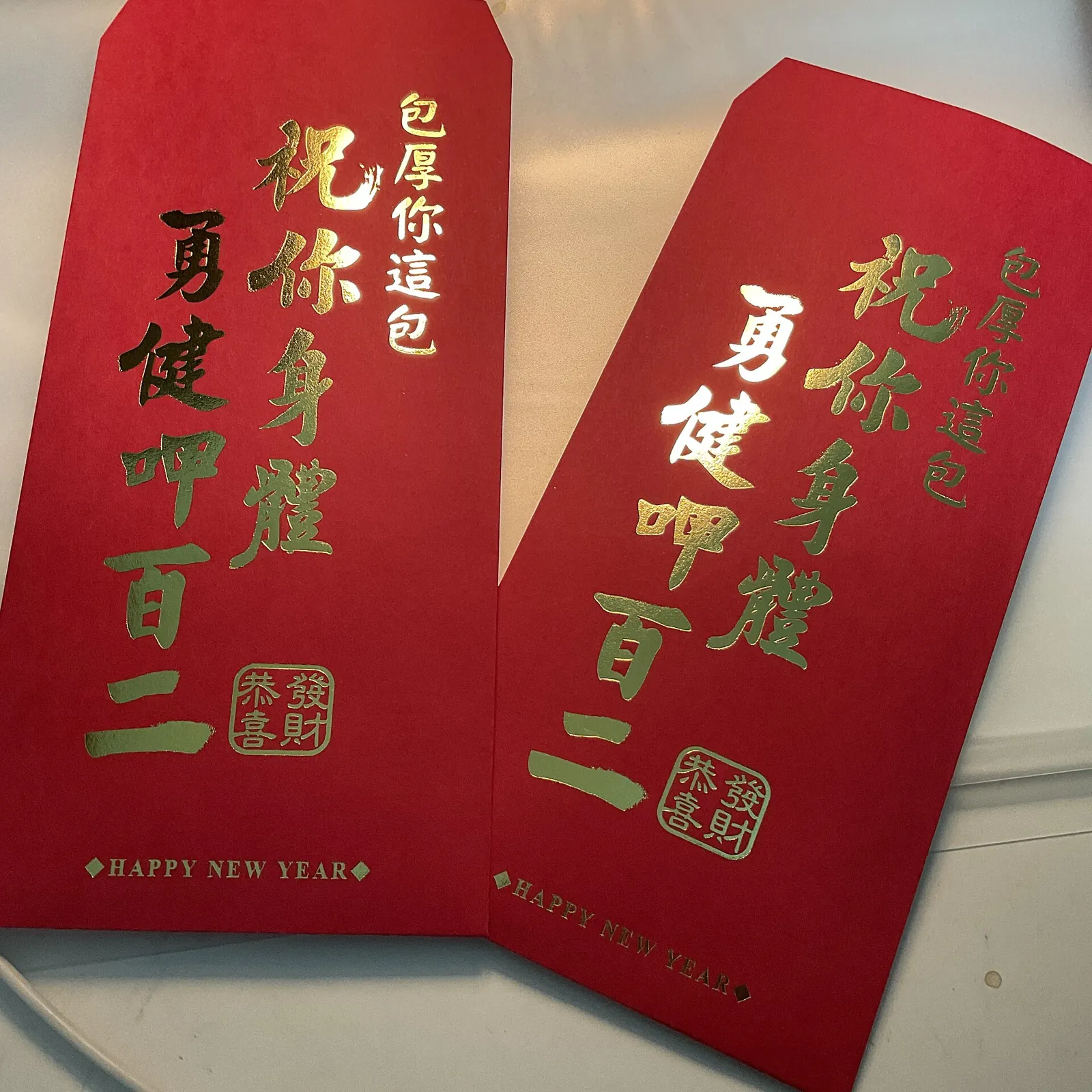
Chinese hongbao (Mandarin hóngbāo, Cantonese lai see) are red envelopes, often printed with gold characters. Working adults give them to children, to younger unmarried relatives, and to their own parents and grandparents. Employers often give them to staff before the holiday.
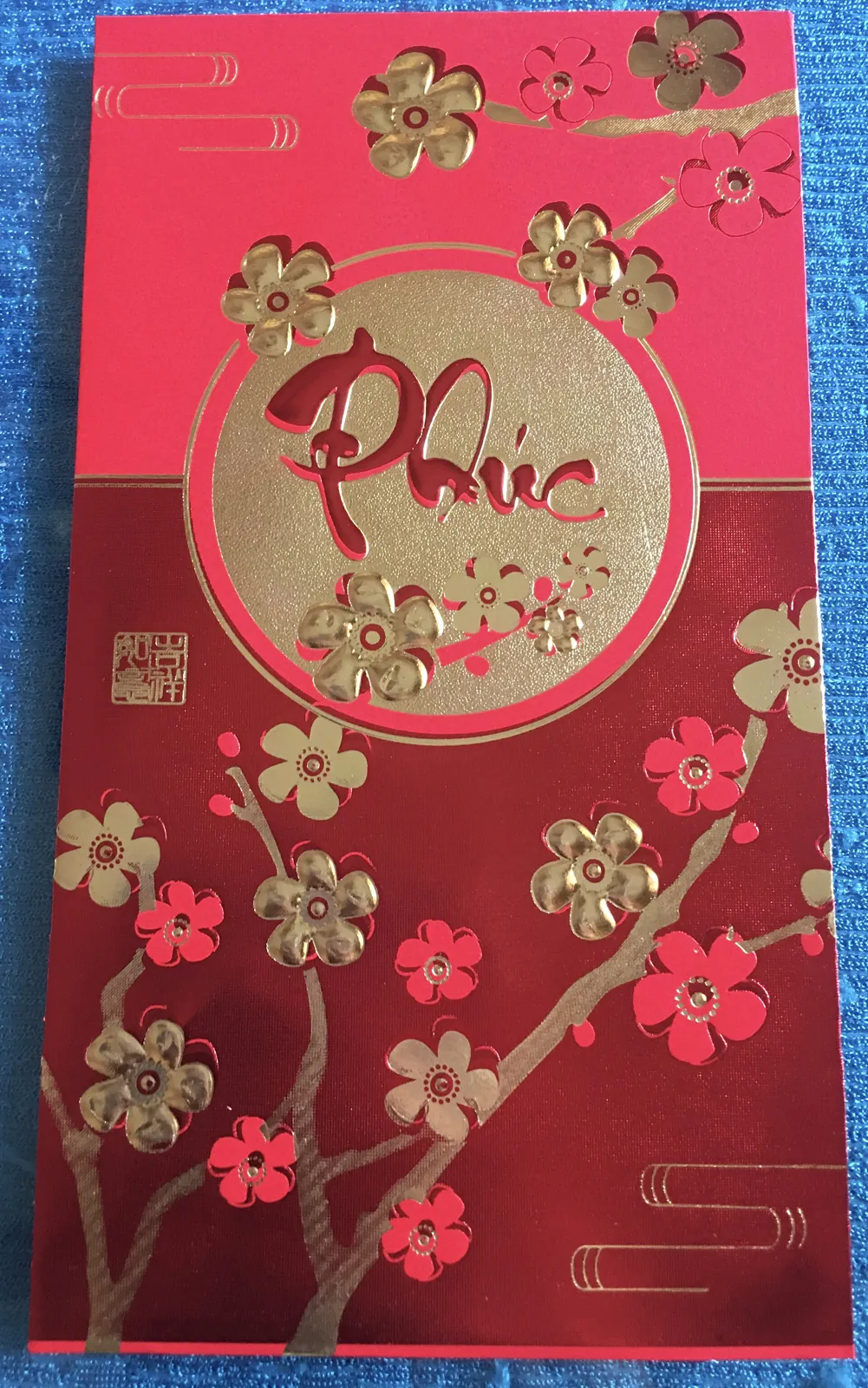
Vietnamese lì xì, also called mừng tuổi ("congratulations on a new age"), are given during Tết. Adults give red envelopes to children with wishes for health and good grades, and adult children also give lucky money to their parents and grandparents with wishes for long life.
Korean sebaetdon works differently. On Seollal, younger family members perform sebae, a deep New Year's bow to their elders, and the elders respond with words of blessing and a cash gift. Envelopes are common but not necessarily red, and the bow, not the envelope, is the heart of the custom.
How much to give in China
Amounts depend on region, family and how close you are. Travel China Guide lists these typical ranges in yuan; treat them as a starting point, not a rule, and note that big-city families often give more.
Hongbao for nieces, nephews and your own relatives' children
Why it works: Close family children are the core of the custom. Round, even amounts such as 200, 500 or 800 are popular in the north, while southern families favor runs of lucky digits such as 88 or 888.
Skip it if: your family has agreed on a smaller standard amount. Matching the family norm matters more than being generous.
Hongbao for friends' and colleagues' children
Why it works: A smaller envelope for children you know less well is polite without creating an obligation the parents feel they must return.
Skip it if: you are visiting a family you have never met; a box of fruit or sweets for the household can be the safer first gesture.
Hongbao for your parents and grandparents
Why it works: Giving to your elders reverses the direction of the gift: it thanks them and wishes them health and long life. Many families hand these over first, before any other envelopes.
Skip it if: you are still a student or unmarried and your family does not expect it; in many homes you receive rather than give until you are working or married.
Hongbao from employers to staff
Why it works: A pre-holiday envelope is a familiar thank-you in Chinese workplaces, and in parts of southern China a smaller "back to work" envelope follows after the break.
Skip it if: your company has a gift or bonus policy that covers this; check it before handing cash to employees.
Lì xì and sebaetdon amounts
Vietnamese and Korean amounts are generally smaller and more symbolic. Both traditions value crisp, new bills.
Lì xì for children at Tết
Why it works: Vietcetera's Tết guide gives 20,000, 50,000 or 100,000 dong as typical examples and stresses that the gesture matters more than the sum. Hand it over with a wish for health or good studies.
Skip it if: you only have old, creased notes. New small bills are in such demand before Tết that people line up to exchange them, so plan ahead.
Lì xì for parents and grandparents
Why it works: After honoring the ancestors, many families give lucky money to grandparents and parents, who may give a little back to the children. It is an expression of respect rather than a payment.
Skip it if: you are a guest in someone else's home; giving to their elders is a family role.
Sebaetdon after the New Year's bow
Why it works: In a 2023 Hanwha Life survey reported by the Korea Herald, employees most often named 30,000 won for elementary students, 50,000 won for middle schoolers and 100,000 won for high school and university students. Say a few words of blessing (deokdam) as you give it.
Skip it if: your family has agreed not to exchange money; in the same period, about 30% of adults in an SK Communications survey said they preferred no cash exchange at all.
If you celebrate in the US or UK
There is no published standard for amounts outside Asia. Families in the diaspora usually carry over the same logic: new bills, an even or lucky-looking total, more for closer relatives. Ask a parent or in-law what the family usually gives so your envelopes match.
Crisp US bills in a red envelope
Why it works: Order new notes from your bank a week or two ahead. Totals such as $20, $60, $80 or $88 avoid the number 4 and look deliberate.
Skip it if: the amount would be $4, $40 or $14; four sounds like "death" in Chinese and is avoided.
A digital red envelope
Why it works: WeChat red envelopes in China and e-wallet transfers in Vietnam are now common ways to send lucky money to relatives far away, often with a playful random-split feature in group chats.
Skip it if: the recipient is an elder who values the in-person ritual; send a message and give the envelope when you next visit.
Etiquette and taboos
- Use new, crisp bills; old or torn notes can look disrespectful.
- Give and receive with both hands, especially with elders.
- Start with the oldest or most senior person in the room.
- Give children their envelope when you arrive and greet them, not as you leave.
- Say a New Year wish as you hand it over, and say thank you when you receive one.
- Don't give amounts containing a 4; in northern China, 250 is also avoided.
- Don't use white envelopes for Chinese hongbao; white is linked with funerals.
- Don't open the envelope in front of the giver or compare amounts.
- Don't treat it as a contest; the envelope carries a blessing, not a price tag.
For more on the wider holiday, see our Lunar New Year gift guides, our cash and gift card etiquette, and the country guides for China, Vietnam and South Korea.
Frequently asked questions
Should a red envelope amount be odd or even?
In Chinese tradition, even amounts are generally preferred, with 8 especially lucky and 4 avoided. Practice varies by region and family, and some Hong Kong guides even disagree, so follow what your family does.
Do unmarried adults give red envelopes?
Traditionally, children and unmarried younger relatives receive envelopes, and working or married adults give them. Many families now expect working adults to give to their parents regardless of marital status.
Can I open a red envelope right away?
It is polite to thank the giver, put the envelope away, and open it later in private.
Do Koreans use red envelopes for sebaetdon?
Not necessarily. Sebaetdon is often given in a decorative envelope or simply handed over after the New Year's bow, together with words of blessing.
Sources
- Travel China Guide — Chinese Red Envelope. travelchinaguide.com
- China Highlights — Chinese New Year gift giving etiquette. chinahighlights.com
- Vietcetera — Vietnam Survival Guide: Lunar New Year Celebration 101. vietcetera.com
- Viet Nam News — Lucky money giveaway: an exchange for best New Year wishes. vietnamnews.vn
- Korea Herald via Daum — How much sebae money is enough? (2023). daum.net
- Korea.net — Seollal celebrations, sebae and sebaetdon (2014). korea.net
Image credits. Top image: The Lucky Red Envelopes or Packets in Lunar New Year by AH-LOD, CC BY-SA 4.0, via Wikimedia Commons · In-article image: Bao lì xì by Biheo2812, CC0 1.0, via Wikimedia Commons
Spotted something out of date or a gift that's no longer available? Tell our editors — we review every correction.