Crochet coasters: an easy beginner pattern to gift
Two quick cotton coaster patterns, a round one in double crochet and a square in single crochet rows, written in US terms with UK equivalents and checked stitch counts.
Quick answer
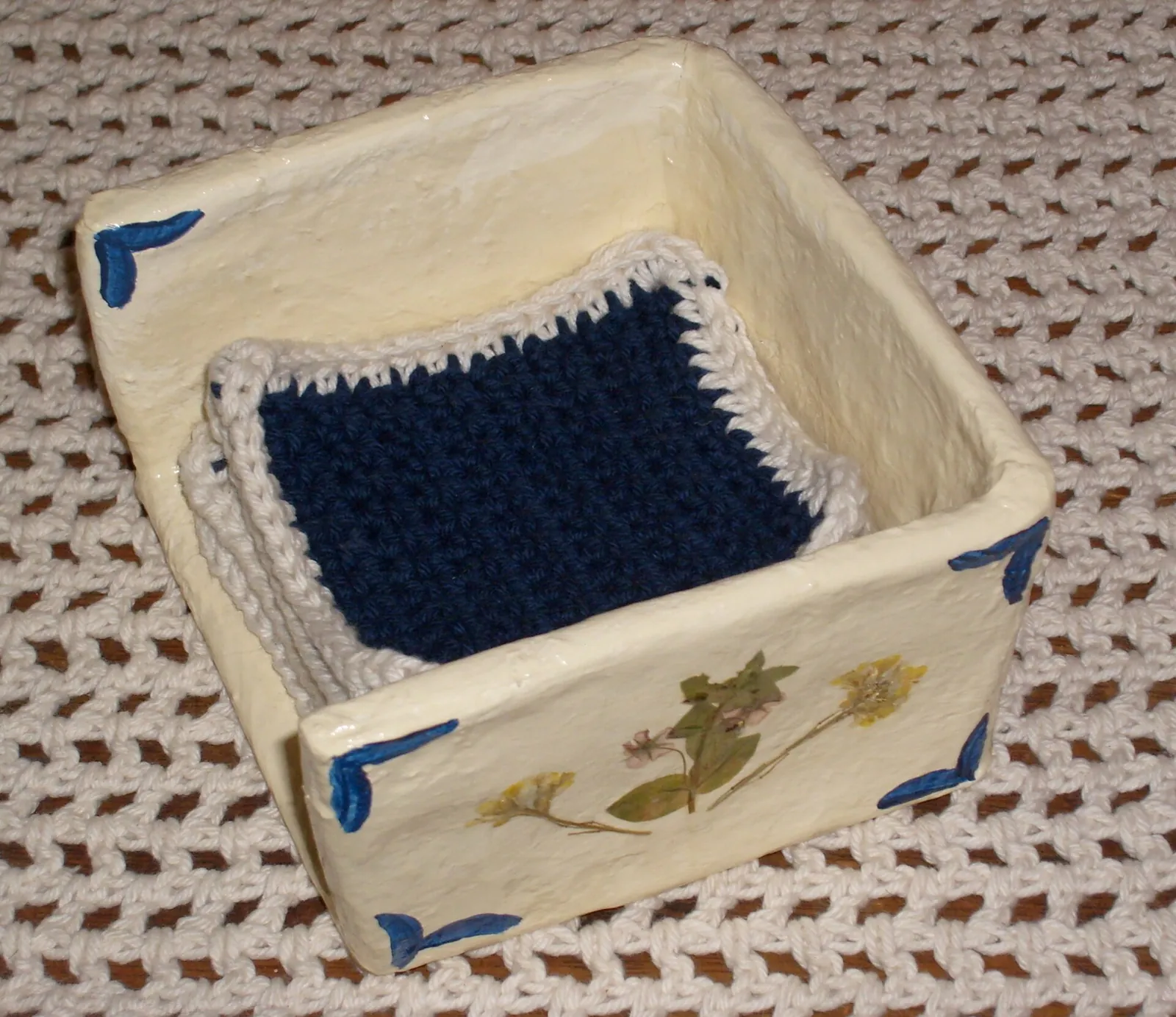
For a first crochet gift, make round cotton coasters: a magic ring, four rounds of double crochet that grow from 12 to 48 stitches, and a single crochet edge. In worsted-weight cotton on a 5 mm (US H-8) hook, each one comes out about 4 in (10 cm) across and takes 30 to 45 minutes. A set of four tied with twine is a quick, useful housewarming or hostess gift. Below are the round pattern and a square one worked in rows, in US terms with UK equivalents.
- Time 30 – 45 minutes per coaster, about 3 hours for a set of four
- Difficulty Beginner (chain, slip stitch, single and double crochet)
- Cost About $5 – $15 for a set
- Makes Coasters about 4 in (10 cm) across; one 95 – 120 yd ball covers three to five, depending on tension (estimate)
Coasters are small, flat, forgiving and used every day, and they don't depend on anyone's size or taste beyond a favorite color. If you have already made knitted or crocheted dishcloths, you have all the skills you need. If not, a coaster is a good place to learn them.
Terms and materials
This pattern uses US terms. UK patterns use some of the same names for different stitches, so check the table if you learned in the UK, Ireland or Australia.
| US term (used here) | UK term |
|---|---|
| Chain (ch) | Chain (ch) |
| Slip stitch (sl st) | Slip stitch (ss) |
| Single crochet (sc) | Double crochet (dc) |
| Double crochet (dc) | Treble (tr) |
| Gauge | Tension |
Other abbreviations: st = stitch, sts = stitches, rnd = round, sk = skip. "2 dc in next" means two double crochet in the same stitch, which is an increase.
What you need
- Worsted-weight 100% cotton yarn (Craft Yarn Council category 4, called aran in the UK). The usual kitchen-cotton balls are 2 to 2.5 oz (57 to 71 g), roughly 95 to 120 yd. Check your label.
- A 5 mm (US H-8) crochet hook
- Tapestry (yarn) needle
- Scissors
- A stitch marker or a scrap of contrasting yarn
- For gifting: baker's twine or ribbon, and a gift tag
Choose cotton over acrylic. It soaks up condensation, washes well and stands up to a hot mug. Acrylic is less absorbent and can soften with high heat. The Craft Yarn Council's guideline hook range for category 4 yarn is 5.5 to 6.5 mm (US I-9 to K-10½). Going down to 5 mm on purpose gives a denser fabric that lies flat and keeps drips off the table.
Pattern 1: round coaster
A flat circle in double crochet usually starts with about 12 stitches and adds the same number every round, with one more plain stitch between increases each time. Some designers start with 10 instead. Here the ch 2 at the start of each round does not count as a stitch, so the counts below are exact.
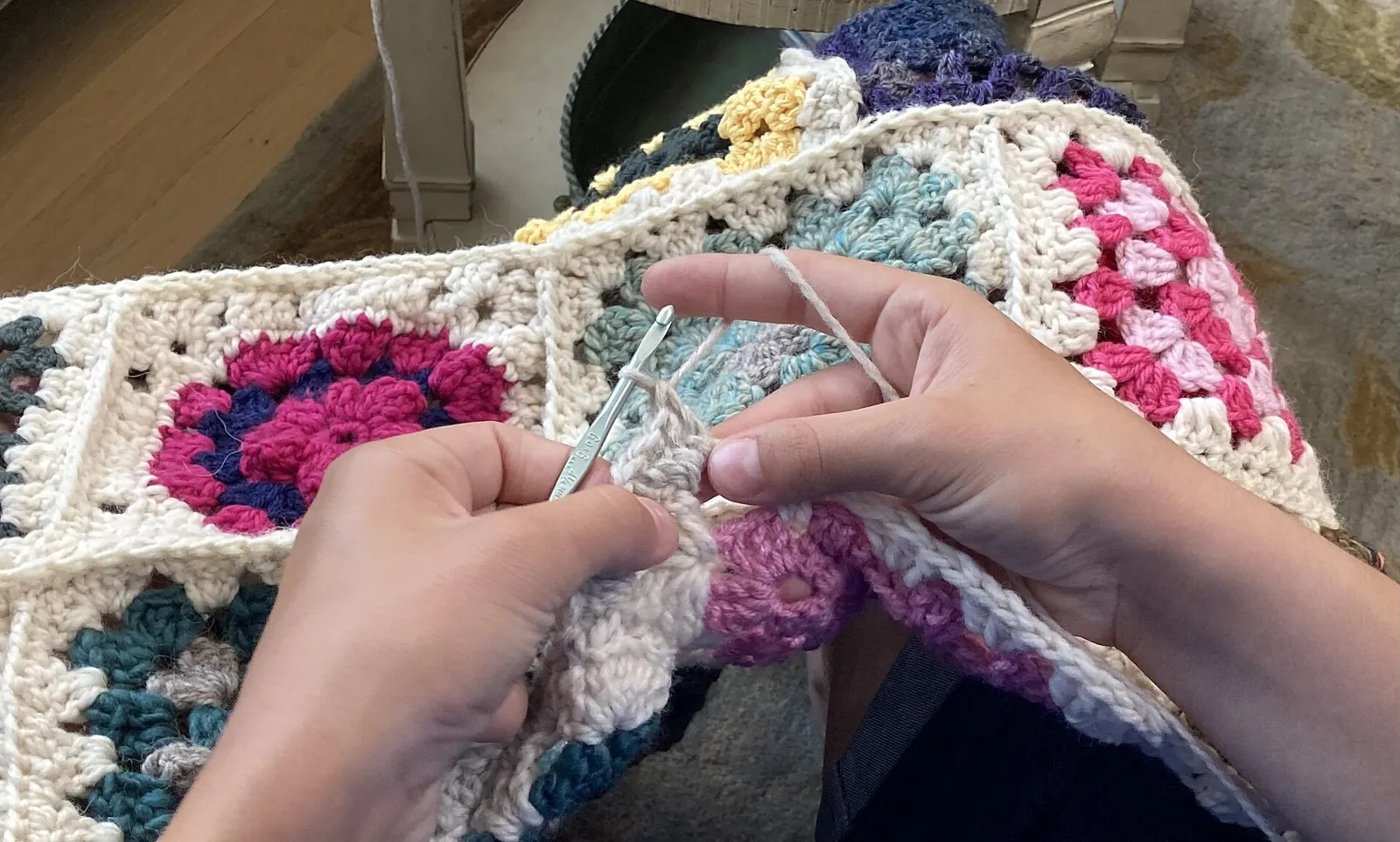
Make the center (round 1)
Make a magic ring (or ch 4 and join with a sl st to form a ring). Ch 2, then work 12 dc into the ring. Pull the tail to close the center. Join with a sl st to the top of the first dc. (12 sts)
Round 2: double the stitches
Ch 2, work 2 dc in each st around. Join with a sl st to the first dc. (24 sts) Check: 12 stitches × 2 = 24.
Round 3
Ch 2, *dc in next st, 2 dc in next st*; repeat from * 11 more times. Join. (36 sts) Check: 12 repeats × 3 stitches = 36.
Round 4
Ch 2, *dc in next 2 sts, 2 dc in next st*; repeat from * 11 more times. Join. (48 sts) Check: 12 repeats × 4 stitches = 48. It should be about 3¾ in (9.5 cm) across; if much bigger, try a 4.5 mm hook.
Round 5: single crochet edge
Ch 1, sc in each st around. Join with a sl st to the first sc. (48 sts) The edge firms up the outline and brings the coaster to about 4 in. Fasten off, leaving a 6 in (15 cm) tail.
Weave in the ends
Thread each tail onto the tapestry needle. Weave it through the backs of three or four stitches in one direction, then back the other way, and trim it close. Cotton is slippery, so changing direction keeps the ends from working loose in the wash.
Flatten and shape
If the edge ruffles, you added too many stitches; if it cups, too few (usually a missed increase). Count each round before you join. To even out small wobbles, dampen the coaster, pat it into a circle on a towel and let it dry flat. Follow the washing and drying advice on your yarn label.
Tip: Increases stacked straight above each other turn a circle into a hexagon. On round 4 you can start with the increase, *2 dc in next st, dc in next 2 sts*, so the increases fall in a different place. The total stays at 48.
Pattern 2: square coaster in rows
If working in the round feels awkward, this square only uses single crochet in rows, with a border round at the end. Each row has 16 sts and the turning ch 1 does not count as a stitch.
Foundation and row 1
Ch 17. Sc in the second ch from the hook and in each ch across. (16 sts)
Rows 2–16
Ch 1, turn, sc in each st across. (16 sts) Repeat until you have 16 rows, or until the piece is square. Single crochet is a little shorter than it is wide, so you may need one or two extra rows. Don't fasten off.
Border round
Ch 1, then work along the top: 3 sc in the first st (corner), sc in the next 14 sts, 3 sc in the last st (corner). Turn the work 90° and sc once into the end of each row down the side, skipping the two corner rows: 14 sc. Along the foundation chain: 3 sc in the first ch (corner), sc in the next 14 ch, 3 sc in the last ch (corner). Up the last side: 14 sc. Join with a sl st to the first sc. (68 sts) Check: 4 corners × 3 = 12, plus 4 sides × 14 = 56, makes 68. If you worked more than 16 rows, the top and bottom stay at 14 but each side edge gets rows minus 2 stitches. For example, 18 rows gives 16 per side and 72 in total (12 + 14 + 14 + 16 + 16).
Fasten off and weave in the ends the same way. The finished square is about 4 to 4½ in (10 to 11.5 cm) on each side.
Easy variations
- Stripes: change color at the start of any round of the round coaster.
- Matching set, mixed shades: make each coaster in a different tone of one color family, such as sage, olive, mint and cream.
- Bigger trivet: carry on with the round pattern. Round 5 becomes *dc in next 3, 2 dc in next* (60 sts), round 6 *dc in next 4, 2 dc in next* (72 sts), and so on, adding 12 sts each round. Use two layers or a cork mat underneath for hot pans, since a single layer of cotton won't protect a table from a pan straight off the stove.
Safety and care
- Coasters are meant for mugs and glasses. Don't use them as potholders or trivets for pans straight from the oven unless they are thick and doubled.
- Machine-wash and dry according to the yarn label. Many cottons shrink a little the first time, so a gift set can go through one wash before you wrap it.
How to wrap them as a gift
Stack four coasters, tie them with baker's twine and add a tag with the washing instructions from the yarn label. For a fuller housewarming gift, pair the set with two mugs and a bag of good coffee or loose-leaf tea, or tuck them into a basket with a handmade dishcloth. A cloth wrap or a reusable bag fits the handmade feel; see our eco-friendly gift wrapping ideas. For more small projects, browse the knit and crochet gifts section or try crochet Christmas ornaments with the same stitches.
Frequently asked questions
What is the best yarn for crochet coasters?
Worsted-weight cotton is the usual choice. It absorbs drips, washes well and handles a hot mug. Acrylic works for decorative coasters but is less absorbent and can soften with high heat.
Why is my crochet coaster wavy or cupping?
A wavy edge means too many stitches for the size of the circle. Cupping means too few, usually from a skipped increase. Count each round against the totals in the pattern (12, 24, 36, 48) before you join.
Does the chain 2 count as a stitch?
Not in this pattern. Join each round to the first real double crochet, not to the chain. That keeps the stitch counts exact and the seam neat.
Sources
- Craft Yarn Council — Standard Yarn Weight System. craftyarncouncil.com
- Craft Yarn Council — Crochet Abbreviations (US and UK terms). craftyarncouncil.com
- Craft Yarn Council — Hooks and Needles size chart. craftyarncouncil.com
- B.hooked Crochet — How to Crochet a Flat Circle (increase chart). bhookedcrochet.com
Image credits. Top image: Coasterbox by Durova, CC BY-SA 3.0, via Wikimedia Commons · In-article image: Leftie crochet by Kravk, CC0 1.0, via Wikimedia Commons
Spotted something out of date or a gift that's no longer available? Tell our editors — we review every correction.