How to make a chunky knit blanket by hand (no needles)
Jumbo chenille, your hands and an afternoon: a beginner table-knit blanket in two sizes, with realistic yarn amounts and tips that keep the edges flat.
Quick answer
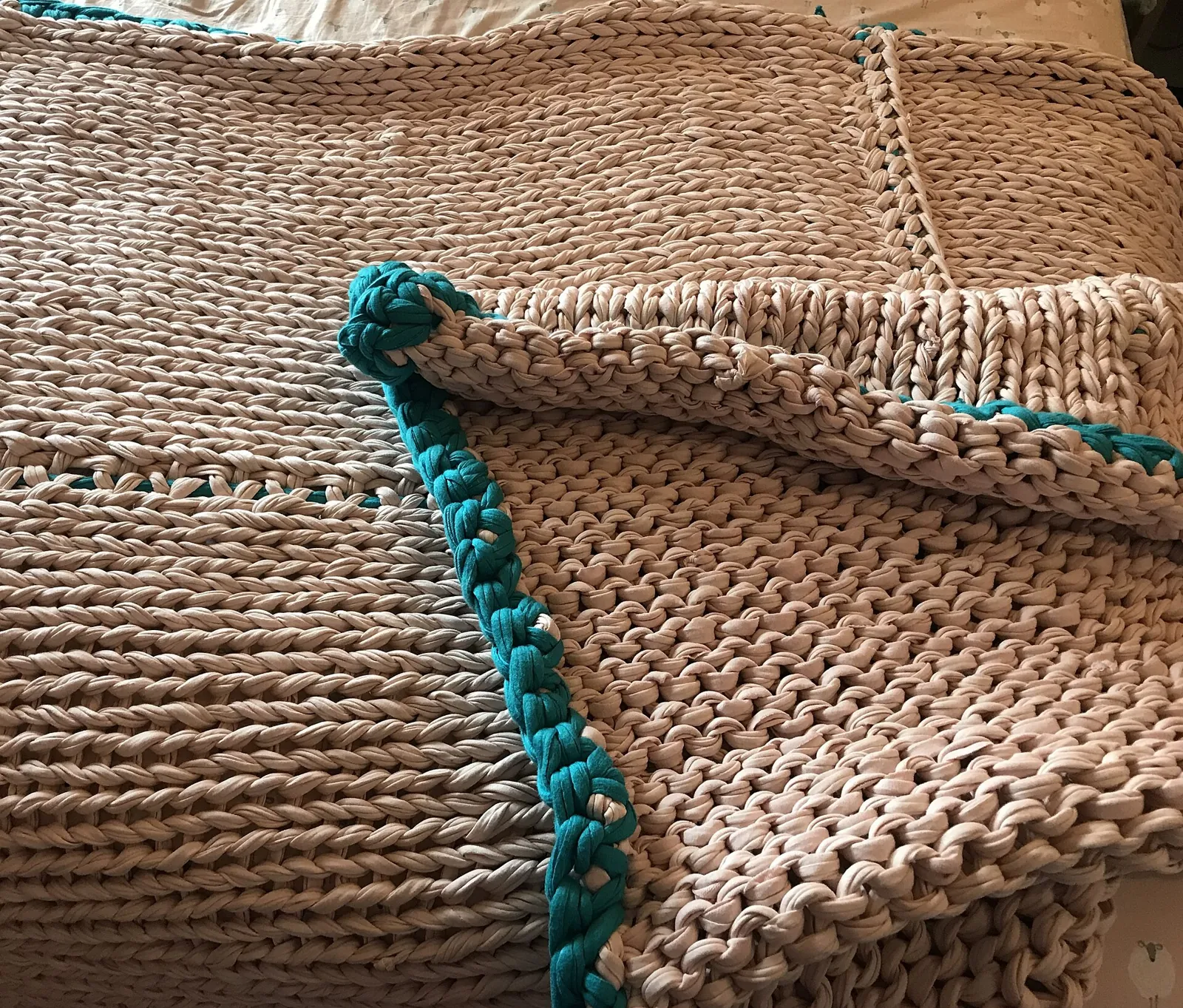
Use jumbo (category 7) chenille yarn and knit it with your hands on a table: chain 20 stitches for a lap throw about 36 × 48 in (91 × 122 cm) or 30 stitches for a full throw about 52 × 59 in (132 × 150 cm). Pull every loop through from back to front, keep two purl stitches at each edge to stop curling, and finish with a loose bind-off. Plan on roughly 110 yd for the lap size and about 190 yd for the full throw, which means two or three large 72 yd balls.
- Time 2 – 5 hours (estimate, depends on size and practice)
- Difficulty Beginner; no needles needed
- Cost About $35 – $90 in jumbo chenille yarn (estimate; wool roving costs far more)
- Makes One lap throw (about 36 × 48 in) or one throw (about 52 × 59 in)
A chunky knit blanket looks luxurious, but it is one of the quickest handmade gifts you can make. The stitches are so large that your fingers do the work of needles, and an entire throw can be finished in an afternoon. It suits anyone who loves a cozy sofa.
The method below is "table knitting": the blanket lies flat on a table while you pull loops through the row below, so you never hold its weight on your arms.
Choosing yarn and estimating how much you need
The Craft Yarn Council's standard yarn weight system puts the thickest yarns in category 7, "Jumbo," with a gauge of six or fewer stitches per 4 inches. Yarn intended for knitting by hand, with no needles at all, may also carry the council's hand symbol on the label. For a chunky blanket you want the thickest end of that range: a polyester chenille tube about as thick as a thumb, or merino wool roving.
- Polyester chenille (recommended for gifts). Soft, affordable, and often machine washable, so it suits households with kids and pets. Check the label: care instructions differ between brands.
- Merino roving. Beautiful and very soft, but much more expensive. Unspun roving can pill, stretch, and felt with friction or water, so it usually needs gentle care.
How much yarn? Yarnspirations' free Ultra Squish Table Knit Blanket pattern is a useful benchmark: 30 hand-knit stitches in a jumbo polyester yarn sold in 72 yd (66 m) balls make a blanket about 52 × 59 in, using about 192 yd (174 m), at a gauge of about 2¼ stitches and 3¼ rows per 4 in. Scaling that by area gives the estimates below. Thickness varies between brands, so buy one extra ball if you can return unused yarn.
| Size | Chain | Approx. finished size | Yarn (estimate) |
|---|---|---|---|
| Lap throw | 20 stitches | 36 × 48 in (91 × 122 cm) | About 110 yd (100 m): two 72 yd balls |
| Throw | 30 stitches | 52 × 59 in (132 × 150 cm) | About 190 yd (174 m): three 72 yd balls |
The arithmetic: at 2¼ stitches per 4 in, each stitch is about 1.8 in wide, so 20 stitches give about 36 in and 30 stitches about 53 in. At 3¼ rows per 4 in, a 48 in blanket is about 39 rows.
Materials
- Jumbo (category 7) chenille yarn: two 72 yd balls for a lap throw or three for a throw (or the equivalent yardage), all from the same dye lot
- A large, clean table or floor space at least as wide as your blanket
- A jumbo yarn needle for weaving in ends (fingers also work)
- Scissors and a tape measure
- Optional: a few clothespins or jumbo stitch markers to mark the edge stitches
How to make the blanket
Make a loose slip knot and the foundation chain
Leave a 10 in (25 cm) tail and tie a slip knot big enough for two fingers to pass through. Reach through the loop, grab the working yarn, and pull up a new loop to form a chain. Repeat until you have 20 chains (lap throw) or 30 chains (throw), counting the loop on your fingers. Keep every loop the same generous size: roughly 2 in (5 cm) tall. Tight loops make a stiff blanket.
Lay the chain flat and set up the first row
Lay the chain on the table with the smooth "V" side up and the working yarn at the right-hand end. Working right to left, pull a loop of working yarn through each chain. Count when you reach the end: you should have one live loop per chain. Do not turn the work, ever; you will simply work back in the other direction.
Work the purl border row
Working left to right, hold the working yarn in front and pull a loop through each stitch from front to back. This purl row creates a firm bottom edge that does not roll.
Knit the body with purl edges
On every following row, purl the first 2 stitches (yarn in front, pull through from front to back), then knit across (yarn behind, pull a loop through each stitch from back to front), and purl the last 2 stitches. On a 20-stitch blanket that is 2 purl + 16 knit + 2 purl in every row. Alternate direction each row: right to left, then left to right.
Tip: Count your stitches every few rows. A blanket that gets narrower means a skipped edge stitch; uneven, gappy fabric means loop size is drifting. Pull chenille gently rather than hard, since overstretching can make it lose pile or poke out in small loops.
Join a new ball at an edge
When a ball runs low, finish the row and start the next ball at the beginning of the following row. Leave 8 – 10 in (20 – 25 cm) tails on both the old and new yarn. You will weave the tails in later.
Knit to length, then add two purl rows
Continue until the blanket is about 2 in shorter than your target: about 46 in for the lap throw or about 57 in for the throw. Then work two full purl rows (every stitch purled, one row in each direction) to match the bottom border.
Bind off loosely
Pull a loop up through the first stitch, then pull a loop through the second stitch and draw that new loop through the first one. Continue across: pull a loop through the next stitch, then draw it through the loop before it. Keep the bind-off loops as large as your knitting loops so the top edge does not pucker. Cut the yarn and pull the tail through the last loop.
Weave in the ends
Thread each tail onto the jumbo needle, or work with your fingers, and weave it along the inside of the edge stitches for at least 6 in (15 cm), then back a short way. Chenille is slippery, so long tails woven in two directions are what keep it from working loose. Trim only the very end.
Safety and care
- Not for infants. The American Academy of Pediatrics advises keeping blankets and other soft bedding out of a baby's sleep area for the first year. A chunky blanket is also heavy, and toddlers can catch fingers and toes in large stitches, so give it to adults and older children.
- Pets. Claws can snag big loops. A tightly worked chenille blanket holds up better than roving.
- Washing. Follow the yarn label exactly. Labels for jumbo polyester chenille often allow a cold, gentle machine wash, but a large blanket is heavy when wet; a front-loading or commercial machine and flat drying are kinder to the stitches. Roving is usually hand wash or spot clean only. Include the label, or a card with the care instructions, with the gift.
How to package it as a gift
Fold the blanket in thirds and roll it, then tie it with a wide fabric ribbon or a strip of leftover chenille. A basket or fabric tote beats wrapping paper, which crushes the stitches. Tuck in a handmade tag with the fiber content and care instructions; our guide to making your own gift tags has simple ideas. For more gifts in the same family, see the knit and crochet hub, the faster no-sew fleece tie blanket, or our ideas for DIY gifts for loved ones.
Frequently asked questions
How much yarn do I need for a chunky knit blanket?
It depends on yarn thickness and size. As a benchmark, a published 30-stitch table-knit pattern in jumbo polyester yarn makes about 52 × 59 in from roughly 192 yd. A lap throw about 36 × 48 in needs around 110 yd. Check the label of the yarn you buy, since jumbo yarns vary.
Can I wash a chunky knit blanket?
Many polyester chenille yarns are labeled machine washable on a cold, gentle cycle, but always follow the specific label. Dry the blanket flat if you can. Merino roving blankets are usually hand wash or spot clean only.
Can I make one for a baby?
Not for sleeping. Pediatric safe-sleep guidance says no blankets in an infant's sleep area during the first year, and big loops can trap small fingers and toes. Consider a knit hat for a family gift instead.
Sources
- Craft Yarn Council — Standard Yarn Weight System. craftyarncouncil.com
- Yarnspirations (Bernat) — Ultra Squish Table Knit Blanket, pattern BRN0502-034931M (PDF). yarnspirations.com
- HealthyChildren.org (American Academy of Pediatrics) — How to Keep Your Sleeping Baby Safe: AAP Policy Explained. healthychildren.org
Image credits. Top image: DIY knitted weighted blanket by Timesoup, CC BY-SA 4.0, via Wikimedia Commons
Spotted something out of date or a gift that's no longer available? Tell our editors — we review every correction.