Birthstones by month: modern, traditional and UK lists
Garnet for January, diamond for April, turquoise or tanzanite for December. Here is every month's birthstone, its alternates, and why lists differ.
Quick answer
The modern US birthstones are garnet (January), amethyst (February), aquamarine or bloodstone (March), diamond (April), emerald (May), pearl, moonstone or alexandrite (June), ruby (July), peridot or spinel (August), sapphire (September), opal or tourmaline (October), topaz or citrine (November) and turquoise, tanzanite or zircon (December). The list was standardized by US jewelers in 1912 and has been updated a few times since. The British list is similar but has some different alternates.
- First standard list 1912, US National Association of Jewelers
- Latest US addition Spinel for August (2016)
- Months with most choice June and December
Birthstones by month at a glance
This table shows the current US list as published by the Gemological Institute of America (GIA), next to the original 1912 list and the British list. Where a month has two or more stones, the first is usually the best known.
| Month | Current US (GIA) | Original 1912 US list | UK (National Association of Goldsmiths) |
|---|---|---|---|
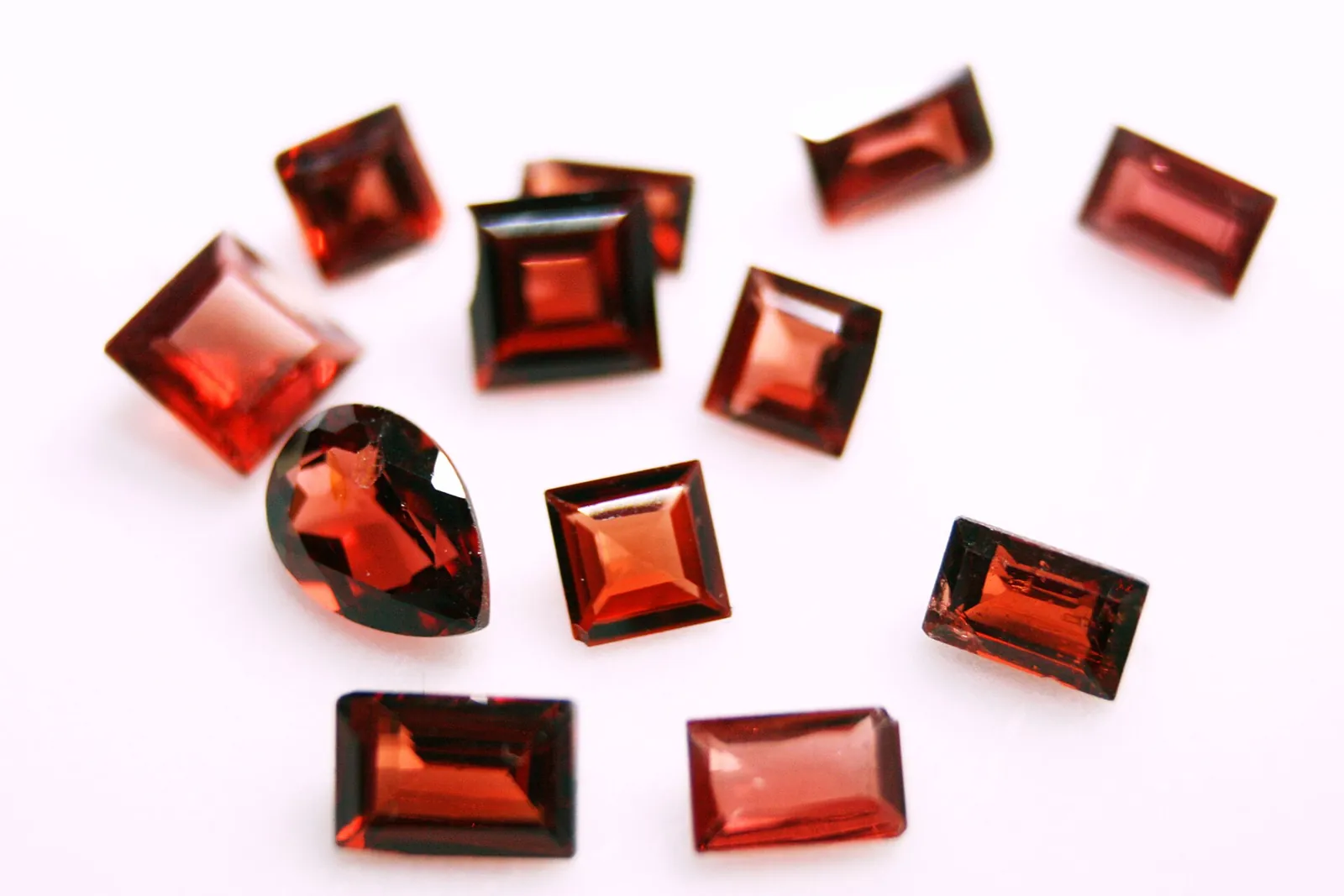
| January | Garnet | Garnet | Garnet |
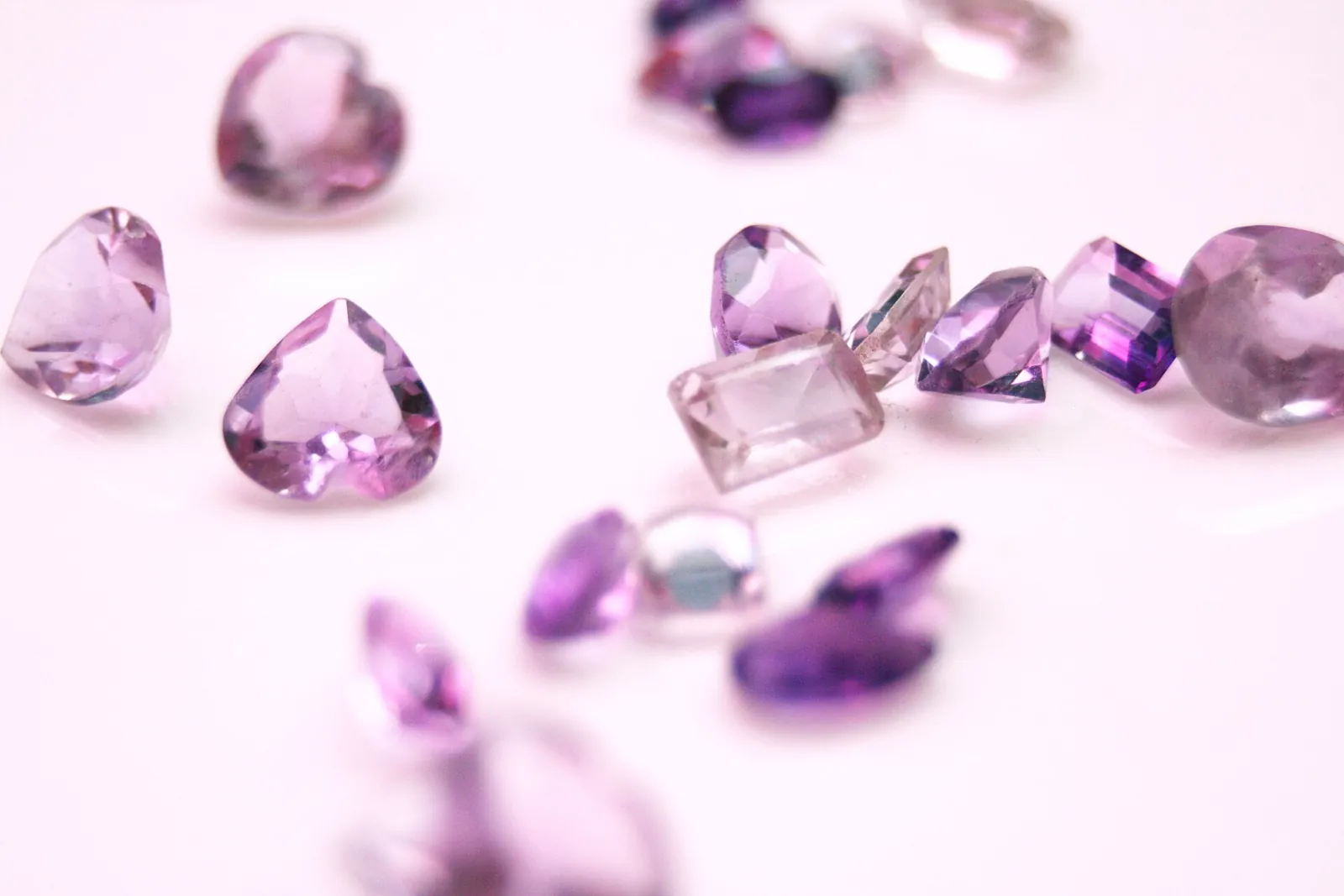
| February | Amethyst | Amethyst | Amethyst |
| March | Aquamarine, bloodstone | Bloodstone, aquamarine | Aquamarine, bloodstone |
| April | Diamond | Diamond | Diamond, rock crystal |
| May | Emerald | Emerald | Emerald, chrysoprase |
| June | Pearl, moonstone, alexandrite | Pearl, moonstone | Pearl, moonstone |
| July | Ruby | Ruby | Ruby, carnelian |
| August | Peridot, spinel (sardonyx on some lists) | Sardonyx, peridot | Peridot, sardonyx |
| September | Sapphire | Sapphire | Sapphire, lapis lazuli |
| October | Opal, tourmaline | Opal (see note) | Opal |
| November | Topaz, citrine | Topaz | Topaz, citrine |
| December | Turquoise, tanzanite, zircon | Turquoise, lapis lazuli | Tanzanite, turquoise |
A note on October: some reproductions of the 1912 list include tourmaline, but the International Gem Society and National Jeweler both date tourmaline's addition to 1952. We follow them here.
How the list was made and changed
The idea of a stone for each month is old. Gem historians link it to the twelve stones on the breastplate of Aaron described in Exodus, which represented the twelve tribes of Israel; later writers connected the stones to the months and the zodiac. According to Wikipedia's summary, the habit of wearing a single stone for your birth month is only a few centuries old, and sources disagree on whether it began in Poland or Germany.
The modern list is a trade standard. Key dates:
- 1912: The National Association of Jewelers, now Jewelers of America, adopted an official list at a meeting in Kansas City.
- 1952: The Jewelry Industry Council of America added alexandrite (June), citrine (November), pink tourmaline (October) and zircon (December), and replaced December's lapis lazuli with zircon.
- 2002: The American Gem Trade Association added tanzanite for December.
- 2016: The American Gem Trade Association and Jewelers of America added spinel as a second August stone alongside peridot.
Britain has its own list. Wikipedia records that the National Association of Goldsmiths first published one in 1937; the version in the table reflects its 2013 update.
Where the lists differ
- Alternates in the UK. The British list adds lower-cost alternatives for April (rock crystal), May (chrysoprase), July (carnelian) and September (lapis lazuli), and doesn't include alexandrite, spinel or zircon.
- December. This month has the most variation: turquoise, tanzanite and zircon in the US, tanzanite and turquoise in the UK, and lapis lazuli on the 1912 list. National Jeweler notes that some retailers also sell blue topaz for December.
- Traditional versus modern. Some sites call the older stones (bloodstone, sardonyx, lapis lazuli) the "traditional" birthstones. The International Gem Society, for example, lists bloodstone for March and sardonyx for August as traditional choices.
- Trade bodies. National Jeweler points out that even US trade lists aren't identical; for example, the American Gem Society omits moonstone for June.
The practical takeaway: if someone asks for "their" birthstone, the main stone in the first column is almost always the safe answer, and the alternates are there for budget or taste.
Choosing a birthstone gift
Birthstones work best when you combine the tradition with what the person actually wears. A few points worth knowing:
- Durability matters for rings. Diamond, ruby and sapphire are hard enough for daily wear. Opal, pearl and turquoise are softer and do better in earrings or pendants.
- Use the alternate for a lower budget. Citrine instead of topaz, or spinel instead of peridot, gives more choice of color and price.
- Ask about treated or lab-grown stones. Many gems are heat-treated, and lab-grown versions of some stones exist. A reputable jeweler should tell you which you are buying.
- Family pieces. A mother's ring or necklace with each child's birthstone is a classic sentimental gift.
For ideas by budget, see our guide to birthstone jewelry gifts and our wider jewelry gifts section. If you prefer flowers, our birth flowers by month chart follows the same idea, and more customs are collected under gift traditions.
Frequently asked questions
Why do some months have more than one birthstone?
Trade bodies added alternates over the years, often to offer a more affordable or more available stone. June, August, October, November and December all have more than one on the current US list.
What is the December birthstone?
Turquoise, tanzanite and zircon on the current US list; tanzanite and turquoise on the British list.
When was spinel added as a birthstone?
In 2016, when the American Gem Trade Association and Jewelers of America added it for August alongside peridot.
Is there an official birthstone list?
There is no legal list. The US list is a jewelry trade standard first set in 1912, and Britain's National Association of Goldsmiths publishes its own.
Sources
- Gemological Institute of America — Birthstones. gia.edu
- Wikipedia — Birthstone (1912, 1952, 2002, 2016 changes; UK list). en.wikipedia.org
- National Jeweler — Rocks on the evolution of the birthstone list. nationaljeweler.com
- International Gem Society — History of birthstones. gemsociety.org
Image credits. Top image: Cut garnet collection by Humanfeather / Michelle Jo, CC BY 3.0, via Wikimedia Commons · In-article image: Collection of Amethyst Gemstones by Michelle Jo, CC BY 3.0, via Wikimedia Commons
Spotted something out of date or a gift that's no longer available? Tell our editors — we review every correction.