Birth flowers by month: US and UK list with meanings
Every month has one or two birth flowers. Here is the full list, what each flower traditionally means, and the few months where US and UK lists disagree.
Quick answer
The usual birth flowers are carnation and snowdrop (January), violet (February), daffodil (March), sweet pea and daisy (April), lily of the valley and hawthorn (May), rose and honeysuckle (June), larkspur and water lily (July), gladiolus and poppy (August), aster and morning glory (September), marigold and cosmos (October), chrysanthemum (November) and holly and narcissus (December). US and UK lists mostly agree; the main differences are February (primrose or iris) and July (larkspur or delphinium).
- Flowers per month Usually two, November has one
- Basis Folklore and the Victorian language of flowers
- Official list None; florists and almanacs vary slightly
Birth flowers by month
The US column follows The Old Farmer's Almanac. The UK column follows the lists published by Ideal Home and the British florist Bloom & Wild. Where they match, the flowers are the same on both sides of the Atlantic.
| Month | US list (Old Farmer's Almanac) | Common UK lists | Traditional meanings (Almanac) |
|---|---|---|---|
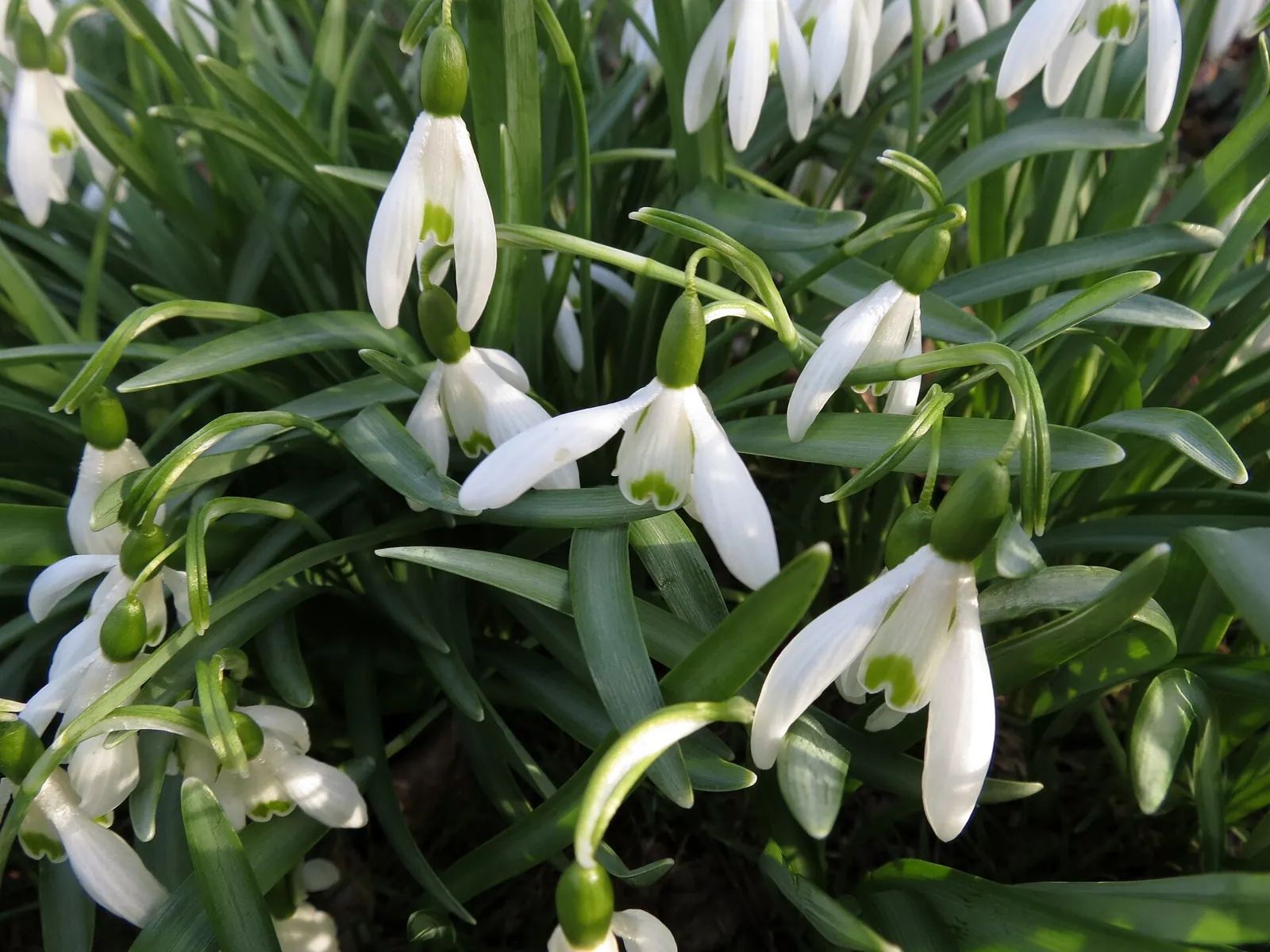
| January | Carnation, snowdrop | Carnation, snowdrop | Carnation: affection (pink); snowdrop: hope |
| February | Violet, primrose | Violet, iris | Violet: modesty, faithfulness; primrose: young love |
| March | Daffodil | Daffodil (and jonquil) | Rebirth, new beginnings, hope |
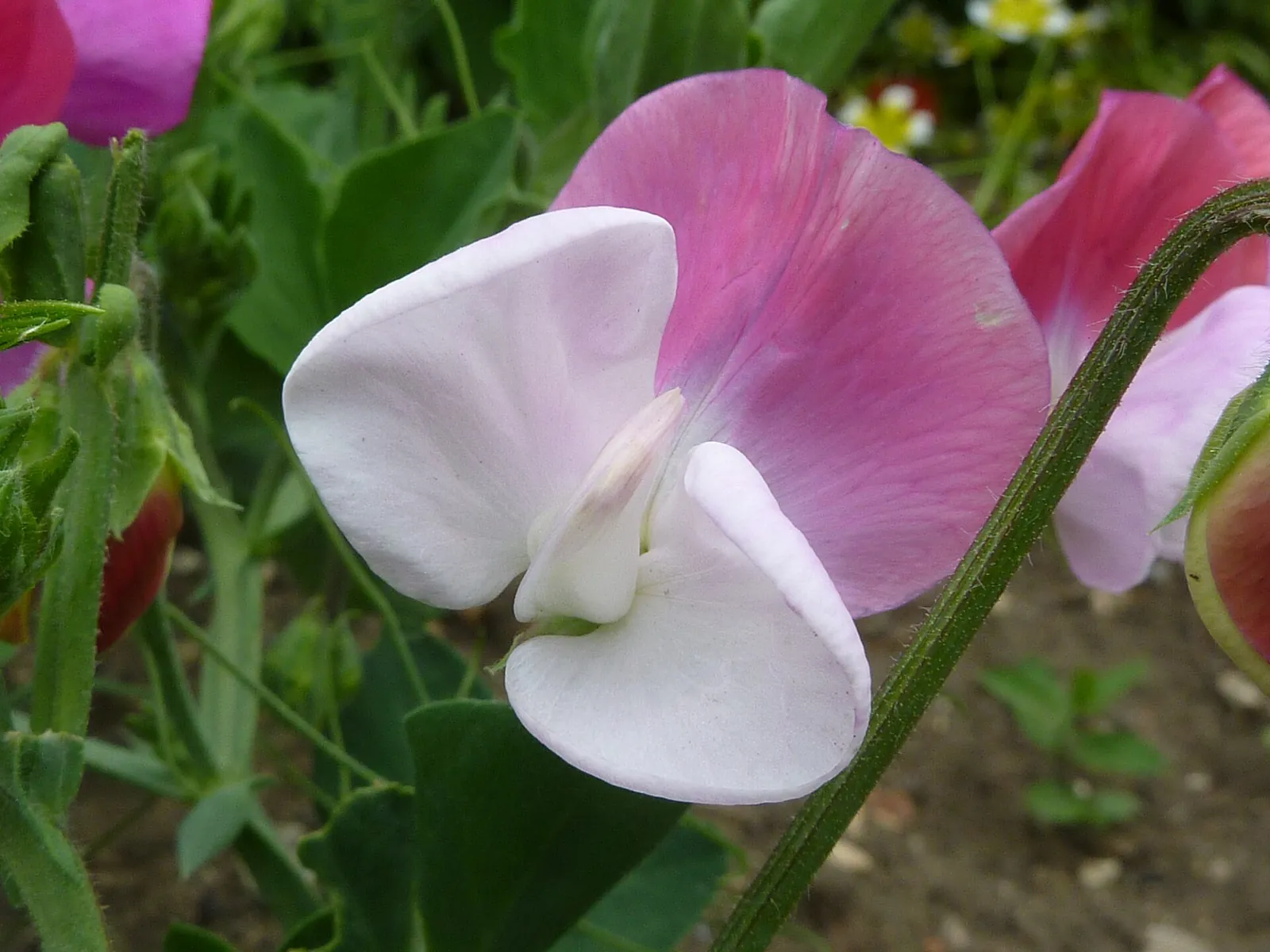
| April | Sweet pea, daisy | Daisy, sweet pea | Sweet pea: gratitude, good wishes; daisy: innocence |
| May | Lily of the valley, hawthorn | Lily of the valley, hawthorn | Sweetness, humility, return of happiness; hawthorn: hope |
| June | Rose, honeysuckle | Rose, honeysuckle | Rose: love (meaning varies by color); honeysuckle: devotion |
| July | Larkspur, water lily | Larkspur or delphinium, water lily | Larkspur: positivity, dedication; water lily: purity, rebirth |
| August | Gladiolus, poppy | Gladiolus, poppy | Gladiolus: strength, integrity; poppy: remembrance |
| September | Aster, morning glory | Aster, morning glory | Aster: love, patience; morning glory: affection |
| October | Marigold, cosmos | Marigold, cosmos | Marigold: joy or remembrance; cosmos: harmony |
| November | Chrysanthemum | Chrysanthemum | Loyalty, friendship, joy |
| December | Holly, narcissus (paperwhite) | Holly, narcissus | Holly: protection, goodwill; narcissus: hope, renewal |
Where the lists differ
Unlike birthstones, there is no trade body behind birth flowers, so every florist or almanac publishes its own version. The differences are small but worth knowing:
- February: US lists usually pair violet with primrose, while Ideal Home and Bloom & Wild pair it with iris. The Almanac mentions iris as an alternative too.
- March: Some lists add jonquil, which is itself a type of daffodil.
- April: The Almanac notes that the University of Illinois Extension lists peony for April.
- July: Larkspur and delphinium are close relatives, and lists use either name; Bloom & Wild gives delphinium.
- August: Some sources add dahlia.
The list is a Northern Hemisphere tradition. The Almanac's editors say they found no authoritative alternative for the Southern Hemisphere, so Australian readers will see the same list even though the seasons are reversed.
Where birth flowers come from
Penn State Extension's Master Gardeners describe birth month flowers as drawing on the "language of flowers" found in old texts and European and Asian folklore, and note that the custom was especially popular in the Victorian era. They are clear that the meanings are not based on scientific study but on folklore and tradition. Some florists trace the idea back to Roman birthday customs, but that history is hard to document, so treat it as part of the folklore.
Many of the meanings come from nineteenth-century flower dictionaries, which often disagreed with each other. That is why the same flower can carry several meanings, and why color matters: the Almanac gives red roses as "I love you" but yellow roses as cheer and friendship, or sometimes jealousy. Our guide to flower meanings for gifts explains this in more detail.
How to give a birth flower
Seasonality is the practical challenge. Some birth flowers are easy to buy year-round (roses, carnations, chrysanthemums), while others have short seasons or rarely appear at florists (hawthorn, morning glory, holly as a cut flower). Some ideas:
- Mix it in. Ask a florist to include the birth flower in a mixed bouquet rather than a single-variety bunch, which also helps with flowers that look modest alone, like violets.
- Give it to grow. Bulbs (snowdrop, daffodil, narcissus) or seeds (sweet pea, cosmos, marigold) make a gift that comes back each year.
- Use the flower as a motif. A print, embroidered item or piece of jewelry featuring the birth flower lasts longer than a bouquet and works in any season.
- Make one. Paper versions work well for flowers that are hard to find fresh; see our tutorial on how to make paper flowers.
Check local customs before you send flowers abroad: chrysanthemums, November's flower, are linked with graves and funerals in parts of Europe. For bouquet ideas, see birthday flowers for her or browse flower and plant gifts.
Frequently asked questions
Why do most months have two birth flowers?
Different traditions assigned different flowers, and a second flower gives more choice, especially when one is out of season. The Almanac notes that cultures disagree and some flowers are easier to find in certain regions.
What is the birth flower for February?
Violet on almost every list, paired with primrose on many US lists and with iris on many UK lists.
Is there an official birth flower list?
No. Unlike birthstones, there is no industry standard, so lists vary slightly between almanacs and florists.
Are birth flower meanings scientific?
No. Penn State Extension notes that the meanings come from folklore and tradition passed down through generations, not scientific study.
Sources
- The Old Farmer's Almanac — Birth month flowers and their meanings. almanac.com
- Penn State Extension, Luzerne County Master Gardeners — Monthly birth flowers. extension.psu.edu
- Ideal Home — Birth month flowers. idealhome.co.uk
- Bloom & Wild — Birth month flowers guide. bloomandwild.com
- The Connexion — Why are chrysanthemums the flower of Toussaint in France? connexionfrance.com
Image credits. Top image: Galanthus nivalis - common snowdrops (5 April 2015, Newark, Ohio, USA) 2 (17140917012) by James St. John, CC BY 2.0, via Wikimedia Commons · In-article image: Lathyrus odoratus 'Cupid Mixed' (Leguminosae) flower by Magnus Manske, CC BY-SA 3.0, via Wikimedia Commons
Spotted something out of date or a gift that's no longer available? Tell our editors — we review every correction.