Gift Etiquette in the Solomon Islands: Kastom, Hosts and Shell Money
Customs in the Solomon Islands vary by province, so modest food gifts and asking first go a long way. Here's what to bring, what to avoid and how shell money fits in.
We independently research every pick. If you buy through our links we may earn a small commission, at no extra cost to you. Affiliate disclosure.
Quick answer
In the Solomon Islands, customs (kastom) differ from province to province, so the safest approach is to ask your host or guide what's appropriate. A small gift such as food is appropriate when you meet a village leader, and if you stay in someone's home, canned tuna (taiyo) and rice make a suitable gift; leave any food you've bought with your host when you go. Ask before photographing people, dress modestly, and respect customary land. In traditional life, shell money, pigs and food are exchanged at bride price ceremonies and other major events; visitors aren't expected to take part in these exchanges.
- Host gift Food, such as taiyo (canned tuna) and rice ($15 – $40)
- Key rule Customs vary by province; ask locally
- Dress Women's clothes should cover the knees
- Say thank you "Tanggio" in Solomon Islands Pijin
What to give
The Solomon Islands is made up of some 900 islands with 63 distinct languages, and people often describe themselves by their province or island first. Tourism Solomons notes that customs vary between provinces, so there's no single gift rule for the whole country. The guidance that does exist points to practical, shareable food rather than ornaments.
For a host family
The Pacific Community's (SPC) cultural etiquette guide suggests taiyo (canned tuna) and rice as a suitable gift if you are invited to stay in a Solomon Islander's home, and says any food you buy during your stay should be left with your host when you leave. Sharing food is an important part of daily life, so a contribution to the household table is always useful. Remote villages may have limited ways to dispose of rubbish, so avoid heavily packaged extras.
For a village leader
If you visit a village, arrange to meet the local leader first; depending on the place, that may be a chief, a church pastor or priest, or a village elder. A small gift, such as food, is appropriate when you meet them.
For friends and in-laws
For Solomon Islander friends or in-laws, including families living in Australia or New Zealand, a gift that the extended family can enjoy together usually fits better than something for one person. For weddings, funerals or other ceremonies, ask a family member how guests outside the family can contribute.
Canned tuna, rice and pantry staples
Why it works: Taiyo and rice are a documented, practical host gift that the whole household can share.
Skip it if: your host suggests something else; ask first.
School supplies or books
Why it works: Practical for families with children; give them to parents or a teacher so they can be shared fairly.
Skip it if: you can't bring enough for all the children.
A specialty from your home country
Why it works: Something from home sparks conversation with friends or in-laws.
Skip it if: it's alcohol and you don't know your hosts' preferences; many families are active churchgoers.
For more ideas, see our food gifts.
Shell money and bride price
Shell money is a traditional currency in the Solomon Islands. Solomon Times reports that shell strings have long been used to trade and settle disputes, long before cash was introduced, and remain in use in Malaita, Makira and Guadalcanal, where some families keep a box of shell money at home.
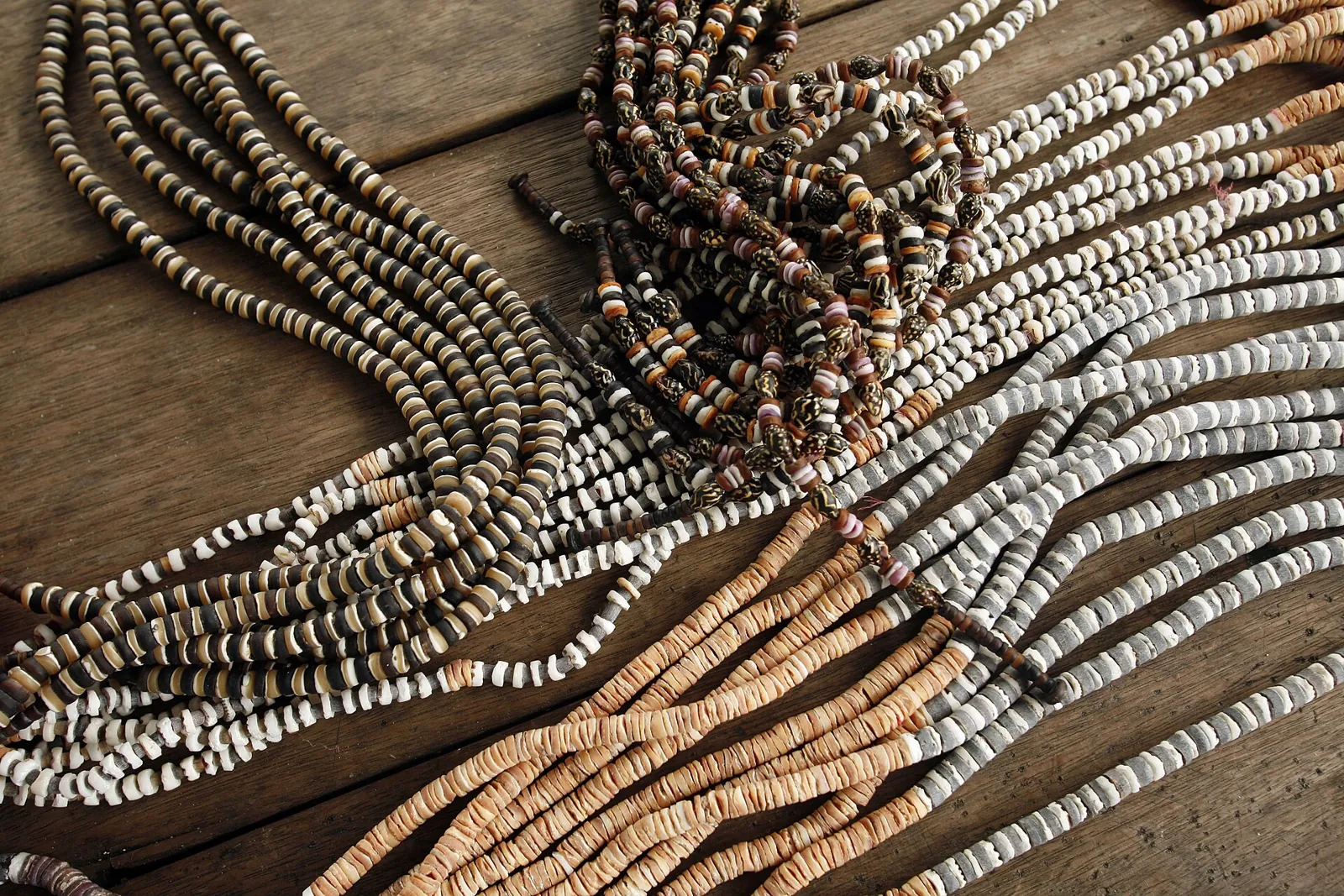
Its best-known role today is in bride price, the exchange that marks a woman's move into her husband's family. At a bride price ceremony, the groom's family may bring live pigs, rice, root crops and mats as well as strings of shell money, which are often the most valuable items; the bride's family can accept or decline. Bride price is particularly associated with Malaita, where shell money made in the Langa Langa Lagoon is also used for funeral feasts and compensation.
These are family and clan exchanges with deep meaning. If you're invited as a guest, attend respectfully and follow your hosts' lead rather than trying to contribute traditional valuables yourself.
What to avoid
- Photographing people without permission. Ask first. General photos of public events, markets or festivals are usually fine, but ask before photographing an individual.
- Short or tight clothing. It is considered disrespectful. Women's clothes should generally cover the knees; beachwear belongs at hotels and resorts.
- Stepping over someone's legs. Especially an older person's. Excuse yourself so they can shift.
- Assuming land is public. Much land is held under custom; ask before entering villages, beaches or reefs.
- Lavish gifts. They can create awkwardness or obligation; modest and practical is better.
- Handling traditional valuables uninvited. Shell money and ceremonial items carry meaning; don't touch them without permission.
How to give and receive
- Ask your host or guide first. Because customs vary by island and province, local advice is the best guide.
- Follow your host's lead at home. Sitting on the floor is common, especially in rural areas; sit where you are directed.
- Wait for the blessing. Don't start eating until others have begun or you're invited to, and see whether a blessing will be said first.
- Accept food graciously. It's polite to finish your plate, but saying "I'm full" is fine; offer any leftovers to your host.
- Respond to welcomes. A village may hold a welcome gathering for a visitor, and you're expected to reply to any speeches.
- Respect days of worship. Saturday and Sunday are set aside for worship and rest in many communities, depending on the church, so ask what is appropriate locally.
Holidays and occasions
- Independence Day (July 7) is the main national celebration.
- Easter (Good Friday, Holy Saturday and Easter Monday; dates vary each year) and Whit Monday are public holidays.
- Christmas (December 25) and the National Day of Thanksgiving (December 26) are times for church, family and shared meals. See our Christmas ideas.
- Province days are local holidays, for example Malaita Province on August 15 and Western Province on December 7.
- Weddings, bride price ceremonies and funerals are where the most significant traditional exchanges take place.
Business gifting
Business gift customs in the Solomon Islands are not well documented. For formal meetings, men typically wear trousers and a buttoned shirt and women a long skirt or dress. Keep gifts modest and open, such as a quality item from your home country or company, and give them in a way that can't be mistaken for an inducement. Many organizations restrict gifts to officials, and anti-bribery laws in your home country may apply abroad. See our business gifts guide.
Frequently asked questions
What gift should I bring to a host in the Solomon Islands?
Food the household can share. The Pacific Community suggests canned tuna (taiyo) and rice if you are staying in someone's home, and leaving any food you bought with your host when you depart.
Should I bring a gift when visiting a village?
A small gift, such as food, is appropriate when you meet the village leader, who may be a chief, pastor or elder.
What is shell money used for?
It's a traditional currency, still used in provinces such as Malaita, Makira and Guadalcanal, especially in bride price, and historically for trade and settling disputes.
How do you say thank you in the Solomon Islands?
"Tanggio" in Solomon Islands Pijin, the lingua franca. English is the official language.
What should I wear when visiting a village?
Modest clothing; women's clothes should cover the knees. Save beachwear for hotels and resorts.
Exploring more of Melanesia? See our Vanuatu and Papua New Guinea guides, or browse all country guides.
Sources
- Pacific Community (SPC) — Cultural Etiquette in the Pacific: Guidelines for staff working in Pacific communities (2020), Solomon Islands chapter. library.sprep.org
- Tourism Solomons — Travel Tips. visitsolomons.com.sb
- Solomon Times — The True Value of Traditional Currency. solomontimes.com
- Wikipedia — Malaita Province. en.wikipedia.org
- Wikipedia — Public holidays in the Solomon Islands. en.wikipedia.org
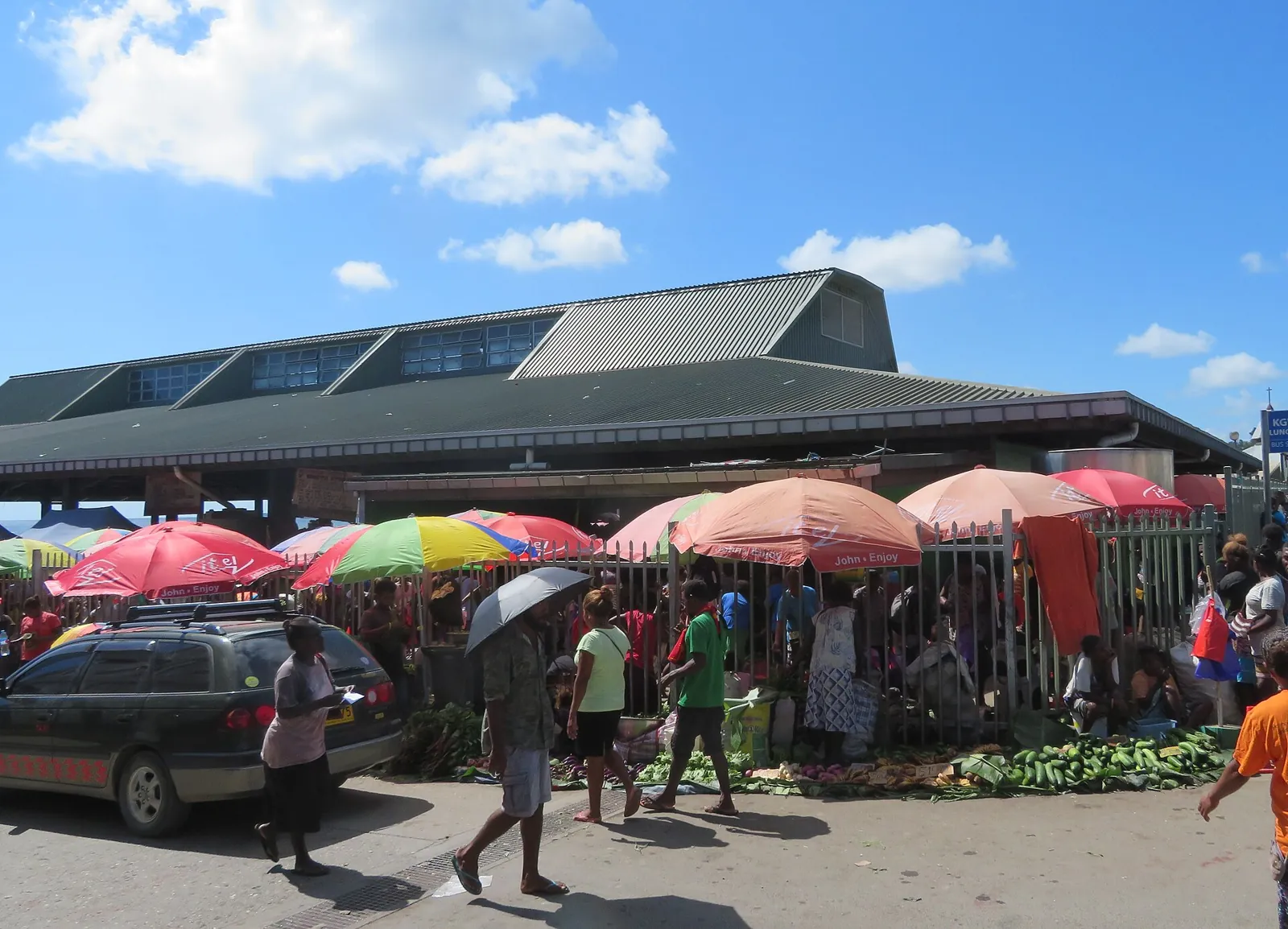
Image credits. Top image: Central Market Honiara by Torbenbrinker, CC BY-SA 4.0, via Wikimedia Commons · In-article image: SOLS0348 (10721964235) by Department of Foreign Affairs and Trade, CC BY 2.0, via Wikimedia Commons
Spotted something out of date or a gift that's no longer available? Tell our editors — we review every correction.




