Gift Etiquette in Papua New Guinea: Reciprocity, Food and Respect
Gift customs vary across Papua New Guinea's many cultures, but food, modesty and reciprocity run through them all. Here is what visitors should bring and avoid.
We independently research every pick. If you buy through our links we may earn a small commission, at no extra cost to you. Affiliate disclosure.
Quick answer
Papua New Guinea has hundreds of distinct cultures, so gift customs vary from one community to the next. As a visitor, bringing food when you visit a home is appropriate but not expected, and a modest gift from your own country is welcome on special occasions. Avoid alcohol as a gift, accept food you are offered, and remember that in many rural areas gifts create an expectation of something in return.
- Home visit Food to share (appreciated, not expected)
- Avoid Alcohol, stepping over food
- Key idea Reciprocity, especially in rural areas
- Big occasions Christmas, weddings, birthdays, mourning periods
PNG is home to more than 800 languages. English is the official language of government and education, while Tok Pisin and Motu are widely spoken. Most people are Christian, but traditional practices remain important and differ greatly between regions. In towns, Western etiquette is generally observed; in rural areas, reciprocity and hospitality carry much more weight. When unsure, ask a local contact or follow your host's lead.
What to give
Cultural Atlas notes that gift-giving etiquette depends on the community and its customs, and that gifts are normally given for occasions such as birthdays and weddings. Bringing food when you visit someone's home is appropriate but not expected.
Understanding reciprocity
Exchange is at the heart of social life in much of PNG. Ceremonies of reciprocal gift-giving involving pigs, yams and other goods, as well as compensation and reconciliation ceremonies, are common, and men may gain status by hosting feasts and exchanging gifts. These ceremonies usually involve specific clans or families, and outsiders are not expected to take part. The practical lesson for visitors: in many Pacific communities a gift can oblige the receiver to respond, so keep gifts modest and in proportion to the relationship.
For hosts, friends and colleagues
Food to share is the most natural host gift. For special occasions, the Pacific Community describes gifts as appropriate and appreciated but not expected; something representing your home country or organization works well.
During a haus krai (mourning period)
When someone dies, relatives and friends gather for the "house cry," the mourning period between the death and the funeral, which can last from a few days to a week. Attending is expected if you know the family, and visitors bring food and pay their respects.
Food to share with the household
Why it works: Food is the gift Cultural Atlas describes as appropriate for a home visit, and sharing is central to hospitality.
Skip it if: you are invited for a formal occasion where your hosts have already asked for something specific.
A gift from your home country
Why it works: On special occasions a small, representative gift is appreciated and easy to accept without creating a heavy obligation.
Skip it if: it is so expensive that your hosts would feel bound to repay it.
Food contribution for a family gathering
Why it works: At a haus krai or a family celebration, food is the customary way for visitors to show support.
Skip it if: the family has asked guests not to bring anything; follow their wishes.
For more practical ideas, browse our food gifts guide.
What to avoid
- Alcohol as a gift. Alcohol is not drunk often by many people and is highly restricted in many areas.
- Stepping over food. This is considered very rude. Walk around food laid out on the floor or a mat.
- Eating food reserved for a chief. In chiefly societies, some foods are reserved for the chief and his family.
- Asking for seconds after the main meal. It can suggest the host did not provide enough.
- Walking past people without stopping. Pausing to greet and chat matters; walking past can offend.
- Crossing land without permission. Rural land is owned by clans or families, so get the landowner's approval first.
- Revealing clothing. Women should wear loose skirts or dresses below the knee with shoulders covered, and men should wear a shirt in public away from the beach.
How to give and receive
- Keep it modest. A small, sincere gift is easier to accept than a lavish one, especially where reciprocity is expected.
- Accept food when offered. It is polite to accept even if you are not hungry. You can ask for it to be packed so you can take it with you.
- Handle betel nut politely. Betel nut chewing is common, especially in rural areas. You may decline, or accept it and give it to someone else later.
- Greet warmly. A handshake with "Yu orait?" ("How are you?") is the usual greeting. Some people hold the clasped hand against the chest as a sign of friendship. Bow before chiefs in chiefly societies, and use titles for important people.
- Accept invitations. Declining an invitation can seem more discourteous than accepting and then not attending. Arriving a little late to social visits is acceptable.
- Follow your guide at ceremonies. Rituals differ greatly by area, so take cues from a local contact.
Holidays and occasions
Christmas (December 25) and Boxing Day (December 26)
Both are public holidays, and Christian worship and family gatherings are central. Food for a shared meal is a good contribution. See our Christmas guides for ideas.
Easter
Good Friday through Easter Monday are public holidays, so the dates move each year. It is mainly a religious occasion.
Independence Day (September 16)
PNG became independent in 1975. Independence Day is a civic celebration rather than a gift-giving day.
Weddings, birthdays and mourning
Birthdays and weddings are typical gift occasions. Customs around marriage and mourning differ widely by region, so ask the family what is appropriate before you choose a gift.
Business gifting
Most business meetings use Western business attire, and English is the language of business and government, though learning a few phrases of Tok Pisin is appreciated. Relationships matter, and a modest gift from your company or home country is a pleasant gesture once you know your counterparts. Avoid alcohol.
Keep business gifts low in value and never offer cash. Anti-bribery laws in Papua New Guinea, and often in your home country, can apply to gifts and hospitality, especially for public officials, and many companies set their own limits. Check both organizations' policies first. Our business gifts section has general guidance.
Frequently asked questions
What should I bring to a home in Papua New Guinea?
Food to share is appropriate, though not expected. Keep it modest and avoid alcohol.
Do gifts have to be returned in PNG?
In many rural communities reciprocity is important, and a gift can create an expectation of something in return. Modest gifts keep that balance comfortable for everyone.
Do I have to chew betel nut if offered?
No. You can politely decline, or accept it and pass it on to someone else later.
What is a haus krai?
It is the mourning period between a death and the funeral. Visitors come to pay their respects and usually bring food for the family.
Is it rude to refuse food in PNG?
It is better to accept. If you are not hungry, you can ask for the food to be packed to take with you.
Exploring the Pacific? See our guides to Fiji and Australia, or browse all country etiquette guides.
Sources
- Cultural Atlas — Papua New Guinean Culture: Etiquette. theculturalatlas.org
- Cultural Atlas — Papua New Guinean Culture: Greetings. theculturalatlas.org
- Pacific Community (SPC) — Cultural Etiquette in the Pacific: Guidelines for staff working in Pacific communities (2020). library.sprep.org
- Oxford Business Group — Facts for visitors: Useful information for business and leisure travellers (PNG 2020 report). oxfordbusinessgroup.com
- Wikipedia — Public holidays in Papua New Guinea. en.wikipedia.org
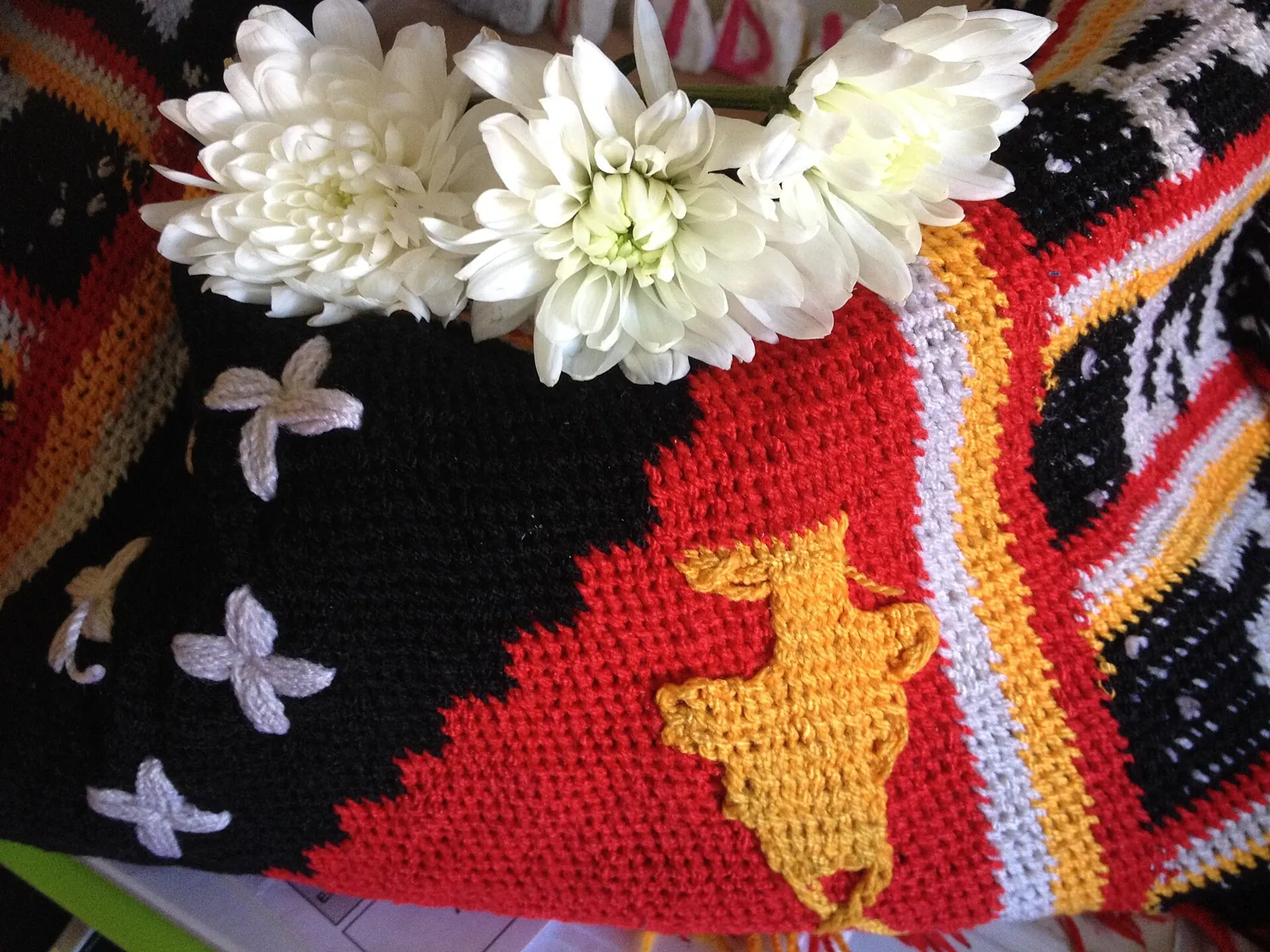
Image credits. Top image: Bilum - panoramio by Papua New Guineans -…, CC BY 3.0, via Wikimedia Commons
Spotted something out of date or a gift that's no longer available? Tell our editors — we review every correction.



