Gift Etiquette in the Marshall Islands: Kemem, Homes and Respect
Home visits in the Marshall Islands don't call for a gift, but a kemem first-birthday party does. Here is how gifting, food and respect work for visitors.
We independently research every pick. If you buy through our links we may earn a small commission, at no extra cost to you. Affiliate disclosure.
Quick answer
In the Marshall Islands you are not expected to bring a gift to a private home; just take your shoes off and accept the food you're offered. Gifts matter most at community events. The big one is the kemem, a child's first-birthday party, where guests traditionally give gifts or place money on the baby's mat. If a traditional leader offers you food or a gift, accept it; refusing is considered offensive.
- Home visit No gift expected; shoes off
- Kemem (first birthday) Cash or a gift for the child
- Never Refuse food or gifts from a traditional leader
- Day of rest Sunday
The Marshall Islands is a nation of atolls and islands in the central Pacific with a matrilineal society, in which land rights pass through women. Most Marshallese are Christian, and prayers open ceremonies, meetings and meals. Traditional leaders (iroij) and church leaders are recognized ahead of government officials at ceremonies.
What to give
Visiting a home
According to the Pacific Community's etiquette guide, guests invited to a private home are not expected to bring gifts, and the setting is generally informal. If you want to thank a family who has hosted you, a small item from your home country or a treat for the household is a kind gesture, but it isn't required.
At a kemem (first birthday)
The kemem celebrates a baby's first birthday. It grew out of a time when many infants did not survive their first year, so reaching one was a major milestone; the name is linked to kemejmej, "to remember." Extended family, friends and the wider community attend, sometimes traveling from other islands, and the host family feeds everyone. Elders recall that guests traditionally gave gifts to bless the child. Today, near the end of the party, guests often line up, sing "Happy Birthday" and place money on the child's mat.
At community events
Visitors may be invited to feasts, Sunday church, birthdays, funerals, weddings or local council meetings. Groups often sing and give guests local gifts to show appreciation, so be ready to receive graciously and, if a speech is made for you, to reply with one of your own.
Cash for a kemem
Why it works: Placing money on the child's mat is a common way for guests to take part in the first-birthday celebration.
Skip it if: the family has asked for something different; follow their lead.
A gift for the baby
Why it works: Giving gifts to bless the child is the older kemem tradition, and clothing or a keepsake is always welcome.
Skip it if: you are unsure of local customs at that particular family's event; cash on the mat is the simpler choice.
A small gift from your home country
Why it works: It is a natural way to thank a host family or community group that has welcomed you.
Skip it if: it is a casual home visit; no gift is expected.
More ideas for little ones are in our gifts for kids and birthday sections.
What to avoid
- Refusing food or gifts from traditional leaders. Sharing food is a sign of great respect, and refusing what a leader offers is considered offensive.
- Standing above or stepping over seated people. It is rude to stand over people who are sitting. When you pass in front of leaders, bend down or lower your head and say "Jolok bwod" (excuse me).
- Loud activity or work on Sunday. Sunday is a day of rest. Rules are looser on Majuro, but most people still observe it.
- Immodest dress. Dress is casual but modest. For church, women wear skirts below the knee and blouses that aren't short-sleeved; men wear long pants and a button-up shirt.
- Swimming at private beaches. Ask locally where to swim so you don't trespass.
How to give and receive
- Take your shoes off before entering a home, and follow your host's lead.
- Accept food. If you're not hungry, eat a small amount and take the rest with you. Prayers are always said before meals.
- Receive gifts graciously. When a group sings for you or gives you local gifts, thank them warmly. If a speech is made on your behalf, reply with a short speech.
- Apologize for standing. If you stand to speak at a ceremony, it is courteous to apologize for standing up.
- Ask about protocol first. Before a formal occasion, ask your host how traditional leaders should be addressed and where to sit. Sit quietly and ask permission before speaking.
- Greet simply. A handshake, a wave or a verbal "Iakwe" (hello) all work.
Holidays and occasions
Christmas (December 25) and Gospel Day (first Friday in December)
Church life shapes the holiday season, and Gospel Day is a public holiday in early December. Christmas is a time for church, family and food; see our Christmas guides for gift ideas.
Kemem and other family milestones
First birthdays are among the biggest family celebrations. Funerals and weddings are also community events where visitors may be invited; ask the family what is appropriate.
National holidays
Public holidays include New Year's Day, Remembrance Day (March 1), Constitution Day (May 1), Fishermen's Day (first Friday in July), Manit Day (last Friday in September), Presidents' Day (November 17) and New Year's Eve. These are civic occasions rather than gift-giving days. Good Friday is also a holiday, so its date changes with Easter.
Business gifting
For official visits, the Ministry of Foreign Affairs and Trade is usually the first point of contact, and outer-island work is coordinated through the local senator or mayor. Meetings and events open and close with prayer, and traditional and church leaders are recognized first at ceremonies.
A modest gift from your organization or home country is a pleasant gesture after a visit or as thanks for hospitality. Keep it low in value. Anti-bribery laws in the Marshall Islands, and often in your home country, can apply to gifts and hospitality, especially for officials, and many organizations set their own limits. Our business gifts section has general guidance.
Frequently asked questions
Do I need to bring a gift to a Marshallese home?
No. Guests at private homes are not expected to bring gifts. Take off your shoes and accept the food you're offered.
What is a kemem?
A celebration of a child's first birthday, with food, music, dancing and gifts. Guests often place money on the child's mat near the end of the party.
How much money should I give at a kemem?
There is no fixed amount. Give what fits your relationship with the family, and ask a relative if you are unsure.
Is it rude to refuse food in the Marshall Islands?
It is better to accept. If you're full, eat a little and take the rest home. Refusing food or gifts from a traditional leader is considered offensive.
Exploring Micronesia? See our guides to Micronesia and Kiribati, or browse all country etiquette guides.
Sources
- Pacific Community (SPC) — Cultural Etiquette in the Pacific: Guidelines for staff working in Pacific communities (2020). library.sprep.org
- The Coconet — Kemems: The Big Marshallese Celebration. thecoconet.tv
- Wikipedia — Public holidays in the Marshall Islands. en.wikipedia.org
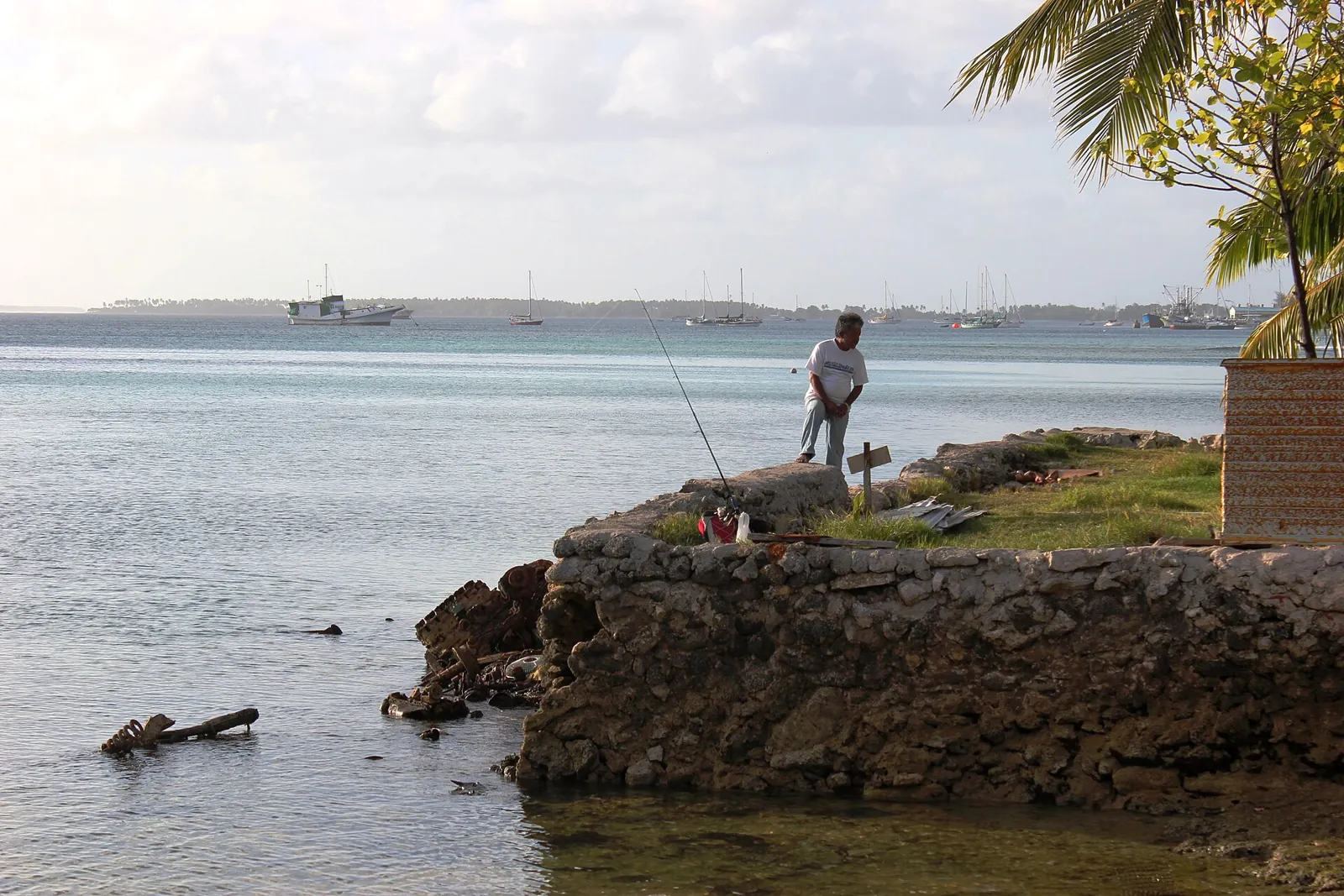
Image credits. Top image: A fisherman on Majuro, Marshall Islands, February 2012. Photo- Erin Magee - DFAT (12426170833) by Erin Magee/DFAT, CC BY 2.0, via Wikimedia Commons
Spotted something out of date or a gift that's no longer available? Tell our editors — we review every correction.



