Gift Etiquette in Micronesia: Visits, Sakau and Island Customs
In the Federated States of Micronesia, a gift from home is welcome at weddings and cultural events, and accepting food matters more than any present. Here is what to know.
We independently research every pick. If you buy through our links we may earn a small commission, at no extra cost to you. Affiliate disclosure.
Quick answer
In the Federated States of Micronesia (FSM), gifts are not expected on an ordinary home visit, but they are appreciated at cultural events, weddings and funerals, and a gift from your home country is a good choice. Always accept offers of food, take a small amount of sakau (kava) or betel nut if it is shared with you unless you have a good reason not to, and dress modestly. Each of the four states, Yap, Chuuk, Pohnpei and Kosrae, has its own customs.
- Home visit No gift expected; follow your host's lead
- Events, weddings, funerals A gift from your home country
- Food Always accept offers
- Sunday Strictly observed, especially in Kosrae
The FSM is spread across many islands in four states, each with its own language, culture and traditional leadership. Yap and Pohnpei have paramount chiefs, Chuuk has lineage heads, and in Kosrae church leaders now play a large role. Extended family and clan ties are central everywhere. Most people are Christian, roughly 55 percent Catholic and 42 percent Protestant, and church is a major part of community life. Because customs differ so much between islands, ask your host before any formal occasion.
What to give
Visiting a home
People in the FSM are known for being generous and welcoming toward visitors. In the home, general courtesy applies, and the Pacific Community's etiquette guide advises following your host's lead. Gifts are not expected, so a home visit doesn't require one. If you are staying with a family, a small, useful gift or a treat from home is a kind thank-you.
Cultural events, weddings and funerals
Gifts are not expected at these occasions either, but they are always appreciated. A gift from your homeland is considered appropriate. Something that represents where you come from, such as a local food specialty, a book of photos or a craft item, is easy to give and to receive.
Ceremonial exchange
Traditional exchange still matters. Yap is famous for its stone money (rai), large carved discs whose value depends on their size and history and whose ownership is tracked by the community. These belong to customary exchanges between families and villages, not to visitor gifting, but they show how much meaning gifts carry in Micronesian life.
A gift from your home country
Why it works: It is the type of gift the Pacific Community guide recommends for cultural events, weddings and funerals.
Skip it if: it is a casual visit to a home; no gift is expected.
Food to share at a gathering
Why it works: Food is central to hospitality, and a contribution to a shared meal is easy to accept.
Skip it if: your hosts are providing a feast; ask first so you don't duplicate their plans.
A thank-you gift for a host family
Why it works: If you have stayed with a family or been helped by a community, a modest, practical gift is a warm way to say thanks.
Skip it if: it is expensive or showy; modesty is valued.
Need inspiration? See our food gifts and thank-you gift ideas.
What to avoid
- Refusing food. Offers of food should always be accepted.
- Turning down sakau or betel nut without reason. In Yap and Pohnpei these are commonly shared. It is advisable to accept a small amount unless you have very good reasons not to. Note that tobacco, sometimes soaked in vodka, is often added to betel nut.
- Working, swimming or fishing on Sunday in Kosrae. These activities are illegal there on Sundays, and Sunday is strictly observed across the FSM.
- Revealing clothing. It is courteous for women to cover their thighs. For church, men should not wear shorts, and women should cover their shoulders and wear a skirt or dress at or below the knee.
- Speaking out of turn at ceremonies. At a sakau ceremony, wait to be asked before you stand and speak.
How to give and receive
- Follow your host's lead. Customs vary by state and even by island, so watch what others do.
- Sit on the floor if no chair is offered. Sit cross-legged.
- Accept food, and eat with your hands if needed. Eating with your hands is accepted, especially if no cutlery is offered. Prayers are often said before meals.
- Greet simply. A smile and a handshake are enough when meeting people for the first time. Learning "thank you" in the local language helps: kalahngan in Pohnpeian, kulo in Kosraean, kilisou in Chuukese and kammagar in Yapese.
- Respect traditional leaders. In Pohnpei and Yap, traditional leaders are recognized before the state's head of government at ceremonies.
Holidays and occasions
Christmas (December 25)
Christmas is a public holiday in all four states and centers on church and family. A contribution to a shared meal or small gifts for children are thoughtful; see our Christmas guides.
National holidays
Independence Day (November 3), Constitution Day (May 10) and Culture Day (March 31) are observed nationwide. These are civic celebrations rather than gift-giving occasions.
State holidays
Each state has its own holidays. Yap observes Yap Day (March 1–2), and Kosrae marks Gospel Day (August 21). Good Friday is observed in Chuuk and Pohnpei, so its date changes with Easter.
Sakau ceremonies, weddings and funerals
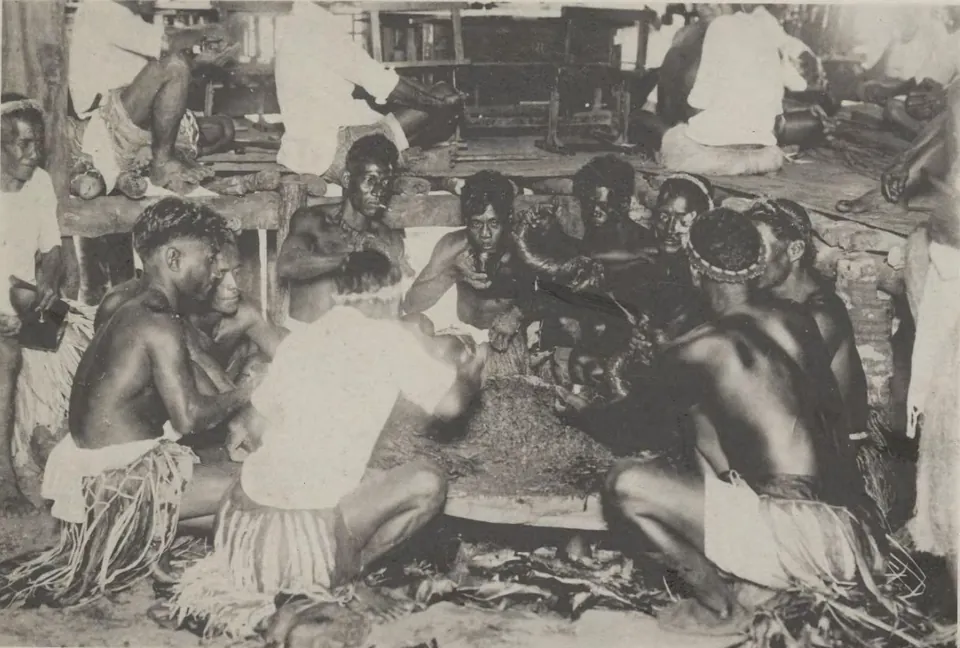
A sakau ceremony may be held for weddings, funerals, special services, tributes to Pohnpei's paramount chiefs, or the inauguration of a president or governor. In Yap, Chuuk and Kosrae it may come with food, betel nut and socializing, and in Kosrae with singing and prayers. Follow your hosts' instructions.
Business gifting
Government structure in the FSM resembles that of the United States, and the national government has adopted many US protocol practices. At ceremonies, however, traditional leaders are given a place of honor. If you work with a community, ask the organizers about protocol before the event.
Business gifts are not required. A modest gift from your organization or home country is a pleasant gesture. Keep the value low; anti-bribery laws in the FSM, and often in your home country, can apply to gifts and hospitality, especially for officials, and many organizations have their own limits. Our business gifts section has general guidance.
Frequently asked questions
Should I bring a gift to a home in Micronesia?
Gifts are not expected on a home visit. Follow your host's lead and accept any food you are offered.
What is a good gift for a Micronesian wedding or funeral?
Gifts are appreciated though not expected. Something from your home country is considered appropriate.
Do I have to drink sakau or chew betel nut?
It is advisable to accept a small amount when it is shared unless you have a very good reason not to, such as health or religious reasons.
What is Yap stone money?
Large carved stone discs (rai) still used in customary exchanges. Their value depends on size and history, and ownership is known by the community.
Traveling around Micronesia? See our guides to Palau and the Marshall Islands, or browse all country etiquette guides.
Sources
- Pacific Community (SPC) — Cultural Etiquette in the Pacific: Guidelines for staff working in Pacific communities (2020). library.sprep.org
- Wikipedia — Culture of the Federated States of Micronesia. en.wikipedia.org
- Wikipedia — Public holidays in the Federated States of Micronesia. en.wikipedia.org
Image credits. Top image: Drinking Sakau, Pohnpei (from a book published in 1935) by Unknown author Unknown author, Public domain, via Wikimedia Commons
Spotted something out of date or a gift that's no longer available? Tell our editors — we review every correction.



