Gift Etiquette in Kiribati: Maneaba Customs, Gifts and Manners
In Kiribati, gifts center on the maneaba meeting house, where elders receive a customary mweaka and cash envelopes mark special occasions. Here is what visitors should know.
We independently research every pick. If you buy through our links we may earn a small commission, at no extra cost to you. Affiliate disclosure.

Quick answer
In Kiribati, gifts matter most at community events in the maneaba (meeting house). On a first visit to a maneaba it is customary to bring a mweaka, traditionally a tin of tobacco shared among the older men, and some occasions call for a cash gift in an envelope. Casual home visits are relaxed: accept the refreshments you are offered, don't leave too early, and dress modestly.
- Maneaba visit A mweaka (customary gift) for the elders
- Cash gift About AUD 20–50 in an envelope, if expected
- Greeting "Mauri" with an upward nod
- Big occasion Independence Day, July 12
Kiribati (pronounced roughly "KIR-ee-bas") is a nation of low-lying atolls spread across the central Pacific. Its people, I-Kiribati, typically live in extended families, and elders are treated with great respect; village decisions rest with the unimwane, the council of elders. Roughly half the population is Catholic and nearly half Protestant, with smaller churches also present. Kiribati uses the Australian dollar. The guidance below is general, and customs vary between islands, so ask your host when in doubt.
What to give
At the maneaba
The maneaba is the most important building in a community, used for meetings, feasts and celebrations. Special occasions are marked with a botaki (feast) there, usually with a written invitation delivered a few days in advance. According to the Pacific Community's etiquette guide, when you visit a maneaba for the first time the convention is to bring a mweaka, a customary gift traditionally made up of a tin of tobacco that is divided among the older men. For some occasions a cash donation is expected; the same guide suggests AUD 20–50 in an envelope is generally appropriate, but check with your host.
At a welcome ceremony
If a community holds a welcome for you or your group, it may include speeches by elders, a prayer, a feast and dancing. The appropriate response is a short speech and a gift; cash in an envelope is suitable. Stand and address your thanks to the unimwane.
For a host family
Homes are for casual visiting, conversation and tea rather than formal entertaining, so a home visit doesn't require a gift. A small, useful present or a treat from your own country is a kind gesture if you are staying with a family or have been helped by them.
Cash gift in an envelope
Why it works: It is the recognized gift for some maneaba occasions and the suitable response when a welcome is held in your honor.
Skip it if: your host says no contribution is expected; ask first.
A mweaka for the elders
Why it works: Bringing a customary gift on your first visit to a maneaba shows respect for the elders and local protocol. A tin of tobacco is the traditional form.
Skip it if: you are not comfortable giving tobacco; ask your host whether another gift would be acceptable.
A small gift from home for your host family
Why it works: It thanks a family for their hospitality without turning a casual visit into a formal one.
Skip it if: it is large or expensive; humility is highly valued.
What to avoid
- Touching the top of someone's head. The head is very personal, and the top of the head is taboo.
- Ignoring an invitation to join a group. If a host calls you over as you pass, it is considered rude not to accept straight away, even if you had other plans.
- Leaving too early. Some hosts go to great lengths to be hospitable, and cutting a visit short may seem impolite.
- Staring at people of higher status. Eye contact is limited, and humility is admired.
- Revealing clothing. Small or revealing tops are not acceptable. Visiting women can carry a lavalava (sarong) to wrap around their legs when sitting.
- Public affection between couples. Opposite-sex couples don't show affection in public, though friends of the same sex often hold hands.
How to give and receive
- Accept refreshments. Taking what is offered shows appreciation for your host's hospitality. A shared hand-rolled cigarette may be offered; it is not impolite to refuse that.
- Sit where you are shown. A host may lay down a clean mat and tell you where to sit. In the maneaba, each family has its own place, and seating follows custom.
- Greet with "Mauri." People usually greet with an upward nod and "Mauri" rather than a handshake, except at official gatherings.
- Eat what you're served. Finishing your plate is good manners, and accepting a second helping compliments the cook. Grace is said before meals.
- Respond to speeches. If a ceremony is held in your honor, expect to stand and reply, directing your remarks to the elders.
- Call out on arrival. On some southern islands it is customary to call out for the man of the house from a distance before approaching.
Holidays and occasions
Independence Day (July 12)
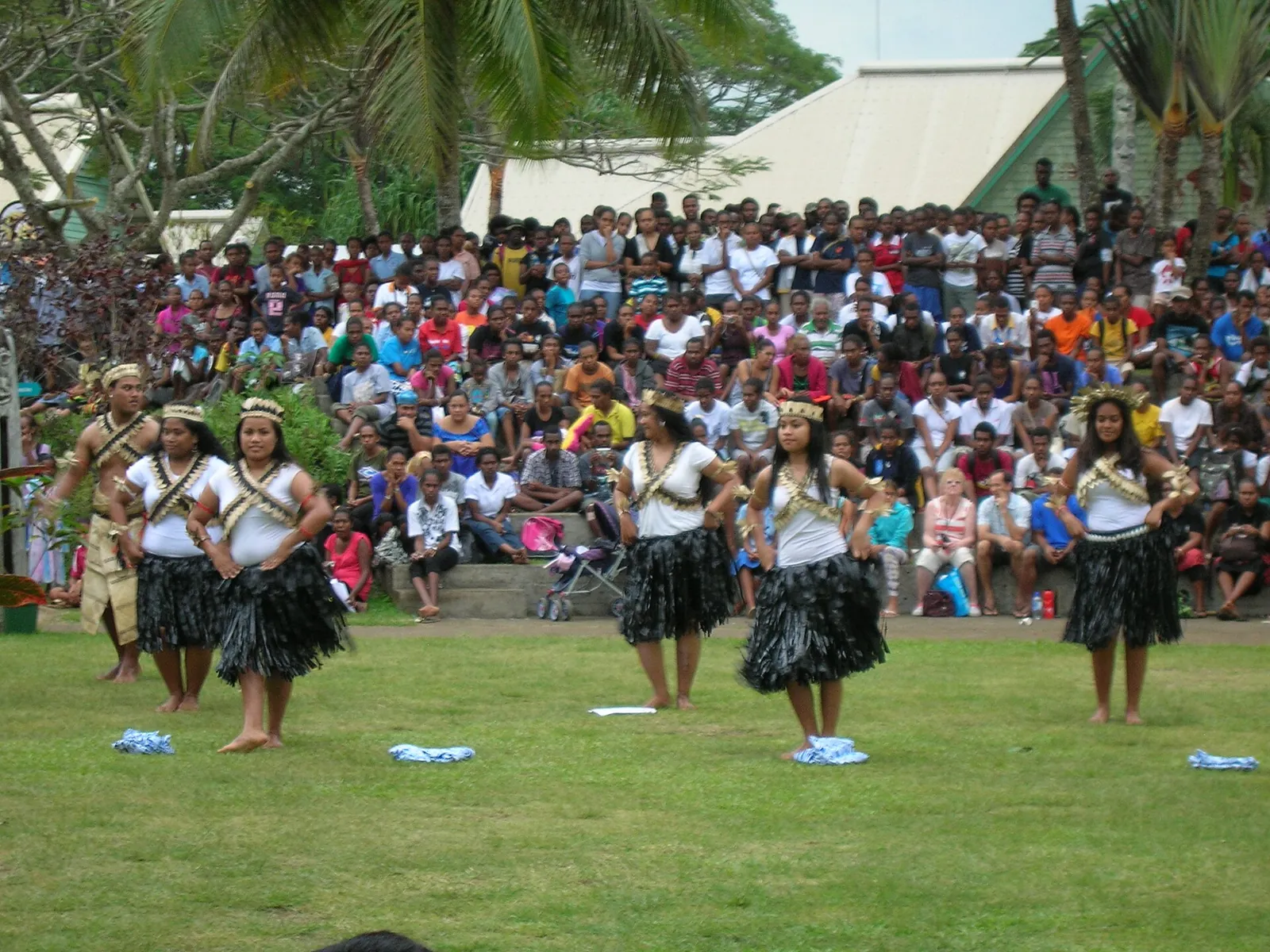
The most important national celebration marks independence from Britain in 1979 with sports, parades and feasts. It sits within a cluster of July holidays that also includes Gospel Day and National Culture and Senior Citizens Day, so many people have several days off. If you are invited to a community celebration, follow the maneaba customs above.
Christmas, Easter and New Year
Christmas, Easter and New Year's Day are national holidays, and church is central to all of them. Attending a service is not expected of visitors but is appreciated; dress conservatively. A contribution to a family meal or small gifts for children are thoughtful at Christmas.
National Youth Day (early August)
Youth Day is another national holiday, marked mainly with community events rather than gifts. Christmas and Boxing Day, Good Friday and Easter Monday are also public holidays.
Feasts and family celebrations
Feasts are the heart of celebrations, with prestige foods such as giant swamp taro, crayfish, giant clam, pig and chicken on display. Food, cash contributions and speeches are the main ways guests honor the occasion.
Business gifting
Official and project work usually begins with a meeting with the island's traditional leaders, arranged through the unimwane. These meetings are typically informal, held seated on a mat, and do not involve a gift exchange; the purpose is to talk. An interpreter may be needed on outer islands.
If you do give a business gift, keep it modest and symbolic, such as something representing your organization or home country. Anti-bribery laws in Kiribati, and often in your home country, can apply to gifts and hospitality, especially for public officials, and many organizations set their own limits. Our business gifts section has general guidance.
Frequently asked questions
What is a mweaka?
It is a customary gift brought on a first visit to a maneaba. Traditionally it is a tin of tobacco, divided among the older men.
How much cash should I give at a Kiribati ceremony?
For occasions where a cash donation is expected, about AUD 20–50 in an envelope is generally appropriate, but ask your host.
Do I need to bring a gift to a home in Kiribati?
Not usually. Home visits are casual. Accepting refreshments and staying a while matter more than a gift.
How do people greet each other in Kiribati?
Usually with an upward nod of the head and "Mauri." Handshakes are mostly for official events or seeing someone off.
Planning more Pacific travel? See our guides to the Marshall Islands and Fiji, or browse all country etiquette guides.
Sources
- Pacific Community (SPC) — Cultural Etiquette in the Pacific: Guidelines for staff working in Pacific communities (2020). library.sprep.org
- Countries and Their Cultures — Kiribati. everyculture.com
- Wikipedia — Public holidays in Kiribati. en.wikipedia.org
Image credits. Top image: Maneaba in Abemama, Kiribati by Rafael Ávila Coya, CC BY-SA 3.0, via Wikimedia Commons · In-article image: Kiribati dancers (7754772046) (2) by Julie Lyn from Washington, DC, USA, CC BY 2.0, via Wikimedia Commons
Spotted something out of date or a gift that's no longer available? Tell our editors — we review every correction.




