Gift Etiquette in Fiji: Sevusevu, Host Gifts and Village Customs
From the kava sevusevu offered to a village chief to food shared with a host family, here is how gifts work in Fiji and the village customs every visitor should know.
We independently research every pick. If you buy through our links we may earn a small commission, at no extra cost to you. Affiliate disclosure.
Quick answer
When you visit a Fijian home, bring something to share: food, something for the children or a small item from your own country. If you visit a village, the customary gift is a sevusevu of yaqona (kava) root, presented to the chief to ask permission to be there. Hold gifts out with both hands, take your hat and shoes off in a village home, and never touch anyone's head.
- Home visit Food, something for the children, or an item from home
- Village visit Yaqona (kava) root as a sevusevu
- Hands Hold gifts out with both hands
- Big gift times Christmas, Diwali, weddings, village feasts
Fiji's population includes indigenous Fijians (iTaukei), Indo-Fijians, and people of European, Chinese and other Pacific Island heritage. According to the 2007 census cited by Cultural Atlas, about 64.5 percent of people are Christian (mostly Methodist or Catholic), 27.9 percent Hindu and 6.3 percent Muslim. Customs differ between a Suva apartment, an Indo-Fijian family home and a rural village, so follow your host's lead.
What to give
Gift giving is central to Fijian life, often in the form of food at feasts, and useful gifts are appreciated. Cultural Atlas recommends bringing something when you visit someone's home, such as food, something for their children, or an item from your own home.
Visiting a village: the sevusevu
Fijian villages are private property, so don't enter one without permission. On arrival, a visitor traditionally calls on the village chief or headman (turaga ni koro) and presents a sevusevu, a gift that asks for acceptance into the community. Yaqona (kava) root is the most customary sevusevu; the Pacific Community notes that a whole plant is the preferred form, though powdered yaqona is an acceptable modern substitute. Books, school supplies, children's toys or food are also appropriate. When you leave, it is courteous to thank the chief for the village's hospitality, and a farewell gift of yaqona is customary.
For hosts, friends and in-laws
Food to share is always welcome, as are books or school supplies for children and a small, useful gift from your own country. In Indo-Fijian homes, a box of sweets or fruit is a safe and friendly choice.
Among indigenous Fijians, the most precious ceremonial gift is the tabua, a sperm whale tooth presented at marriages and important rituals. It belongs to formal family and village exchanges; visitors are not expected to give one.
Yaqona (kava) root for a village sevusevu
Why it works: It is the customary introductory gift to a village chief, and it shows you understand local protocol. Ask your guide what form and amount suit the village.
Skip it if: you are visiting a city home rather than a village; food or a gift from home fits better.
Books or school supplies for the children
Why it works: Cultural Atlas lists these as appropriate gifts, and they are useful in any household.
Skip it if: you don't know whether there are children in the home; food is the safer default.
Food to share
Why it works: Meals are communal in Fiji, and food is the most common form of gift.
Skip it if: your hosts are Hindu or Muslim and you are unsure of their diet; choose fruit or packaged sweets.
A small item from your home country
Why it works: It is personal, easy to pack and one of the gifts Cultural Atlas suggests for a home visit.
Skip it if: it is flashy or expensive; useful beats showy.
What to avoid
- Wearing a hat in a village. Traditionally only the chief wears a hat there, and wearing one can be taken as an insult. Sunglasses and shoulder bags are also best put away.
- Touching someone's head. The head is considered the most respected part of the body.
- Entering a village without permission. Villages are private property. Announce yourself and ask to see the headman.
- Revealing clothing in villages. Women should cover their shoulders and knees; women wearing pants are advised to wrap a sulu (sarong) over them.
- Walking in front of seated people. Pass behind them and say "Tilou" (excuse me). Don't sit or stand in doorways.
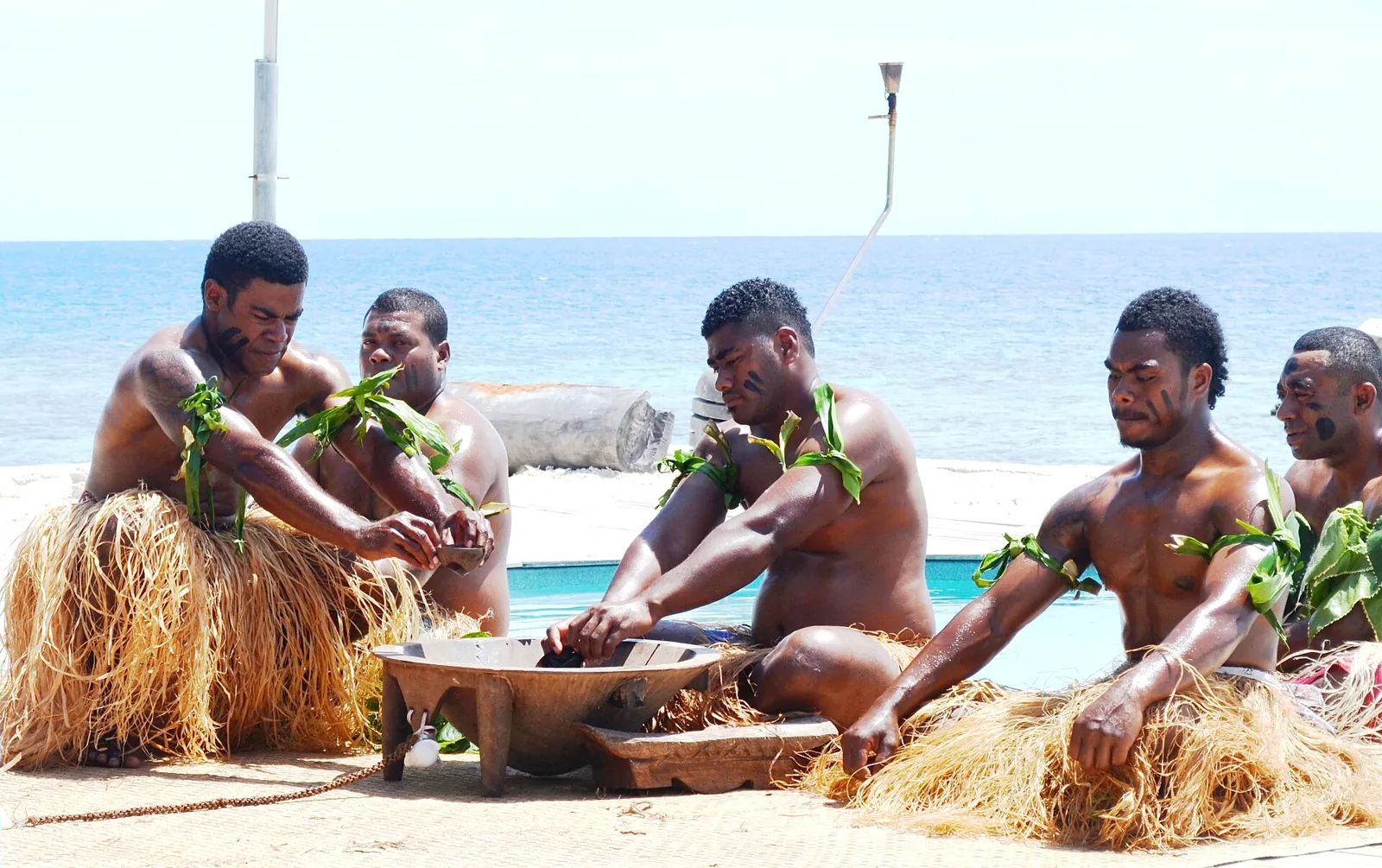
- Sitting in front of the kava bowl. At a yaqona session, seating follows rank, so sit where you are asked and avoid the space in front of the tanoa unless invited.
- Assuming what everyone eats or drinks. Most Indo-Fijians are Hindu and some are Muslim, so ask before bringing meat dishes or alcohol to their homes.
How to give and receive
- Use both hands. Hold a gift out with both hands rather than one. Presentation styles vary by occasion and region, so follow your guide.
- Take your shoes off. Remove shoes before entering a Fijian home, stoop as you move around inside and sit cross-legged (women often sit with legs to the side). Sitting with legs stretched out is impolite.
- Clap after you sit. At a ceremony, after shaking hands with the chief, sit down and clap with cupped hands (cobo) a few times.
- Accept kava if you can. Drinking yaqona with the chief at a welcome is good manners, but you may decline politely.
- Handle food offers gracefully. It is polite to decline a first offer of food, then accept if your host insists. Wait for the meal to be blessed before eating. If you can't finish, ask to take some with you; it honors your host's generosity.
- Say thank you in Fijian. "Vinaka" (thank you) or "vinaka vakalevu" (thank you very much) is always appreciated.

Holidays and occasions
Christmas and Boxing Day
For Fiji's Christian majority, Christmas centers on church and family, and Boxing Day (December 26) is a public holiday. A contribution to the family meal or small gifts for children are good choices. See our Christmas guides for ideas.
Diwali (October or November; date varies)
The Hindu festival of lights is a public holiday in Fiji and is celebrated widely across communities. The date follows the Hindu lunar calendar and changes each year. If Hindu friends invite you, sweets or fruit make a thoughtful contribution.
Prophet Muhammad's Birthday (date varies)
This is also a public holiday, following the Islamic lunar calendar, so the date shifts each year.
Fiji Day (October 10)
Fiji Day marks both the 1874 cession to Britain and independence in 1970. The week before, known as Fiji Week, includes religious and cultural events. It is a civic celebration rather than a gift-giving day.
Weddings, feasts and Sundays
Among indigenous Fijians, feasts mark special occasions with large quantities of food; among Indo-Fijians they are usually reserved for religious festivals and weddings. Sunday is widely kept for worship and family, so it is not a good day for business calls or noisy activities in villages.
Business gifting
Business in Fiji's towns is more punctual than village life, but relationships and courtesy still matter. A gift is not expected at a first meeting. If you give one, choose something modest from your home country or company and present it with both hands. Visitors whose work takes them into a village should present a sevusevu to the chief before starting, ideally with advance notice.
Keep business gifts low in value. Anti-bribery laws in Fiji, and often in your home country, can apply to gifts and hospitality, particularly for government officials, and many organizations set their own limits. Check policies on both sides. Our business gifts section has general guidance.
Frequently asked questions
What is a sevusevu?
It is a customary gift, usually yaqona (kava) root, presented to a village chief or headman on arrival to ask permission to be in the village. A whole plant is preferred; powdered kava is an accepted substitute.
What should I bring to a Fijian home?
Food to share, something for the children such as books or school supplies, or a small item from your home country.
Do I have to drink kava?
Accepting is good manners, but you may decline politely.
Why shouldn't I wear a hat in a Fijian village?
Traditionally only the chief wears a hat in the village, so wearing one can be seen as disrespectful.
Is Diwali a holiday in Fiji?
Yes. Diwali is a public holiday in Fiji, and its date changes each year with the Hindu calendar.
Traveling around the Pacific? See our guides to Papua New Guinea and New Zealand, or browse all country etiquette guides.
Sources
- Cultural Atlas — Fijian Culture: Etiquette. theculturalatlas.org
- Cultural Atlas — Fijian Culture: Religion. theculturalatlas.org
- Pacific Community (SPC) — Cultural Etiquette in the Pacific: Guidelines for staff working in Pacific communities (2020). library.sprep.org
- Wikipedia — Public holidays in Fiji. en.wikipedia.org
Image credits. Top image: Fijian kava ceremony by Jaejay77, CC BY-SA 4.0, via Wikimedia Commons · In-article image: Namalata Village, Vanua Balavu, Fiji 1977 by Panoxis, CC BY-SA 4.0, via Wikimedia Commons
Spotted something out of date or a gift that's no longer available? Tell our editors — we review every correction.




