Gift Etiquette in Iran: Taarof, Host Gifts and Nowruz Customs
In Iran, how you offer a gift matters as much as what it is. Here is how taarof shapes giving and receiving, what to bring a host, and how gifts work at Nowruz.
We independently research every pick. If you buy through our links we may earn a small commission, at no extra cost to you. Affiliate disclosure.
Quick answer
When you visit an Iranian home, bring a small gift such as pastries, sweets or flowers, and wrap it as elegantly as you can. Offer it modestly, even apologizing for its shortcomings, and expect it to be set aside rather than opened in front of you. Under the politeness system called taarof, a recipient may first decline; insist warmly and the gift will be accepted. Use both hands, or your right hand. Never give alcohol to a devout Muslim, a Bahá'í or anyone you do not know well, and avoid pork. At Nowruz, the Persian New Year in March, elders give younger relatives gifts of money called eidi.
- Typical host gift $15 – $45
- Hands Both hands, or the right hand
- Opening Usually later, not in front of you
- Main gift season Nowruz (around March 21)
What to give
Iranian hospitality is generous: guests are often seated in the best-furnished room, offered the best seat and served more food than they can eat. A small gift is the expected way to return the kindness, and its presentation counts for a lot.
For a host
Pastries, sweets or flowers are the classic host gifts. Arrive on time, since punctuality is appreciated, and remove your shoes at the door if your host is barefoot. Greet elders first. Visits are reciprocal through a tradition called did-o bazdid, visiting and receiving return visits, so if a family hosts you, expect them to hope you will welcome them in turn.
For friends, in-laws and coworkers
With close friends and future in-laws, a thoughtful item for the home or something from your own country shows care. Keep it modest: taarof means people may offer more than they can afford, and an extravagant gift can create pressure to reciprocate. For coworkers, a box of sweets to share is easy and welcome.
A box of fresh pastries or sweets
Why it works: Pastries and sweets are a standard host gift and fit almost any household.
Skip it if: the fillings contain alcohol or gelatin of uncertain origin and the family is observant.
A bouquet of flowers
Why it works: Flowers are one of the usual gifts when visiting a home in Iran.
Skip it if: you cannot get them nicely wrapped; presentation matters.
A well-made item from your home country
Why it works: A craft, book of photographs or regional food specialty gives your hosts a story to tell and suits a first visit.
Skip it if: it shows alcohol or anything that could clash with religious values.
A small cash gift for Nowruz
Why it works: If you are close to a family, a small cash eidi for the children follows the Nowruz custom of elders giving money to younger relatives.
Skip it if: you are not part of the family's close circle; a box of sweets is safer.
Browse more food gifts for ideas that travel well.
What to avoid
- Alcohol for anyone you do not know well. Never give it to a devout Muslim or Bahá'í. Even with friends you know drink, be discreet.
- Pork or alcohol-based foods. These can offend observant Muslims.
- Bragging about the gift. Givers customarily downplay a gift's value; praising your own present comes across badly.
- Taking the first refusal at face value. A polite "I can't possibly" is part of taarof. Insist gently before giving up.
- Using the left hand. For many religious Iranians the left hand is for cleaning, so do not offer items with it.
- Feet on the table or toward elders. Putting your feet on the table is rude, and when seated on the floor do not stretch your legs toward others.
- Public criticism. Damaging someone's standing, or aberu, can have lasting consequences.
How to give and receive
- Wrap it beautifully. Elegant wrapping is expected and shows respect.
- Offer modestly. Say something like "it is nothing" or apologize for the gift's shortcomings.
- Use both hands. Giving and receiving with both hands is most respectful; if you use one, use the right.
- Decline once when receiving. If someone offers you a gift, a polite first refusal followed by warm thanks and praise is the gracious response.
- Expect gifts to be opened later. Do not wait for a reaction.
- Read offers carefully. Some offers, such as a shopkeeper waving away payment, are token courtesies; decline politely rather than accepting.
- Accept food, then accept again. Hosts will offer second and third helpings. Take small portions at first so you can accept more.
Holidays and occasions
Nowruz (Persian New Year)
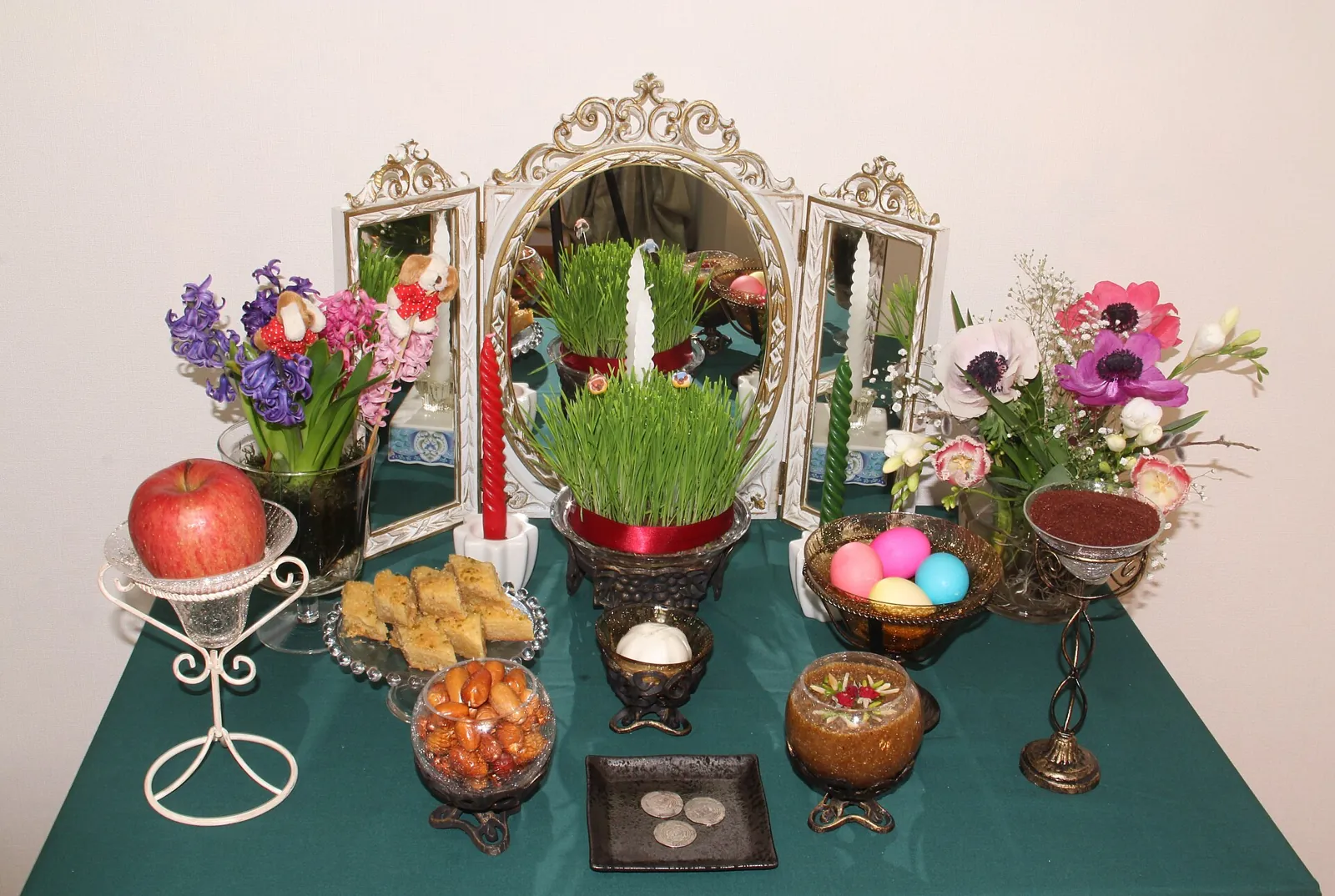
Nowruz begins on the first day of the Persian month of Farvardin, around March 21, at the spring equinox. It is a cultural rather than specifically Islamic festival. Families set a haft-sin table of seven items whose names begin with the letter S, such as sprouts, apples and coins. During the first days, younger relatives visit elders, who give them eidi, gifts of money. Many families also give eidi to people who serve the community, such as the mail carrier. Visits to relatives, friends and colleagues usually continue until the thirteenth day, Sizdah Bedar, when families head outdoors. If you are invited during Nowruz, a box of sweets or flowers is a perfect gift.
Islamic holidays
Most Iranians who identify with a religion are Shia Muslims, and holidays such as Ramadan and Eid follow the lunar calendar, so their dates shift each year. Some periods in the Shia calendar are times of mourning rather than celebration, so ask before planning anything festive.
Family occasions
Birthdays, weddings and new homes are all occasions for gifts. Follow the same rules: modest, well wrapped and offered with humility.
Business gifting
Business in Iran is built on relationships. Expect tea and informal conversation before business, and do not push for firm deadlines early on. Under taarof, enthusiasm is not the same as commitment, and silence is not always a refusal.
A small, modest gift is appropriate on special occasions or when you visit a counterpart's home. Present business cards with a Farsi translation on one side, use titles and surnames until invited otherwise, and greet with salaam. Where a handshake across genders is not appropriate, placing your right hand over your heart is a respectful greeting. Keep gifts modest, check company gift policies, and follow anti-bribery rules. Companies abroad should also check their own country's trade rules before sending goods. See our business gifts guide for general advice.
Frequently asked questions
What is taarof?
Taarof is a Persian system of politeness in which people put others first, downplay their own gifts and achievements, and often decline an offer before accepting it.
What should I bring to an Iranian home?
Pastries, sweets or flowers, elegantly wrapped. Avoid alcohol unless you know your host well and know they drink.
Can I give flowers in Iran?
Yes. Flowers are a common host gift when visiting a home.
What is eidi?
Eidi is money given by elders to younger relatives during Nowruz, usually when the younger generation visits to pay respects.
Should I open a gift in front of an Iranian host?
Gifts are usually not opened in front of the giver. Thank the giver warmly and open it later.
Compare customs with our guides to Turkey and Iraq, or browse all country guides.
Sources
- The Cultural Atlas — Iranian Culture: Etiquette. theculturalatlas.org
- The Cultural Atlas — Iranian Culture: Religion. theculturalatlas.org
- Commisceo Global — Iran Business Culture Guide. commisceo-global.com
- Iran Daily — Nowruz; timeless celebration of renewal and unity. irandaily.ir
Image credits. Top image: Haft Seen 97 by Roozitaa, CC BY-SA 4.0, via Wikimedia Commons · In-article image: Grand Bazaar, Tehran 12 by Antoine Taveneaux, CC BY-SA 4.0, via Wikimedia Commons
Spotted something out of date or a gift that's no longer available? Tell our editors — we review every correction.




