Gift Etiquette in Indonesia: What to Give, Avoid and How to Present It
What to bring to an Indonesian home, which gifts to avoid for Muslim, Chinese Indonesian and Hindu recipients, and how gifts work at Lebaran, Imlek and in business.
We independently research every pick. If you buy through our links we may earn a small commission, at no extra cost to you. Affiliate disclosure.
Quick answer
When you visit a home in Indonesia, bring a small, modestly priced gift such as cakes, cookies or fruit, and hand it over with your right hand or both hands. Most Indonesians are Muslim, so food gifts should contain no pork and ideally be halal, and alcohol is best avoided unless you know your host drinks. Chinese Indonesian, Hindu Balinese, Christian and other communities have their own customs, so think about who you are visiting. Gifts are usually opened later, not in front of you.
- Typical host gift $10 – $35
- Hands Right hand or both hands, never the left alone
- Opening Usually later, after the giver leaves
- Key occasions Lebaran (Idul Fitri), Imlek, Christmas, Galungan in Bali
What to give
Indonesians commonly bring a gift when they visit friends, and the gift usually has little monetary value. The thought and the gesture matter more than the price. Because Indonesia is so diverse, the right choice depends on the recipient's religion and ethnic background. When you are unsure, a box of packaged sweets with clear ingredient labeling is a safe default.
For a host
A box of cakes, cookies or pastries from a good bakery, or a basket of fruit, suits most households. For a Muslim family, choose food that is halal-certified or, at the very least, free of pork and pork fat or lard. Flowers are generally kept for special occasions such as weddings and funerals, so they are not the usual visiting gift.
For friends, coworkers and in-laws
For in-laws or elders, a well-presented food hamper or a quality item from your home country shows respect. For an office, a shared box of snacks is easier than individual gifts and avoids any suggestion of favoritism. For Chinese Indonesian friends, elaborate wrapping in red and gold is admired. For Hindu Indonesians, including many Balinese, bright wrapping works well, but avoid leather.
A box of bakery cakes or cookies
Why it works: Sweet snacks are the classic visiting gift and are easy to share across a household.
Skip it if: you cannot confirm the ingredients for a Muslim host; look for halal labeling and no lard.
A fruit basket
Why it works: Fresh fruit fits almost every religious and dietary rule and is a natural gift for elders.
Skip it if: you are visiting someone in the hospital who has dietary restrictions; ask the family first.
A Lebaran-style hamper
Why it works: Baskets or boxes of cookies, snacks and drinks are a familiar way to send good wishes when you cannot visit in person.
Skip it if: the recipient is a civil servant or official; see the business section.
A small specialty from your home country
Why it works: Local crafts, a photo book or regional treats are personal without being lavish.
Skip it if: it contains alcohol, pork or leather, or carries imagery that might clash with the recipient's faith.
For more ideas that travel well, see our food gifts section.
What to avoid
- Alcohol and pork for Muslim recipients. Islamic dietary rules prohibit them. This includes snacks made with pork oil, lard or gelatin of unknown origin.
- Non-halal food for observant Muslims. Stricter families only eat food prepared to halal standards, so check for certification.
- Leather and alcohol for Hindu recipients. Many Indian Indonesian and other Hindu families avoid them; leather is a particular concern.
- Clocks for Chinese Indonesian recipients. In Chinese, giving a clock sounds like attending someone's funeral.
- Knives, scissors and other sharp objects. They are widely read as cutting off the relationship.
- Umbrellas, handkerchiefs, mirrors, green hats and white or yellow flowers for Chinese Indonesian recipients. These are traditional bad-luck or mourning associations in many Chinese families.
- Expensive gifts early in a relationship. An overly costly gift can create an awkward obligation, and in business it can look like a bribe.
How to give and receive
- Use your right hand or both hands. Give and receive with both hands together or with the right hand alone. Do not pass anything with the left hand only.
- Do not expect the gift to be opened. Gifts are usually set aside and opened later, which spares everyone embarrassment.
- Expect a polite refusal from some recipients. A Chinese Indonesian host may decline two or three times before accepting. Offer again, gently.
- Match the wrapping to the recipient. Red and gold suit Chinese Indonesian families; bright colors suit Hindu families.
- Take your shoes off when your host does. Shoes usually come off before carpeted rooms and places of worship.
- Wait to be told to eat. At a meal, wait for your host's signal, pass food only with your right hand, and stay seated until everyone has finished.
Holidays and occasions
Lebaran (Idul Fitri)
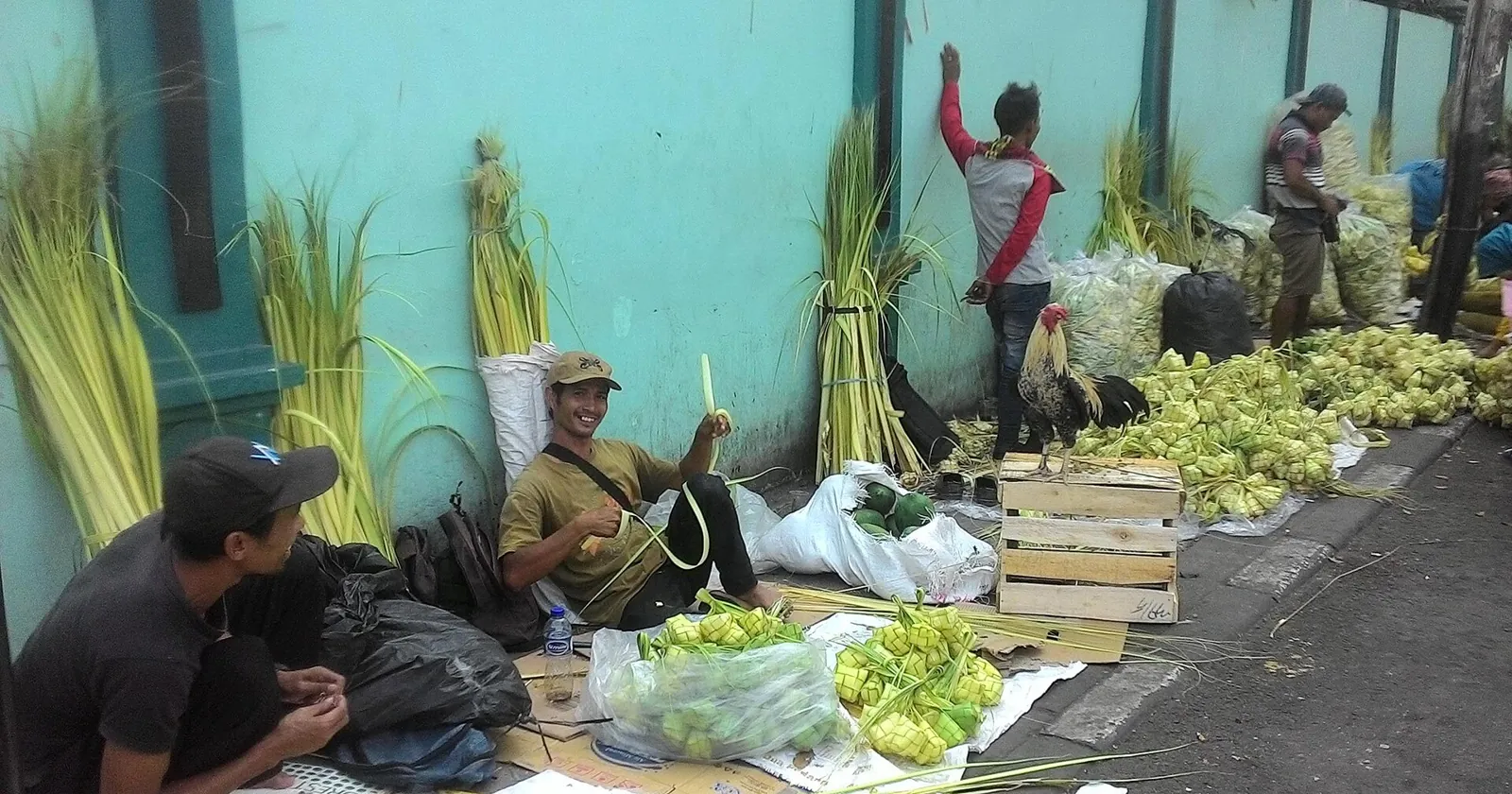
Lebaran is the Indonesian name for Eid al-Fitr, the end of Ramadan, and it is one of the country's biggest holidays. It falls on 1 Shawwal in the Islamic calendar, so the date moves earlier each year. Millions travel home (mudik) to ask forgiveness from parents and elders, and people greet each other with "mohon maaf lahir dan batin." Adults, especially married couples, give small amounts of money in colorful envelopes to children and younger relatives, and banks open counters for small notes in the days before. Because no one can visit everyone, people send parcel baskets or modern hampers of cookies, snacks and drinks. If you are invited to a Lebaran visit, a box of cookies or a hamper is ideal. Eid al-Adha is also called Lebaran in Indonesia and is a quieter, family-focused holiday.
Imlek (Chinese New Year)
Chinese Indonesians celebrate Imlek, which follows the lunar calendar, so the date varies each year, usually in January or February. Public celebration was restricted for decades; President Abdurrahman Wahid lifted the restrictions in 2000, and Imlek became a national holiday in 2003. Many families mark it with visits, food and red envelopes (angpao) for children. The Chinese gift taboos above apply. See our Lunar New Year guides for gift ideas.
Christmas
Christian Indonesians celebrate Christmas with church, family meals and visits. If you are invited, cakes, cookies or a hamper work well, and our Christmas guides have more ideas.
Galungan in Bali
In Bali, where most people follow Balinese Hinduism, Galungan celebrates the victory of good over evil. It follows the 210-day Pawukon calendar, so it comes around roughly twice a year on changing dates, and Kuningan follows ten days later. Families pray at temples, make offerings and visit relatives and friends, especially on the day after Galungan. Fruit and traditional rice cakes are typical gifts between families. If you are a guest, step around offerings on the ground and dress modestly near temples.
Business gifting
Gift-giving in Indonesian business is sensitive. Small, tasteful gifts such as a company-branded item or a box of treats for a team can help a relationship, but anything costly can look like an attempt to buy influence. Present gifts with the right hand or both hands, and keep religious rules in mind: no alcohol or non-halal food for Muslim colleagues.
Gifts to public officials are tightly controlled. Indonesia's Corruption Eradication Commission (KPK) tells civil servants and state officials to refuse gratuities linked to their position; a gift they cannot refuse must be reported to the KPK within 30 working days or it may be treated as a violation. The KPK repeats these warnings around Lebaran, when holiday parcels are common. Do not send hampers to officials, and check your own company's anti-bribery policy and any home-country rules before giving anything of value. Our business gifts guide has general advice.
Frequently asked questions
What should I bring to an Indonesian home?
A box of cakes or cookies or a fruit basket is ideal. For a Muslim host, make sure food is pork-free and preferably halal-certified.
Can I give wine to an Indonesian host?
Only if you know the host drinks. Avoid alcohol for Muslim hosts and for many Hindu hosts. A food gift is the safer choice.
What is a Lebaran parcel?
A basket or box of cookies, snacks and drinks sent to friends, family and colleagues around Idul Fitri, especially to people you cannot visit in person.
Why didn't my Indonesian friend open my gift?
Gifts are usually opened later, not in front of the giver. It is politeness, not a lack of interest.
Can I give a gift to an Indonesian government officer?
It is best not to. Officials are told to refuse gratuities and to report to the KPK any they cannot refuse.
For neighboring customs, see our guides to Malaysia and Singapore, or browse all countries.
Sources
- The Cultural Atlas — Indonesian Culture: Etiquette. theculturalatlas.org
- Wikipedia — Lebaran. en.wikipedia.org
- TheSmartLocal Indonesia — 8 Indonesian Lebaran traditions and customs explained. thesmartlocal.id
- Jakarta Globe — Gus Dur's legacy lives on each Lunar New Year. jakartaglobe.id
- Bali Untold — Galungan and Kuningan in Bali. baliuntold.com
- ANTARA News — State apparatus should uphold integrity to reject gratuities: KPK. en.antaranews.com
Image credits. Top image: Batik Trusmi Cirebon (23) by Fpangestuphotographer, CC BY-SA 4.0, via Wikimedia Commons · In-article image: Ketupat weaving 2 by Gunawan Kartapranata, CC BY-SA 4.0, via Wikimedia Commons
Spotted something out of date or a gift that's no longer available? Tell our editors — we review every correction.