Gift Etiquette in Malaysia: Malay, Chinese and Indian Customs
How to choose, wrap and present gifts for Malay, Chinese and Indian Malaysian hosts, plus what to bring at Hari Raya, Chinese New Year and Deepavali, and how business gifts work.
We independently research every pick. If you buy through our links we may earn a small commission, at no extra cost to you. Affiliate disclosure.
Quick answer
Bring a small gift such as fruit, sweets or a craft item when you visit a Malaysian home, take your shoes off at the door, and give and receive with both hands or the right hand. Tailor the gift to the recipient: halal food and no alcohol or pigskin for Malay Muslims, no clocks, sharp objects or sets of four for many Chinese Malaysians, and no leather or alcohol for Hindu Indian Malaysians. Gifts are usually opened later, and a polite first refusal is normal.
- Typical host gift $10 – $35
- Hands Both hands, or the right hand alone
- Opening Later, not in front of the giver
- Key festivals Hari Raya Aidilfitri, Chinese New Year, Deepavali, Christmas
What to give
Malaysia is a multicultural country. Malays, who are Muslim, form the largest community, alongside large Chinese and Indian communities and the many Indigenous peoples of Sabah and Sarawak. Each brings its own customs, so the best gift depends on who you are visiting. A small gift for the hostess, such as fruit, sweets or crafts, is widely appreciated, and visitors often drop by without much notice, so a simple gift is fine.
For a host
For a Malay family, any food must be halal; buy from a halal-certified bakery or choose sealed products with a halal logo. For a Chinese Malaysian family, mandarin oranges are a classic gift, especially at Chinese New Year. For an Indian Malaysian family, sweets are a safe choice, but remember that most avoid beef and many Hindus avoid leather.
For friends, coworkers and in-laws
Keep gifts modest. Malaysians feel a strong obligation to reciprocate, so an overly grand gift can embarrass the recipient. For in-laws and elders, presentation matters: wrap carefully in colors suited to the family's background. For coworkers, a shared box of halal treats works for everyone in a mixed office.
A box of halal cakes, cookies or sweets
Why it works: Food is the most common visiting gift, and halal-certified treats can be shared by Malay, Chinese and Indian guests alike.
Skip it if: you cannot confirm halal status for a Muslim host.
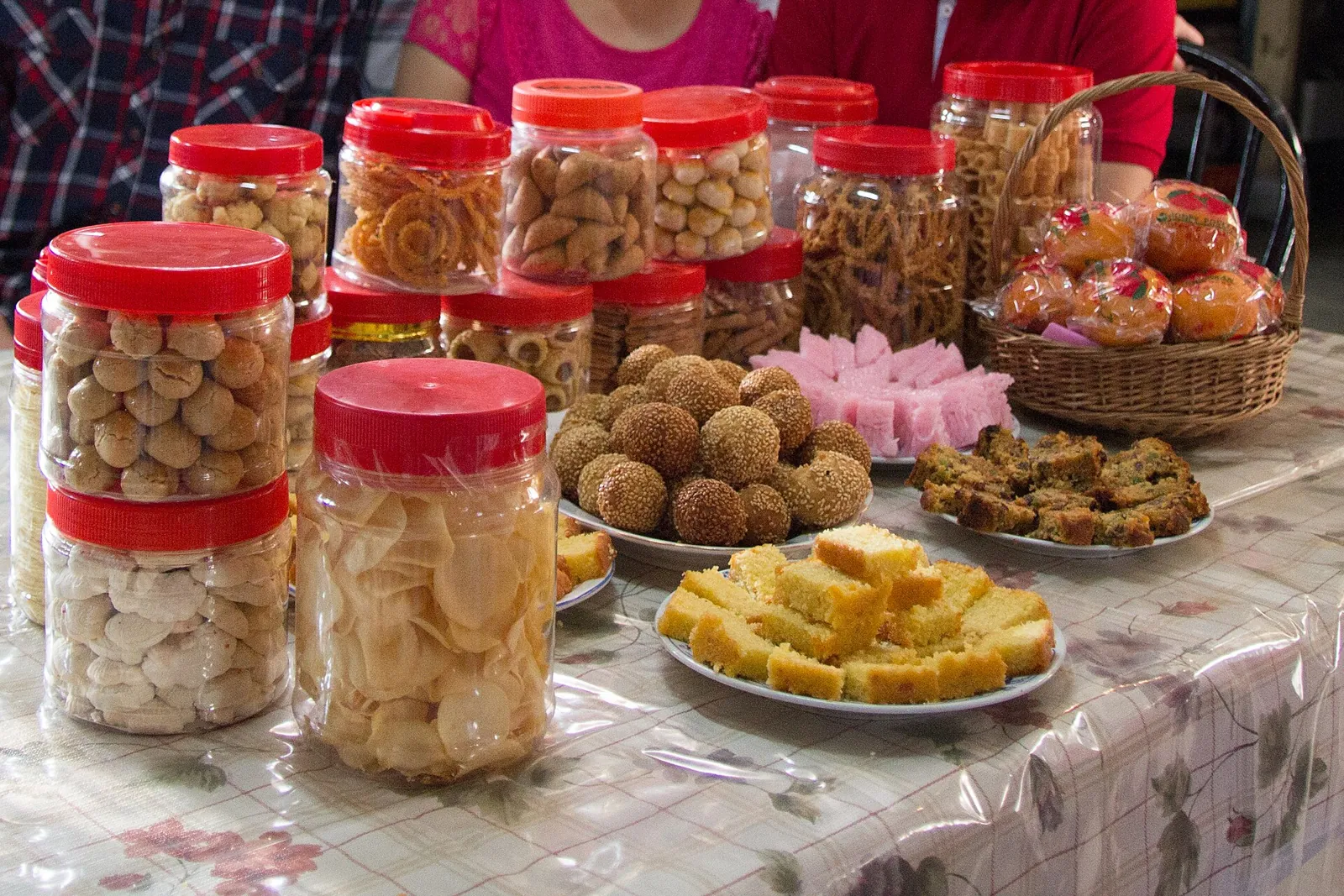
Mandarin oranges or a fruit basket
Why it works: In Cantonese, the mandarin orange is called kam, which sounds like "gold," so a box of them is a wish for prosperity. Fruit also suits almost every dietary rule.
Skip it if: the box contains four of anything for a Chinese family.
Indian sweets for Deepavali
Why it works: A box of traditional sweets is a warm, easy gift for Hindu friends during the festival season.
Skip it if: the sweets contain egg or other ingredients a strictly vegetarian family avoids; ask if unsure.
A small craft or specialty from your home country
Why it works: A modest, well-made item is personal and easy to accept.
Skip it if: it is made of leather or pigskin, contains alcohol, or shows dogs or pigs for a Malay recipient.
What to avoid
- Alcohol and pork for Malay Muslims. Islam prohibits them, so avoid gifts containing alcohol, items made of pigskin and any non-halal food.
- Images of dogs or pigs for Malay recipients. Many Malay Muslims consider these animals unclean, so avoid them on cards, toys or wrapping.
- White or yellow wrapping for Malay recipients. White is associated with mourning and death, and yellow is traditionally reserved for royalty.
- Knives and scissors. They represent severing the relationship, across communities.
- Sets of four and clocks for Chinese Malaysians. Four sounds like "death" in Chinese, and a clock gift sounds like attending a funeral.
- Flowers for Chinese Malaysians. They are often given to the sick or at funerals, so they are not a favored gift.
- Black, white or blue wrapping for Chinese Malaysians. These colors carry mourning associations; red, pink and yellow are better.
- Leather and alcohol for Hindu Indian Malaysians. Cattle are sacred in Hinduism, and many Hindu families do not drink. Most Indian Malaysians also avoid beef.
- Frangipani for Indian Malaysians. The flower is used at funerals.
How to give and receive
- Use both hands, or the right hand. The left hand is traditionally reserved for cleansing and should not be used alone to give or receive.
- Expect a polite refusal. It is polite to decline a gift at first before accepting. Offer again, gently.
- Let the recipient open it later. Gifts are not usually opened in front of the giver.
- Choose the right wrapping. Red, pink or yellow for Chinese families; red, yellow or green for Indian families; avoid white for Malay families.
- Give money in even amounts. Even sums are considered lucky in Chinese and wider Malaysian custom.
- Take off your shoes. Shoes come off before entering a home. Wait for your host to invite you to eat, and pass food with your right hand.
Holidays and occasions
Hari Raya Aidilfitri
Hari Raya Aidilfitri marks the end of Ramadan and falls at the start of the Islamic month of Syawal, so the date varies each year. Muslim families hold open houses (rumah terbuka) through the month, and well-wishers of any race or religion are welcome. Elders give children small sums of money (duit raya) in green packets, a custom adapted from Chinese red packets. If you are invited, bring a box of halal cookies or cakes, dress modestly and greet your hosts with "Selamat Hari Raya."
Chinese New Year
Chinese New Year follows the lunar calendar, so the date varies each year, usually in January or February. Families visit relatives and friends, and mandarin oranges are exchanged as a symbol of wealth and good fortune. Married adults give red packets (ang pow) to children and unmarried younger relatives, often with even amounts and sometimes with a coin added for children. Avoid the number four. See our Lunar New Year guides for gift ideas.
Deepavali
Deepavali, the Hindu Festival of Lights, usually falls in October or November and the exact date varies each year. Families clean and decorate their homes, prepare sweets and savory snacks and hold open houses for friends of every background. In Malaysia, some families give money in purple packets, sometimes called Deepavali ang pow. A box of Indian sweets is a thoughtful gift for a host.
Christmas and weddings
Christmas is a public holiday, celebrated by Christian Malaysians, many of them in Sabah and Sarawak. At weddings across communities, money in an envelope is a common gift; for Chinese weddings, use a red packet and an even amount.
Business gifting
In business, keep gifts modest and well presented, and match them to the recipient's background: halal food and no alcohol for Malay counterparts, no leather for Hindu counterparts, and bright wrapping for Chinese and Indian colleagues. Gifts are generally not opened on the spot. A team gift of halal treats at a festival is a safe, friendly gesture.
Malaysia has strict anti-corruption rules. Since 1 June 2020, Section 17A of the Malaysian Anti-Corruption Commission Act 2009 makes a company liable if anyone acting for it offers gratification to win or keep business, unless the company can show it had adequate procedures to prevent corruption. As a result, many Malaysian companies and government bodies have formal gift policies and may decline or declare gifts. Ask about the recipient's rules before sending anything of value. Our business gifts guide has general advice.
Frequently asked questions
What should I bring to a Hari Raya open house?
A box of halal cookies or cakes is ideal. If you are close to the family and there are children, a small amount of money in a green packet is a kind touch.
Can I give wine to a Malaysian host?
Only if you know the host drinks. Many Malaysians avoid alcohol for Islamic, Hindu or Buddhist reasons, and you should never give it to a Muslim host.
Why did my Malaysian friend refuse my gift at first?
A polite first refusal is customary. Offer again and it will usually be accepted.
What colors should I use to wrap a gift in Malaysia?
Avoid white for Malay recipients and black, white or blue for Chinese recipients. Red, pink and yellow suit Chinese families; red, yellow and green suit Indian families.
Are business gifts legal in Malaysia?
Modest courtesy gifts are common, but companies can be liable for corrupt gratification by anyone acting for them, so many firms have strict gift policies. Check before giving.
For neighboring customs, see our guides to Singapore and Indonesia, or browse all countries.
Sources
- The Cultural Atlas — Malaysian Culture: Etiquette. theculturalatlas.org
- Commisceo Global — Malaysia Business Culture Guide. commisceo-global.com
- EMGS Hub — You've been invited to an open house: Hari Raya traditions. hub.emgs.com.my
- Wikipedia — Red envelope. en.wikipedia.org
- The Star — Oranges of all kinds to invite luck and blessings. thestar.com.my
- MahWengKwai & Associates — Section 17A of the MACC Act 2009: The introduction of corporate liability. mahwengkwai.com
Image credits. Top image: Chinese New Year foods in Malaysia by evelynquek, CC BY 2.0, via Wikimedia Commons
Spotted something out of date or a gift that's no longer available? Tell our editors — we review every correction.



