Gift Etiquette in Singapore: Chinese, Malay and Indian Customs
Singapore's gift customs depend on who you are giving to. Here is how to choose, wrap and present gifts for Chinese, Malay and Indian hosts, plus festival and business norms.
We independently research every pick. If you buy through our links we may earn a small commission, at no extra cost to you. Affiliate disclosure.

Quick answer
Bring a small, nicely wrapped gift when visiting a home in Singapore, give and receive it with both hands, and do not expect it to be opened in front of you. Tailor the gift to the recipient's background: avoid clocks, sharp objects and the number four for many Chinese families, give only halal food and no alcohol to Muslim Malay friends, and skip leather and alcohol for many Hindu hosts. Gifts to public servants are tightly regulated, so keep business gifts modest.
- Typical host gift $15 – $40
- Hands Both hands to give and receive
- Opening Usually later, not in front of the giver
- Key festivals Chinese New Year, Hari Raya Puasa, Deepavali, Christmas
What to give
Singapore is a multicultural society, and the major communities each bring their own gift customs. Guests are generally expected to bring a small gift for the host, and the most suitable type can depend on the host's ethnicity and religion. When in doubt, ask a mutual friend, and choose something that works for everyone at the table.
For a host
Good quality food gifts are popular, but check dietary rules first. For Muslim hosts, any food must be halal. Some Hindu families are vegetarian or avoid certain foods, so plain sweets, fruit or packaged snacks with clear labeling are safer than meat-based treats. Remember that it is common to remove your shoes when entering a home.
For friends, coworkers and in-laws
For Chinese Singaporean in-laws or elders, presentation counts: elaborate wrapping is expected, and red and gold are admired. For Indian Singaporean friends, bright wrapping colors are a good choice. For coworkers, a shared box of treats is easier than individual gifts.
A box of pastries or sweets
Why it works: Food is the most common visiting gift and easy to share across a household.
Skip it if: you cannot confirm it is halal for a Muslim host, or it contains meat for a vegetarian Hindu host.
A fruit basket
Why it works: Fresh fruit suits almost every dietary rule and is a natural gift for elders.
Skip it if: it includes pears for a Chinese family, since pears can suggest separation.
A quality item from your home country
Why it works: A small local specialty, such as a book of photos or a regional craft, is personal without being lavish.
Skip it if: it is made of leather and the recipient is Hindu, or it contains alcohol for a Muslim or Hindu host.
A festive hamper
Why it works: Hampers of snacks, tea or treats are a practical way to mark festivals or thank a team.
Skip it if: it is meant for a public servant; see the business section below.
What to avoid
- Clocks (for many Chinese families). The Chinese word for clock sounds like the word for "end," which suggests death.
- Knives, scissors and other sharp objects. They can suggest cutting off the relationship.
- Umbrellas and pears. In Chinese, "umbrella" sounds like "split" or "separate," and pears carry a similar sense of parting.
- Mirrors. A broken mirror is seen as an omen of a relationship breaking down.
- Green hats. A green hat implies a man's partner has been unfaithful, which is a serious insult.
- The number four. Four sounds like "death" in Chinese, so avoid sets of four and money amounts ending in 4.
- White or yellow flowers for Chinese hosts. They are associated with funerals and mourning.
- Alcohol and pork for Muslim recipients. Islamic rules prohibit them, and any food gift should meet halal standards.
- Leather and alcohol for many Hindu recipients. Cattle are revered in Hinduism, and many Hindu families avoid alcohol.
How to give and receive
- Use both hands. Giving and receiving with both hands is the polite norm across communities.
- Do not expect it to be opened. Recipients usually set gifts aside and open them later, not in front of the giver.
- Expect a polite refusal. A Chinese Singaporean may decline a gift two or three times before accepting. Offer again, gently.
- Wrap with care. Red and gold are well received by Chinese families; bright colors suit Indian families.
- Use even numbers in money gifts. For red packets, give even amounts, avoid amounts ending in 4, and know that 8 is considered especially lucky.
- Remove your shoes. Shoes usually come off at the door, so wear socks you are happy to show.
Holidays and occasions
Chinese New Year
Chinese New Year follows the lunar calendar, so the date varies each year, usually falling in January or February. Visiting relatives and friends during the first 15 days is central, and it is considered ill-mannered to arrive empty-handed. The standard visiting gift is a pair of mandarin oranges, which represent wealth and good fortune, handed to the head of the household. Married adults give red packets (hongbao or ang bao) to children and unmarried younger relatives, and often to their own parents; recipients open them privately, not on the spot. More ideas are in our Lunar New Year section.
Hari Raya Puasa
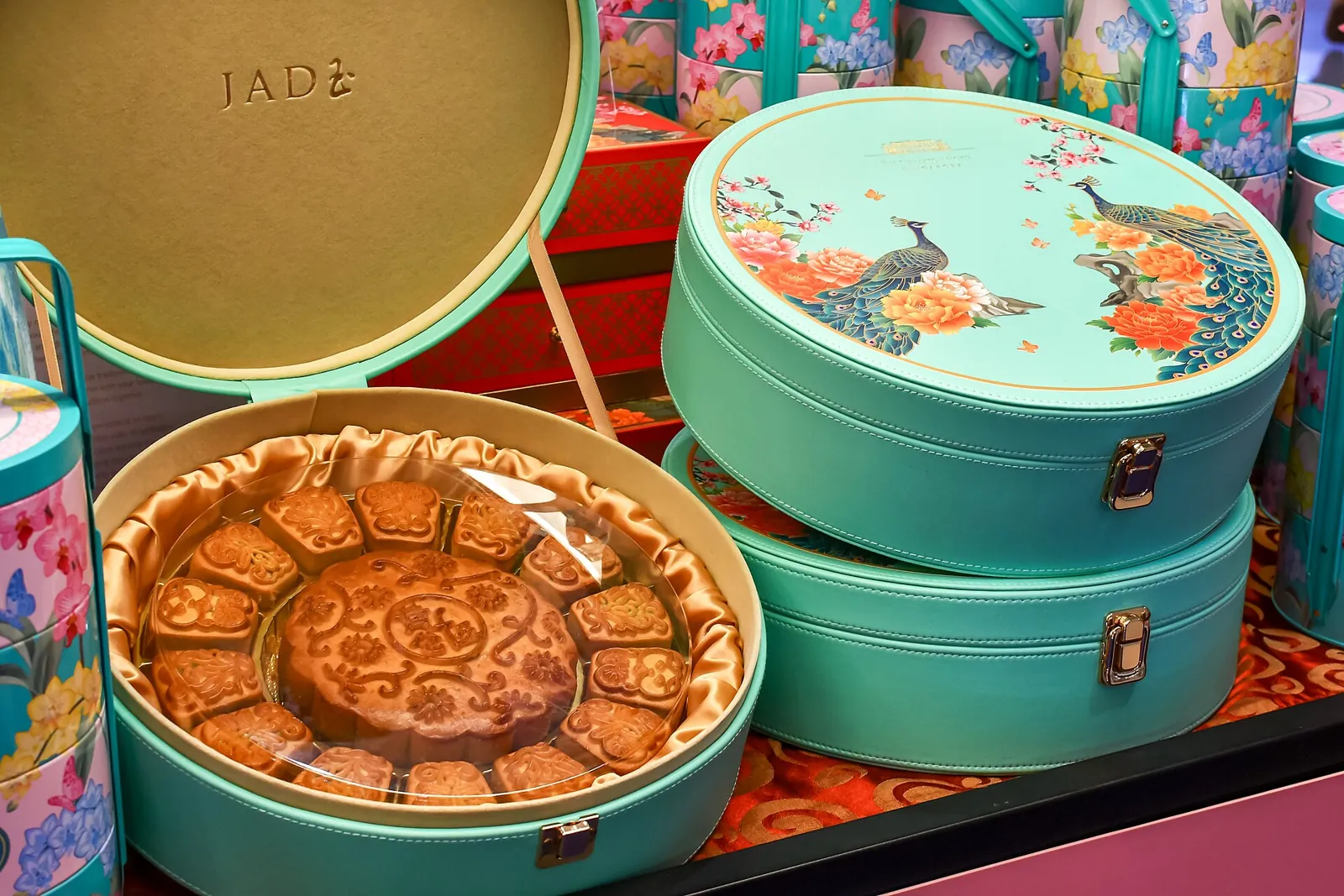
Hari Raya Puasa (also called Hari Raya Aidilfitri) marks the end of Ramadan and falls on the first day of the Islamic month of Syawal, so its date shifts each year. Families visit relatives and friends throughout the month, starting with parents and elders, and younger members may ask elders for forgiveness. Children are often given money in small green packets (duit raya), a custom Singapore's National Heritage Board describes as a fairly recent development influenced by Chinese red packets. If you visit, bring a halal treat.
Deepavali
Deepavali, the Festival of Lights, usually falls between October and November and is linked to the Tamil month of Aipasi, so the exact date varies. Families prepare sweet and savory snacks, wear new clothes and light oil lamps. Elders may give small gifts to younger family members. A box of Indian sweets (mithai) is a thoughtful gift if you are invited to a home.
Christmas and birthdays
Christmas is widely celebrated, especially in offices and among Christian families. Our Christmas guides work well here, with the dietary and number points above kept in mind.
Business gifting
Corporate gifts in Singapore should be modest and well presented. A shared box of treats for a team or a small gift from your company's home region is appropriate; anything costly can look like an attempt to influence. Present the gift with both hands, and do not be surprised if it is put aside unopened.
Singapore takes integrity in public service seriously. Civil servants must not ask for gifts and are expected to decline gifts that could influence their decisions. When declining is impractical, they declare the gift. According to the Public Service Division, an officer may be allowed to keep a gift valued under S$50 after checks such as conflict of interest, and a gift of S$50 or more only if the officer pays its value to the government. In practice, the kind thing is not to put a public servant in that position: offer a thank-you note or a small shared treat instead. Private companies often have their own gift policies, so check before sending anything of value. See our business gifts guide for general advice.
Frequently asked questions
What should I bring to a Chinese New Year visit in Singapore?
A pair of mandarin oranges for the head of the household is the classic gift. If you are married and there are children or unmarried younger relatives, red packets with an even amount are customary.
Can I give wine to a Singaporean host?
Only if you know the host drinks. Avoid alcohol for Muslim hosts and for many Hindu hosts. A food gift is the safer choice.
Why didn't my Singaporean friend open my gift?
It is common to open gifts later, not in front of the giver. It is a sign of politeness, not a lack of interest.
How much should I put in a red or green packet?
It depends on your relationship. For red packets, use even amounts and avoid amounts ending in 4. Green packets for Hari Raya are usually given to children and are typically modest.
Can I give a gift to a Singapore government officer?
It is best not to. Public servants are expected to decline gifts where possible and must declare those they cannot refuse. A thank-you note is more appropriate.
For neighboring customs, see our guides to China and other countries.
Sources
- The Cultural Atlas — Singaporean Culture: Etiquette. theculturalatlas.org
- Wikipedia — Chinese New Year customs in Singapore. en.wikipedia.org
- Travel China Guide — 10 things to be avoided as Chinese New Year gifts. travelchinaguide.com
- Roots (National Heritage Board) — Hari Raya Puasa. roots.gov.sg
- Roots (National Heritage Board) — Deepavali. roots.gov.sg
- Public Service Division — Declaration of gifts and meal invitations by civil servants and political officeholders. psd.gov.sg
Image credits. Top image: Chinese New Year market in Singapore Chinatown horizontal by Aaaatu, CC BY-SA 4.0, via Wikimedia Commons · In-article image: Mooncake Gift Sets in Singapore by ScribblingGeek, CC BY-SA 4.0, via Wikimedia Commons
Spotted something out of date or a gift that's no longer available? Tell our editors — we review every correction.