Gift Etiquette in Bhutan: Host Gifts, Hospitality and Losar
Bhutan has a formal etiquette code and a deep tradition of hospitality. Learn what to bring a host, how to accept food and drink, and how Losar is celebrated.
We independently research every pick. If you buy through our links we may earn a small commission, at no extra cost to you. Affiliate disclosure.
Quick answer
Bhutan has a formal code of etiquette, driglam namzha, and a strong tradition of hospitality in which guests and hosts exchange gifts. A modest food gift or a specialty from your home country is a good choice for a host. Expect to be offered tea or ara (a local spirit), and know that it is polite to decline food once or twice, saying "meshu meshu," before accepting. Avoid tobacco as a gift, and never criticize the King.
- Safe host gift Food from home, sweets, fruit, a small keepsake
- Typical budget $10 – $40
- Avoid Tobacco, and anything disrespectful of religion or the monarchy
- Main festival Losar, the Bhutanese New Year (date varies)
Buddhism is Bhutan's official religion, and Hinduism is practiced mainly by southern Bhutanese. Etiquette is taken seriously: a royal decree in 1989 promoted driglam namzha, the traditional code of conduct, along with a national dress code. Hospitality is central to social life, captured in a local saying that a guest for one night is like a god.
What to give
For a host
Traditionally, visitors bring a general gift called choom, often food. Villagers from one valley would carry their own produce, such as cheese, incense or roasted barley flour, to their hosts. As a foreign guest, the modern equivalent is a food specialty from your own region, sweets or fruit.
For friends and family
Gift exchange runs both ways. Hosts may send guests off with a farewell gift of food and drink for the journey (lamju), and a return gift between equals is called chomlog. If you are given something, a modest gift in return later on is a good way to keep the relationship balanced.
Food specialty from your home country
Why it works: It follows the old custom of bringing your own region's produce to a host.
Skip it if: It contains alcohol and you are visiting a monastery or a devout household.
Sweets or fruit
Why it works: Easy to share over tea with the whole household.
Skip it if: You are trekking to a remote village and need something light and durable.
Small keepsake or illustrated book about your home
Why it works: A modest, lasting gift for a guide, homestay host or colleague.
Skip it if: It features imagery that could be seen as disrespectful to Buddhism.
What to avoid
- Tobacco. Smoking became legal again in 2020, but it is still frowned on, especially near temples and other religious places.
- Criticizing the King or the royal family. Bhutanese customs and traditions are taken very seriously, and the monarchy is deeply respected.
- Casual dress at temples and dzongs. Dress respectfully when visiting these fortress-monasteries; your guide can advise.
- Accepting food on the very first offer. It is polite to decline once or twice before accepting.
- Flashy gifts. A modest gift fits better with local values than an expensive one.
How to give and receive
- Offer the gift with both hands as a respectful default.
- Decline food politely at first. When offered food, say "meshu meshu" and cover your mouth with your hand, then accept on the second or third offer.
- Accept ara if you can. In traditional hospitality, ara is the first offering on arrival and is hard to refuse; butter tea (suja) or sweet tea usually follows. If you do not drink alcohol, explain politely.
- Return the kindness. If you receive a farewell gift, consider a modest return gift later.
Visiting a Bhutanese home
Expect tea, which is served in many ways and is the most popular drink. In eastern Bhutan, a traditional welcome may involve ara heated with egg and butter, shared with songs and dancing. Follow your host's lead on where to sit and what to eat, and leave plenty of time: hospitality is not rushed.
Holidays and occasions
Losar
Losar, the Bhutanese New Year, falls on the first day of the lunisolar calendar, so the date changes every year (usually February or March). It is celebrated with picnics, dancing, singing, archery and darts, and with offerings. Sugarcane and green bananas are considered auspicious foods for the occasion. A food gift for a host family's Losar table is a thoughtful gesture.
Festivals and Dashain
Many annual festivals mark events in the life of the Buddha and are major community gatherings rather than gift occasions. Among Hindu southern Bhutanese, Dashain (Dussehra) has been a national holiday since 1980.
Business gifting
For business visits, a modest gift from your company or country, such as a book, a regional food specialty or a desk item, is a polite gesture. Keep the value low, avoid cash, take particular care with government officials, and follow anti-bribery laws and your organization's gift policy. Dress formally and respectfully, especially for meetings in a dzong. Our guide to business gifts has more general advice.
Frequently asked questions
What should I bring a host in Bhutan?
A modest food gift, such as a specialty from your home country, sweets or fruit. Traditionally, visitors brought produce from their own region.
What does "meshu meshu" mean?
It is what you say, while covering your mouth with your hand, to politely decline food. Hosts expect it and will offer again; accept on the second or third offer.
Can I give cigarettes as a gift in Bhutan?
It is best not to. Smoking is legal again but still frowned on, especially near religious sites.
When is Losar in Bhutan?
On the first day of the lunisolar new year, usually in February or March. The date changes each year.
Traveling across the Himalaya? Read our guides to Nepal and India.
Sources
- Countries and Their Cultures — Bhutan. everyculture.com
- Bhutan Homestay (Ulrike Cokl) — Traditional hospitality and travelling in Bhutan. bhutanhomestay.com
- Wikipedia — Bhutanese cuisine. en.wikipedia.org
- GOV.UK — Bhutan travel advice: safety and security (local laws and customs). gov.uk
- Wikipedia — Losar. en.wikipedia.org
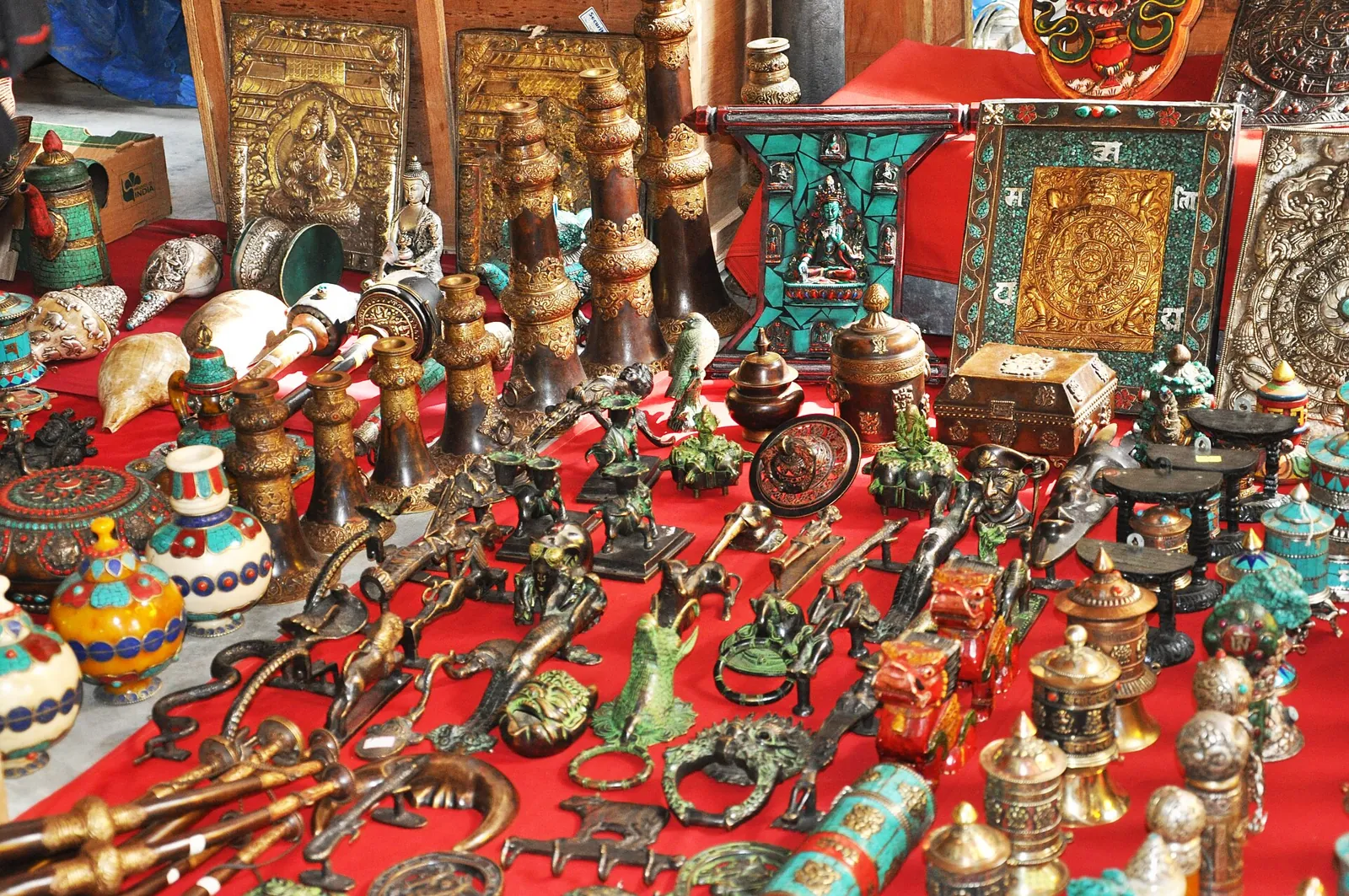
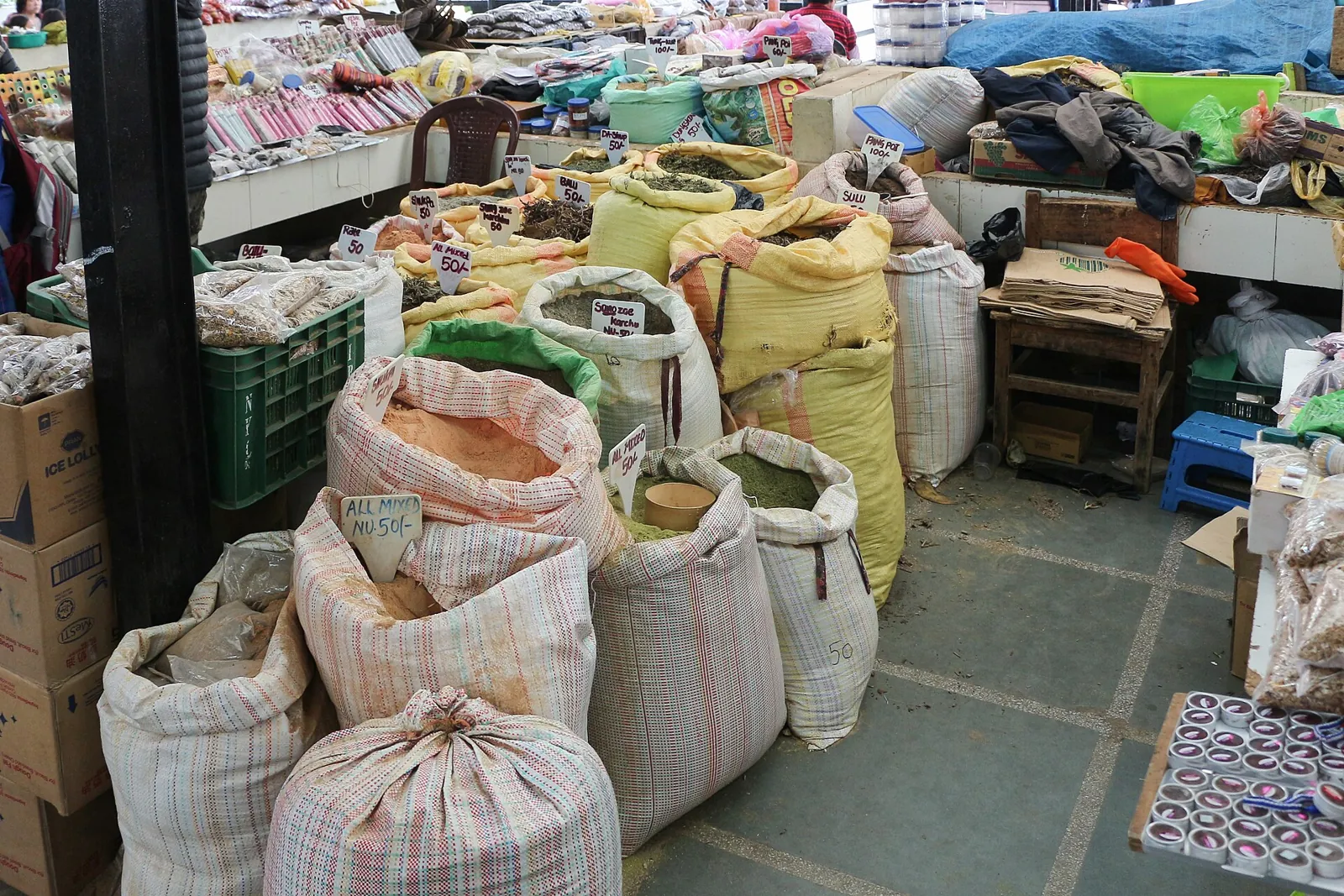
Image credits. Top image: Thimphu handicraft market - Bhutan by Prof Ranga Sai, CC BY-SA 4.0, via Wikimedia Commons · In-article image: Centenary Farmers Market, Thimphu 02 by Bernard Gagnon, CC BY-SA 4.0, via Wikimedia Commons
Spotted something out of date or a gift that's no longer available? Tell our editors — we review every correction.




