Gift Etiquette in Nepal: Host Gifts, Taboos, Dashain and Tihar
Nepali hosts receive gifts quietly, but the details matter. Learn what to bring, which items to avoid, how to hand things over, and how gifts work at Dashain and Tihar.
We independently research every pick. If you buy through our links we may earn a small commission, at no extra cost to you. Affiliate disclosure.
Quick answer
In Nepal, fruit or sweets make the best gift for a host, and gifts are received without much fuss, so do not expect effusive thanks. Give and receive with your right hand, or with both hands to show extra respect. Never offer beef, be careful with leather and alcohol, and learn the basics of jutho (food that has touched someone's mouth). The big gift seasons are Dashain and Tihar in the fall.
- Safe host gift Fruit or sweets
- Typical budget $10 – $35
- Avoid Beef, leather for devout Hindu hosts, alcohol unless you know they drink
- Main festivals Dashain and Tihar (September to November, dates vary)
Nepali hospitality is deep and sincere; many hosts say "guests are our god." Gift-giving itself is understated. People do not give presents very often outside festivals and family occasions, and a gift is usually accepted quietly. Nepal is home to Hindu, Buddhist and other communities and many ethnic groups, so customs can vary from family to family.
What to give
For a host
If you are invited to a home, bring fruit or sweets. They are easy to share and suit Hindu and Buddhist households alike. Keep in mind that your host may simply set the gift aside with little comment; that is normal, not a sign of displeasure.
For friends, family and elders
At festivals and family milestones, clothing, sweets and practical household items are common. For a wedding, graduation or other achievement, a khata (a ceremonial scarf) is a traditional gift among both Hindus and Buddhists in Nepal, and guests often drape one over the person being honored.
Box of sweets
Why it works: Sweets are the classic visiting gift and are shared at every festival.
Skip it if: You are buying abroad and are unsure whether the sweets contain gelatin or other animal products; vegetarian sweets are the safe choice.
Fruit basket
Why it works: Fresh fruit is welcome in almost every household and appropriate for elders.
Skip it if: You are trekking to a remote village; something light and non-perishable from home travels better.
Khata (ceremonial scarf)
Why it works: A traditional way to honor someone at a wedding, graduation or celebration.
Skip it if: It is a casual dinner visit; a khata belongs to formal occasions.
Clothing or fabric for festivals
Why it works: Buying and wearing new clothes is an important part of Dashain, so clothing makes sense for close family and friends.
Skip it if: You do not know the person's size and taste well.
What to avoid
- Beef, in any form. Hindus avoid beef out of reverence for the cow.
- Leather gifts for devout Hindu hosts. Leather is usually not allowed in temple precincts, so it is wise to choose another material.
- Alcohol, unless you know your host drinks. Many Nepalis do not drink alcohol.
- Anything that is jutho. Food or drink that has touched your mouth, or a spoon you have eaten from, is considered polluted for others. Never offer food you have bitten.
- Touching people with your feet or letting your feet touch books and papers, which can be seen as an insult to the goddess of learning, Saraswati.
- Leaving shoes upside down, which is thought to bring bad luck.
How to give and receive
- Use your right hand. For extra respect, give with both hands, or with your right hand while your left touches your right wrist.
- Do not expect a big reaction. Gifts are usually received without fuss, and the word for "thank you" is often saved for something beyond the ordinary.
- Accept tea even if you do not usually drink it.
- Eat with your right hand and use serving spoons, not your own utensils, for shared dishes.
- Take a modest first helping. Asking for seconds is a real compliment to the cook.
Visiting a Nepali home
Look for shoes at the entrance and remove yours if others have. Do not walk into the kitchen unless invited. Guests are often served first, and much of the socializing happens before the meal; people tend to leave fairly soon after eating. Invitations can be last-minute, and it is polite to make at least a short appearance if you are invited to an event.
Holidays and occasions
Dashain
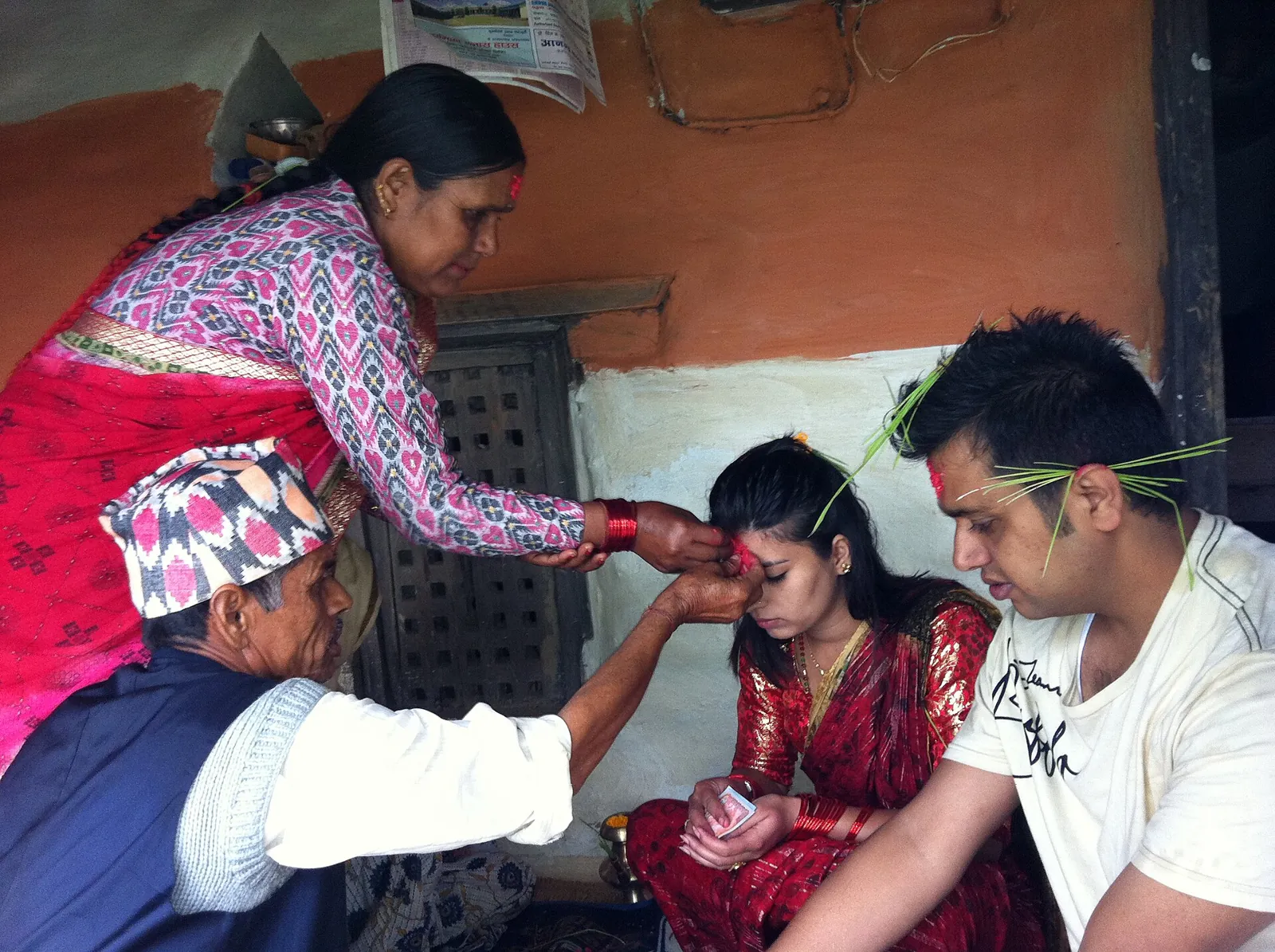
Dashain is Nepal's biggest festival, lasting 15 days in September or October; the dates follow the lunar calendar and change every year. People travel home from all over the country and abroad to be with family. On the tenth day, elders place a tika of rice, yogurt and vermilion, along with sprouted barley grass (jamara), on the foreheads of younger relatives as a blessing. New clothes are an important part of the festival, and gifts are exchanged within families.
Tihar
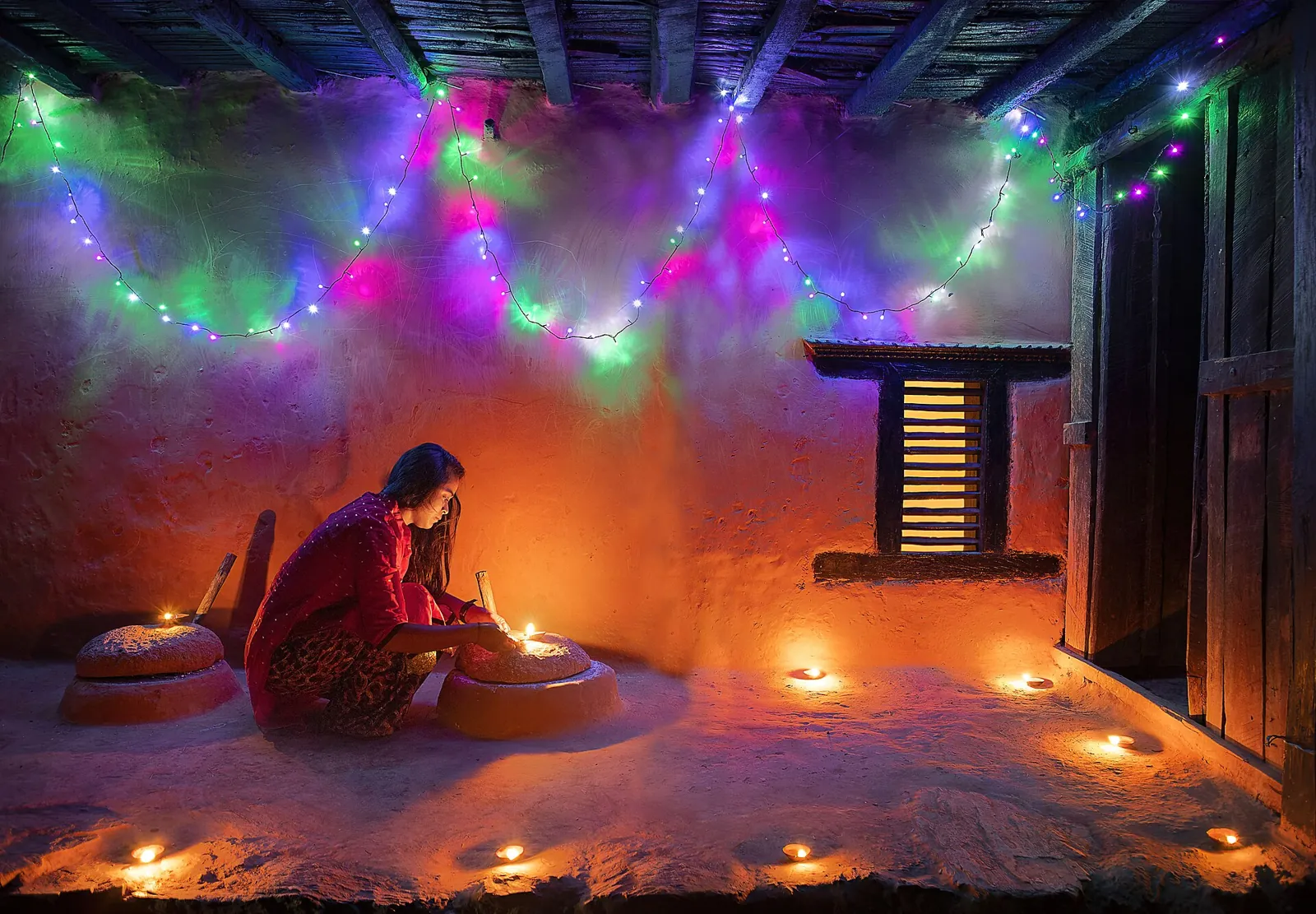
Tihar is a five-day festival that typically falls in October or November. Homes are cleaned and lit with oil lamps for Laxmi Puja, the worship of the goddess of wealth, and children go house to house singing deusi and bhailo, receiving money and food such as sel roti. On the last day, Bhai Tika, sisters bless their brothers with a multicolored tika and a flower garland and serve them food; brothers in turn give their sisters cash or gifts such as clothing.
Losar
Several Buddhist communities celebrate their own new year, or Losar: Gurung and Tamang communities usually in December or January, and Sherpa and Tibetan communities in February or March.
Business gifting
A modest gift from your home country or company, such as a book, a quality pen or a regional food specialty that is free of beef, is a polite gesture once a working relationship is established. Present it with your right hand or both hands, keep the value low, avoid cash, and take extra care with government officials. Follow anti-bribery laws and your company's gift policy. Dashain and Tihar are the natural moments for a seasonal gift, and business slows considerably during Dashain as people travel home. See our guide to business gifts for general advice.
Frequently asked questions
What should I bring to a Nepali home?
Fruit or sweets. Hand them over with your right hand or both hands, and do not be surprised if your host accepts them quietly.
What gifts should I avoid in Nepal?
Anything containing beef, leather items for devout Hindu hosts, and alcohol unless you know the person drinks. Never offer food you have already bitten.
What is a khata?
A ceremonial scarf given to honor someone at weddings, graduations and other milestones. It is used by both Hindus and Buddhists in Nepal.
What do brothers give sisters at Tihar?
At Bhai Tika, sisters bless their brothers and serve them food, and brothers usually give their sisters cash or gifts such as clothing.
When is Dashain?
Dashain lasts 15 days in September or October; the exact dates change each year with the lunar calendar.
Planning more travel? See our India gift etiquette guide or browse all countries.
Sources
- The Cultural Atlas — Nepalese culture: etiquette. theculturalatlas.org
- Rough Guides — Culture and etiquette in Nepal. roughguides.com
- Wikipedia — Dashain. en.wikipedia.org
- Wikipedia — Tihar (festival). en.wikipedia.org
- Wikipedia — Khata. en.wikipedia.org
- Wikipedia — Losar. en.wikipedia.org
Image credits. Top image: Sister lighting traditional lamp during Tihar festival (edited) by Original: Mithun Kunwar Derivative work: Radomianin, CC BY-SA 4.0, via Wikimedia Commons · In-article image: Dashain Tika 02 by Krish Dulal, CC BY-SA 3.0, via Wikimedia Commons
Spotted something out of date or a gift that's no longer available? Tell our editors — we review every correction.




