How to make a DIY Christmas hamper
Four themed Christmas hampers you can build at home, plus which homemade foods are safe to tuck inside, how to label them and how to wrap the finished basket.
Quick answer
Pick one theme (Christmas breakfast, movie night, spa evening or a baker's kit), choose a container the recipient can reuse, and fill it with one hero item, three to six supporting pieces and something homemade. Stick to shelf-stable homemade food such as cookies, biscotti, granola, candy or properly processed jam, label each with ingredients, the date made and storage instructions, and leave out home-canned cakes in jars, infused oils and anything that needs refrigeration unless you hand it over in person.
- Time 1 – 2 hours to assemble, plus any baking
- Difficulty Easy
- Cost About $30 – $80 for a medium hamper, depending on contents
- Makes One hamper; easy to scale for several
A hamper is simply a gift basket with a British accent: a lidded basket, crate or box filled with treats around a theme. Our step-by-step guide to building any gift basket covers the general technique. This page is about the Christmas version: themes that suit the season, homemade fillers that are safe to give, and festive wrapping.
What you'll need
- A container: wicker hamper, wooden crate, enamel bowl, mixing bowl, tote, or a sturdy box covered in paper
- Filler for the base: crinkle paper, shredded tissue, a folded tea towel or a small throw
- A piece of card or a rolled towel to raise the floor of a deep basket
- Your hero item and supporting items (see the themes below)
- Something homemade, packed in airtight jars, tins or food-safe bags
- Labels, a pen and a gift card
- Cellophane or a large cellophane bag, ribbon, scissors and clear tape (optional)
Four Christmas hamper themes
A clear theme makes a hamper feel planned rather than collected. Choose one and edit everything else out.
Christmas morning breakfast
Hero: a good bag of coffee or loose-leaf tea, or a pancake or waffle mix. Supporting: a jar of homemade jam (see our guide to jam as a gift for safe processing), homemade granola, maple syrup, a pair of festive mugs, a tea towel. Best for families, hosts and neighbors.
Movie night in
Hero: a cozy throw or a gift card for a streaming rental. Supporting: popcorn kernels and seasoning shakers, homemade caramel corn or chocolate bark, boxed candy, a list of your favorite Christmas films, and two mugs with hot chocolate mix.
Spa evening
Hero: a soft robe, plush towel or quality bath product. Supporting: homemade sugar scrub or melt-and-pour soap, bath salts, a candle, a face mask and slipper socks. Label homemade bath products with their ingredients so the recipient can check for sensitivities. See also our spa gift basket.
The baker's hamper
Hero: a mixing bowl (which doubles as the container) or a good loaf pan. Supporting: a cookie mix in a jar, cookie cutters, vanilla, sprinkles, a whisk, wooden spoons, and a handwritten family recipe card.
How to put the hamper together
Plan around the recipient
Before buying anything, note allergies, dietary rules (vegetarian, gluten-free, alcohol-free) and household size. A single person does not need a family-size panettone; a household with a dog should not get anything that is dangerous if a curious nose finds it.
Choose the container
Pick something the recipient will keep: a basket for blankets, a crate for the garage, a bowl for the kitchen. Measure it, and choose a hero item that fits comfortably with room for four to six smaller things.
Make the homemade items first
Bake, cool and pack food a day or two before assembly so it is completely cool before it goes into a sealed container (warm food in a closed tin turns soggy). Use tested recipes for anything jarred.
Label everything homemade
Clemson University's Home & Garden Information Center advises labeling homemade food gifts with the date they were made, the ingredients (important for allergies) and storage instructions. Add "Keep refrigerated" to anything that needs it, and a best-by date only if your recipe source gives one.
Build the base
Raise the floor of deep baskets with card or a rolled towel, then add a generous layer of filler so nothing sinks out of sight.
Place items from back to front
Stand the hero item at the back, then tall items, then shorter ones in front so every label faces forward. Keep glass jars away from each other and wedge them with filler or tissue. Tuck small items into gaps last.
Wrap and finish
Leave an open hamper as it is if you are handing it over, or slide it into a large cellophane bag, gather the top and tie it with ribbon. A sprig of fresh greenery, a cinnamon stick bundle or a homemade ornament makes a festive topper. Tape the card where it can be read without unwrapping.
Tip: Photograph the finished hamper and write a short contents list on the gift card, with storage notes and allergens. Recipients appreciate knowing what needs to go in the fridge and what will keep.
Food safety for homemade items
Homemade food is often the most appreciated part of a hamper, but some popular homemade gifts are not safe to give. Extension food-safety specialists are consistent on this:
- Good choices: cookies, biscotti, crackers, granola, nut mixes, candy, flavored popcorn, chocolate bark, gingerbread, fresh bread or rolls, and dry mixes in jars or bags (Iowa State University Extension's suggestions). Clemson lists cookies, brownies, fruitcake, hard cheese and hard salami among foods that travel well.
- Jams and jellies: lower risk, but Iowa State says home-canned food must be made with a USDA-tested recipe, followed exactly, and properly processed. Gelatin-based jams must be refrigerated or frozen.
- Cakes or breads baked in jars: Iowa State calls these "not safe in any way" because they are moist and low-acid.
- Herb, garlic or vegetable-infused oils, pesto, pumpkin butter and homemade chocolate or fudge sauces: both Iowa State and Clemson advise against giving these as home-canned or mailed gifts. If you want to give oil, read our guide to infused olive oil gifts first.
- Perishables left out: Clemson notes that perishable food should not sit between 40°F and 140°F (the "danger zone") for more than two hours. Cheesecake, cream-filled pastries, cured-fish dips and soft cheeses belong in the fridge, not a hamper under the tree.
If you are mailing a hamper, keep it to shelf-stable items. Clemson's guidance for perishables (freeze solid, pack with a cold source, mark "Perishable – Keep Refrigerated," ship early in the week and tell the recipient when to expect it) is a lot of effort; it is usually easier to send the hamper food-free and bake for the recipient when you see them. Check your carrier's holiday shipping deadlines before you post anything.
Budget and presentation tips
- Spend most of the budget on the hero item; supporting pieces can be modest.
- Decant bulk buys (coffee beans, popcorn, cocoa) into matching jars with handwritten labels for a custom look.
- Three textures look richer than one: something soft (a towel or throw), something glass (a jar), something natural (a wooden spoon or pine sprig).
- Avoid overpacking. A slightly full hamper with space between items looks more generous than a crammed one.
- For more festive makes to tuck inside, browse DIY Christmas projects.
Frequently asked questions
What is the difference between a hamper and a gift basket?
Very little. "Hamper" is the usual British and Australian term, often for a lidded wicker basket of food and drink; "gift basket" is more common in the US. The way you build them is the same.
What homemade food lasts longest in a Christmas hamper?
Dry, low-moisture foods such as biscotti, crisp cookies, granola, candy and properly processed jam hold up best. Label each with the date it was made and storage instructions, and give a best-by date only if your recipe source provides one.
Can I put homemade cake in a jar in a hamper?
No. Iowa State University Extension says cakes and breads canned in jars are not safe because they are moist and low-acid. Give a freshly baked loaf wrapped in paper to be eaten soon, or a dry mix in a jar instead.
How much should a DIY Christmas hamper cost?
Whatever suits your budget. A small breakfast or baker's hamper can come in around $30 if you make the food yourself and reuse a bowl as the container, while a spa or movie hamper with a robe or throw will cost more.
Sources
- Iowa State University Extension and Outreach, AnswerLine — Safe Homemade Food Gifts. extension.iastate.edu
- Clemson Cooperative Extension, Home & Garden Information Center — Mailing Perishable Foods. hgic.clemson.edu
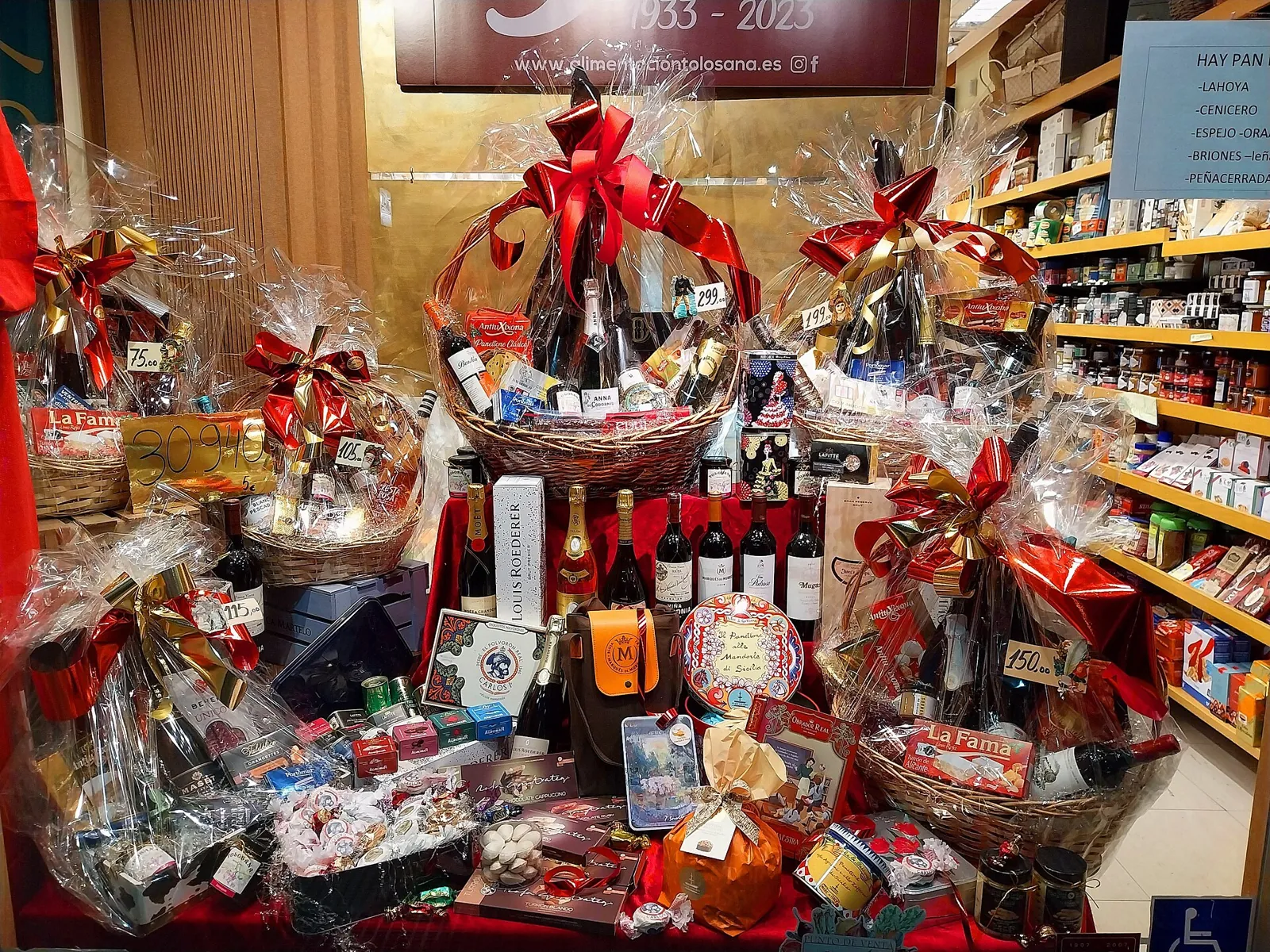
Image credits. Top image: Miranda de Ebro - Alimentación Tolosana, cestas de navidad by Zarateman, CC0 1.0, via Wikimedia Commons
Spotted something out of date or a gift that's no longer available? Tell our editors — we review every correction.