Gift Etiquette in South Sudan: Visiting, Respect and Holiday Customs
In South Sudanese culture a small gift and a proper greeting go a long way. Here is what to bring a host, how to show respect, and how gifts fit Christmas and weddings.
We independently research every pick. If you buy through our links we may earn a small commission, at no extra cost to you. Affiliate disclosure.
Quick answer
In South Sudanese culture it is a good gesture to bring a small gift when you visit, along with something for any children in the household. Give and receive with your right hand or both hands, not the left alone. Accept the water, tea or coffee your host offers, since refusing is considered rude, and greet the man of the house and elders with special respect. Customs vary widely between ethnic groups, so follow your host's lead.
- Host gift A small gift, plus something for the children
- Hand to use Right hand or both hands
- Don't refuse Water, tea, coffee or food from a host
- Big gift times Christmas, Easter, weddings and family visits
Most South Sudanese are Christian, mainly Catholic and Anglican, and many blend church life with traditional practices; rural communities often follow traditional beliefs, and there are small Muslim communities, mainly in towns. South Sudan has many ethnic groups, including the Dinka, Nuer and Bari, and customs differ between them. Many readers will meet South Sudanese friends and families in diaspora communities. If you are thinking of traveling to South Sudan, follow your government's current travel advice.
What to give
Visiting is how relationships are built and kept, and staying away for a long time can even be taken as an insult. Cultural Atlas notes that bringing a small gift is a good gesture, and that you may also bring gifts for the children who live in the household.
For a host family
Food to share, such as sweets, biscuits, fruit or a good packet of tea or coffee, suits a household where refreshments are offered to every guest. Families are often large and include extended relatives, so a gift everyone can enjoy works best.
For friends, in-laws and elders
Elders hold great authority in the family, and the father or eldest man usually leads the household. A quality, practical gift for an elder, such as a warm blanket, a well-made household item or something from your home region, shows respect. For children, school supplies, books or a toy are welcome.
Tea, coffee or sweets to share
Why it works: Hosts offer water and then tea or coffee to every guest, so these are useful and easy to share.
Skip it if: the household is Muslim and you can't confirm sweets are gelatin-free; choose fruit or plain biscuits.
Books, school supplies or a toy for the children
Why it works: Gifts for children in the household are specifically recommended.
Skip it if: you don't know the children's ages; a family treat is easier.
A practical gift for an elder
Why it works: Respect for elders is central, and a quality everyday item honors their place in the family.
Skip it if: it is a novelty gadget with little everyday use.
Looking for ideas for children? Browse our gifts for kids section.
What to avoid
- Using the left hand alone. Don't gesture or pass things with the left hand; use your right hand or both hands.
- Refusing refreshments or food. Hosts offer water, then tea or coffee, and declining is considered rude. Turning down food is also very impolite.
- Disrespecting elders. Insulting an elder is considered extremely offensive. Avoid gifts or jokes that could be read as mocking age or status.
- Assuming one set of customs. Whether men and women socialize together or separately, for example, depends on the ethnic background of the family.
- Alcohol as a default gift. Religious and family attitudes vary, and some households are Muslim or strictly observant Christians; give it only if you know your hosts drink.
How to give and receive
- Greet properly. A handshake is the usual greeting, and it is rude not to offer your hand. People may pat each other's shoulders first, and close friends may embrace.
- Greet the man of the house before others present, and address elders, teachers and religious leaders by title.
- Show respect to seniority. Bending or kneeling slightly when greeting someone much older or of higher status, and looking down rather than holding direct eye contact, are signs of respect.
- Remove your shoes before entering a home.
- Accept the first portion. Guests are often served first, and important visitors may be offered the family's best goat, sheep or chicken. Eat what you are given and don't speak with your mouth full.
- Be relaxed about time. Lateness is common and usually tied to family matters.
For simple presentation ideas, see our gift wrapping page.
Holidays and occasions
Christmas (December 25)
Christmas is the main Christian celebration. Cultural Atlas describes processions of people singing hymns down the road on Christmas Eve, followed by an overnight church service. Church life is busy year-round, and long services are common. If you are invited to a family meal, a contribution of food or drink to share, or small gifts for the children, fits the occasion.
Easter (date varies)
Easter is also a public holiday, and its date changes each year. It is a church and family occasion; a gift for the household is optional.
Weddings
Marriage joins two families, and the bride's family usually receives a bride price, which among some groups is paid in cattle and can be very large. The groom's extended family often contributes. This is a family arrangement, not something guests are expected to join; as a guest, follow the lead of the family that invited you.
National days
Peace Agreement Day (January 9), Independence Day (July 9) and Martyrs' Day (July 30) are commemorations rather than gift occasions.
Business gifting
Titles and seniority matter: address superiors by title and surname, and allow time for greetings and refreshments. Gifts are not expected at first meetings. If you give one later, keep it modest and practical, and present it with your right hand or both hands. Anti-bribery laws in your home country, and company policies on both sides, may limit the value of gifts and hospitality, especially for public officials. Our business gifts section has general guidance.
Frequently asked questions
Should I bring a gift when visiting a South Sudanese family?
Yes, a small gift is a good gesture, and a gift for the children in the household is welcome too.
Is it rude to refuse tea or food?
Yes. Hosts offer water, then tea or coffee, and refusing refreshments or food is considered rude. Accept at least a little.
Which hand should I use?
Your right hand or both hands. Don't pass items or gesture with the left hand alone.
How is Christmas celebrated in South Sudan?
Many people sing hymns in processions on Christmas Eve and attend an overnight church service. It is a church and family occasion.
Do wedding guests contribute to the bride price?
The bride price is arranged between the families, with the groom's extended family often contributing. Guests follow the invitation and the family's lead.
Exploring the region? See our guides to Sudan, Kenya and Uganda, or browse all country etiquette guides.
Sources
- Cultural Atlas — South Sudanese Culture: Etiquette. theculturalatlas.org
- Cultural Atlas — South Sudanese Culture: Greetings. theculturalatlas.org
- Cultural Atlas — South Sudanese Culture: Religion. theculturalatlas.org
- Cultural Atlas — South Sudanese Culture: Family. theculturalatlas.org
- Cultural Atlas — South Sudanese Culture: Dates of Significance. theculturalatlas.org
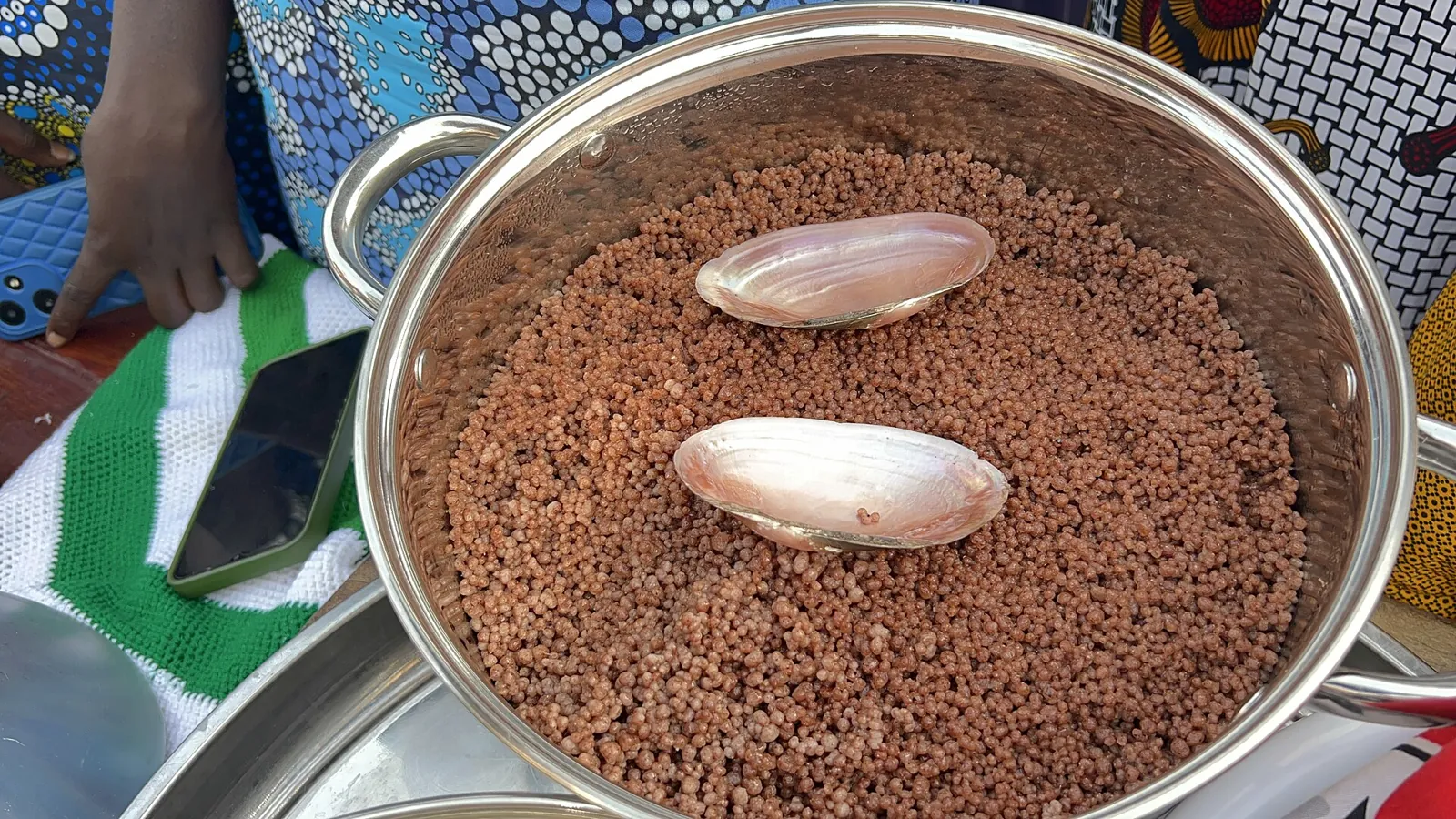
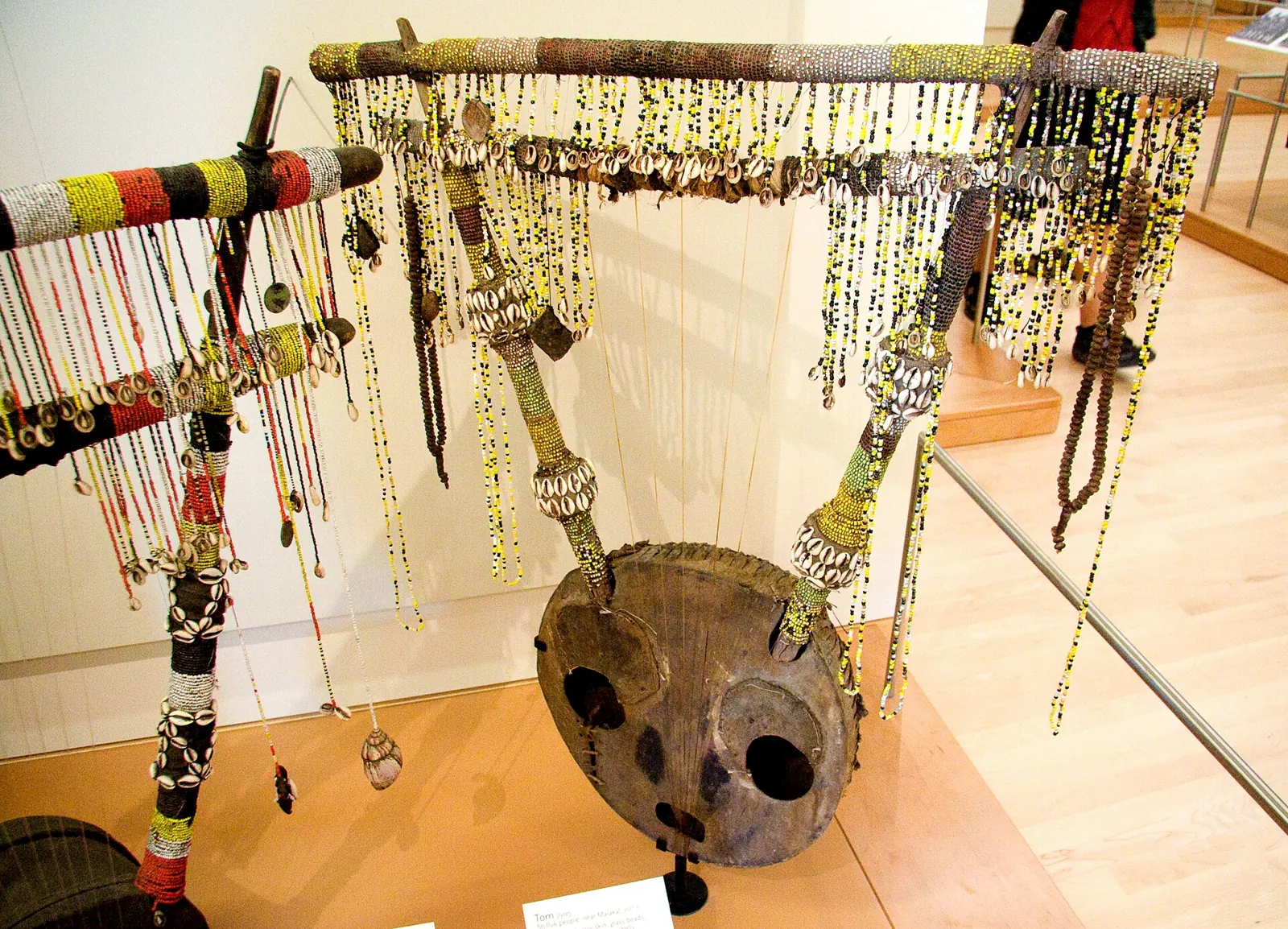
Image credits. Top image: Local Akop food south Sudan by Eawisdom, CC0 1.0, via Wikimedia Commons · In-article image: Tom (lyre) (20th century, Shilluk (people), South Sudan) - Beaded Stringed Instrument - MIM PHX (2011-04-09 17.35.55 by ksblack99) by ksblack99, Public domain, via Wikimedia Commons
Spotted something out of date or a gift that's no longer available? Tell our editors — we review every correction.




_(20th_century,_Shilluk_(people),_South_Sudan)_-_Beaded_Stringed_Instrument_-_MIM_PHX_(2011-04-09_17.35.55_by_ksblack99).jpg)