Gift Etiquette in Senegal: Teranga, Host Gifts and Holiday Customs
Senegal's famous teranga means guests are treated generously. Here is what to bring a host, how to hand it over, and how gifts work at Korité, Tabaski and in business.
We independently research every pick. If you buy through our links we may earn a small commission, at no extra cost to you. Affiliate disclosure.
Quick answer
Senegal is known as the land of teranga, the Wolof word for hospitality, and guests are treated generously. When you visit a home, bring a small, thoughtful gift such as pastries, fruit or sweets that the household can share. Give and receive with your right hand or both hands, never the left hand alone. Keep it modest: a showy present can make people uncomfortable. Most Senegalese are Muslim, so avoid alcohol and pork unless you know your hosts well.
- Host gift Pastries, fruit, sweets or a small item from home
- Hand to use Right hand or both hands
- Careful with Alcohol and pork in Muslim homes
- Big gift times Korité, Tabaski, Christmas, weddings and baptisms
Islam is the majority religion in Senegal and is highly visible in daily life, and there is also a Christian minority. French is the official language, while Wolof is the everyday lingua franca. Customs vary between Dakar, smaller towns and rural villages, and between ethnic groups, so treat the advice below as a starting point and follow your host's lead.
What to give
Gifts are not a formal requirement in Senegal, but a small one suits most social visits. Commisceo Global puts it simply: the gesture matters more than the value, and a modest gift given respectfully is usually better than something showy.
For a host
Food that can be shared fits the communal way many families eat. A box of pastries, good-quality sweets or a basket of fruit is easy to hand over and easy to share. If you know the family has children, a small extra for them is a kind touch.
For friends, in-laws and colleagues
For people you know well, practical gifts or something from your home region show thought without creating obligation. Fabric matters in Senegal, where families often have new outfits tailored for the big holidays, but clothing is personal, so leave that to people who know the recipient's taste and size.
Pastries or a box of sweets
Why it works: Easy to share with a large household and in keeping with the spirit of teranga.
Skip it if: you cannot confirm the ingredients for a Muslim family; choose clearly labeled packaged sweets or fruit instead.
A generous basket of fruit
Why it works: Simple, suitable for every faith and appreciated by families of all sizes.
Skip it if: you are bringing it for a business contact; a small item from your home country travels better.
A quality item from your home region
Why it works: A local specialty, book or well-made desk item suits colleagues and in-laws and gives you something to talk about.
Skip it if: it is expensive enough to feel like an obligation.
Our food gifts guide has more ideas that travel well.
What to avoid
- Giving or receiving with the left hand alone. Commisceo Global advises using the right hand or both hands for gifts and business cards.
- Alcohol and pork for Muslim hosts. Islam is the majority religion, and many families do not drink or eat pork. Choose sweets, fruit or non-food gifts unless you know your hosts' preferences.
- Expensive or flashy gifts. They can cause discomfort or a sense of obligation. Modest and thoughtful is the norm.
- Rushing the greeting. Handing over a gift before greeting everyone properly can seem abrupt. Greetings are about building the relationship, and they take time.
How to give and receive
- Greet first. Ask after the person's health and family before anything else. Learning a few Wolof greetings is appreciated, even if your conversation continues in French or English.
- Use your right hand or both hands to offer and accept gifts, food and business cards.
- Don't expect the gift to be opened. Recipients may set it aside and open it later.
- Follow the handshake lead. Some very religious men and women avoid shaking hands with the opposite sex, so wait for the other person to offer.
- At a shared meal, wash your hands first, eat from the section of the communal bowl in front of you, use only your right hand and wait for the eldest or most senior person to begin. Leaving a little food shows you were well looked after.
- Stay a while. It is polite to stay and talk after the meal rather than leaving straight away.
Wrapping can be simple; see our gift wrapping ideas for a neat, low-key finish.
Holidays and occasions
Korité (Eid al-Fitr, date varies)
Korité marks the end of Ramadan and follows the Islamic lunar calendar, so its date changes each year. A 2025 report from Dakar's daily Le Soleil describes a day that starts with lakh (millet porridge), continues with prayers in new clothes, and fills up with courtesy visits to neighbors, relatives and grandparents. After prayer, people ask each other's forgiveness for the past year. Chicken is the classic Korité meal, and children go from house to house collecting small gifts of money known as ndéwénal. If you are visiting that day, a little cash in an envelope for children or a box of sweets for the household fits the occasion.
Tabaski (Eid al-Adha, date varies)
Tabaski is the Feast of the Sacrifice and also moves with the lunar calendar. After sunrise prayers, families slaughter a ram and traditionally divide the meat into thirds: for the household, for relatives and neighbors, and for people in need. Many people travel home to their villages, new outfits are tailored for the celebrations, relatives and friends exchange presents in the days before, and in the evening people visit one another to ask forgiveness and share good wishes. It is an expensive time for families, so a thoughtful contribution is more welcome than an extravagant one.
Christmas and other holidays
Christmas (December 25) is a public holiday, as are Easter Monday, Ascension, Whit Monday, Assumption (August 15) and All Saints' Day (November 1). For Christian friends, a small gift or a contribution to a shared meal at Christmas is a natural gesture.Independence Day (April 4) is a civic celebration rather than a gift occasion. The Grand Magal of Touba, Mawlid and Tamkharit also follow the Islamic calendar.
For family celebrations at home, our Christmas guides have broader ideas.
Business gifting
Senegalese business customs resemble French ones: formal dress, respect for titles and seniority, and meetings that begin with personal inquiries before business. The U.S. Commercial Service notes that teranga matters in business contacts too, and that counterparts may avoid saying "no" directly. Have one side of your business card printed in French with your title clearly shown.
Gifts are not expected at a first meeting. Once a relationship is established, a modest item from your home country or a shared meal is appropriate. Avoid anything of high value, especially for public officials: anti-bribery laws in Senegal and in your home country may apply, and many companies set their own limits. Check both organizations' policies first. Our business gifts section has general guidance.
Frequently asked questions
What should I bring to a Senegalese host?
Pastries, sweets or a basket of fruit that the household can share. Keep it modest and hand it over with your right hand or both hands.
What does teranga mean?
Teranga is the Wolof word for hospitality. It describes a strong tradition of welcoming and caring for guests, and it shapes social and business life.
Can I give alcohol as a gift in Senegal?
Only if you know the recipient drinks. Most Senegalese are Muslim, so sweets, fruit or a non-food gift is the safer choice.
What gifts are given at Korité and Tabaski?
New clothes for the family, shared meals, and small gifts of money (ndéwénal) for children who visit. At Tabaski, meat from the sacrificed ram is shared with relatives, neighbors and people in need.
Will my gift be opened in front of me?
Often not. Recipients may put it aside and open it later, which is not a sign of disinterest.
Traveling further in West Africa? See our guides to the Gambia, Mali and Morocco, or browse all country etiquette guides.
Sources
- Commisceo Global — Senegal Guide. commisceo-global.com
- International Trade Administration — Senegal Country Commercial Guide: Business Travel. trade.gov
- Le Soleil — Reportage Korité: immersion dans une famille dakaroise. lesoleil.sn
- CREATE! — Celebrating Tabaski in rural Senegal. createaction.org
- Wikipedia — Public holidays in Senegal. en.wikipedia.org
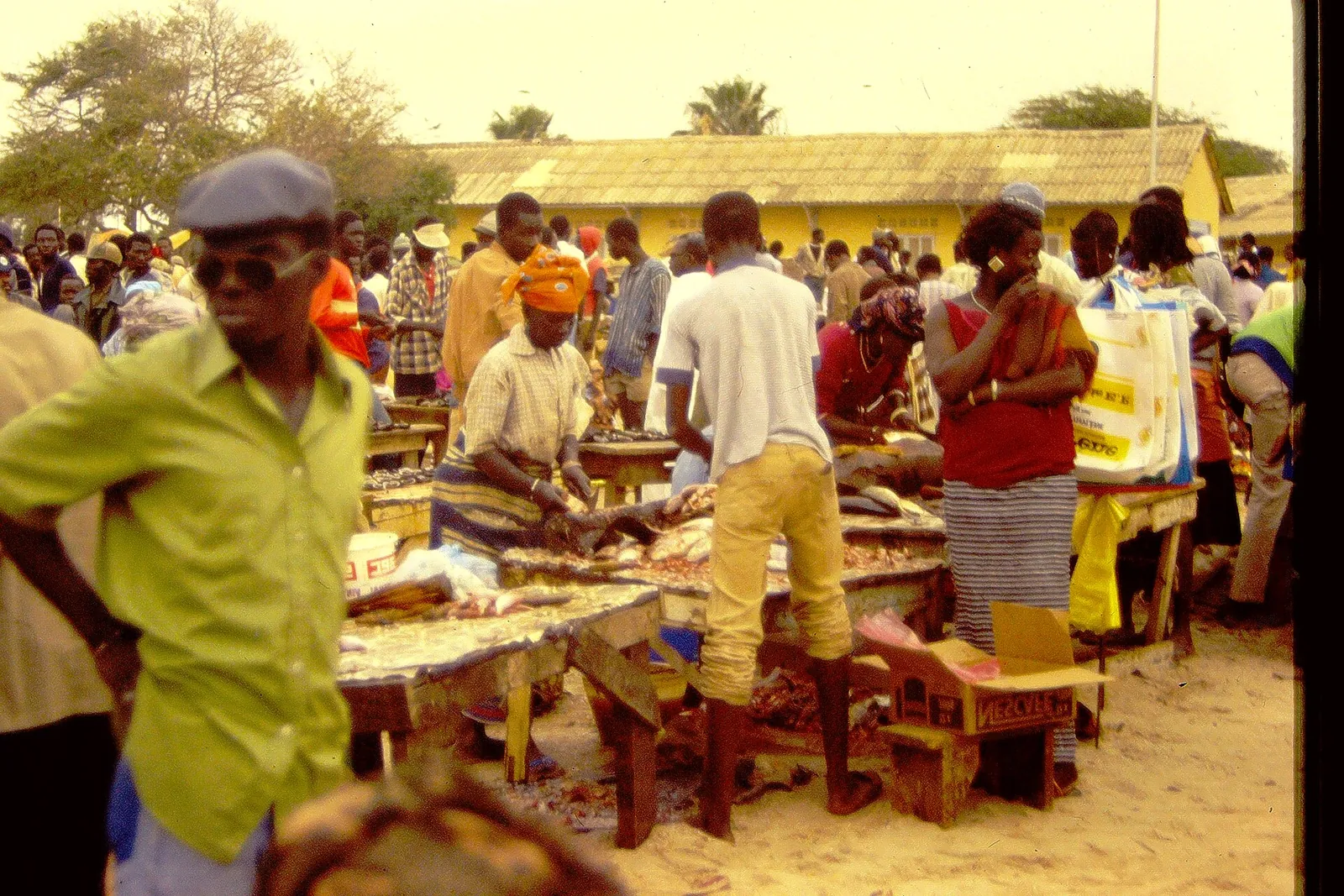
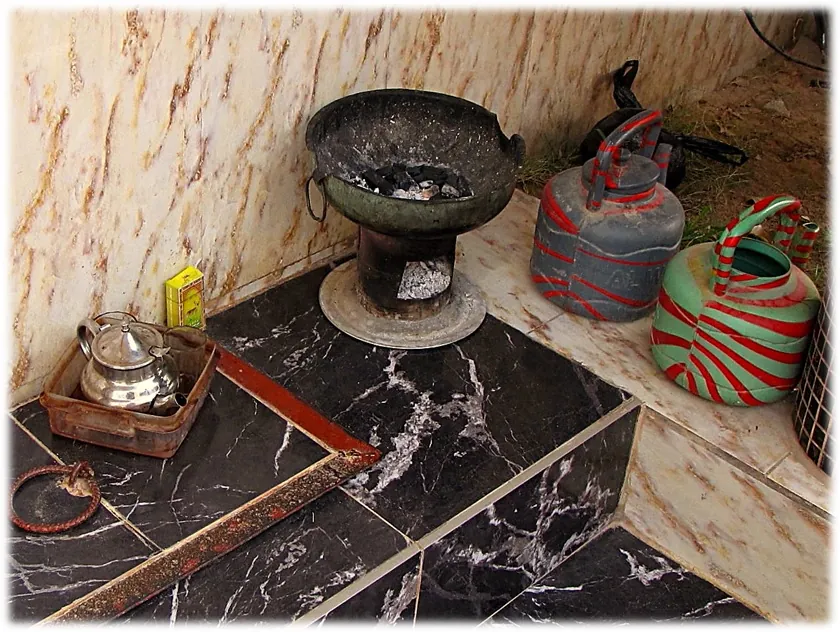
Image credits. Top image: PICT0275 Soumbedioune fish market (Dakar Senegal) by Komalick, CC BY-SA 4.0, via Wikimedia Commons · In-article image: Tea pot and stove 'attaya' by T.K. Naliaka, CC BY-SA 4.0, via Wikimedia Commons
Spotted something out of date or a gift that's no longer available? Tell our editors — we review every correction.




