Gift etiquette in The Gambia: greetings, gifts and Koriteh
In The Gambia, a proper greeting and your right hand matter as much as the gift. What to bring, what to avoid and how Koriteh and Tobaski are celebrated.
We independently research every pick. If you buy through our links we may earn a small commission, at no extra cost to you. Affiliate disclosure.
Quick answer
In The Gambia, how you greet and how you hand something over matter as much as what you give. Take time over greetings, use only your right hand to give or receive anything, and remove your shoes when you enter a home. A modest, shareable food gift or something from your home country suits a host. The country is mostly Sunni Muslim, so avoid alcohol unless you know it is welcome. Koriteh (Eid al-Fitr) and Tobaski (Eid al-Adha) are the big family celebrations.
- Safe host gift Sweets, fruit or a gift from home
- Typical budget $10 – $40
- Hands Right hand only
- Main celebrations Koriteh and Tobaski
English is the official language of The Gambia, while Mandinka, Wolof, Fula, Jola and Serahule are widely spoken. Most Gambians are Sunni Muslims, with Christian communities mainly in urban and coastal areas, and the faiths generally live side by side peacefully. Hospitality is central: visitors are often offered tea, food and conversation.
What to give
Keep gifts modest and practical. Something that can be shared with the extended family usually goes further than a personal item.
Sweets, cookies or fruit to share
Why it works: Gambian households are often large, and meals are shared from a communal bowl, so a gift everyone can enjoy fits the culture. More ideas in our food gifts.
Skip it if: the family is fasting during Ramadan; offer it for the evening meal instead.
A gift from your home country
Why it works: A small craft, photo book or local specialty shows thought and gives you something to talk about over tea.
Skip it if: it is expensive enough to make your host uncomfortable.
Practical items for children
Why it works: School supplies, books or simple clothing are useful, appreciated gifts for families with children.
Skip it if: you would be handing them out to strangers; give through a family you know or a school or organization.
Fabric or clothing for a celebration
Why it works: New or specially tailored clothes are a big part of Koriteh, so fabric or an outfit is a generous gift for a close friend or relative before the holiday.
Skip it if: you do not know the person well; it is a personal gift best suited to close relationships.
Friends, in-laws and coworkers
With a partner's family, spend extra time greeting elders and people in authority, and choose something for the whole household. For coworkers, a shared treat works better than individual presents.
What to avoid
- Using your left hand. Only the right hand should be used to give or receive food, money or other items; giving with the left hand is an insult.
- Rushing the greeting. A greeting is expected to last at least 15 seconds, and longer for people in authority. Launching straight into a request or price question is rude.
- Alcohol for Muslim hosts. Most Gambians are Muslim. Bring food or a gift from home instead.
- Greeting someone who is praying, or shaking hands with someone who has recently been bereaved.
- Immodest dress away from the beach. Swimwear belongs on hotel beaches, not in towns or villages.
- Photos without permission. Always ask before photographing people, markets or villages.
How to give and receive
- Greet first. As-salamu alaykum is the common Muslim greeting, answered with Malaikum salaam. In Wolof, "Naka nga def?" ("How are you?") is answered with "Mang fi rek" ("I'm just fine").
- Shake with your right hand. If someone's hands are full, they may offer their forearm instead. Women are not always expected to shake hands, so follow their lead.
- Give and receive with your right hand, including gifts and money.
- Remove your shoes when you enter a home, even if your host says you need not.
- Join the bowl. Wash your hands, eat with your right hand from the part of the bowl in front of you, and let the host break up and share the meat or fish. Guests may be offered a spoon and chair, but trying the Gambian way is appreciated.
- Accept tea and other hospitality when it is offered.
Holidays and occasions
- Koriteh (Eid al-Fitr) ends Ramadan. Most people, young and old, wear new or specially tailored clothes, attend communal prayers and visit family, friends and neighbors. Many give the Zakat al-Fitr charity beforehand, and many forgive one another and renew friendships. The date moves each year with the Islamic calendar; in 2026 it fell in March.
- Tobaski (Eid al-Adha), the Feast of the Sacrifice, is a two-day public holiday and a major family occasion. Its date also varies each year.
- Christmas (December 25), Good Friday and Easter Monday are public holidays, observed especially by the Christian community. See our Christmas ideas.
- Independence Day is February 18.
Naming ceremonies and weddings are also important family occasions. If you are invited, ask a mutual friend what is customary.
Business gifting
Relationships come first. Expect extended greetings and conversation about family before business, and treat senior people with visible respect. English is the official language of government and business, which makes communication straightforward for English speakers, but a few words of Wolof or Mandinka are warmly received.
Gifts are not required in business. If you give one, keep it modest, such as a book about your region or a food specialty from home, and never give alcohol to a Muslim contact unless you know it is welcome. Avoid anything that could be read as an inducement, especially with officials, and follow your company's gift policy and the anti-bribery laws that apply to you, such as the U.S. Foreign Corrupt Practices Act or the UK Bribery Act. See our business gifts guide.
Frequently asked questions
What should I bring to a Gambian home?
Something modest and shareable, such as sweets, fruit or a small gift from your home country. Practical items are welcome for children.
Which hand should I use in The Gambia?
Always the right hand to give, receive, eat and shake hands. Giving with the left hand is considered an insult.
What is Koriteh?
Koriteh is the Gambian name for Eid al-Fitr, the festival ending Ramadan. People wear new clothes, pray together and visit family, friends and neighbors.
What is Tobaski?
Tobaski is the Gambian name for Eid al-Adha, the Feast of the Sacrifice, a two-day public holiday and a major family occasion.
Is alcohol an acceptable gift in The Gambia?
Usually not. Most Gambians are Muslim, so choose food or a gift from home unless you know your hosts drink.
Neighboring customs are covered in our Senegal guide, and more destinations are in countries.
Sources
- World Travel Guide — The Gambia: History, Language and Culture. worldtravelguide.net
- Access Gambia — Traditional Greetings. accessgambia.com
- Access Gambia — The Food Bowl. accessgambia.com
- The Point — Koriteh draws near. thepoint.gm
- My Gambia — Eid elation: celebrating the joy of Koriteh in The Gambia. my-gambia.com
- Office Holidays — Public Holidays in Gambia in 2026. officeholidays.com
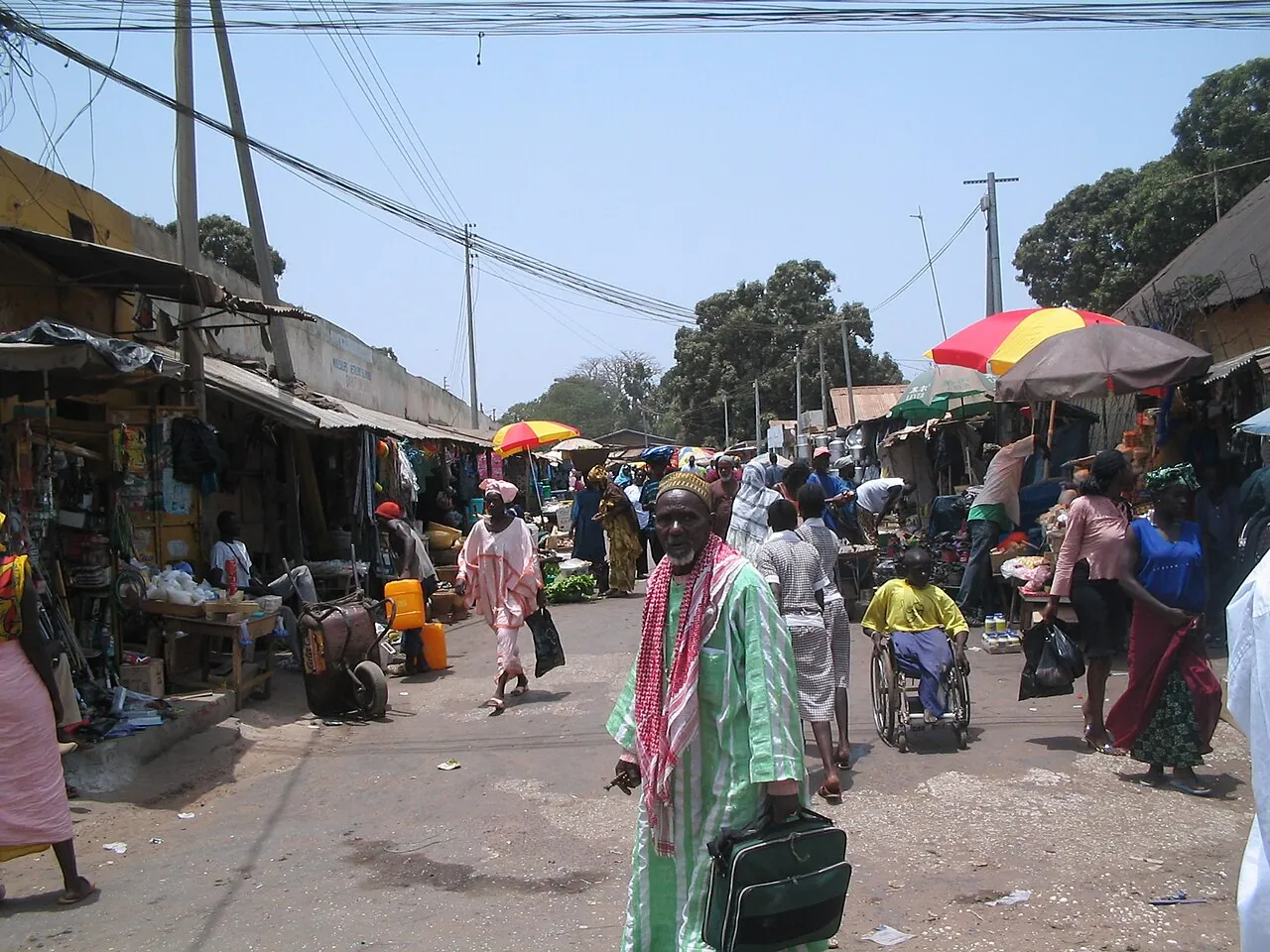
Image credits. Top image: Serrekunda market 2006 by Joseph Lehner (sebbothebutcher), CC BY-SA 2.0, via Wikimedia Commons
Spotted something out of date or a gift that's no longer available? Tell our editors — we review every correction.



