Gift Etiquette in Mali: What to Bring, Avoid and Expect at Tabaski
Generosity and sharing run through Malian social life. Here is what to bring a host, how to hand it over, and what to expect at Tabaski, the end of Ramadan and in business.
We independently research every pick. If you buy through our links we may earn a small commission, at no extra cost to you. Affiliate disclosure.
Quick answer
Hospitality and generosity are central to Malian life, and sharing is built into everyday social rules. When visiting a home, bring something modest to share, such as sugar, tea, sweets or fruit, and in villages a few kola nuts are a traditional courtesy for a chief or elders. Take time over greetings, give and receive only with your right hand, and dress modestly. Most Malians are Muslim, so don't bring alcohol or pork, and choose clearly halal food gifts.
- Host gift Sugar, tea, sweets, fruit; kola nuts in villages
- Hand to use The right hand only
- Never give Alcohol or pork to Muslim hosts
- Big gift times Tabaski, the end of Ramadan, weddings and naming ceremonies
Mali is a secular state, but the large majority of its people are Muslim; the US government puts the figure at about 95 percent, with small Christian and traditional-religion communities. French is the official language, while Bambara and other local languages are what most people speak day to day. The Bambara, Malinke, Fulani (Peul), Songhai, Dogon, Tuareg and other groups each have their own traditions, so let your hosts guide you. If you plan to visit, follow your government's current travel advice.
What to give
Malians take pride in welcoming guests, and gift-giving and sharing resources are basic principles of social life. The rules about who gives what to whom depend on age, status and relationship, so as a visitor you will rarely go wrong with something modest that the household can share.
For a host
Sugar, green tea, sweets, dates or fruit are practical, easily shared gifts. If you are visiting a village, especially to meet a chief or elders, kola nuts are a long-standing courtesy gift in many parts of West Africa, including Mali's Dogon country; your guide can tell you whether they are appropriate and where to buy them.
For friends, in-laws and families with children
For people you know well, a quality piece of fabric, a household item or food from your home country is thoughtful. If you have built a relationship with a family, a small toy or school supplies for the children is fine within the family compound; sweets can also be given to the parents to share out.
Sugar and green tea
Why it works: Tea is part of daily hospitality, so the makings of a few rounds are useful and sociable.
Skip it if: you are visiting a city friend who would appreciate something more personal from your home country.
Kola nuts for village elders
Why it works: Offering kola is a traditional courtesy when greeting a chief or elders in many villages.
Skip it if: you are visiting an urban family; sweets or tea are more natural there.
Dates, sweets or biscuits
Why it works: Easy to share, and especially welcome around Ramadan and the Eid holidays.
Skip it if: you can't check ingredients; avoid anything containing alcohol, gelatin or pork products.
Fabric or a quality household item
Why it works: For in-laws and close friends, good fabric or a durable kitchen item is useful and respectful.
Skip it if: it is a novelty or decorative piece with no everyday use.
Browse our food gifts guide for more shareable ideas.
What to avoid
- Alcohol and pork. Islam forbids both, and most Malians are Muslim. Even where alcohol is sold, it is not an appropriate gift unless you know your hosts well and know they drink.
- Using the left hand. Don't give or receive anything, especially money or food, with your left hand, and eat from a shared dish with your right hand only.
- Rushing the greetings. Malians place great emphasis on courtesy, and conversations start with an extended exchange of greetings. Skipping them to get to the point is impolite.
- Handing out money or sweets in public. Giving to children who call out for gifts encourages dependency. Give through parents, a teacher, a school or a respected head of family instead.
- Revealing clothing. Shorts are frowned upon for both men and women, and women should cover shoulders and knees.
How to give and receive
- Greet at length. Ask about the person's health and family before anything else. As-salamu alaykum (reply wa alaykum as-salam) is widely used, and a few words of Bambara are warmly received. Younger people traditionally greet elders first.
- Use your right hand to hand over gifts, money and food, and to accept anything offered.
- Give discreetly. Cash or larger gifts are better handed quietly to the head of the household or the mother of the family than given in front of others.
- Join the meal if invited. Shared meals are often eaten by hand from a communal bowl. Use your right hand, or ask for a spoon if you are strongly left-handed.
- Take wrapping lightly. Simple wrapping or a bag is fine; there is no widely documented color or number rule.
- Respect the joking cousins. Many families and ethnic groups have sinankuya, a traditional joking relationship in which teasing is expected and helps ease tensions. If friends tease each other about their surnames, it is usually affectionate.
Holidays and occasions
End of Ramadan (date varies)
The holiday at the end of Ramadan, Eid al-Fitr, is known in Bambara as the "small feast." It follows the Islamic lunar calendar, so it moves earlier each year. Families visit one another, dress up and share food; sweets, dates or a small gift for the children are welcome if you are invited. During Ramadan, avoid eating, drinking or smoking in front of people who are fasting.
Tabaski (Eid al-Adha, date varies)
Tabaski, the "big feast," commemorates Abraham's sacrifice and comes about 70 days after the end of Ramadan. Families sacrifice a sheep and exchange meat and prepared food as a sign of solidarity. If you are invited to share the meal, a contribution such as sweets, fruit or soft drinks is a kind gesture. Mawlud, the Prophet Muhammad's birthday, is also a public holiday.
Christian and national holidays
Christmas (December 25) and Easter Monday are public holidays, celebrated mainly by Mali's Christian minority. Independence Day (September 22) is the main national holiday. These national days are civic occasions rather than gift-giving times.
Weddings and naming ceremonies
Marriage is the most important ritual of the life cycle, and naming ceremonies for newborns are major family events. Special dishes such as rice with meat and vegetables, ginger drink and sorrel drink are prepared. If you are invited, a gift of cash in an envelope or a practical household item is common; ask a local friend what is usual in that family.
Business gifting
Malian business culture values protocol, relationships and patience. Meetings open with extended greetings and small talk, business cards are commonly exchanged, and French is the main business language. Time is treated flexibly, and a spoken promise can carry significant weight. Inviting a contact to a meal is a good way to build trust.
Gifts are not required at a first meeting. Once you know your counterparts, a modest gift such as a quality item from your home country, a book or a box of sweets for the office is appropriate; never alcohol. Keep values low and be particularly careful with gifts to government officials. Anti-corruption laws in Mali, and often in your home country, can apply to gifts and hospitality, and many companies set their own limits. See our business gifts section for general guidance.
Frequently asked questions
What should I bring when visiting a Malian family?
Something modest that can be shared, such as sugar, green tea, sweets, dates or fruit. In villages, kola nuts are a traditional courtesy for elders or a chief.
Can I give alcohol as a gift in Mali?
It is best not to. Most Malians are Muslim and don't drink alcohol, and pork is also forbidden in Islam. Choose food or practical gifts instead.
Which hand should I use to give a gift in Mali?
Always the right hand. Giving or receiving with the left hand, especially money or food, is considered impolite.
When do Malians exchange gifts?
The main occasions are Tabaski (Eid al-Adha) and the end of Ramadan, when families share food and visit each other, plus weddings and naming ceremonies. Christmas is celebrated by the Christian minority.
Should I give money or sweets to children in Mali?
Not in public. Give through parents, teachers or a school, or, if you know a family well, inside their home.
Planning more stops in West Africa? Read our guides to Senegal, Burkina Faso and Mauritania, or browse all country etiquette guides.
Sources
- Countries and Their Cultures — Culture of Mali. everyculture.com
- International Trade Administration — Mali Country Commercial Guide: Business travel. trade.gov
- Netherlands Enterprise Agency (RVO) — Zakencultuur in Mali. rvo.nl
- Explore Timbuktu — Responsible tourism in Mali. exploretimbuktu.com
- Transitions Abroad — Traveling responsibly in West Africa. transitionsabroad.com
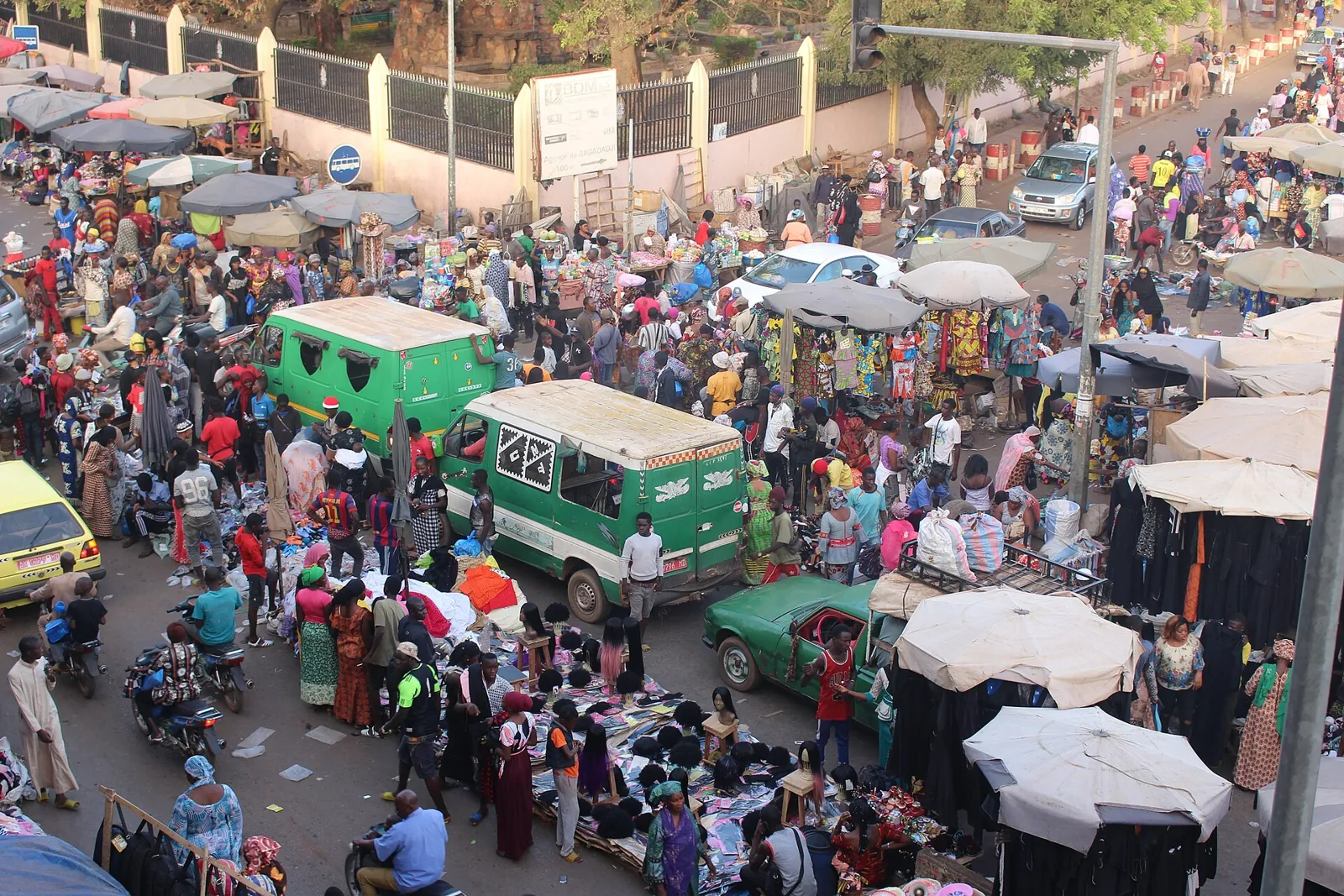
Image credits. Top image: Grand Marché - Bamako, MALI by Carolinerre, CC BY-SA 4.0, via Wikimedia Commons
Spotted something out of date or a gift that's no longer available? Tell our editors — we review every correction.



