Gift Etiquette in Russia: Flowers, New Year Gifts and What to Avoid
Bring an odd-numbered bouquet and something for the table, offer twice if your gift is refused, and save your big gift for New Year. Here is how gifting works in Russia.
We independently research every pick. If you buy through our links we may earn a small commission, at no extra cost to you. Affiliate disclosure.
Quick answer
When you visit a Russian home, bring flowers in an odd number (three, five or seven stems) plus something for the table, such as wine, chocolates or a cake. Even numbers of flowers are for funerals, and yellow flowers carry unwelcome meanings. Don't be thrown if your gift is politely refused at first: offer it again. The biggest gift day of the year is New Year, not Christmas.
- Host gift Odd-numbered bouquet plus wine, sweets or cake
- Avoid Even numbers of flowers, yellow flowers, carnations
- Main gift day New Year (December 31 to January 1)
- Refusals A first “no” is often politeness; offer again
What to give
Gift giving in Russia is most common among family and close friends, especially for birthdays, New Year and Orthodox Christmas. An invitation to someone's home is a sign of warmth, and arriving with something in hand is the polite thing to do.
For a host
Flowers are the classic host gift, and guides note that male guests in particular are generally expected to bring them. Cultural Atlas adds a traditional pattern for a family visit: flowers and wine or sweets for the woman of the house, and a bottle of spirits for the man. Many families today will simply be happy with a good bouquet and something to share over tea, such as a cake or a box of chocolates. Flowers are also given on dates and even on a child's first day of school, and the general feeling is that a bigger bouquet is a better one.
For friends, coworkers and in-laws
For people you know well, a thoughtful personal gift works best: a book, something from your home country, a nice item for the kitchen or good tea. When meeting a partner's parents, a generous bouquet for the mother and a quality bottle or food gift for the household is a safe opening move. If a family has children, a small toy or sweets is usually appreciated.
A generous bouquet (odd number of stems)
Why it works: Flowers are the default gift for visits, birthdays and holidays, and the size of the bouquet is noticed.
Skip it if: you can't count the stems before handing them over; an even number is a funeral signal.
Cake, chocolates or sweets for tea
Why it works: Hosts usually serve tea or coffee with food, so something sweet for the table is easy to share.
Skip it if: your hosts have told you they are baking; bring chocolates to keep instead.
Wine or quality spirits
Why it works: A bottle is a traditional gift for the household, and opened bottles are often finished during the meal.
Skip it if: you don't know whether your hosts drink; choose sweets or tea instead.
A specialty from your home country
Why it works: Food, crafts or a book from where you live makes a personal gift and starts conversation.
Skip it if: it is a novelty souvenir with no real use.
Need more ideas for the table? See our food gifts.
What to avoid
- Even numbers of flowers. Odd numbers are traditionally given for happy occasions, while even numbers are associated with funerals and mourning. Count carefully, especially with small bouquets.
- Yellow flowers for a romantic interest. Cultural Atlas notes that yellow can suggest disloyalty or separation, and Commisceo Global advises guests to avoid yellow flowers generally.
- Carnations. They are linked with funerals and formal commemorations, so they read as solemn rather than celebratory.
- Anything lavish to a teacher, doctor or official. Russian law limits gifts to these groups (see the business section), so a modest token is the safe choice.
Blue, on the other hand, is considered a good color for a gift to a friend.
How to give and receive
- Offer twice. A gift may be refused at first out of politeness. Insist a second time, warmly, and it will generally be accepted. If someone offers you a gift, a small protest before accepting is perfectly normal.
- Arrive on time. Commisceo Global suggests arriving on time or no more than about 15 minutes late, and dressing well as a sign of respect.
- Take off your shoes. Offer to remove your coat and outdoor shoes; your hosts may hand you slippers.
- Accept the hospitality. Try to accept the food and drink offered, and don't eat or drink during a toast. Leaving a little food on your plate signals that you are full.
- Offer to help. Offering to help clear up is polite even if it is declined, and inviting your hosts back is the best way to say thank you.
Presentation matters, so wrap gifts neatly; our gift wrapping guide has simple ideas.
Holidays and occasions
New Year (December 31 to January 1)
Novy God is the big family celebration of the season and the main gift-giving holiday. Children receive presents from Ded Moroz (Grandfather Frost), who is accompanied by his granddaughter Snegurochka, and families gather around a decorated New Year tree. If you want to give one gift to a Russian friend or colleague during winter, New Year is the time.
Orthodox Christmas (January 7)
Russian Orthodox Christmas falls on January 7, following the Julian calendar. It is a more religious and private family occasion than New Year, so a card or warm wishes are usually more fitting than a big present. Some people also mark the “Old New Year” informally on the night of January 13 to 14.
International Women's Day (March 8)
March 8 is a public holiday and one of the busiest days of the year for florists. Women receive flowers (mimosa and roses are popular), chocolates, perfume or cosmetics from partners, family and male colleagues. Because it is a day off, offices often celebrate the day before with flowers, small gifts and cake. Its counterpart for men is February 23, Defender of the Fatherland Day, when small gifts for male relatives and coworkers are common.
Birthdays and name days
Birthdays are the main personal gift occasion. Name days, the feast day of the saint a person is named after, are mostly kept by religious Orthodox families; in less religious homes they may be treated like a second birthday. If you are invited, bring flowers and something sweet.
Business gifting
In Russian business, trust and personal rapport matter a great deal, and relationships are often built over meals and socializing outside formal meetings. A modest, good-quality gift, such as a book, a specialty food or a well-made item with a discreet company logo, is appropriate once you know each other. New Year is the natural moment for a seasonal gift.
Be careful with value. Article 575 of the Russian Civil Code restricts gifts to public officials and to certain employees, such as staff of medical and educational organizations, with an exception for ordinary gifts worth up to 3,000 rubles. Commercial bribery is also a criminal offense, and anti-bribery laws in your own country, along with your company's policy, may apply too. When in doubt, keep gifts modest and never give cash. For more ideas, see our business gifts section.
Frequently asked questions
What should I bring to a Russian home?
An odd-numbered bouquet of flowers plus something for the table, such as wine, chocolates or a cake. A small gift for the children is a nice touch.
Why do Russians give an odd number of flowers?
Odd numbers are traditionally for happy occasions, while even numbers are associated with funerals and mourning.
When do Russians exchange Christmas gifts?
Most gift giving happens at New Year, when Ded Moroz brings presents to children. Orthodox Christmas on January 7 is a quieter, more religious holiday.
What if a Russian refuses my gift?
A first refusal is often just politeness. Offer the gift again and it will usually be accepted.
Can I give a gift to a teacher or doctor in Russia?
Yes, but keep it modest. Russian law limits gifts to staff of educational and medical organizations and to public officials, with an exception for ordinary gifts worth up to 3,000 rubles.
Exploring more countries? Browse our country guides, including Poland and Greece.
Sources
- Cultural Atlas — Russian Culture: Etiquette. theculturalatlas.org
- Commisceo Global — Russia Guide. commisceo-global.com
- Why Christmas — Christmas in Russia. whychristmas.com
- MasterRussian — March 8: International Women's Day. masterrussian.com
- The Moscow Times — What's a name day in Russia, and do I have one? themoscowtimes.com
- DLA Piper — Global Bribery Offenses Guide: Russia. dlapiper.com
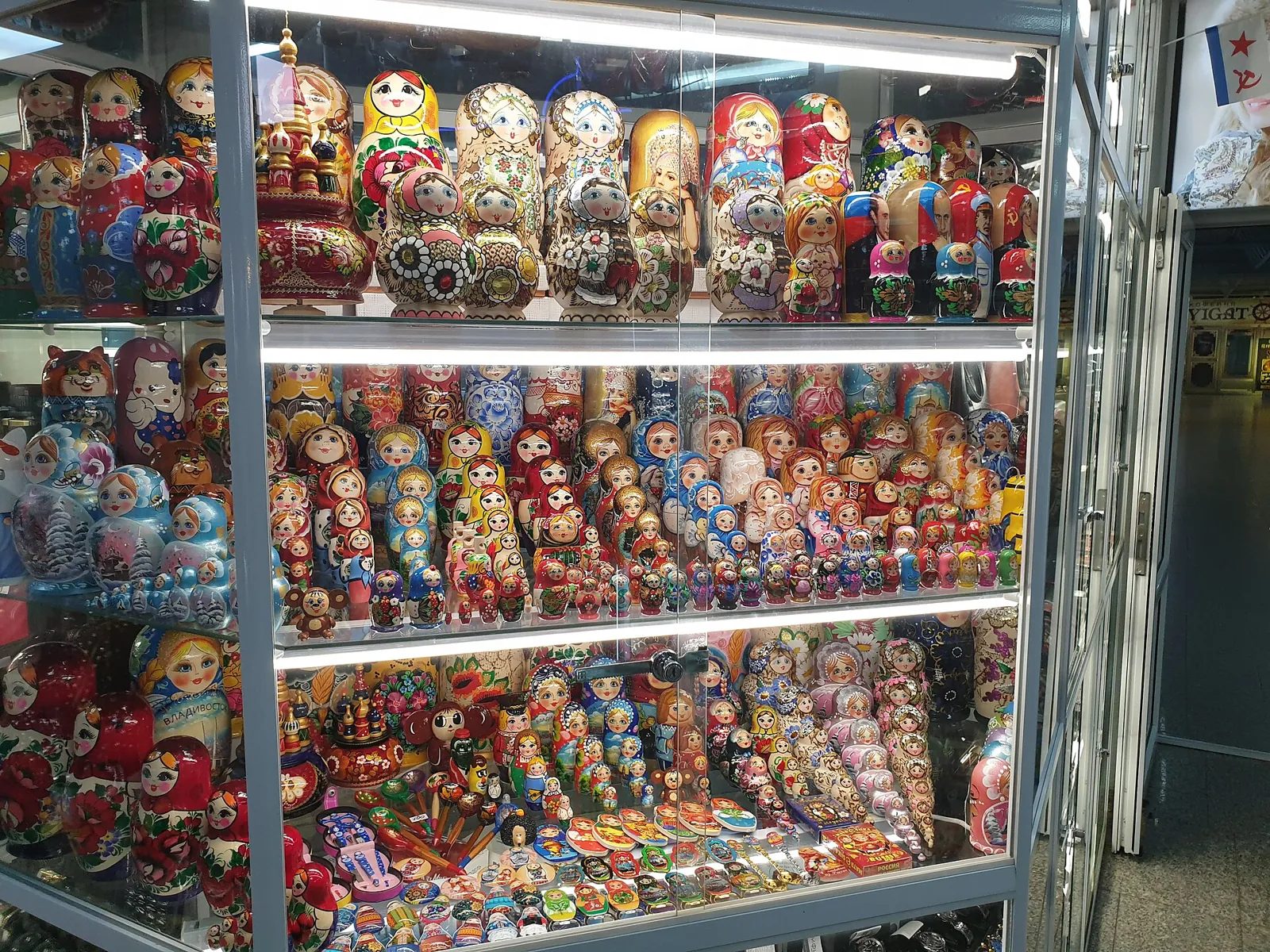
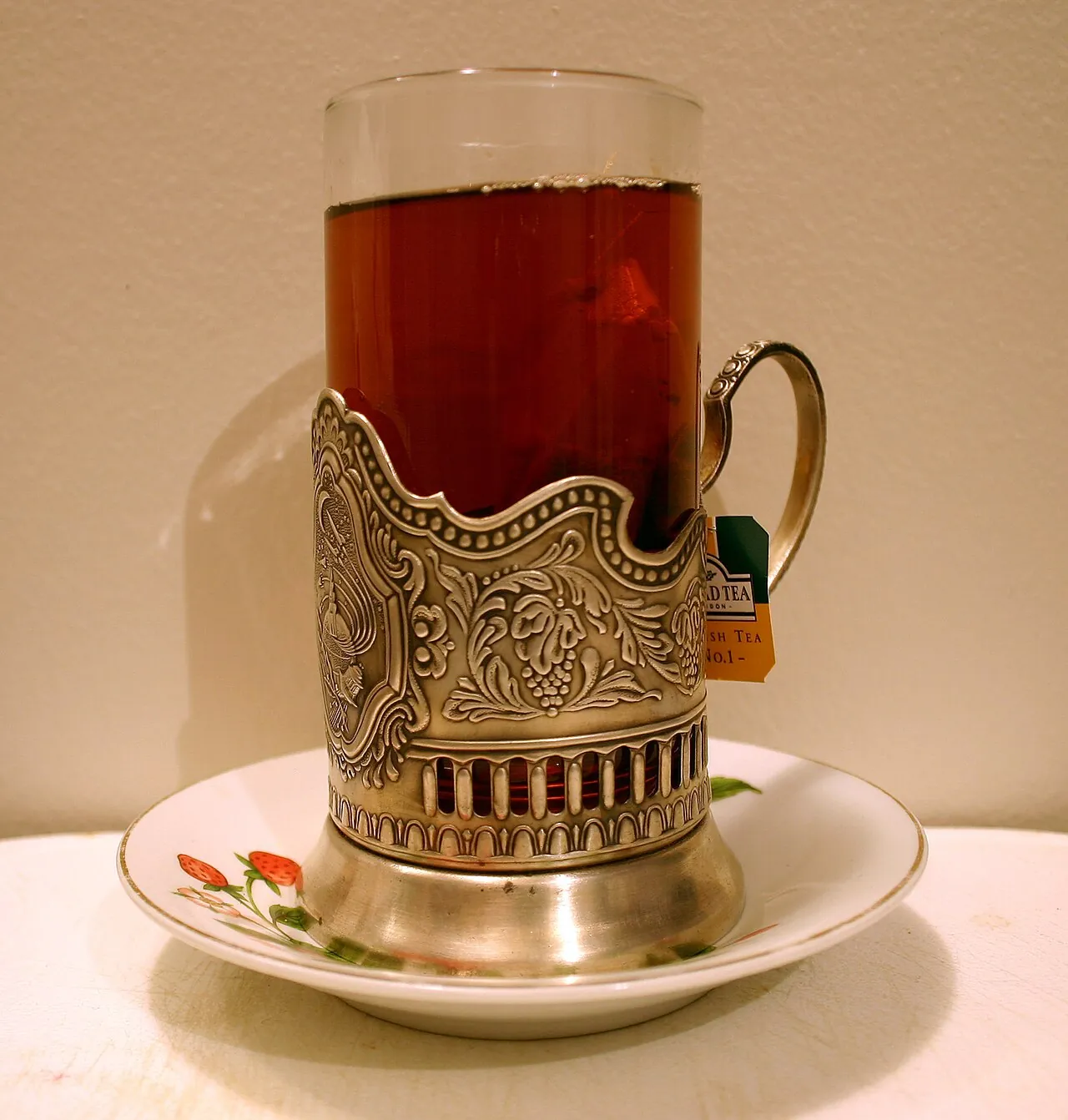
Image credits. Top image: Many matryoshka dolls by LR0725, CC BY-SA 4.0, via Wikimedia Commons · In-article image: Podstakannik and glass of tea by Obrez, CC BY-SA 3.0, via Wikimedia Commons
Spotted something out of date or a gift that's no longer available? Tell our editors — we review every correction.




