Gift Etiquette in Mauritius: Host Gifts, Festivals and Faith Customs
Mauritius mixes Hindu, Christian, Muslim and Chinese traditions, so the right gift depends on the family. Here is what to bring, what to avoid and how festivals work.
We independently research every pick. If you buy through our links we may earn a small commission, at no extra cost to you. Affiliate disclosure.
Quick answer
In Mauritius you are not expected to bring a gift when you visit someone's home, but a small, thoughtful one is always welcome. Sweets, biscuits or fruit for the children are easy choices. Match the gift to your hosts' faith: avoid leather for Hindu families and anything containing pork or pigskin for Muslim families, and bring alcohol only if you know your hosts drink. Give and receive with your right hand or both hands, greet elders first, and accept the food and tea you are offered.
- Host gift Optional; sweets, biscuits, fruit for children
- Hand to use Right hand or both hands
- Careful with Leather (Hindu homes), pork and pigskin (Muslim homes), beef, alcohol
- Big gift times Divali, Spring Festival, Eid, Christmas, weddings
Mauritius is a highly diverse, multi-faith society. Cultural Atlas, citing 2011 estimates, puts the population at roughly 48.5 percent Hindu, 26.3 percent Roman Catholic, 17.3 percent Muslim and 6.4 percent other Christian, with a smaller Buddhist and Sino-Mauritian community. Customs depend heavily on the family you are visiting, and people of different faiths often join in each other's festivals. If you are unsure, it is fine to ask; Mauritians are used to visitors and minor slips rarely cause offense.
What to give
Cultural Atlas notes that guests are not expected to bring gifts, which takes the pressure off. A modest gesture still shows warmth, and food that the household can share is usually the safest option.
For a host
Packaged sweets, good biscuits or a box of pastries suit almost any household. Visits are often informal: unannounced drop-ins have traditionally been welcome (though less so now that people work longer hours and phone ahead), and Sunday afternoon is a popular time to call. If you turn up around a mealtime you will probably be invited to eat, so a shareable treat makes a natural thank-you.
For friends, in-laws and families with children
Small snacks for children, such as fruit, are specifically welcomed according to Cultural Atlas. For in-laws or close friends, something from your home country, a quality food gift or a practical item for the home works well. Check the family's faith before choosing anything edible or made of animal products.
Sweets, biscuits or pastries
Why it works: Hosts usually serve tea and biscuits to visitors, so a box of something sweet fits right into Mauritian hospitality.
Skip it if: you can't confirm the ingredients for a Muslim or vegetarian Hindu household; choose clearly labeled vegetarian sweets instead.
Fruit or snacks for the children
Why it works: Small treats for children are a welcome, low-key gesture that never feels like showing off.
Skip it if: the family has no young children; a shareable food gift is better.
A food specialty from your home country
Why it works: Mauritians enjoy food from many cuisines, and a local specialty from where you live is a good conversation starter.
Skip it if: it contains pork, beef, gelatin or alcohol and you don't know the family's dietary rules.
A useful item for the home
Why it works: A well-made kitchen or table item is a good choice for in-laws or longer stays.
Skip it if: it is made of leather and the family is Hindu.
For more ideas that travel well, see our food gifts guide.
What to avoid
- Leather gifts for Hindu families. Many Hindu Mauritians regard cows as sacred, and Cultural Atlas notes that leather gifts may offend. Leather shoes and belts are also removed before entering places of worship.
- Beef for Hindu households. Many Hindus avoid beef, so leave beef jerky and meat-based snacks at home.
- Pork or pigskin items for Muslim families. Muslims generally avoid pork, and pork or pigskin gifts are considered inappropriate.
- Alcohol as a default gift. Many Muslim Mauritians do not drink, and attitudes vary in other households too. Bring wine or spirits only if you know your hosts enjoy them.
- Passing things with the left hand. For Indo-Mauritians in particular, giving or receiving with the left hand alone is poor etiquette.
- Food gifts during Ramadan daylight hours. Muslim Mauritians fast during Ramadan; if you visit then, offer food for the evening meal rather than expecting it to be eaten on the spot.
How to give and receive
- Use your right hand or both hands to hand over a gift and to accept anything offered.
- Greet elders first and properly. Respect for older people is expected across communities.
- Accept food and drink. Hosts will often insist that you take biscuits and tea, and both Rough Guides and Cultural Atlas say it is polite to accept what is offered and try everything.
- Dress conservatively when visiting a home for the first time or attending a religious event, and remove leather items before entering a temple or mosque.
- Expect a choice at the table. Meals are usually eaten with a spoon and fork, though at Indian events such as weddings many people eat with the right hand and guests are often given the choice.
- Ask when in doubt. Because customs vary so much between communities, asking your host what is appropriate is seen as courteous, not awkward.
Simple, neat wrapping is enough; our gift wrapping ideas cover low-key options.
Holidays and occasions
Mauritius has public holidays for several faiths. Many of them follow lunar or regional calendars, so the dates change each year; check the official government calendar for the current year.
Divali (October or November, date varies)
The Hindu festival of lights is a public holiday. Its best-known gifting custom is sharing homemade or shop-bought sweets with friends and neighbors from all communities. The Mauritius Times describes gateaux patates, gateaux banane and thekoas as standard preparations in many Hindi-Bhojpuri-speaking homes, and notes that sharing now often starts days before the festival. If a neighbor brings you a plate, a small return gift of sweets or fruit is a kind gesture.
Chinese Spring Festival (January or February, date varies)
The Lunar New Year is a public holiday. Sino-Mauritian families traditionally distribute gato lasir, a sticky rice-flour "wax cake," and red is the color of the festival. As in many Chinese communities, red envelopes of money for younger relatives are part of the celebration. See our Lunar New Year guide for gift ideas and taboos.
Eid al-Fitr (date varies)
Eid ul-Fitr, which ends Ramadan, is a public holiday whose date depends on the lunar calendar. Sweets or dates are a thoughtful contribution if Muslim friends invite you to celebrate.
Christmas and New Year
Christmas Day (December 25) and January 1 and 2 are public holidays. Christmas is an important family occasion for Catholic and other Christian Mauritians, and gift exchange follows familiar patterns. Other Hindu festivals with public holidays include Thaipoosam Cavadee, Maha Shivaratri, Ugadi and Ganesh Chaturthi; the National Day on March 12 is a civic holiday rather than a gift-giving one.
Business gifting
Gifts are not a central part of Mauritian business culture. Cultural Atlas recommends being on time even if your counterpart arrives late, shaking hands with everyone present, bringing plenty of business cards and printed materials, and dressing formally. Relationships are often built over lunches and dinners, so hosting a meal can mean more than a present.
If you do give something, keep it modest and suitable for every faith: a book about your region, quality stationery or a food gift without pork, beef or alcohol. Avoid anything of significant value, especially for public officials. Anti-bribery laws in Mauritius and in your home country can apply to gifts and hospitality, and many companies set their own limits, so check both organizations' policies first. Our business gifts section has more general guidance.
Frequently asked questions
Do I need to bring a gift when visiting a Mauritian home?
No. Guests are not expected to bring gifts, but sweets, biscuits or fruit for the children are a friendly gesture.
Can I give alcohol as a gift in Mauritius?
Only if you know your hosts drink. Many Muslim Mauritians abstain, and some Hindu and Christian families do too, so a food gift is the safer default.
What gifts should I avoid for Hindu friends in Mauritius?
Avoid leather goods and anything containing beef. Many Hindu Mauritians regard cows as sacred.
What is shared at Divali in Mauritius?
Sweets. Families share cakes such as gateaux patates and other mithais with friends and neighbors of all communities, often starting a few days before the festival.
Which hand should I use to give a gift?
Your right hand or both hands. Using the left hand alone is considered poor etiquette, especially among Indo-Mauritians.
Planning more travel in the region? See our guides to Madagascar and India, or browse all country etiquette guides.
Sources
- Cultural Atlas — Mauritian Culture: Etiquette. theculturalatlas.org
- Cultural Atlas — Mauritian Culture: Business Culture. theculturalatlas.org
- Cultural Atlas — Mauritian Culture: Religion. theculturalatlas.org
- Rough Guides — Customs and etiquette in Mauritius. roughguides.com
- Mauritius Times — Reflections Around Divali Celebrations in Mauritius. mauritiustimes.com
- Wikipedia — Public holidays in Mauritius. en.wikipedia.org
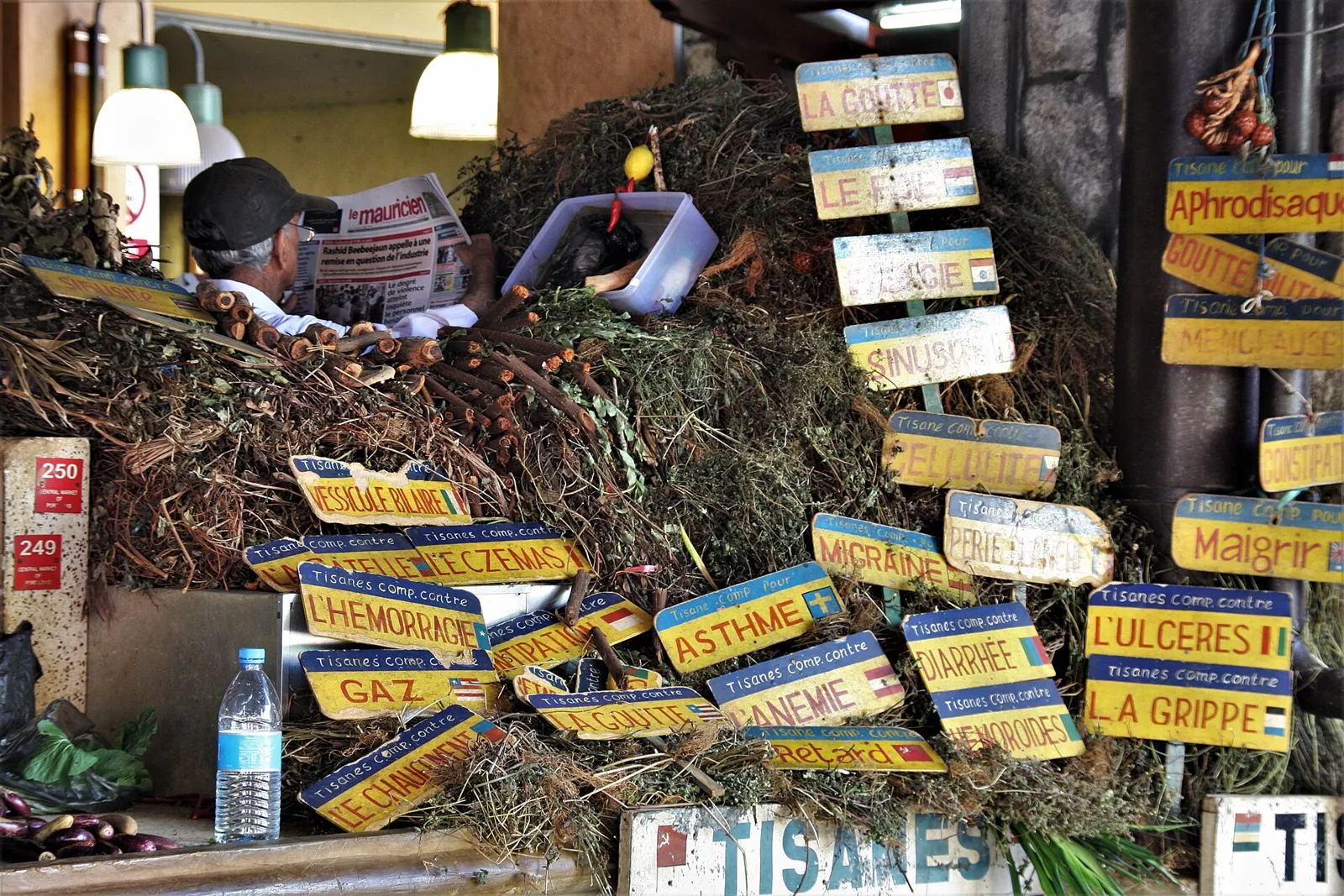
Image credits. Top image: Herbal tisanes for several ailments on sale at the Central Market, Port Louis, Mauritius by Sushil Dawka, CC BY-SA 4.0, via Wikimedia Commons
Spotted something out of date or a gift that's no longer available? Tell our editors — we review every correction.



