Gift Etiquette in New Zealand: Host Gifts, Koha and Christmas
Kiwis keep gifts low-key: wine, chocolate or flowers for a host, a plate of food when asked, and koha in Māori settings. Here is how it all works.
We independently research every pick. If you buy through our links we may earn a small commission, at no extra cost to you. Affiliate disclosure.
Quick answer
New Zealand gift giving is relaxed and modest. When invited to a home, bring a small token such as wine, chocolates, flowers or a book from your country, and ask "What can I bring?" in advance. "Bring a plate" means bring a dish of food to share, and BYO means bring your own drinks. In Māori settings, a contribution called koha is customary; ask your hosts what is appropriate. Gifts are usually opened in front of the giver.
- Host gift Wine, chocolates, flowers or a book from home
- Budget Modest; high-value gifts aren't expected
- Opening Usually in front of the giver
- Big gift day Christmas, in the middle of summer
What to give
In New Zealand, gifts are mostly kept for special occasions such as birthdays and Christmas, or to thank someone for a kindness. Cultural Atlas notes that recipients don't usually expect gifts of high monetary value, and Commisceo Global sums it up: gift giving is about thoughtfulness, not display.
For a host
Arrange visits in advance and ask your host what you can bring. A token gift such as a bottle of wine, chocolates or flowers is common. If the invitation says "bring a plate," it doesn't mean an empty plate: bring a dish or platter of food to share, a little larger than a normal family serving. For parties, hosts often say whether drinks are provided or whether it's BYO (bring your own).
For friends, in-laws and Māori hosts
For in-laws and close friends, something personal and practical beats something expensive: a book, a specialty food from your home region or an experience gift you can share. If you are invited to a Māori home, Cultural Atlas suggests bringing a small, simple gift, such as food, drinks, flowers or photos of your homeland. Offer to take off your shoes, especially in Māori homes, and offer to help with preparation and cleanup.
A bottle of wine
Why it works: Wine is one of the most common token gifts for a dinner host and can be shared or saved.
Skip it if: your hosts don't drink; choose chocolates or flowers instead.
Good chocolates
Why it works: Easy, unfussy and appreciated in almost any household.
Skip it if: it's a hot summer day and you'll be outdoors for hours before you arrive.
A shared dish or platter
Why it works: When you're asked to bring a plate, a generous salad, dessert or cheese platter is exactly what the host has in mind.
Skip it if: the host hasn't asked; check first so it fits the menu.
A book or small item from your home country
Why it works: Commisceo Global specifically suggests it, and it gives you something to talk about.
Skip it if: it's a generic airport souvenir with no real use.
Understanding koha
Koha is a Māori word usually translated as gift, offering, donation or contribution, especially one that maintains a relationship and carries an expectation of reciprocity. It is not a fixed price or a simple payment for services, and its meaning matters more than its monetary value. Customs differ between iwi (tribes) and marae, so the best rule is to ask your hosts in advance.
- At a marae. Guests (manuhiri) give koha to acknowledge the hosts' work and costs. In many tribes, money is collected from the group beforehand and laid down on the marae by the visitors' last speaker during the welcome (pōwhiri), often in an envelope, though not every tribe follows this practice.
- How much. There is no set amount; give what you can afford. Cultural Atlas notes that around NZ$20 per person is a common guideline for a personal marae visit, and that organizations should give a larger koha for business or government visits. For an overnight stay, contact the marae beforehand to arrange koha that covers costs.
- At a tangihanga (funeral). Koha is also a way of showing respect for the person who has died and supporting the family.
- Gifts from Māori hosts. If you are given a gift on behalf of a Māori person or community, open it right away.
A few related courtesies help too: ask permission before taking photos inside a meeting house (wharenui), don't eat or drink inside it, and wait for the blessing before eating in the dining hall.
What to avoid
- Lavish gifts. Showy or expensive presents can make people uncomfortable in a culture that values modesty.
- Turning up empty-handed to a "bring a plate" event. It means the host is counting on guests to supply part of the meal.
- Bringing extra people unannounced. Check with the host first, although Māori hosts are often more flexible about family and close friends.
- Treating koha as a ticket price. Haggling or giving a token amount for a significant service can cause offense; koha should reflect your gratitude.
- Touching someone's head or passing food over it. In Māori culture the head is considered the most sacred part of the body.
How to give and receive
- Hand gifts over simply. There's no special hand protocol in everyday settings; a smile and a quick thank-you are enough.
- Expect gifts to be opened in front of you, either right away or later with other presents. Do the same with gifts you receive.
- Arrive on time, not early. Arriving more than about ten minutes early can inconvenience a host; small gatherings allow ten to fifteen minutes' leeway.
- Return the favor. Kiwis notice stinginess. If someone shouts you a drink or a meal, return it next time.
- In Māori settings, follow the hosts' lead. Local tikanga (customs) vary, and asking beforehand is always welcome.
Holidays and occasions
Christmas (December 25) and Boxing Day
Christmas falls in summer, so many families celebrate outdoors. A formal dinner is still traditional, but barbecue lunches have grown popular, and pavlova with summer fruit is a favorite dessert. The red-flowering pōhutukawa, which blooms around Christmas, is known as New Zealand's Christmas tree. Gift giving is common, and charities collect presents for families in need. Boxing Day, December 26, is a statutory holiday. Pick summer-friendly gifts: outdoor games, picnic gear or something for the beach. Our Christmas gift guides have more ideas.
Matariki (date varies)
Matariki is the Māori name for the Pleiades star cluster, which rises in mid-winter (around June or July) and marks the Māori new year. The date changes each year. It is a time for remembrance, gathering and sharing food rather than a gift-giving holiday; contributing a dish to a shared meal is a good way to take part.
Birthdays, Mother's Day and Father's Day
Birthdays are the main personal gift occasion. Mother's Day falls in May, and Father's Day in September rather than June.
Business gifting
Business etiquette in New Zealand is practical and informal, and gifts aren't expected at meetings. If you want to thank a team, a modest shared treat or a book or food item from your home region is appropriate. At Christmas, many workplaces hold a small gift exchange or end-of-year function; keep contributions within any agreed budget.
Public servants and many private companies have rules on accepting gifts and hospitality, and anti-bribery laws in New Zealand and your home country can apply. Keep gifts modest, avoid anything that could look like it is meant to influence a decision, and check both organizations' policies. When visiting a marae on business, your organization should arrange an appropriate koha. See our business gifts section for general guidance.
Frequently asked questions
What should I bring to a New Zealand dinner?
A bottle of wine, chocolates or flowers is typical. Ask "What can I bring?" when you accept, and if you're told to bring a plate, bring a dish to share.
What does "bring a plate" mean in New Zealand?
Bring a plate of food to share with the group, a little larger than you'd make for your own family. It doesn't mean an empty plate.
How much koha should I give at a marae?
There's no fixed amount. Around NZ$20 per person is a common guideline for a personal visit, while organizations should give more. Ask your hosts in advance, since customs vary between marae.
Do New Zealanders open gifts right away?
Usually, yes, in front of the giver, either on receipt or later along with other presents.
Is Christmas a big gift-giving holiday in New Zealand?
Yes. It falls in summer, so celebrations often involve barbecues, the beach and pavlova alongside family gift exchanges.
Heading across the Tasman too? Read our Australia gift etiquette guide, or browse all country guides.
Sources
- Cultural Atlas — New Zealand Culture: Etiquette. theculturalatlas.org
- Commisceo Global — New Zealand Guide. commisceo-global.com
- Te Aka Māori Dictionary — koha. maoridictionary.co.nz
- 1News — What is koha and how much should I give? 1news.co.nz
- Wikipedia — Christmas in New Zealand. en.wikipedia.org
- Department of Conservation — Pōhutukawa. doc.govt.nz
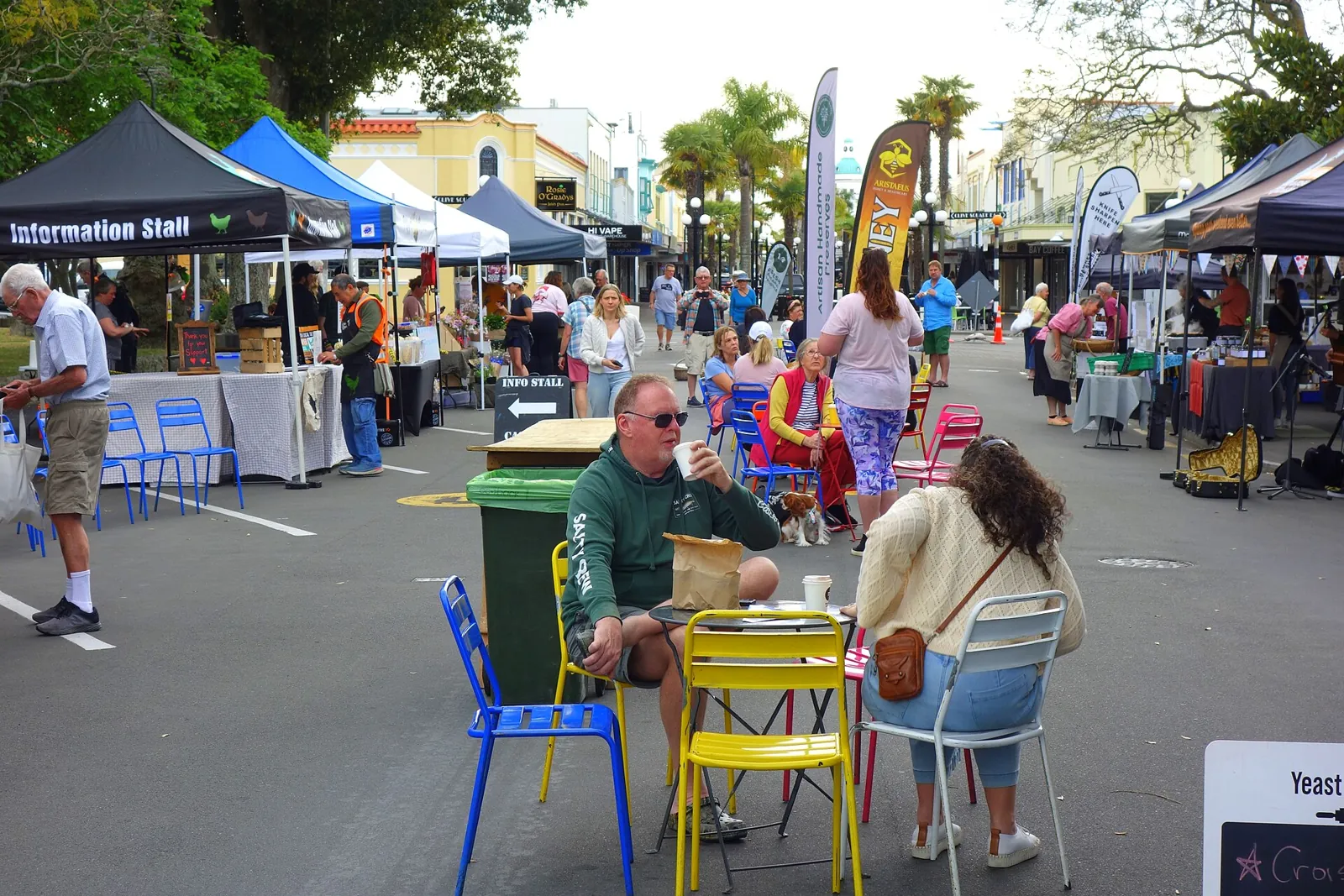
Image credits. Top image: Napier Urban Farmers' Market - Napier, NZ - DSC05295 by Daderot, CC0 1.0, via Wikimedia Commons
Spotted something out of date or a gift that's no longer available? Tell our editors — we review every correction.



