Experience gifts for toddlers ages 1 to 3
Clutter-free experience gifts for 1- to 3-year-olds, from memberships and parent-and-child classes to short outings, with tips on booking and wrapping.
We independently research every pick. If you buy through our links we may earn a small commission, at no extra cost to you. As an Amazon Associate we earn from qualifying purchases. Affiliate disclosure.
Quick answer
The best experience gifts for toddlers are simple, repeatable and shared with a grown-up: a zoo or children's museum membership, a term of parent-and-child swim or music classes, or a planned outing such as a farm visit or a short train ride. Pick something that fits around naps, ask the parents before you book, and wrap a small related object so the toddler has something to open.
- Typical budget $15 – $250
- Ages 1 to 3 years
- Best for grandparents, godparents, aunts and uncles
- Golden rule Check with the parents before booking anything
Experience gifts for toddlers solve a familiar problem: the toy shelf is full, but the family would love a reason to get out of the house. At this age the "experience" is really time together, so the best picks are ones a parent or grandparent enjoys too. This guide focuses on outings, classes and memberships; for physical presents, see our main guide to gifts for toddlers, and for older children, our experience gifts for kids.
The American Academy of Pediatrics notes that it is a parent's or caregiver's presence and attention that enriches young children, more than fancy electronic gadgets. An outing you share fits that idea neatly.
Memberships for repeat visits
Toddlers love repetition, and short, frequent visits suit their attention spans better than one long, expensive day. A membership lets the family pop in for an hour and leave before a meltdown.
A zoo or aquarium family membership
Why it works: Animals are endlessly fascinating to 1- to 3-year-olds, and a membership turns the zoo into a regular morning outing. Many memberships also include free parking or discounts on special events.
Skip it if: the nearest zoo is more than an hour away; a local farm or nature center is easier to use often.
A children's museum membership
Why it works: Children's museums usually have dedicated areas for the under-3s, with water tables, ramps and soft play. They are a lifesaver on rainy and very hot days.
Skip it if: the family already has one; offer to cover the renewal instead, which is just as welcome.
A botanical garden or nature center pass
Why it works: Wide paths, ponds with ducks and seasonal events make these places easy with a stroller. They are also calm places for a grandparent outing.
Skip it if: the toddler is in a phase of running off; enclosed play areas may be less stressful for now.
Classes that grow with them
Parent-and-child classes give a toddler a weekly routine and give the adult a reason to meet other families. Look for short sessions, usually 30 to 45 minutes, held mid-morning rather than at nap time.
Parent-and-child swim classes
Why it works: The AAP says swim lessons can help reduce drowning risk for children ages 1 to 4 and recommends parent-child water classes as a good way to introduce water safety habits. It is a gift with real practical value as well as splashing fun.
Skip it if: the family has no time for a weekly commitment; a single pool visit pass is an easier start.
A toddler music and movement class
Why it works: Singing, shakers and dancing suit this age perfectly, and the songs often become part of the family's daily routine at home.
Skip it if: the parent dislikes group singing; a music-themed outing such as a family concert works better.
A toddler tumbling or gym class
Why it works: Soft mats, ramps and tunnels let climbers climb safely, practicing walking, jumping and balancing in one place.
Skip it if: the child is very cautious with new places; a drop-in session lets them try it first.
A messy art or sensory play session
Why it works: Paint, dough and water play happen in someone else's space, so there is no cleanup at home. Drop-in sessions are easy to gift as a small bundle.
Skip it if: the toddler still puts everything in their mouth and the class uses small items; check the age range.
Simple outings: experience gifts for 1 year old and 2 year old toddlers
Very young toddlers do not need tickets to anything elaborate. Simple outdoor outings are ideal, and the AAP highlights playing outside as good for young children's physical development, curiosity and mood.
A day at a farm or pick-your-own patch
Why it works: Seeing goats, tractors and strawberries up close is thrilling at 18 months, and farm visits usually suit strollers and short legs.
Skip it if: the season is wrong; choose a pumpkin patch in fall or a petting farm in spring.
Tickets for a short train or carousel ride
Why it works: A heritage railway, miniature train or carousel gives a big thrill in a short time, which is exactly right for this age.
Skip it if: loud noises upset the child; a quiet boat pond or duck feeding spot is gentler.
A nature walk kit with a promise
Why it works: Pack a small backpack with bubbles, a ball and a picture book set outdoors, and add a card promising a walk together. The AAP suggests bubbles, ball rolling and outdoor story time as easy ways to play outside with toddlers.
Skip it if: you live far away and cannot deliver the walk yourself; a membership is a better long-distance gift.
Experience gift ideas for 3 year old children
Tickets to a children's theater or puppet show
Why it works: Shows for preschoolers are short, interactive and forgiving of wriggling. Many theaters run special relaxed performances.
Skip it if: the child has not sat through anything longer than a story time yet; start with a library puppet session.
A paint-your-own pottery visit
Why it works: A 3-year-old can happily decorate a small plate or handprint tile, and the family gets a keepsake back after firing.
Skip it if: the studio does not welcome young children; call ahead to check.
How to choose experience gifts for toddlers
- Talk to the parents first. They know the nap schedule, budget for gas and parking, and what is already booked.
- Favor flexibility. Memberships and drop-in passes beat a single fixed date that may clash with a cold.
- Give something to unwrap. Toddlers do not understand vouchers, so pair the gift with a plush animal, a board book about the zoo or a pair of swim goggles.
- Offer to come along. For grandparents, the outing itself can be the best part.
- Safety basics still apply. The AAP stresses that swim lessons are only one layer of protection and that close, constant supervision is needed whenever a child is in or near water.
If you want a mix of things to hold and things to do, our list of non-toy gifts for kids has more clutter-free ideas, and the wider experience gifts section covers every age.
Frequently asked questions
Are experience gifts good for a 1-year-old?
Yes, as long as they are simple and shared with a parent. A zoo membership, a parent-child swim class or a farm visit gives the family repeated outings, which suits a 1-year-old better than one big event.
At what age can toddlers start swim lessons?
The AAP says swim lessons can help reduce drowning risk for children ages 1 to 4, and parent-child water classes are a good introduction. It does not recommend infant swim programs for babies under 1 as a way to lower drowning risk.
How do you wrap an experience gift for a toddler?
Put the membership card or printed booking in an envelope for the parents and wrap a related small item for the child, such as a toy animal, a book about trains or a bucket for the beach.
Is a membership better than a single day ticket?
For toddlers, usually yes. Short, frequent visits fit their energy, and a family can leave after an hour without feeling they wasted an expensive ticket.
Sources
- HealthyChildren.org (American Academy of Pediatrics) — Swim lessons: when to start and what parents should know. www.healthychildren.org
- HealthyChildren.org (American Academy of Pediatrics) — Playing outside: why it's important for kids. www.healthychildren.org
- HealthyChildren.org (American Academy of Pediatrics) — The power of play: how fun and games help children thrive. www.healthychildren.org
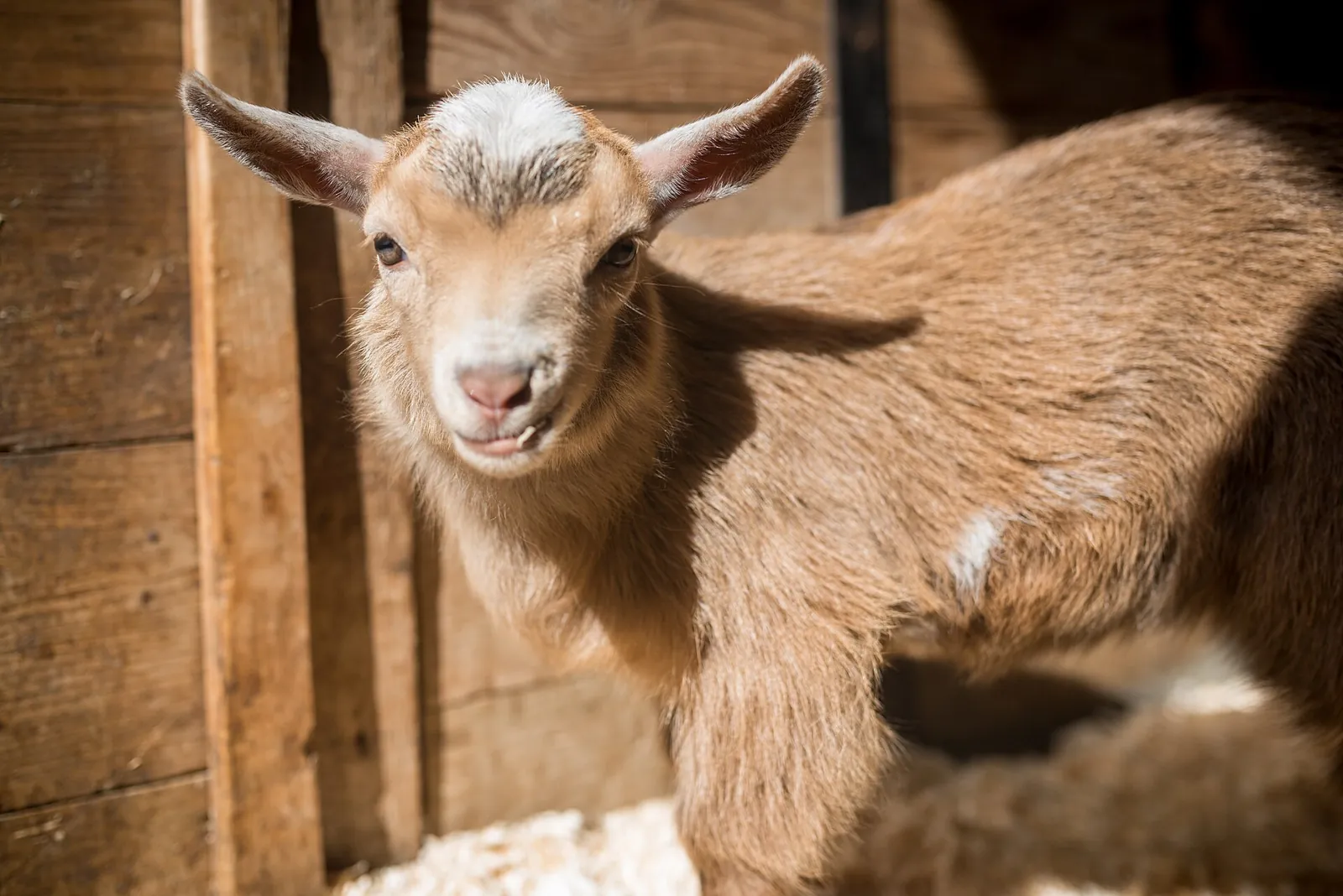
Image credits. Top image: Baby Goat Standing with Ears Out by Eric Kilby, CC BY-SA 2.0, via Wikimedia Commons
Spotted something out of date or a gift that's no longer available? Tell our editors — we review every correction.