Étrennes: a guide to New Year tips in France
Caretaker, mail carrier, firefighters, cleaner: who traditionally receives étrennes in France, commonly cited amounts, how to give them and how to avoid calendar scams.
Quick answer
Étrennes are the year-end tips or small gifts that people in France give to those who serve them through the year: the building caretaker (gardien or concierge), the mail carrier, firefighters selling their calendar, and household help such as a cleaner or nanny. They are a custom, not a legal obligation, and the amount is up to you. Commonly cited ranges are about €5 – €20 for calendar visits and €30 – €100 for a caretaker or regular home help. Give cash in an envelope with a short note, and check the badge of anyone selling calendars at your door.
- When Calendar rounds from November to mid-January; most étrennes in December
- Legal obligation None; amounts are custom
- Usual form Cash in an envelope with a note
- Watch out for Fake calendar sellers; ask for a professional card
What are étrennes?
The word comes from the Latin strena, a gift exchanged as a good omen, and in French the plural étrennes has long meant presents given at New Year. Today, étrennes are the closest thing to New Year tips in France: the word mostly means a year-end thank-you to people whose work makes daily life easier. If you come from the US, think of holiday tipping for your doorman or mail carrier, with French twists: the firefighters and postal workers knock on your door with a calendar, and the building caretaker often expects an envelope.
French consumer and banking sources are clear that the custom has never been a legal obligation. It is a voluntary gesture, and the right amount depends on your budget, how often the person helps you and your relationship with them. Skipping it entirely can still be noticed, especially by a caretaker you see every day. For the wider picture of French gift customs, see our guide to gift etiquette in France.
Who traditionally receives étrennes, and how much
The figures below are ranges commonly quoted in French press and consumer guides. They are customs, not rules or official rates, and they vary by city, building and household.
| Who | Commonly cited range | Notes |
|---|---|---|
| Building caretaker (gardien, concierge) | €30 – €50, sometimes up to €100 | The traditional rule of thumb was about 10% of a month's rent; that is now less common |
| Mail carrier (facteur) | About €5 – €20 | Usually given when they offer their calendar |
| Firefighters (sapeurs-pompiers) | Often €5 – €20 | Free donation for their calendar; many people give more |
| Refuse collectors (éboueurs) | From about €5 | Not allowed to collect in Paris; see the scams section |
| Cleaner (femme de ménage, aide ménagère) | About €30 – €50 | More for someone who comes weekly for years |
| Nanny or babysitter | About €30 – €50 | Depends on how regular the work is |
| Childminder (assistante maternelle) | Sometimes 10% – 20% of a monthly salary | Less widespread; a gift is also common |
| Gardener or other home help | About €20 – €50 | More for regular work |
The caretaker
The gardien is the person for whom the custom is strongest. They sort your mail, take in parcels and keep an eye on the building, so the envelope is a thank-you for a whole year. Some residents give wine, champagne or chocolates instead of, or alongside, cash. If you are new to a building, ask a neighbor what is usual there; it is a perfectly normal question.
The calendar visits
From autumn onward, mail carriers and firefighters may ring your bell offering a calendar for a donation of your choice. There is no set price. Firefighters' calendars are sold by the station's amicale, a local association, not by the fire service itself. The money mainly funds the firefighters' community life and support for families after accidents on duty, not rescue operations. If you would rather not give, a polite "non merci" is fine; nobody should pressure you.
People you employ at home
For a cleaner, nanny or home helper, many families give étrennes in cash or as a gift such as a hamper, flowers or a gift card. If you formally employ someone through France's home-employment schemes, a larger bonus may need to be declared like pay; check the rules of the scheme you use before giving a big sum.
When to give étrennes
There is no fixed date. Calendar rounds usually start in November and can run until mid-January. For caretakers, most étrennes are handed over in the two weeks before Christmas, though some people give in early January with their New Year's wishes. A good habit is to have envelopes ready by mid-December, so you are not caught at the door without small bills.
How to give: cash, gift and a short note
- Use clean bills in a plain or seasonal envelope, handed over in person.
- Add a short handwritten note. "Merci pour votre aide tout au long de l'année, et meilleurs vœux pour la nouvelle année" works for almost anyone.
- Write the person's name on the envelope if you leave it with someone else.
- For larger amounts, consider a bank transfer labelled "Étrennes," which leaves a record.
- Keep a little cash at home in December for unexpected calendar visits.
- Don't hand over a pile of loose coins; some people find it patronizing.
- Don't let a door-to-door seller into your home.
Our guide to cash and gift card etiquette has more ideas for making money feel like a gift, and our thank-you note wording examples help if you want to write more than one line.
Calendar scams: how to spot a fake seller
Every year, French towns and fire services warn about people posing as firefighters, postal workers or refuse collectors to collect money. A few checks protect you:
- Ask for a professional card. Real firefighters wear an official uniform with the local badge and can show a professional or amicale card on request.
- Look at the calendar. A genuine firefighters' calendar names the local station or town. Be wary of a generic calendar, a "compulsory" price or pressure to come inside.
- Know the local rules. In Paris, municipal workers such as refuse collectors and sewer workers are strictly forbidden from asking for étrennes, including staff of private contractors collecting waste for the city. Anyone at a Paris door claiming to be one is very likely an impostor.
- Check with La Poste. A real mail carrier can tell you which distribution center they work from.
- When in doubt, don't open. Call your town hall, the local fire station or the police (17), and never give out bank details or codes.
Frequently asked questions
Are étrennes compulsory in France?
No. No law requires them, and the amount is entirely up to you. They are a long-standing custom, strongest for building caretakers.
How much should I give the concierge?
Commonly cited figures are €30 to €50, sometimes up to €100, depending on your means and how much they do for you. The old rule of 10% of a month's rent is now less common.
Do I have to buy the firefighters' calendar?
No. It is a free donation to the station's association. Many people give €5 to €20, but you can decline politely.
Can I give a gift instead of cash?
Yes. Chocolates, wine, champagne, flowers or a gift card are all appreciated, especially for a caretaker or home help you know well.
Looking for gifts for friends rather than tips for helpers? See our New Year gift ideas or browse all New Year guides.
Sources
- Les clés de la banque — Étrennes : usages et arnaques (2026). lesclesdelabanque.com
- Infosyvelines — Notre guide pratique des étrennes pour remercier ceux qui vous rendent service (2025, updated 2026). infosyvelines.fr
- Infosyvelines — Tournée des calendriers 2027 des sapeurs-pompiers (2026). infosyvelines.fr
- Ville de Paris — Étrennes de fin d'année : quête et vente de calendriers interdites (updated 2025). paris.fr
- The Connexion — Learn from the French: how Christmas étrennes gifts work (2023). connexionfrance.com
- CNRTL — Étymologie de « étrenne ». cnrtl.fr
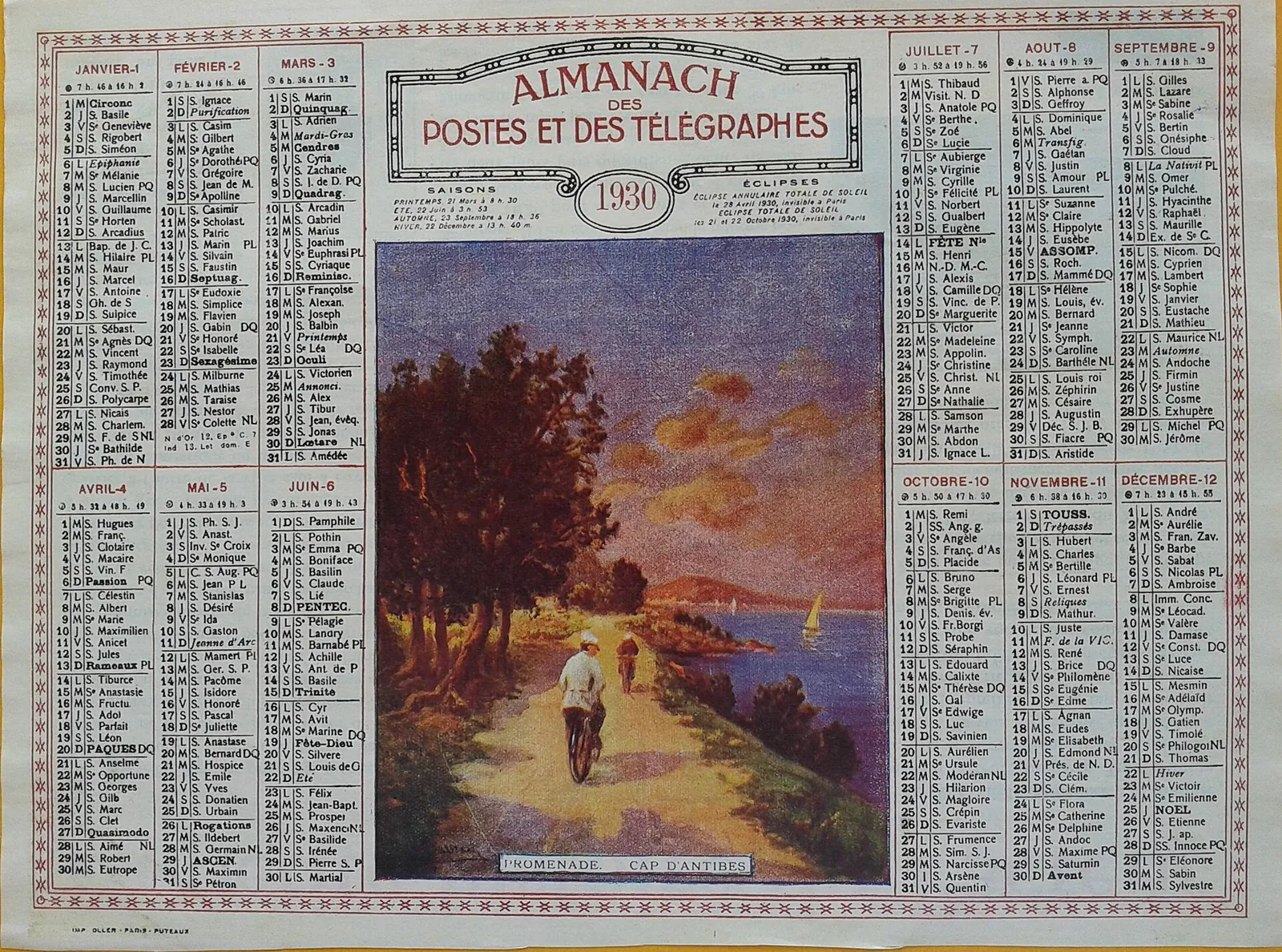
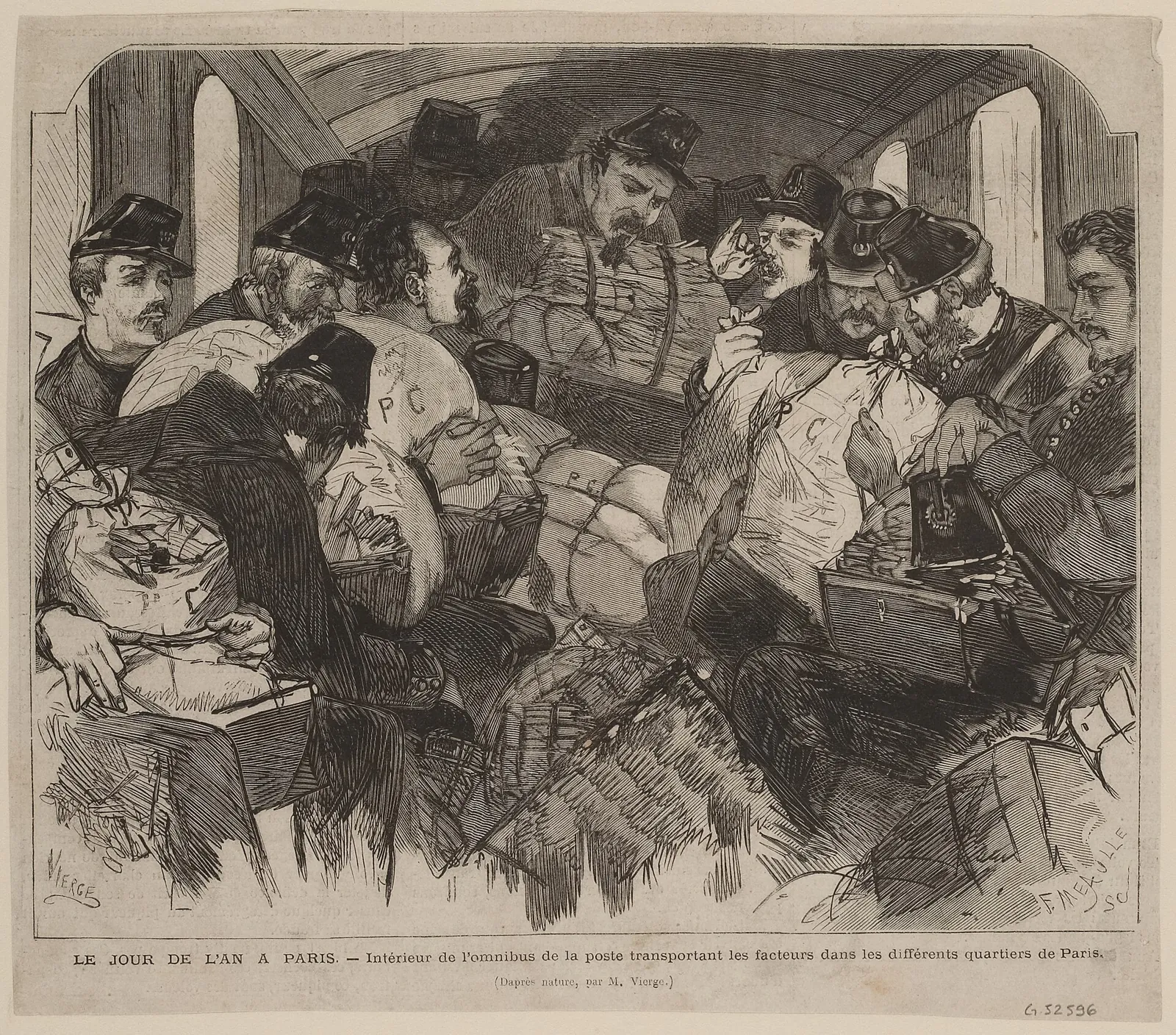
Image credits. Top image: Almanach des Postes 1930 by Contributeur2019, CC BY-SA 4.0, via Wikimedia Commons · In-article image: Le jour de l'an à Paris. Intérieur de l'omnibus de la poste transportant les facteurs dans les différents quartiers de P, Paris Musées 20230525205350 by Méaulle, Fortuné Louis (Angers, 11–04–1844 - en 1901), graveur, CC0 1.0, via Wikimedia Commons
Spotted something out of date or a gift that's no longer available? Tell our editors — we review every correction.