DIY New Year gifts: lucky-charm cookies and easy homemade ideas
A step-by-step tutorial for lucky-charm shortbread in a tin, plus quick homemade New Year gifts from the kitchen and a paper craft kids can make.
Quick answer
The easiest DIY New Year gift that still feels special is a tin of lucky-charm shortbread: plain butter cookies cut into four-leaf clovers, horseshoes, pigs and mushrooms, decorated simply and packed in an airtight tin with an ingredient label. One batch makes about two dozen cookies for well under $15. Below is the full tutorial, plus quick variations from the kitchen and a paper craft kids can make.
- Time About 1 1/2 hours, including chilling and cooling
- Difficulty Easy
- Cost About $8 – $15 per batch, plus tins
- Makes About 24 cookies with a 3-inch cutter
Homemade New Year gifts work best when they are small, cheap to make in quantity and a little bit lucky. Good-luck symbols are a big part of New Year in Germany, where marzipan pigs are a traditional gift and chimney sweeps are considered lucky because they once collected their fees on New Year's Day, according to The Local Germany. Shortbread is a forgiving dough for cutting those shapes: it has no eggs, keeps its edges well when chilled and tastes good plain. For the meaning behind each symbol, see our guide to New Year's lucky charms.
What you need
- 1 cup (2 sticks) butter, softened; if unsalted, add about 1/2 teaspoon kosher salt
- 1/2 cup plus 1 tablespoon granulated sugar
- 2 3/4 cups all-purpose flour, plus a little for rolling
- Cookie cutters: four-leaf clover, horseshoe, pig, mushroom, or a 3-inch round
- Decoration (optional): confectioners' sugar mixed with a few drops of water or lemon juice, gel food coloring, melted chocolate or sprinkles
- Rolling pin, baking sheets, parchment paper, wire rack
- Airtight tins or boxes, parchment or wax paper for layering, labels and ribbon
The quantities follow a standard rolled shortbread published by the baking site Scotch & Scones (rolled 1/4 inch thick, baked at 350°F for 14 to 16 minutes). Ovens vary, so watch the color rather than the clock.
How to make lucky-charm shortbread
-
Make the dough
Beat the softened butter and sugar (and salt, if using unsalted butter) until smooth and creamy. Add the flour gradually and mix on low just until the dough comes together.
-
Roll it out
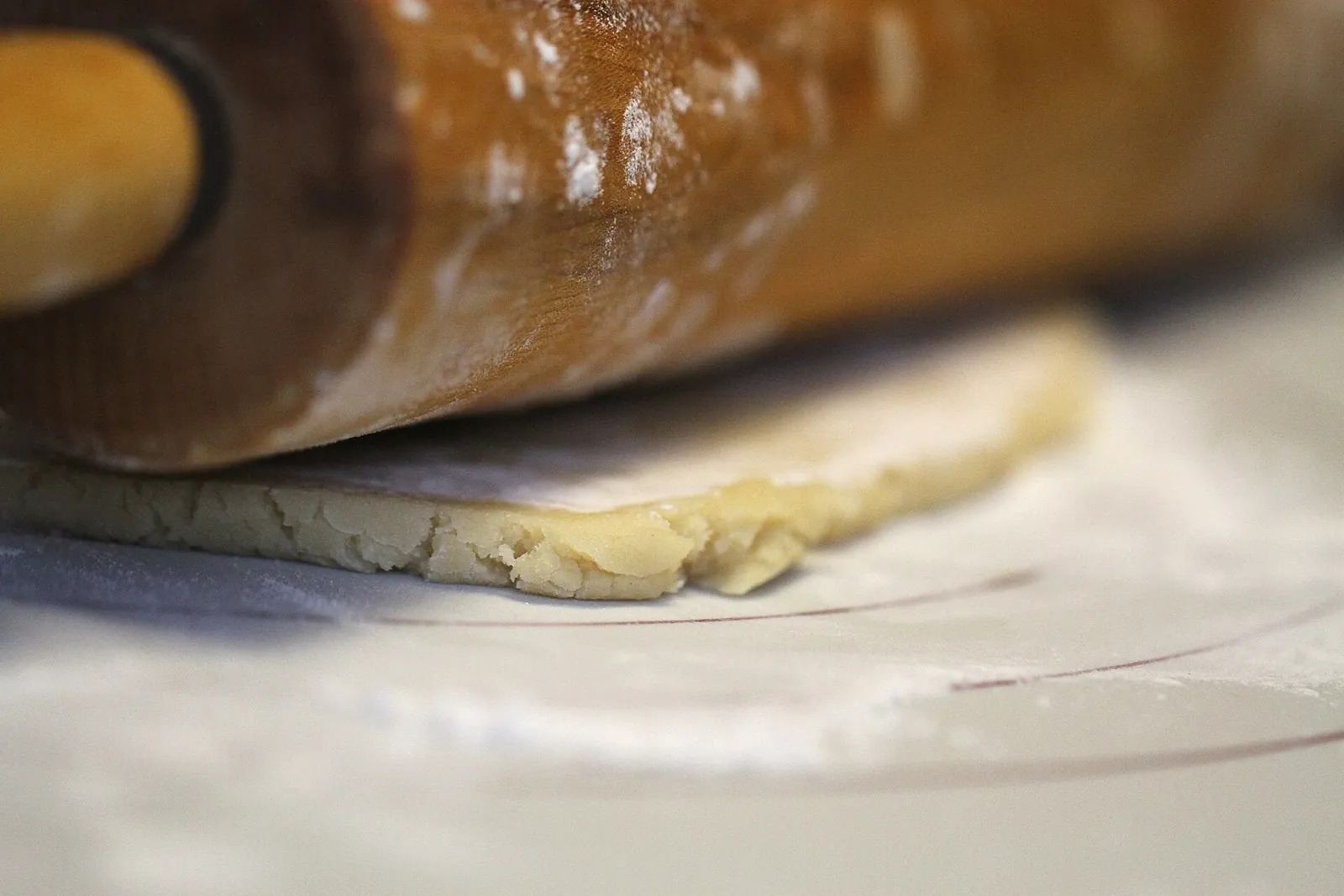
Divide the dough in half and roll each piece between two sheets of parchment to about 1/4 inch thick. Rolling between paper means you need little extra flour, which keeps the cookies tender.
-
Cut the lucky shapes
Cut clovers, horseshoes, pigs and toadstools and lift them onto lined baking sheets, leaving about an inch between them. Gather the scraps and reroll; re-roll no more than once or twice, because overworked dough bakes tougher. No cutters? Draw a shape on cardstock, cut it out, lay it on the dough and trace around it with a small knife. That part is a job for an adult.
-
Chill before baking
Put the trays in the fridge for about 20 minutes while the oven heats to 350°F. Cold dough holds sharp edges, which matters for small details like clover leaves and pig ears.
-
Bake until just golden at the edges
Bake one tray at a time for about 14 to 16 minutes, until the tops are still pale and the edges are just starting to turn golden. Keep similar sizes on the same tray.
-
Cool completely
Leave the cookies on the tray for a few minutes, then move them to a wire rack. Shortbread is fragile while warm. Decorate and pack only when it is completely cool, or the icing will run and the tin will steam.
-
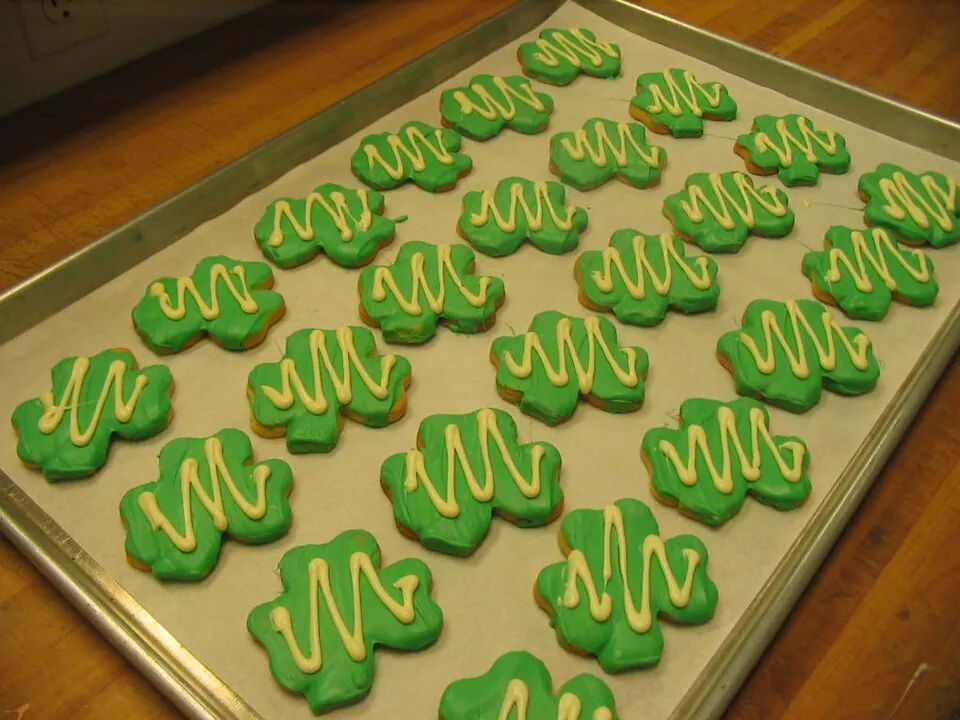
Decorate simply
Stir confectioners' sugar with a few drops of water or lemon juice until it is thick, tint it green, pink or red, and pipe or spread it on. Or dip half of each cookie in melted chocolate. Let the decoration set fully, ideally a few hours, before stacking. If you prefer royal icing, use a recipe made with meringue powder rather than raw egg whites.
-
Pack and label
Line a tin with parchment, stack the cookies in layers with paper between them and close the lid tightly. Add a label with the ingredients, a "best by" date and a line such as "Lucky clover shortbread: wishing you a lucky new year."
Tip: Bake the cookies no more than a day or two before you give them. Undecorated shortbread freezes well for up to about three months in an airtight container; thaw it in the closed container at room temperature, then decorate.
Food safety, allergens and shelf life
- Shelf life: Sources differ on how long baked shortbread stays at its best at room temperature: King Arthur Baking says up to a week, well wrapped, while Scotch & Scones suggests up to three days in an airtight container. Give a short date on the label, such as five days after baking.
- Allergens: This recipe contains wheat and milk. The FDA recognizes nine major food allergens: milk, eggs, fish, crustacean shellfish, tree nuts, peanuts, wheat, soybeans and sesame. List every ingredient on your label, including anything in sprinkles or chocolate, and note if your kitchen also handles nuts.
- Ask before you give: Mississippi State University Extension recommends checking for food allergies or dietary restrictions before gifting, storing cookies in sealed airtight containers and labeling gifts with ingredients.
- No tasting raw dough: The CDC warns that most flour is raw and can carry germs such as E. coli and Salmonella, which are killed only by baking. Don't eat the raw dough, and don't let children eat or play with it; wash hands and surfaces afterward.
- Heat and kids: Children can cut shapes and decorate, but an adult should handle the oven, hot trays and any knives.
How to package it as a gift
A tin is ideal because it keeps cookies crisp and protects the delicate clover leaves. Small kraft boxes with a window also work. Tie with green or gold ribbon and add a handwritten tag. For a fuller gift, add a mini bottle of sparkling juice or a hand-drawn calendar card for the new year. Our ideas on gift wrapping cover simple, low-waste finishes.
More DIY New Year gifts: quick variations
Hot chocolate mix in a jar
Layer cocoa powder, sugar, dry milk powder and mini marshmallows in a jar and tie on a tag with mixing instructions. Because it is completely dry, it travels well and keeps much longer than baked goods; just label the milk. The method is the same as our cookie mix in a jar, and for something more theatrical try hot chocolate bombs.
A New Year wishes jar
Fill a jar with 12 or 52 folded notes: one wish, memory or small challenge for each month or week of the coming year. Our memory jar tutorial walks through the notes and decoration.
Marzipan lucky pigs
Tint store-bought marzipan pale pink, roll a ball for the body, add a flattened snout and two triangle ears, and mark nostrils and eyes with a toothpick. Pack each pig in a small cellophane bag. Marzipan is made from almonds, so label it clearly as containing tree nuts.
Citrus sugar or herb salt
Rub finely grated orange or lemon zest into sugar, or mix flaky salt with dried herbs, and spread it out to dry before jarring. Use dried, not fresh, herbs for a shelf-stable gift. Skip homemade garlic- or herb-infused oils: Oregon State University Extension notes that garlic and herbs in oil can support botulism growth, so homemade versions must be refrigerated and used within four days unless made with a tested acidification method.
Jam for the first breakfast of the year
A jar of homemade jam with a "for New Year's morning" tag is lovely, but only if it is made with a tested recipe and processed correctly. Our homemade jam gift guide explains how.
Kids' craft: paper four-leaf clover cards
Children can cut four paper hearts, glue the points together into a clover, add a stem and stick it to a folded card with a New Year wish inside. Painted pebble ladybugs or toadstools are another easy lucky charm. Use safety scissors and washable glue, and keep this a paper craft rather than a raw-flour salt dough.
For more seasonal makes, browse DIY holiday gifts or the whole New Year collection.
Frequently asked questions
How far ahead can I make homemade New Year cookies?
Shortbread tastes best within a few days to a week of baking. To get ahead, freeze the undecorated cookies in an airtight container for up to about three months, then thaw and decorate a day or two before giving.
What are good small homemade New Year gifts for a lot of people?
Lucky-charm cookies in cellophane bags, marzipan pigs, small jars of citrus sugar or hot chocolate mix, and handmade clover cards are all cheap to make in quantity.
Do I need to label homemade food gifts?
It's strongly recommended. List all ingredients, highlight common allergens such as wheat, milk, eggs and nuts, add a best-by date and say how to store it.
Sources
- Scotch & Scones — Shortbread Cutout Cookies. scotchandscones.com
- King Arthur Baking — Shortbread Cookies. kingarthurbaking.com
- CDC — Raw Flour and Dough. cdc.gov
- U.S. Food and Drug Administration — The FASTER Act: Sesame Is the Ninth Major Food Allergen. fda.gov
- Mississippi State University Extension — Holiday Food Gift Safety. extension.msstate.edu
- Oregon State University Extension Service — Herbs and vegetables in oil. extension.oregonstate.edu
- The Local Germany — Eight things Germans believe bring good luck. thelocal.de
Image credits. Top image: Shortdough cookies for Saint Patrick's Day by Tracy Hunter, CC BY 2.0, via Wikimedia Commons · In-article image: Rolling pin and cookie dough -2 (11539971944) by photochem_PA from State College, PA, USA, CC BY 2.0, via Wikimedia Commons
Spotted something out of date or a gift that's no longer available? Tell our editors — we review every correction.