How to pack a Christmas cookie gift box
Which cookies keep and travel, how to pack a tin so nothing breaks, and what to write on the label so everyone can enjoy it safely.
Quick answer
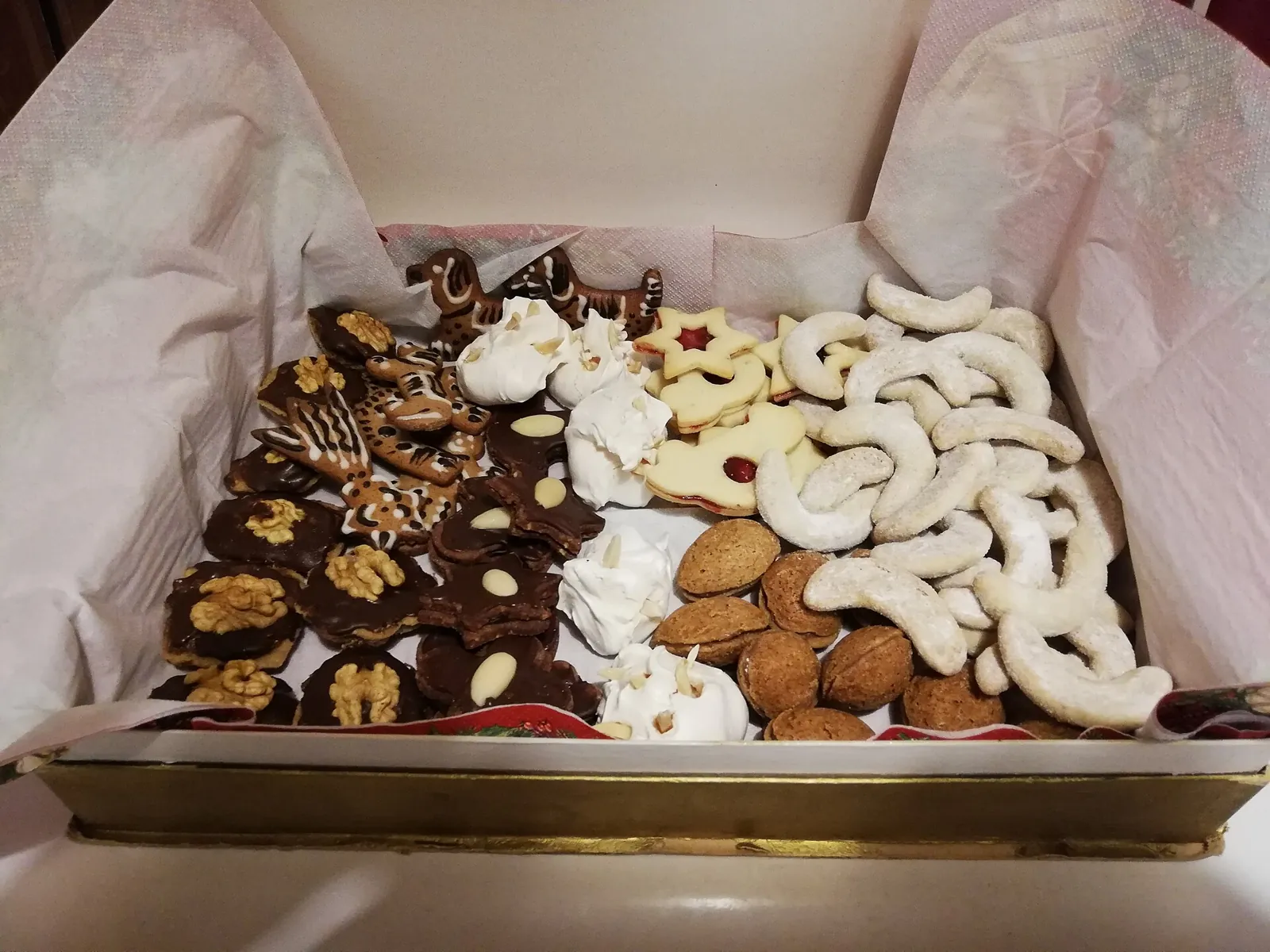
A Christmas cookie gift box works best with three or four sturdy, low-moisture cookies such as shortbread, biscotti, gingerbread and thick sugar cookies. Cool them completely, pack each kind in its own lined section of an airtight tin with no gaps, keep crisp and soft cookies apart, and attach a label listing every ingredient, the main allergens, the bake date and a cautious best-by date. For shipping, seal the cookies, cushion the tin on all sides and mail early in the week.
- Time One or two baking sessions, plus about 30 minutes to pack each box
- Difficulty Easy
- Cost About $25 – $50 for ingredients for three or four varieties, plus $3 – $10 per tin
- Makes Two to three medium tins of about 2 – 3 dozen cookies each
A tin of homemade cookies is the gift most people hope to find on the doorstep in December. The difference between a box that arrives looking generous and one that arrives as crumbs is mostly planning: choosing cookies that keep, packing them so nothing moves, and labeling them so everyone can eat safely. This guide is about assembling and giving the box. If you would rather give the makings instead of the baked cookies, see our cookie mix in a jar tutorial.
Choose cookies that travel and keep
King Arthur Baking's shipping advice is a good rule for any gift box: delicate cookies such as pizzelles, Florentines and thin cutouts are a poor choice, while sturdy cookies and moist bars hold up. Good picks:
- Shortbread: Buttery, firm and easy to stack.
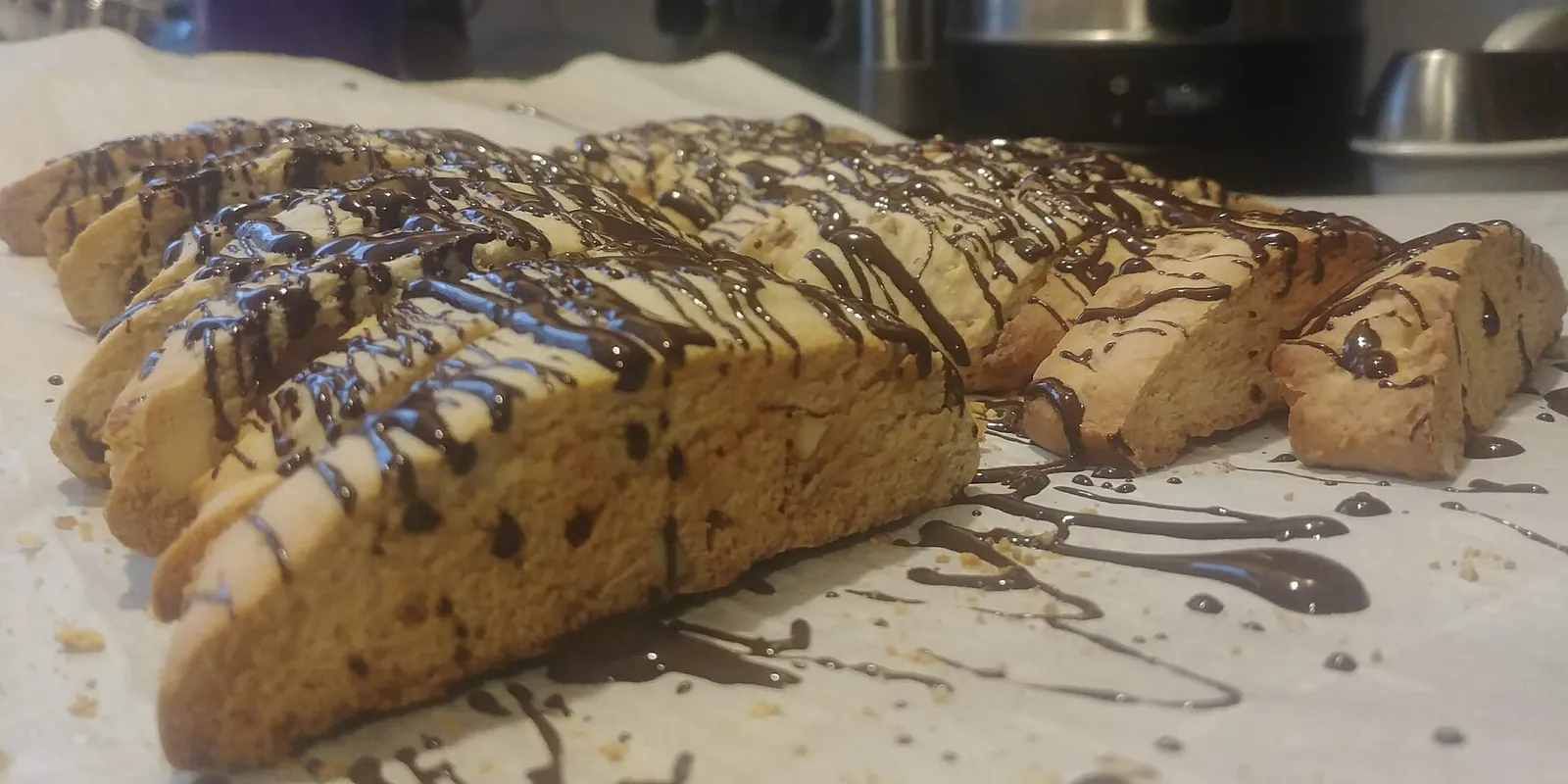
- Biscotti: King Arthur notes that twice-baked biscotti stay dry and crunchy for weeks, which makes them ideal for a box that may sit a while.
- Gingerbread and molasses cookies: Roll cutout dough a little thicker than usual so the shapes survive.
- Sandwich cookies: The filling holds fragile cookies together, as long as it is a shelf-stable filling like jam or chocolate.
- Brownies and bars: Cut them at least 1/2 inch thick; King Arthur says thin bars can go stale on a long trip.
- Small cookies over big ones: Smaller cookies are less likely to break.
Leave out anything with whipped cream, custard or cream cheese filling. NDSU Extension's food storage guide says whipped cream, custard and chiffon fillings must be refrigerated, so they do not belong in a tin that will sit on a counter. Press sprinkles into the dough before baking instead of adding loose decorations that can fall off.
How long homemade cookies keep
NDSU Extension's guide says homemade cookies keep two to three weeks in an airtight container in the cupboard and do not need refrigeration. That is an upper limit for sturdy, dry cookies; soft, frosted and filled cookies lose their texture sooner. Both NDSU and University of Illinois Extension list baked cookies at 8 to 12 months in the freezer at 0°F for best quality, and Illinois notes that freezer times are about quality, not safety.
In practice, this means you can bake in late November, freeze the cookies in airtight bags, and thaw them at room temperature, still sealed, the day before packing so condensation does not make them soggy. Set your best-by date conservatively, from the day the cookies came out of the freezer or oven.
What you need
- Three or four kinds of sturdy cookies, completely cooled
- Airtight metal tins or rigid food-safe boxes
- Parchment or wax paper, cut to fit the tin
- Mini or standard paper baking cups, or cardboard dividers lined with parchment
- Food-safe cellophane or zip-top bags for crumbly or strongly flavored cookies
- Crinkle paper or tissue for filling gaps (keep it outside the food-contact liner)
- Labels, a pen and ribbon
- For shipping: a sturdy box larger than the tin, bubble wrap or air pillows, and packing tape
How to pack a cookie gift box
Cool everything completely
Pack only cookies that are at room temperature all the way through. Warm cookies steam inside a closed tin and turn soft or sticky.
Sort by texture and flavor
Keep crisp cookies away from soft, moist ones, which can make them go limp. Bag strongly flavored cookies, such as peppermint or ginger, separately so their flavor does not spread to everything else.
Line the tin
Line the base and sides with parchment. Put the heaviest, sturdiest cookies, such as biscotti or bars, on the bottom.
Stack in snug rows
Stand round cookies on edge in rows, or stack them in short piles. King Arthur suggests pairing cookies flat side to flat side for stability. Use paper cups or parchment-lined dividers to give each variety its own section.
Fill every gap
Nothing should be able to shift. Tuck crumpled parchment into empty corners and put a final sheet of parchment on top before closing the lid.
Shake-test and seal
Close the tin and give it a gentle shake. If you hear movement, add more padding. Tie the lid with ribbon.
Label it
Attach a label with the cookie names, the full ingredient list, an allergen line, the bake date, a best-by date and simple storage advice (see below).
Tip: Put a small card inside the lid naming each cookie with a tiny sketch or number. People like to know what they are eating, and it helps anyone avoiding an ingredient pick safely.
Labeling allergens and dates
Texas A&M AgriLife Extension advises listing every ingredient on homemade food gifts, because you never know who has a food allergy, and marking when the food should be used and how to store it. The FDA recognizes nine major food allergens in the United States: milk, eggs, fish, crustacean shellfish, tree nuts, peanuts, wheat, soybeans and sesame. Most cookie boxes contain at least wheat, milk and eggs, and many contain nuts, soy or sesame.
A clear label might read:
Christmas cookie box. Brown butter shortbread, almond biscotti, gingerbread stars. Ingredients: wheat flour, butter, sugar, eggs, almonds, molasses, spices, baking soda, salt. Contains wheat, milk, egg, tree nuts (almond). Made in a home kitchen that also handles peanuts and sesame. Baked: Dec 12. Best by: Dec 22. Store airtight at room temperature.
If someone in the household has a severe allergy, it is kinder to bake a separate, clearly labeled box for them than to pick cookies out of a mixed tin. King Arthur also recommends keeping gluten-free baking completely separate from regular baking for highly sensitive recipients.
Shipping a cookie box
- Seal for freshness: King Arthur notes that the less air around baked goods, the fresher they stay. Bag cookies inside the tin and press out the air.
- Cushion on all sides: Put a layer of bubble wrap or air pillows in the bottom of a sturdy box, set the tin in the middle, and pack padding around the sides and on top. Crumpled newspaper is a weak substitute.
- Shake it again: When the outer box is closed, nothing should rattle.
- Mail early in the week so the package is less likely to sit in a depot over a weekend. Check carrier cutoffs in our holiday shipping deadlines guide.
Ways to give it
A cookie box is a natural thank-you for neighbors, mail carriers, teachers and the friends who host every year. Hand-delivered tins can be more delicate and decorative than shipped ones. Pair a tin with a small bag of coffee or a mug for a fuller gift, and see our ideas for holiday treats for neighbors and the full list of DIY Christmas gifts.
Frequently asked questions
How far ahead can I bake Christmas cookies for gifts?
Sturdy cookies can be baked a week or two ahead and kept airtight. For longer, freeze them: Illinois and NDSU Extension list baked cookies at 8 to 12 months in the freezer for best quality. Thaw them sealed before packing.
What cookies should I not put in a gift tin?
Skip delicate cookies such as pizzelles and thin cutouts, and anything with cream, custard or cream cheese filling, which needs refrigeration.
Should I mix different cookies in one tin?
Yes, but give each kind its own section, keep crisp and soft cookies apart, and bag strongly flavored ones separately.
Do I need to list ingredients on homemade cookies?
For a gift, yes, it is the considerate thing to do. Texas A&M AgriLife Extension recommends listing every ingredient, because you rarely know who in the household has a food allergy. Call out the major allergens on their own line.
Sources
- King Arthur Baking — How to ship cookies (2020). kingarthurbaking.com
- NDSU Extension — Food Storage Guide Answers the Question (FN579, reviewed 2023). ndsu.edu
- University of Illinois Extension — Freezer Storage. extension.illinois.edu
- U.S. Food and Drug Administration — Food Allergies. fda.gov
- Texas A&M AgriLife Today — Give a homemade gift from your kitchen this holiday season (2023). agrilifetoday.tamu.edu
Image credits. Top image: Vanocni.Cukrovi.2019.RUPA.dessert.02 by Mojmir Churavy, CC BY-SA 4.0, via Wikimedia Commons · In-article image: Chocolate Drizzled Biscottis by Nnikkhoui, CC BY-SA 4.0, via Wikimedia Commons
Spotted something out of date or a gift that's no longer available? Tell our editors — we review every correction.