Kwanzaa gift ideas: meaningful zawadi for the seven principles
Modest, meaningful Kwanzaa gifts for children and family: books, heritage keepsakes and handmade zawadi, grouped by the Nguzo Saba.
We independently research every pick. If you buy through our links we may earn a small commission, at no extra cost to you. Affiliate disclosure.
Quick answer
The best Kwanzaa gift ideas are modest and meaningful: a book, a heritage object, something handmade, or a gift that reflects one of the seven principles (the Nguzo Saba). Traditionally the gifts, called zawadi, go mainly to children, often on the last day, January 1, and are meant to teach and to honor African heritage rather than to impress with price.
- Dates December 26 to January 1 every year
- Gift name Zawadi (Swahili for gifts)
- Typical budget $10 – $50 per gift
- Classic pairing A book plus a heritage symbol
Kwanzaa was created in 1966 by Dr. Maulana Karenga as a week-long celebration of family, community and African culture, and it runs from December 26 to January 1 (see this year's countdown on our Kwanzaa calendar page). Kwanzaa gift ideas work best when they follow the spirit of the holiday: the official Kwanzaa website describes the zawadi as a symbol of "the labor and love of parents and the commitments made and kept by the children." That is why the gifts below are grouped around the seven principles rather than around price.
The Nguzo Saba are Umoja (unity), Kujichagulia (self-determination), Ujima (collective work and responsibility), Ujamaa (cooperative economics), Nia (purpose), Kuumba (creativity) and Imani (faith). One principle is the focus of each day of the week.
Kwanzaa gift ideas for children: a book and a heritage symbol
Many families follow the guidance, attributed to the official Kwanzaa website, that zawadi should include a book, to stress the value of learning, and a heritage symbol, to reinforce a commitment to history and tradition. Gifts are often given on January 1, the day of Imani, though some families give small gifts during the week.
A picture book or chapter book by a Black author
Why it works: A book is the one gift most closely tied to the zawadi tradition. Picture books about Kwanzaa, African folktales, or biographies of Black inventors, artists and leaders suit younger children; older kids may prefer a novel or a history written for their age. Write a short note inside the cover explaining why you chose it.
Skip it if: the child already has a full shelf on the topic; ask a parent which books they own, or choose a different subject such as science or poetry.
A heritage keepsake for a child's room
Why it works: A small handcrafted item such as a carved wooden figure, a kente-pattern pouch, a beaded bracelet or a framed map of Africa gives a child something to keep and ask questions about. Look for pieces with a maker's story or a label naming the country of origin.
Skip it if: you cannot say where the item comes from or what it represents; a heritage symbol should be something you can explain, not a generic "tribal" souvenir.
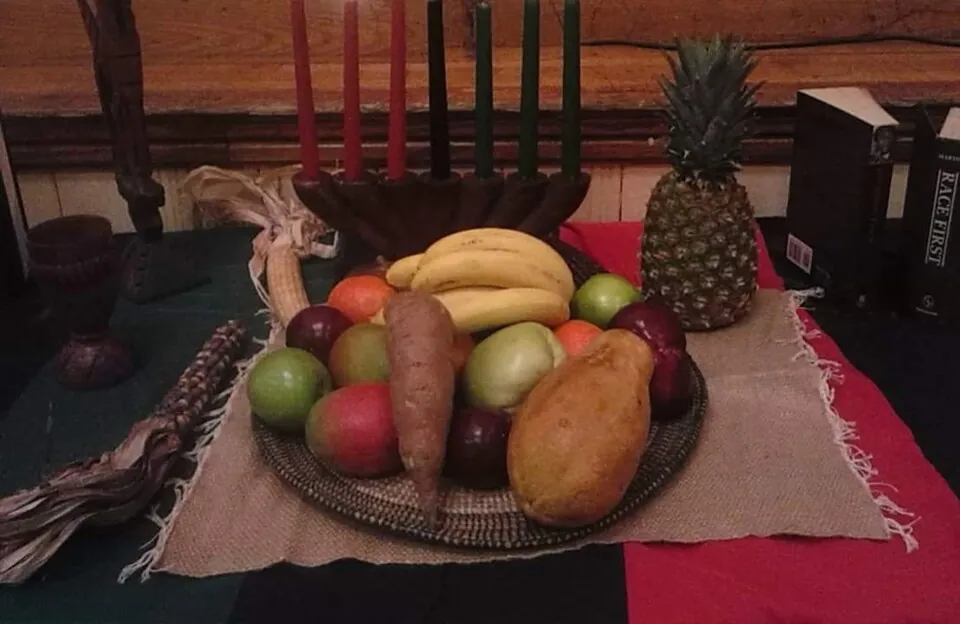
A child-sized kinara and candle set
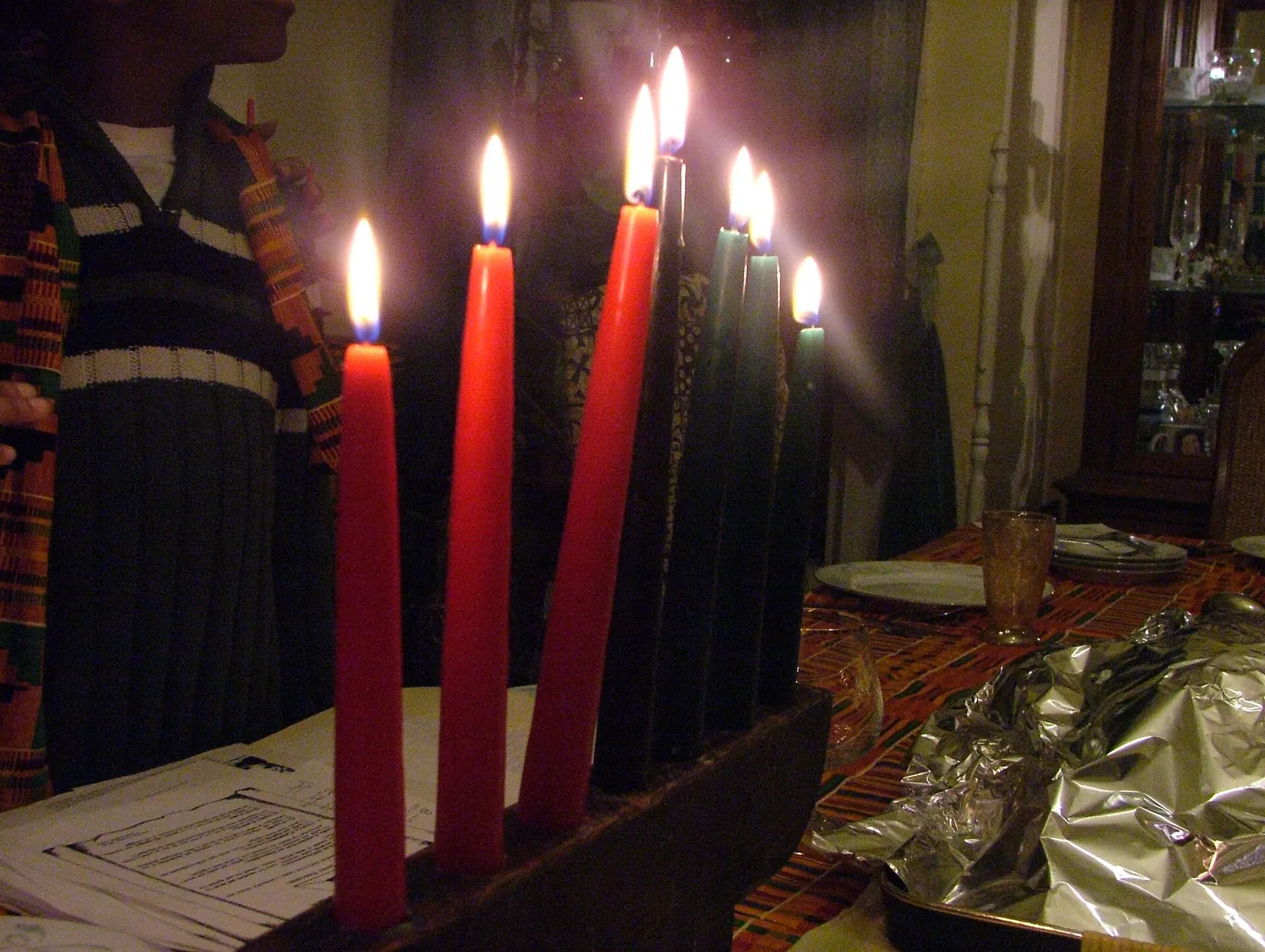
Why it works: The kinara holds seven candles, one black, three red and three green, and lighting them each evening is at the heart of the week. A child's own wooden kinara, or a felt or LED version for younger kids, helps them take part and learn the order of the principles.
Skip it if: the child is very young; real candles need adult supervision, so choose an LED or felt kinara instead.
Gifts for Umoja, Ujima and Ujamaa: family and community
The first principles focus on togetherness, shared work and building up the community's own businesses. Gifts here are often for the whole household.
A family history kit or recorded-story journal
Why it works: A guided journal or a simple audio recorder with prompts invites grandparents and elders to tell their stories, which fits Umoja (unity) beautifully. Families can add photos and copies of old documents through the year.
Skip it if: the family already keeps detailed records; a framed copy of an old family photo may mean more.
A cooperative board game or puzzle
Why it works: Games where everyone wins or loses together reflect Ujima (collective work and responsibility) better than head-to-head competition, and they give the family something to do together during the week.
Skip it if: the household rarely plays games; a shared cookbook or recipe card set is a better "together" gift.
A gift from a Black-owned local business
Why it works: Ujamaa (cooperative economics) is about building and supporting the community's own shops and makers. Body care, spice blends, coffee, candles or art prints bought from a local Black-owned business carry the principle into the gift itself.
Skip it if: you are buying only for the label; choose something the recipient will genuinely use.
Gifts for Kuumba and Nia: creativity and purpose
Handmade and creative gifts are widely encouraged during Kwanzaa as a way to keep the week from becoming commercial. If you like making things, our handmade gift ideas are a good starting point.
Something you made yourself
Why it works: A hand-sewn mkeka-style place mat, a painted card, a knitted scarf in black, red and green, or a jar of homemade spice mix speaks directly to Kuumba (creativity). Children can make simple gifts for parents and elders too; see our ideas for gifts kids can make for parents.
Skip it if: you are short on time; a modest bought gift with a heartfelt note is better than a rushed craft.
An art or music starter kit
Why it works: Watercolors, a sketchbook, a beginner djembe or a kalimba encourages a young person to make something of their own, which suits both Kuumba and Nia (purpose). Add a note about an artist or musician they might enjoy.
Skip it if: the family has limited space or prefers quiet; a sketchbook and quality pencils are compact.
A goal journal or vision board kit
Why it works: Nia is about purpose, and a goal journal, a planner or a kit for a vision board helps a teen or adult set intentions for the new year that begins as Kwanzaa ends.
Skip it if: the recipient dislikes planners; a book about a person whose work they admire carries the same message.
Gifts for Kujichagulia and Imani: identity and faith
A class, workshop or museum membership
Why it works: Kujichagulia (self-determination) is about defining and speaking for oneself. A drumming or dance class, a language course, or a family membership to a museum of African American history or African art supports learning that lasts beyond the holiday.
Skip it if: the recipient's schedule is already full; a book or documentary collection is easier to fit in.
A handwritten letter of faith in them
Why it works: Imani, the last principle, means faith, including faith in parents, teachers and the community. A letter telling a child or young adult what you believe they will achieve, tucked into a book, costs little and is often the gift people keep longest.
Skip it if: you would only write a generic message; take time to name specific strengths.
How to choose Kwanzaa gifts
- Keep it modest. The holiday's spirit is about meaning, learning and family, not expense. A $15 book with a thoughtful note is a perfect zawadi.
- Pair learning with heritage. If you give one thing, make it a book; if you give two, add a small heritage object you can explain.
- Tie it to a principle. Saying "this is for Kuumba" when you hand over a sketchbook turns an ordinary gift into part of the celebration.
- Respect how the family celebrates. Kwanzaa is a cultural rather than religious holiday, and the official website notes that people of many faiths observe it, often alongside Christmas or other holidays. Follow the family's lead on when and how gifts are given.
- Avoid stereotypes. Skip costume-like "African" items or mass-produced souvenirs with no real origin. Choose genuine crafts, books and art.
For more seasonal ideas, browse our gift traditions collection or our gifts for kids.
Frequently asked questions
What are traditional Kwanzaa gifts?
Traditional Kwanzaa gifts, called zawadi, are usually given to children and are meant to be educational or tied to heritage. A book and a heritage symbol are the classic pair, and handmade gifts are widely encouraged.
When are Kwanzaa gifts given?
Many families give gifts on January 1, the last day of Kwanzaa and the day of Imani (faith). Some give small gifts on other days of the week; there is no single rule.
Can you give Kwanzaa gifts if you do not celebrate?
Yes, a respectful gift to a friend or colleague who celebrates is usually welcome. A book, a handmade item or a gift from a Black-owned business are thoughtful choices. Wish them a happy Kwanzaa and let them share as much about their traditions as they like.
Is Kwanzaa a religious holiday?
No. The official Kwanzaa website describes it as a cultural holiday with a spiritual quality, celebrated by people of many faiths.
How much should I spend on a Kwanzaa gift?
There is no set amount, and expensive gifts are not expected. Most meaningful zawadi cost $10 to $50, and handmade gifts can cost far less.
Sources
- Official Kwanzaa Website — The Nguzo Saba (home page). www.officialkwanzaawebsite.org
- Official Kwanzaa Website — The Symbols. www.officialkwanzaawebsite.org
- Official Kwanzaa Website — Frequently Asked Questions. www.officialkwanzaawebsite.org
- Official Kwanzaa Website — Candle Lighting. www.officialkwanzaawebsite.org
- National Geographic — Kwanzaa history, traditions and information. www.nationalgeographic.com
- William & Mary Libraries — Celebrating Principles. libraries.wm.edu
- BrightHub Education — The Origins, History, Principles, Traditions, and Symbols of Kwanzaa. www.brighthubeducation.com
Image credits. Top image: Kwanzaa Display. by Adjoajo, CC BY-SA 3.0, via Wikimedia Commons · In-article image: The kinara with the red black and green (2162325489) by rashida s. mar b. from Baltimore, USA, CC BY-SA 2.0, via Wikimedia Commons
Spotted something out of date or a gift that's no longer available? Tell our editors — we review every correction.