Gift etiquette in Thailand: what to give, avoid and how to give it
Thai gift giving is warm and informal, but colors, flowers and respect for the monarchy matter. Here is what to give, what to skip and how.
We independently research every pick. If you buy through our links we may earn a small commission, at no extra cost to you. Affiliate disclosure.
Quick answer
Gift giving in Thailand is relaxed and informal. A small gift such as fruit, sweets or flowers is a kind gesture when visiting a home, though it isn't strictly required. Wrap it in bright colors (gold and yellow are especially welcome), avoid blue, black and green, and skip marigolds and carnations, which are used at funerals. Give and receive with your right hand or both hands, and don't expect the gift to be opened in front of you. Show respect for the monarchy and Buddhism at all times; criticizing the royal family is a crime.
- Safe host gifts Fruit, sweets, cake, flowers
- Hand it over Right hand or both hands, never the left alone
- Good wrapping colors Gold, yellow, bright colors
- Biggest holiday Songkran, April 13 to 15
What to give
Thais often give small, informal gifts such as sweets, trinkets or souvenirs. When you are invited to a home, Cultural Atlas notes that a gift for the hosts isn't necessary, but it is polite to bring one. Keep it modest. Expensive gifts can make the recipient uncomfortable and may cause a loss of face if they can't reciprocate.
A basket of fruit
Why it works: Fruit is one of the most commonly suggested host gifts. It is easy to share with the whole family and works for in-laws and older relatives.
Skip it if: You are traveling a long way in the heat and it won't arrive fresh.
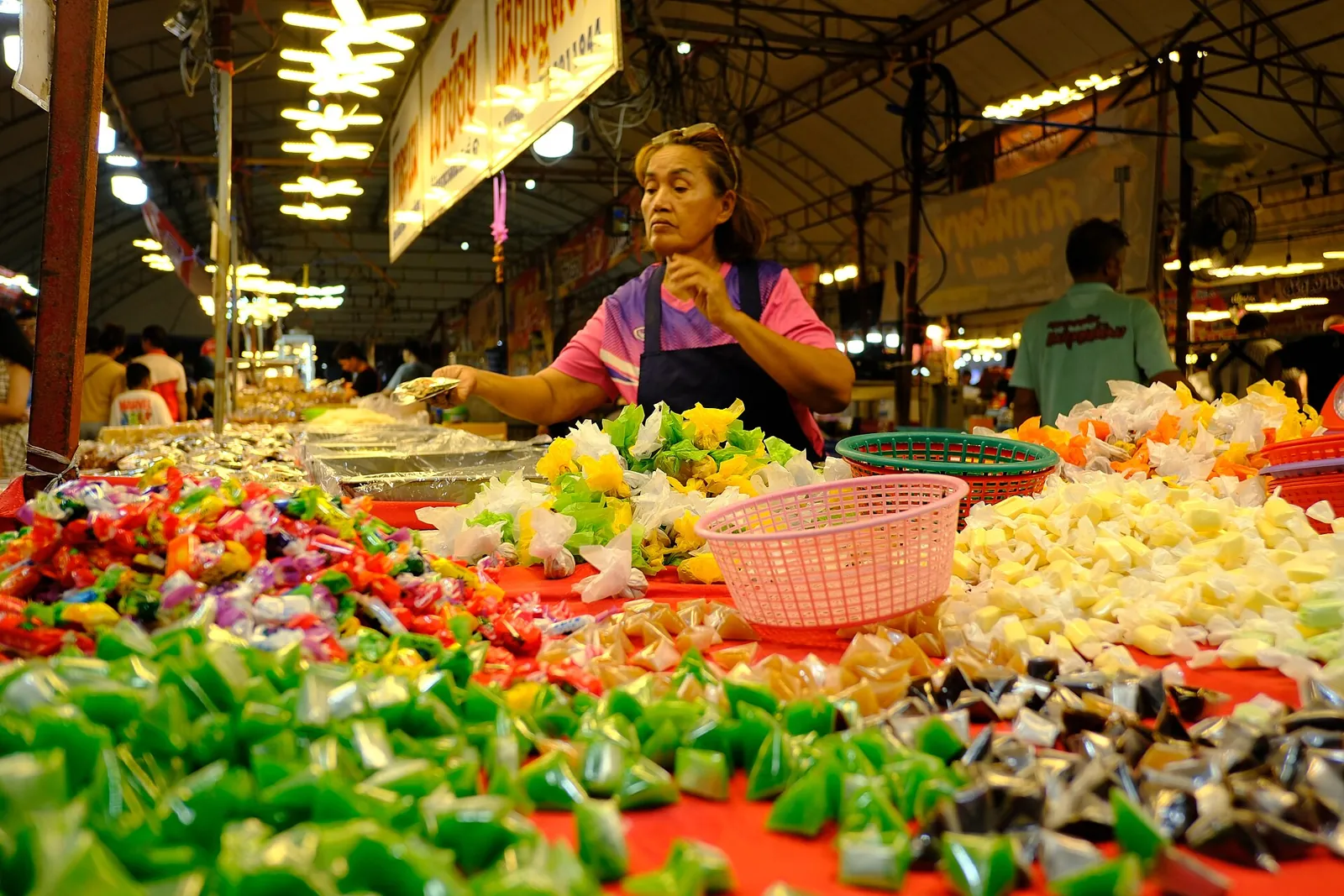
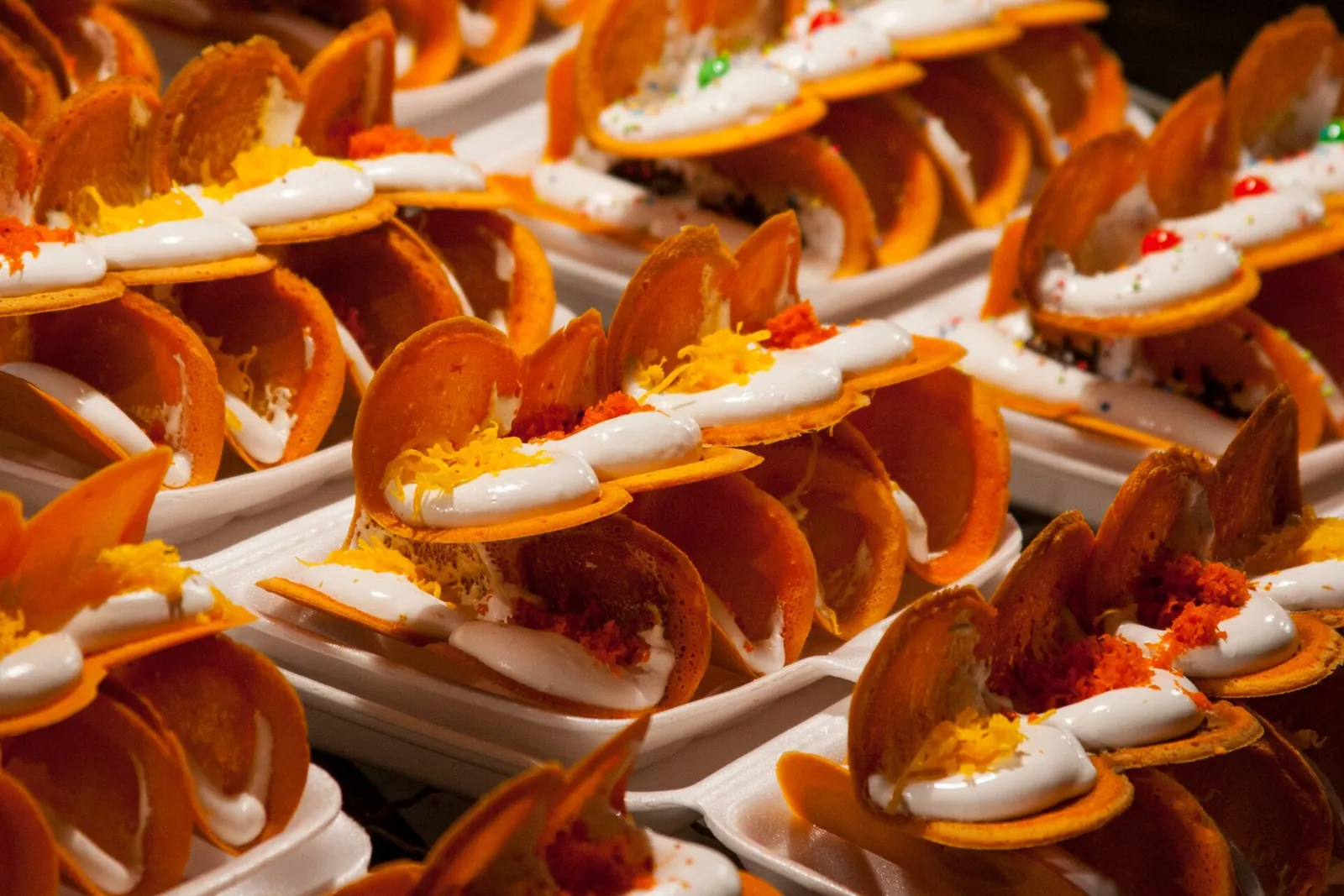
Sweets, cake or quality chocolates
Why it works: Sweets and cake suit a casual visit, and chocolates or a treat from your home country make a good small gift for friends and coworkers.
Skip it if: The packaging is mostly black, blue or green.
Flowers (with care)
Why it works: Flowers are a welcome host gift and fit many occasions.
Skip it if: The arrangement includes marigolds or carnations, which are used at funerals.
A bottle of liquor or wine
Why it works: Liquor appears on Cultural Atlas's list of suitable gifts for a home visit and is a familiar present among adults who drink.
Skip it if: Your host is Muslim (Thailand has a Muslim minority) or you know they avoid alcohol for religious or personal reasons.
Thais also share the habit of bringing back food or souvenirs from a trip for family, friends and colleagues, much like omiyage in Japan or pasalubong in the Philippines. See our food gifts guide for shareable ideas.
What to avoid
- Blue, black or green wrapping. These colors are associated with death and mourning. Gold and yellow are seen as particularly auspicious.
- Marigolds and carnations. Both are used at funerals.
- Anything disrespectful to the monarchy. Criticizing the Thai monarchy (lèse-majesté) is illegal, the law is interpreted broadly, and it covers members of the royal family past and present. Avoid jokes, novelty items or comments that could be seen as disrespectful.
- Disrespect toward the Buddha. Buddhism is central to Thai life, and Buddha images are treated with great respect. Treat any Buddha image or religious item with care, and don't give one as a novelty decoration.
- Lavish gifts. An overly expensive present can embarrass the recipient.
- Giving with the left hand alone. This is considered taboo.
How to give and receive
- Use your right hand or both hands to pass or receive anything, including gifts.
- Wrap it brightly. Presentation matters. Gold or yellow paper is a good choice; red works well if the recipient is of Chinese heritage. Ribbons and bows are welcome. For techniques, see our gift wrapping guide.
- Think in threes. Three is considered a lucky number, so gifts are often given in groups of three.
- Don't open on the spot. It is seen as disrespectful to open a gift in front of the giver unless invited to do so. Recipients usually open gifts in private.
- Greet with a wai. The wai, palms pressed together with a slight bow, is the traditional greeting. The younger or more junior person usually initiates it, and a wai is a respectful way to greet older members of a household.
- Mind your feet and head. Remove your shoes before entering a home, avoid stepping on the threshold, don't point your feet at people and don't touch anyone on the head.
Holidays and occasions
Songkran (Thai New Year)
Songkran is officially observed as a three-day national holiday from April 13 to 15, though celebrations can run longer in some places. Many people travel home to their families. In the Rot Nam Dam Hua ceremony, younger people pour scented water for their parents and elders, who give their blessings in return, often with a jasmine garland. Floral garlands (phuang malai) are a popular way to show love and respect to older relatives, and many people make merit by offering food to monks.
New Year (January 1)
Thai companies commonly send gifts to customers around the international New Year, and business associates often exchange gifts at this time.
Chinese New Year
Chinese New Year is another gift-giving occasion, especially in families of Chinese heritage. It follows the lunar calendar, so the date varies each year, usually falling in January or February. Our Lunar New Year guide covers the customs.
Mother's Day, Father's Day and Children's Day
Thailand marks Children's Day in January, Mother's Day in August and Father's Day in December, and gifts are common on all three.
Weddings and ordinations
Money is the most common gift for weddings and for celebrations of a monk's ordination.
Christmas
Relatively few Thais celebrate Christmas, so a gift isn't expected, though it is usually received warmly.
Business gifting
Business gifts in Thailand should be modest and well presented. The New Year period is the main season for corporate gifts, and a quality item from your home country, a food hamper or branded items of good quality are all appropriate. Hand the gift over with your right hand or both hands and don't expect it to be opened in the meeting.
Thailand has strict rules for gifts to state officials. A 2022 regulation from the Office of the Prime Minister, in force since January 2023, generally prohibits officials and their family members from accepting gifts, with an exception for gifts on customary occasions worth 3,000 baht or less. Check current rules and your company's policy before giving to anyone in government or a state enterprise; your own country's anti-bribery laws may also apply. Our business gifts guide and country guides have more.
Frequently asked questions
What should I bring to a Thai home?
A gift isn't required, but fruit, flowers (not marigolds or carnations), sweets or cake are all good choices. Wrap it in bright colors and take off your shoes at the door.
What colors should I avoid when wrapping a gift in Thailand?
Avoid blue, black and green, which are associated with mourning. Gold and yellow are considered auspicious.
Do Thai people open gifts in front of you?
Usually not. Opening a gift in front of the giver is seen as disrespectful unless the giver invites it.
Do people give gifts at Songkran?
Yes, mostly within families. People return home, honor parents and elders in the Rot Nam Dam Hua ceremony, and often give floral garlands and small gifts to older relatives.
Can I give a gift to a Thai government official?
Only with great care. State officials may generally accept only customary-occasion gifts worth 3,000 baht or less, and many organizations set stricter policies.
Sources
- Cultural Atlas — Thai culture: Etiquette. theculturalatlas.org
- Commisceo Global — Thailand: Language, culture, customs and etiquette. commisceo-global.com
- Thaiger — The etiquette of gift giving in Thailand. thethaiger.com
- TAT News (Tourism Authority of Thailand) — Thailand's Songkran festival: its origins, history and modern-day observance. tatnews.org
- GOV.UK — Thailand travel advice: Safety and security. gov.uk
- Tilleke & Gibbins — Thailand reissues regulation on gifts to state officials. tilleke.com
Image credits. Top image: DSCF0697 Night market sweets stall overflowing with colorful traditional candies as a vendor arranges treats under warm lights by PattayaPatrol, CC BY-SA 4.0, via Wikimedia Commons · In-article image: Khanom bueang 01 by Ilya Plekhanov, CC BY-SA 3.0, via Wikimedia Commons
Spotted something out of date or a gift that's no longer available? Tell our editors — we review every correction.




