Flower delivery: how to choose and send flowers well
What to send, how to order so the right flowers arrive, and the details that matter for offices, hospitals and homes with cats.
We independently research every pick. If you buy through our links we may earn a small commission, at no extra cost to you. Affiliate disclosure.
Quick answer
For the freshest flowers and the most value for your money, order directly from a florist in the recipient's town, ask for a seasonal "designer's choice" arrangement, and specify a budget rather than an exact recipe. Order at least a few days ahead for Valentine's Day and Mother's Day, check whether the recipient has cats (true lilies are dangerous to them), and keep the card message short and specific.
- Budget $50 – $150 delivered
- Best bet Seasonal designer's choice from a local florist
- Order ahead 3 – 7 days for major holidays
Sending flowers looks simple until you are comparing a dozen websites with similar photos and very different delivery fees. This guide covers what kind of arrangement to send, how to order so the flowers that arrive match the ones you paid for, and the details that matter for offices, hospitals and homes with pets. If you are still deciding which flowers to choose, our flower meanings guide can help.
What to send: the main arrangement types
Seasonal designer's choice arrangement
Why it works: The florist uses whatever is freshest that day, so you usually get more stems for the money and a better-looking result than a fixed catalog design.
Skip it if: the recipient has a strong dislike of certain flowers or colors. Add a short note to the order, such as "no lilies" or "soft pastels."
Arrangement in a vase
Why it works: It arrives ready to display, which matters for offices, hospitals and anyone busy. The recipient does not need to find a vase or cut stems.
Skip it if: you are sending to someone with limited space or a cluttered cupboard of florist vases. A wrapped bouquet is lighter and cheaper.
Hand-tied wrapped bouquet
Why it works: It looks generous and lets the recipient arrange flowers in their own vase. Many florists deliver hand-tied bouquets with a water bubble or bag to keep stems hydrated.
Skip it if: the recipient is in the hospital or at work, where finding a vase is a hassle.
A dozen roses or a single-variety bunch
Why it works: One flower in one color, such as tulips, peonies or roses, looks deliberate and elegant. Roses remain the standard for romantic occasions.
Skip it if: it is Valentine's week and your budget is tight. Rose prices often rise sharply around February 14, and seasonal mixed flowers go further.
Sympathy arrangement
Why it works: A calm arrangement in white, cream or soft green sent to the family home is a traditional way to show support. Ask the florist to label it clearly as a sympathy order.
Skip it if: the family has asked for donations in lieu of flowers. Respect that request, and follow the funeral home's guidance if you send flowers to a service.
Longer-lasting alternatives to cut flowers
Potted orchid or flowering plant
Why it works: A potted orchid, kalanchoe or African violet can bloom for weeks and keep going afterward. It is a good choice for coworkers and people who dislike seeing flowers wilt. See our potted plant gifts for options and pet safety.
Skip it if: the recipient travels constantly or has said they always kill plants.
Dried or preserved bouquet
Why it works: Dried and preserved flowers last for months with no water, which suits people who travel, ship well and avoid the problem of wilting.
Skip it if: the recipient prefers the look and scent of fresh flowers, or has dust allergies.
Flower subscription
Why it works: A bouquet every week, two weeks or month turns one gesture into a season of small surprises. Prepaid three-month plans make an easy gift for new parents or someone recovering at home.
Skip it if: the recipient is often away. Check the pause and skip rules before you buy.
How to order so the right flowers arrive
- Order direct from a local florist when you can. Search for a florist in the recipient's town and call or use their own website. Some national flower sites pass orders on to local shops, and fees along the way can mean less of your money goes into the flowers.
- Give a budget and a mood, not a recipe. "Around $75, bright and cheerful, no lilies" gets a better result than insisting on an exact photo the shop may not have stems for.
- Check delivery fees and cutoffs. Same-day cutoffs vary by shop, often around midday. For last-minute needs, see our same-day delivery gifts.
- Order early for peak days. Valentine's Day, Mother's Day and the December holidays are the busiest times for florists. Three to seven days ahead gives you the best choice.
- Confirm the delivery details. For offices, include the floor, company and a phone number. For apartments, give the buzzer code. For hospitals, call first; some units, such as intensive care, do not allow flowers.
- Ask for a photo. Many local florists will send a picture of the finished arrangement before it goes out.
Pets, allergies and practical care
If the recipient has cats, avoid true lilies. The ASPCA lists the Easter lily as toxic to cats, with possible kidney failure, and says cats are the only species known to be affected. Ask the florist to leave lilies out entirely when you are unsure.
For allergy sufferers or hospital rooms, ask for low-scent flowers, or choose a plant or a non-floral gift instead. Our guide to sympathy gifts instead of flowers has ideas that work for many occasions.
A short care card helps the flowers last. University of Illinois Extension recommends trimming about an inch off the stems with clean, sharp shears, removing leaves that would sit below the waterline, changing the water every two to three days, using floral preservative as the packet directs, and keeping flowers away from heat sources, drafts and direct sun.
Tip: Keep the card message to one or two sentences and sign with a name the recipient will recognize. For wording ideas, see our card messages section.
Frequently asked questions
How much should I spend on flower delivery?
A modest but generous-looking arrangement typically costs $50 to $100 before delivery fees in the US. Spend more for sympathy arrangements, large events or premium flowers such as peonies out of season.
Is it better to order from a local florist or a national website?
Ordering directly from a florist near the recipient usually gives you fresher flowers and more control, since you can speak to the person making the arrangement. National sites can be convenient for comparing options and tracking orders.
How far in advance should I order flowers?
For ordinary days, one or two days is usually enough, and many florists offer same-day delivery if you order early. For Valentine's Day and Mother's Day, order several days ahead.
Can I send flowers to a hospital?
Often yes, but policies vary. Some units do not allow flowers or plants. Call the hospital or ask the family before ordering.
Browse more ideas in our flowers and plants collection.
Sources
- ASPCA — Easter Lily. aspca.org
- University of Illinois Extension — Care for fresh-cut flowers. extension.illinois.edu
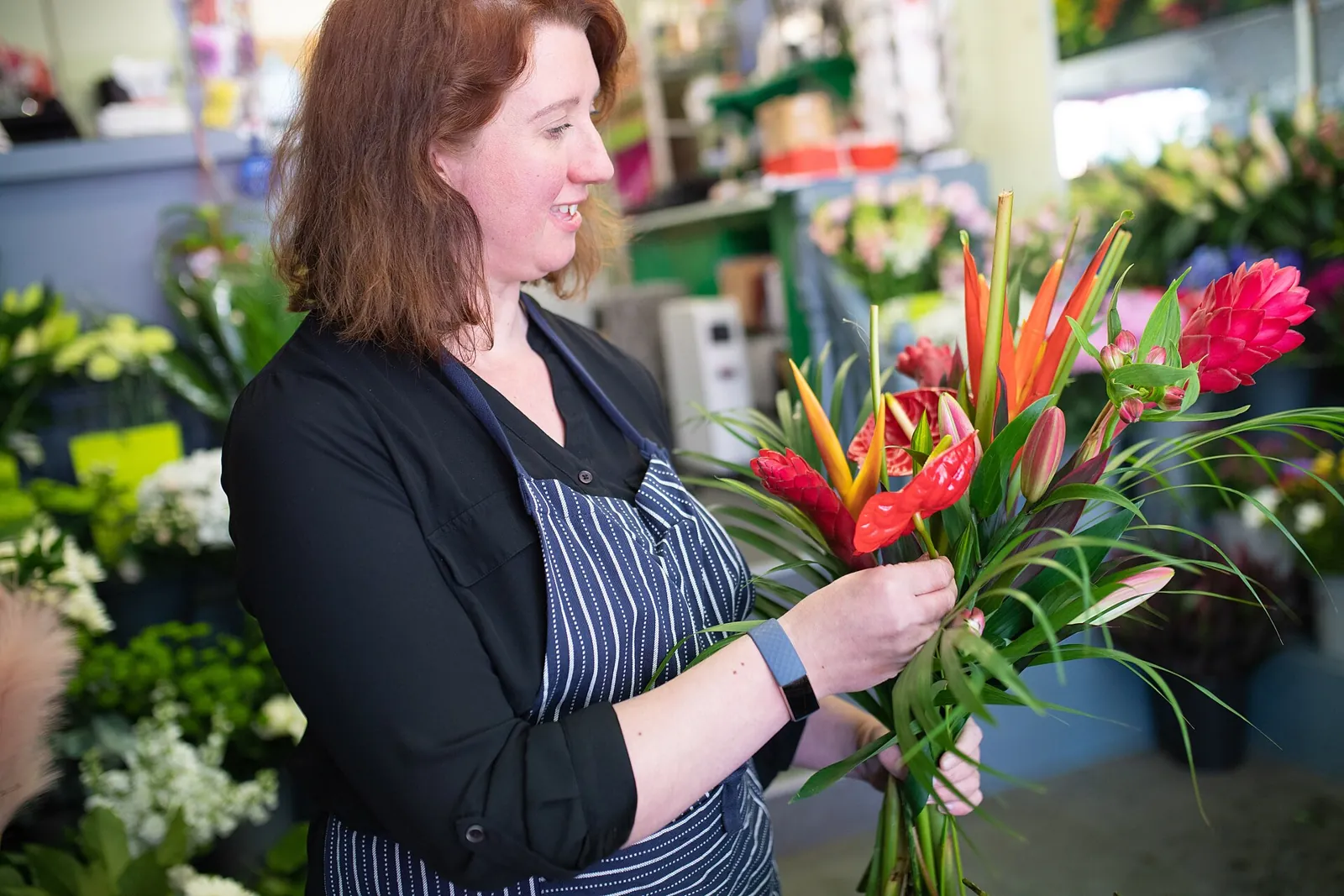
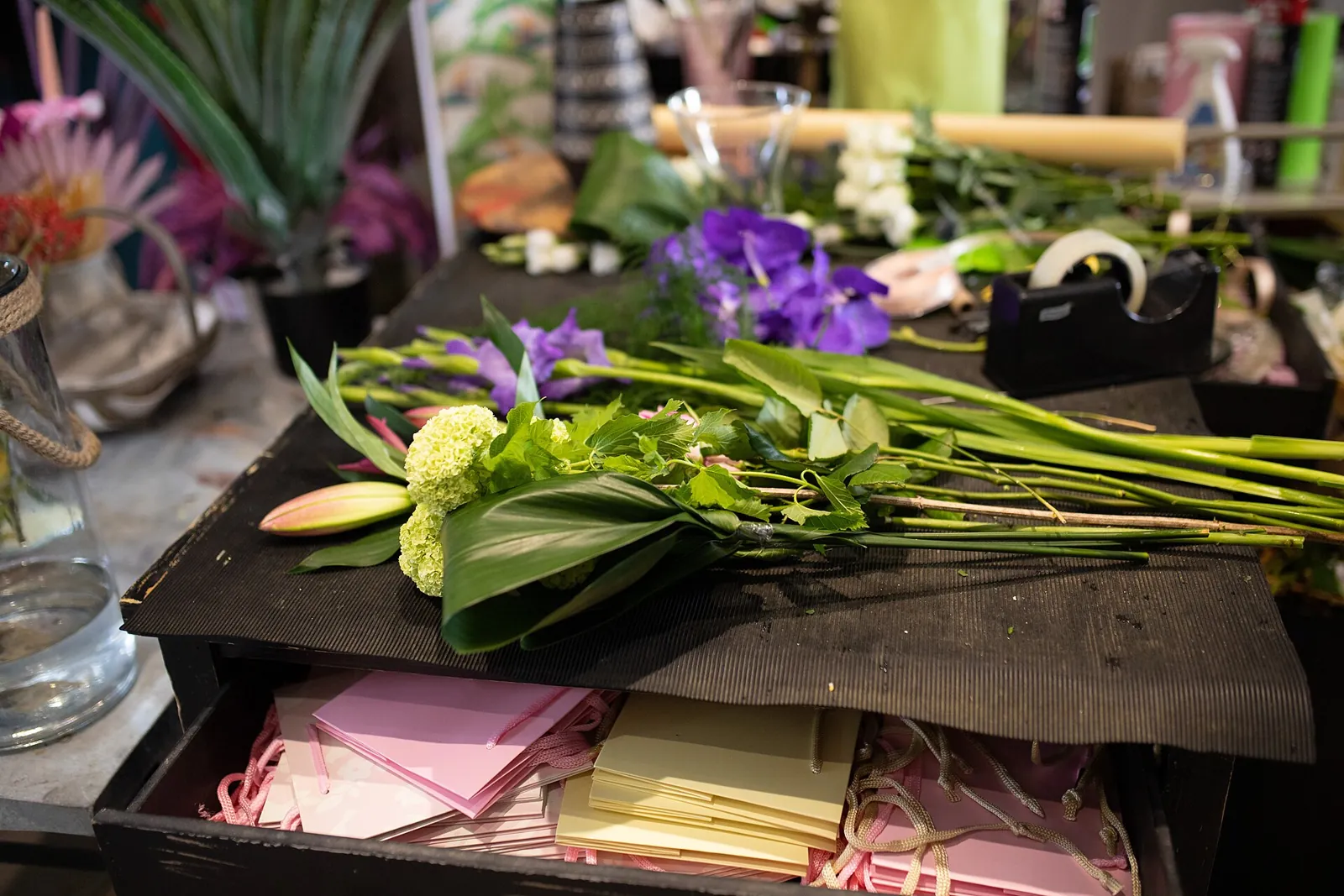
Image credits. Top image: Florist putting a bouquet together by direct2Florist, CC BY 2.0, via Wikimedia Commons · In-article image: Flowers ready to be prepared by florist by direct2Florist, CC BY 2.0, via Wikimedia Commons
Spotted something out of date or a gift that's no longer available? Tell our editors — we review every correction.