How to make a rice heating pad (and use it safely)
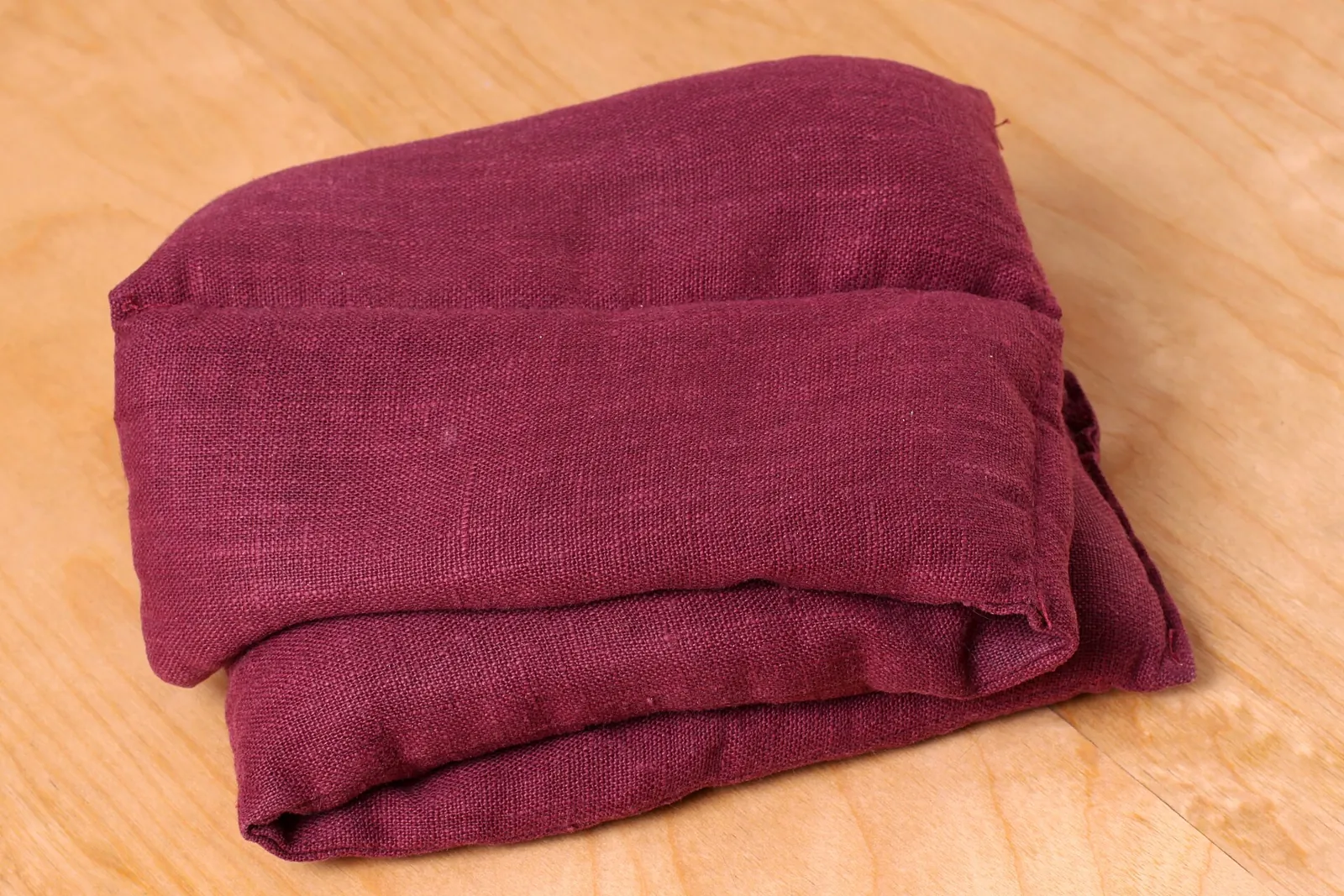
A cotton rice pack with four channels and a removable cover, plus the heating and safety instructions to include with it so the gift stays comforting, not risky.
Quick answer
Sew two 9 × 21 inch (23 × 53 cm) pieces of 100% cotton into a tube, fill it with about 3 to 4 cups of plain uncooked white rice in four stitched channels, and close the end. Make a separate washable cover. Heat it lying flat in the microwave in short bursts (start with about 30 seconds), check the temperature by hand after each burst, and never use it on babies or young children, in bed, or straight on bare skin. Include written heating instructions with the gift.
- Time 1 – 1½ hours
- Difficulty Beginner
- Cost $8 – $20
- Makes One pad about 8 × 20 in (20 × 51 cm) with a removable cover
A microwavable rice pack is a classic handmade comfort gift: warm on a stiff neck after a long day, on cold hands in winter, or (from the freezer) as a soft cold pack. It is easy to sew, but it is also a product that gets hot, so the details matter: the right fabric, a sensible fill, and clear instructions for whoever receives it. This guide covers all three.
Materials
- Inner bag: ⅔ yd (0.6 m) of plain 100% cotton (quilting cotton, cotton muslin or cotton flannel)
- About 3 – 4 cups (roughly 1½ – 2 lb / 0.7 – 0.9 kg) of plain, uncooked long-grain white rice. Do not use instant or parboiled rice
- 100% cotton thread
- For the cover: ¾ yd (0.7 m) of a printed 100% cotton or cotton flannel
- Sewing machine, pins, ruler, fabric marker, a funnel or paper cone for filling
Tip: Avoid polyester, fleece, nylon, satin, metallic threads, glitter prints, plastic or fusible appliqués, buttons, zippers and snaps on anything that goes in the microwave. Synthetics can melt and metal can spark. Keep the inner bag plain cotton and put decorative fabric on the cover.
How to make the heating pad
Cut the pieces
Cut two rectangles of 9 × 21 in (23 × 53 cm) for the inner bag. For the cover, cut one piece of 10 × 22 in (25 × 56 cm) for the back and two pieces of 10 × 14 in (25 × 36 cm) for an envelope opening. The cover is slightly larger so the filled pad slides in easily.
Sew the inner bag
Place the two inner pieces right sides together. Sew both long sides and one short end with a ½ in (1.3 cm) seam, backstitching at the corners. Clip the corners, turn right side out and press. The bag is now about 8 × 20 in.
Mark the channels
With a fabric marker, draw lines across the bag at 5, 10 and 15 in (13, 25 and 38 cm) from the closed end. These make four pockets of about 8 × 5 in, which stop the rice from sliding to one end.
Fill and stitch the first channel
Using a funnel, pour about ¾ to 1 cup of rice into the bag. Shake it down into the first pocket, pin across the first line to keep it there, and sew along the line. Pockets should be roughly half to two-thirds full, so the pad drapes over a shoulder.
Repeat for the remaining channels
Add the same amount of rice for the second and third pockets, sewing each line in turn. Push the rice away from the needle as you sew; a zipper foot makes this easier.
Close the end
Fill the last pocket, then fold the raw edges of the open end ½ in to the inside, pin, and topstitch it closed twice, about ⅛ in and ¼ in from the edge. Shake the pad and check that no rice escapes anywhere.
Sew the washable cover
For an envelope cover, hem one 10 in edge of each 10 × 14 in piece, lay them right side down on the back piece so the hemmed edges overlap in the middle, and sew around the outside with a ½ in seam. Turn right side out and slip the pad inside. The cover can be washed; the rice pad itself should not be.
Heating safely
Homemade wheat and rice packs are not tested like commercial ones, so whoever uses it needs to be careful. Consumer-safety agencies give consistent advice for microwavable grain packs, and these are the points to pass on with your gift:
- Heat in short intervals. Lay the pad flat in the microwave, not folded, so it heats evenly without hot spots. Start with about 30 seconds, take it out, squeeze it to spread the heat and feel all sections, then add 10 to 15 seconds at a time only if needed. Microwaves vary a lot in power, so there is no single safe time; Which? suggests lowering the power setting on microwaves over 1,000 W.
- Check the temperature before it touches skin. It should feel warm and comfortable on the inside of your wrist, not hot. Use it inside its cover, never directly on bare skin.
- Never leave it in the microwave unattended, and do not heat it longer than needed. Overheated grain packs can scorch and catch fire. A glass of water placed alongside is not a reliable way to prevent this, and NSW Fair Trading warns that it can cause scalds.
- Let it cool completely before reheating or storing it.
- Do not use it in bed or under covers. Bedding traps heat and can cause a hot pack to ignite.
- Not for babies or young children. Do not use a heat pack on an infant or toddler. Their skin burns more easily, and safety agencies single out the very young and older people as most at risk of contact burns. Older adults, and anyone with reduced feeling in their skin, should only use one with care and supervision.
- Replace it if it smells burnt, looks scorched, or the rice has become very dry and old. Cool a scorched pack in the sink and throw it away.
Using it as a cold pack
Put the pad in a clean plastic bag and freeze it for an hour or two. Use it inside the cover, and keep sessions short, as with any cold pack. Let it return to room temperature and dry completely before heating it again, since condensation can make the rice damp.
Packaging it as a gift
Fold the cover-wrapped pad in tissue and tie it with ribbon, or roll it into a gift bag with a mug and herbal tea. Always include a printed tag with the heating instructions from the section above, the fabric content, and "remove cover before washing; do not wash the inner pad." A rice pack fits well in a get-well care package or among gifts after surgery, though check first that the person's doctor is happy for them to use heat. Find more fabric projects in our sewing section and the DIY gifts for loved ones collection.
Frequently asked questions
How long do you microwave a rice heating pad?
Start with about 30 seconds lying flat, then add 10 to 15 seconds at a time, checking by hand after each burst. Microwaves differ, so there is no fixed safe time; never leave it heating unattended.
Can I add essential oils or lavender?
It is safer to skip them in the inner pad. Oils can soak into the fabric and plant material can scorch. Tuck a lavender sachet into the gift wrap instead.
Can I wash a rice heating pad?
No. Washing the rice makes it damp and it can go moldy. That is why a removable, washable cover is part of this design.
Is a rice pack safe for a baby?
No. Do not use heat packs on babies or young children; their skin burns easily. Give rice packs to adults.
Sources
- NSW Government (Fair Trading) — Heat pack and hot water bottle safety. nsw.gov.au
- Which? — Buying a hottie or wheat bag for a loved one this Christmas: what you need to know. which.co.uk
Image credits. Top image: Röd Vetekudde by Fluff, CC BY-SA 3.0, via Wikimedia Commons
Spotted something out of date or a gift that's no longer available? Tell our editors — we review every correction.