DIY gifts for teachers they'll actually keep
A thank-you note jar from a student or the whole class, plus small handmade extras teachers use, and the common gifts to skip.
Quick answer
The handmade teacher gift that lands best is a thank-you note jar: short, specific messages from the student (or the whole class) rolled up in a decorated jar. Pair it with something small and useful, such as a homemade sugar scrub, a labeled cookie mix or a potted succulent. Skip generic mugs and scented items unless you know the teacher's taste, and label any food with its ingredients.
- Time 1 – 2 hours (longer if collecting notes from a class)
- Difficulty Easy
- Cost About $8 – $20
- Makes One jar of 10 – 30 notes
Teachers receive many gifts around the winter holidays, Teacher Appreciation Week and the end of the year, and a lot of them look the same. Handmade gifts stand out when they say something personal about the year, or when they are genuinely useful in a busy week. The projects below do one or the other, and the first does both.
Project: a thank-you note jar
A jar of notes is something a teacher can reread on a hard day. It works from one student, or as a group project organized by a room parent; see teacher gifts from the class for how to coordinate one.
- A clean glass jar with a lid, about 16 – 24 oz
- Colored paper or cardstock, cut into strips about 2 x 6 in
- Fine-tip markers or gel pens (washable, ACMI AP-sealed markers if young children are writing)
- Thin ribbon, baker's twine or small rubber bands to tie the rolled notes
- A label or tag, and ribbon for the lid
- Optional: a few wrapped candies or tea bags to tuck between notes
Collect prompts
Blank paper leads to "You are nice." Give the writer a prompt instead: "My favorite thing we did this year was…," "You helped me when…," "Something I learned from you is…." Younger children can dictate to a parent or draw a picture.
Write one note per strip
Aim for at least 10 notes from one student, or one or two from each classmate. Specific memories are what make the gift: a science experiment, a book read aloud, a joke from class.
Sign and date
Each note should carry a first name and the school year, so the teacher can tell them apart years later.
Roll and tie
Roll each strip around a pencil, slide it off, and tie it with ribbon or a small band. Mixing paper colors makes the jar look full and cheerful.
Label the jar
A simple tag such as "Open when you need a smile" or "Thank you from Room 12" explains the idea. The student can decorate the label.
Fill and finish
Drop the notes in, add any small treats, close the lid and tie a ribbon around the neck. Add a card from the parent if you like; our thank-you note wording guide has examples.
Tip: For a class jar, collect notes through a shared box at school pickup or ask families to send them in a sealed envelope, so no child feels left out and the teacher never sees the gift being assembled.
More DIY gifts teachers actually use
Homemade sugar scrub
A small jar of sugar scrub with a neutral or lightly scented oil is welcome after a day of whiteboard markers and hand sanitizer. Keep fragrance mild, since many people are sensitive to strong scents. Our sugar scrub tutorial covers safe oils and storage.
Cookie mix in a jar
Layered dry ingredients with baking instructions on the tag let the teacher bake when they have time. Because of allergies and some schools' rules on homemade food, list every ingredient on the tag, avoid nuts unless you know they are fine, and consider giving it at the end of the year rather than for a class party. See cookie mix in a jar for layering ratios.
A painted pot with a succulent
A child-painted terracotta pot with an easy plant brightens a classroom windowsill. Choose a low-maintenance plant that can survive a long weekend without water.
A personalized clipboard or bookmark
Decoupage a plain clipboard with patterned paper, or laminate a child's drawing as a bookmark. Teachers handle clipboards and books every day, so these get used.
A creative gift card holder
Many teachers spend their own money on classroom supplies. A small gift card to a bookstore, office supply store or coffee shop, tucked into a handmade card or pencil-shaped holder, combines the personal and the practical.
What to avoid
- Another "World's Best Teacher" mug, unless it is truly personal.
- Strongly scented candles, lotions or sprays; scent is very personal and some people react to fragrance.
- Homemade food without an ingredient label, or anything with nuts when you do not know the teacher's needs.
- Expensive gifts from one family. Some schools and districts set limits on what staff may accept, so check if you are unsure; a group gift keeps values reasonable.
- Gifts that create work: large plants, fragile decor, or anything that needs special care.
Safety notes when kids help
If children are writing, painting or decorating, choose washable supplies with the Art & Creative Materials Institute's AP (Approved Product) seal. ACMI recommends AP-sealed products for children in sixth grade and younger, and says products with its CL seal are for older students and adults. "Conforms to ASTM D 4236" on a label means the product follows the US chronic hazard labeling standard for art materials. Adults should handle ovens, glue guns, craft knives and spray sealers.
How to give it
Have the student hand the gift over, ideally at drop-off rather than in the middle of a lesson. Keep packaging simple: a paper gift bag or a ribbon is enough, and teachers often carry gifts home on foot or by bus. For more ideas by budget, see teacher gifts under $15 or the full gifts for teachers hub.
Frequently asked questions
Do teachers like homemade gifts?
Personal ones, yes. Notes and drawings from students are among the gifts teachers keep. Homemade food and decor are more hit-and-miss, so pair them with a note or keep them small.
When should I give a teacher gift?
The most common times are the winter holidays, Teacher Appreciation Week in May, and the last week of school. A thank-you note jar is especially fitting at the end of the year.
How much should I spend on a DIY teacher gift?
Most handmade teacher gifts cost under $20 in materials. The value is in the thought; check whether your school has a policy on staff gifts.
Is it OK to give homemade food to a teacher?
Often, but label all ingredients, avoid common allergens if you are unsure, and remember some teachers have dietary restrictions. A dry mix in a jar or store-sealed treats with your handmade tag are safer options.
Sources
- Art & Creative Materials Institute — Approved Product (AP) Seal and classroom art materials safety. acmiart.org
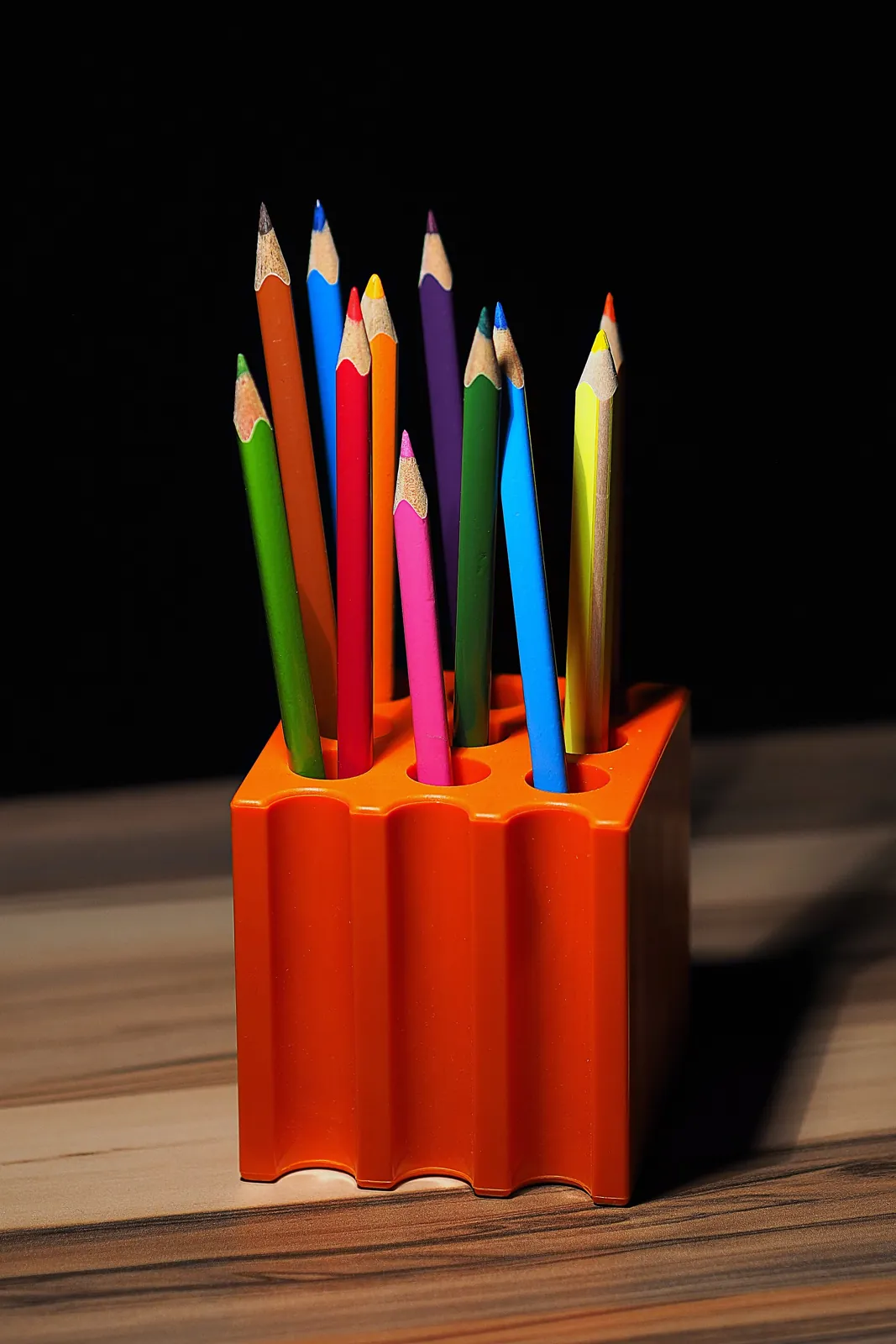
Image credits. Top image: Colored pencils in holder by ThoBel-0043, CC BY-SA 4.0, via Wikimedia Commons
Spotted something out of date or a gift that's no longer available? Tell our editors — we review every correction.