How to make a wooden cutting board with a food-safe finish
A hardwood cutting board is a handmade gift that gets used every day. Here is how to choose safe wood, shape and sand it, finish it with food-safe oil, and explain its care.
Quick answer
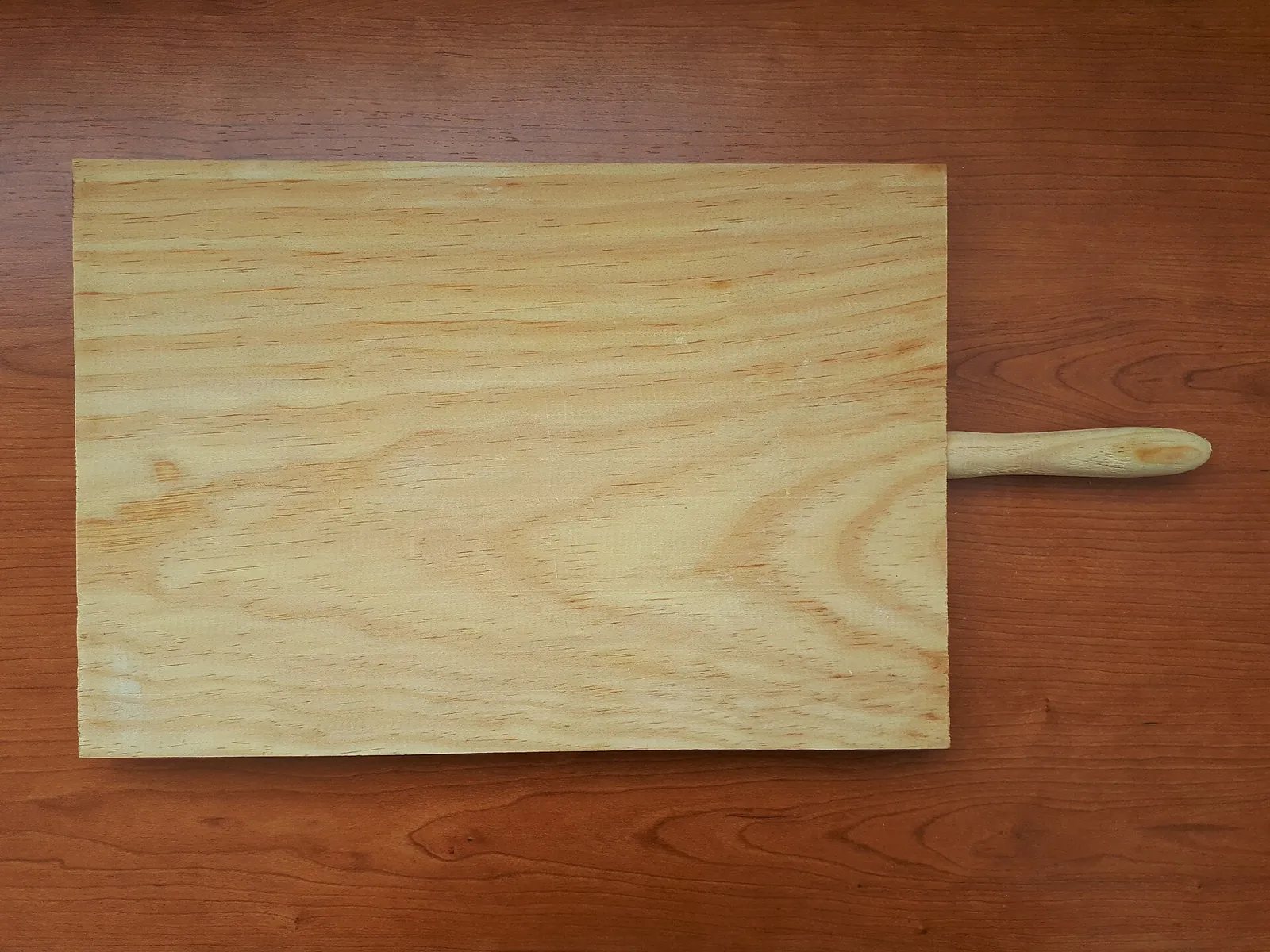
The easiest handmade cutting board is a single plank of closed-grain hardwood such as maple, cherry or walnut, cut to length, shaped, sanded smooth and finished with food-grade mineral oil or a mineral oil and beeswax blend. If you glue strips together, use a glue its maker approves for indirect food contact. Avoid treated lumber, softwoods and film finishes not meant for cutting surfaces, and include care instructions with the gift.
- Time About 2 – 3 hours of work, plus overnight for oil to soak in
- Difficulty Moderate (needs a saw and a sander)
- Cost About $20 – $60 for hardwood and finish
- Makes One board, roughly 10 x 14 inches
A wooden cutting board is one of the most practical handmade gifts there is. It gets used every day, it improves with age, and a well-made one can last for years. A plank board is a good first woodworking project: no complicated joinery, just careful cutting, patient sanding and the right finish.
Choosing safe, durable wood
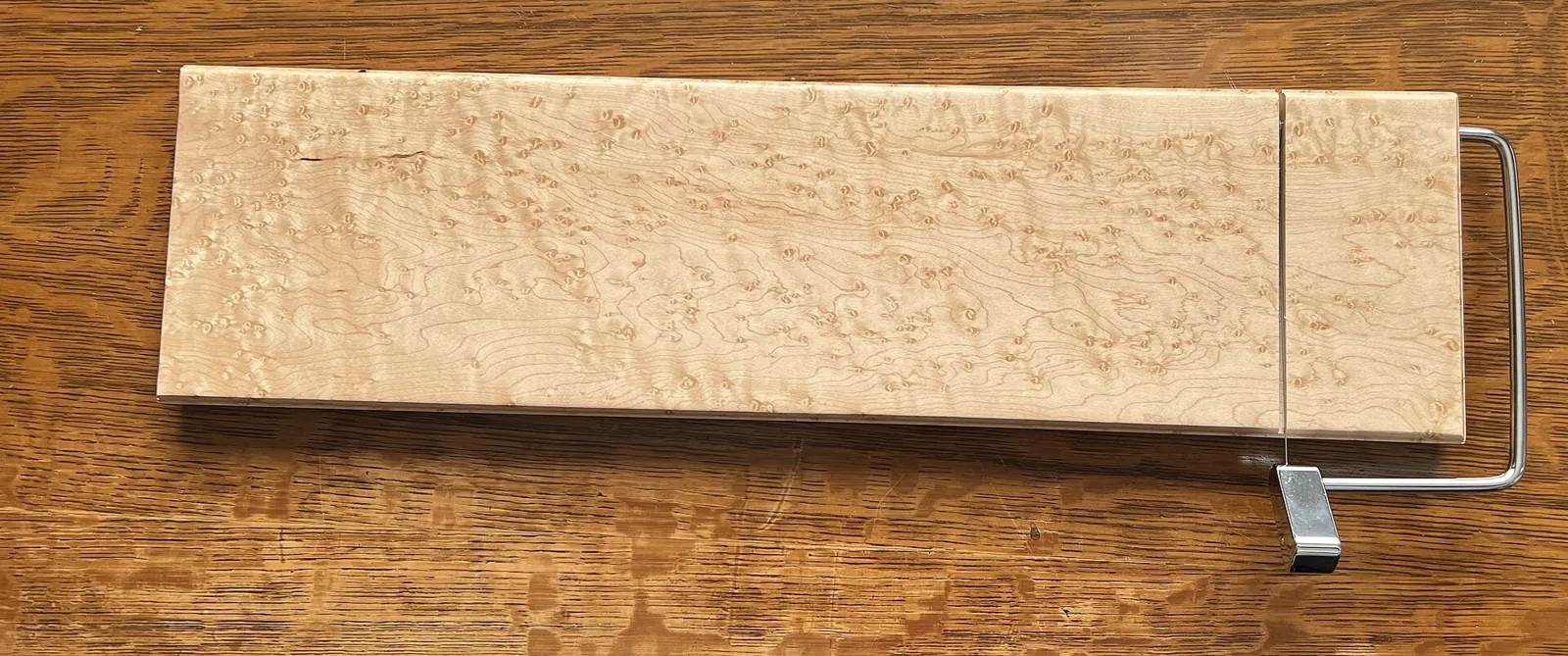
Pick a tight-grained hardwood. Hard maple is the classic choice, and NDSU Extension notes that hardwood boards such as maple are less likely to dull knives than plastic. Cherry and walnut are also popular and give warm color.
- Use solid hardwood boards, about 3/4 to 1 1/4 inches thick, sold for furniture or cabinetry.
- Choose flat, straight pieces without large knots, cracks or loose grain.
- Buy a little extra length so you can cut away any split ends.
- Do not use pressure-treated lumber, reclaimed wood of unknown history, plywood, MDF or particleboard.
- Avoid soft woods like pine, which dent and scratch easily and hold cut marks.
- Avoid very open-grained woods such as red oak for a first board; the pores trap moisture and food.
If you want a striped board, glue several strips of hardwood edge to edge. Use a waterproof wood glue its maker approves for indirect food contact; Titebond, for example, says its Titebond III and Titebond II glues are approved for indirect food contact and recommends Titebond III for cutting boards.
What you need
- A hardwood board (maple, cherry or walnut), about 3/4 to 1 1/4 inches thick
- Saw (circular saw, jigsaw, miter saw or a good handsaw)
- Random-orbit sander or sanding block with 80, 120, 180 and 220 grit paper
- Router with a roundover bit (optional, for soft edges) or a file
- Clamps and food-contact-approved wood glue (only for glued-up boards)
- Food-grade mineral oil, or a mineral oil and beeswax "board butter"
- Lint-free cloths
- Safety glasses, hearing protection and a dust mask
- Optional: small rubber feet (only on one side), or a hole for hanging
How to make a wooden cutting board
Plan the size and shape
Mark out the board on the plank. A rectangle around 10 x 14 inches is versatile; smaller paddle-shaped boards make good serving or cheese boards. Draw any handle or rounded corners with a template.
Cut it to shape
Clamp the board securely and cut along your lines, wearing eye and hearing protection. Keep hands well away from the blade and follow your saw's safety instructions. Take your time on curves.
Glue up strips (optional)
For a striped board, joint the strips so edges meet tightly, spread glue on the edges, clamp evenly and wipe off squeeze-out. Leave clamped for the time on the glue label, then let it cure fully before sanding.
Round the edges
Ease all edges and corners with a router roundover bit, a file or sandpaper. Soft edges feel better in the hand and resist chipping.
Sand through the grits
Sand both faces and all edges, starting at 80 or 120 grit to remove saw marks and working up to 180 and 220. Wipe off dust between grits. Wear a dust mask; OSHA notes that breathing wood dust can irritate the airways and cause other health effects.
Raise the grain
Wipe the board with a damp cloth and let it dry. The fibers that stand up are the ones that would make the board fuzzy after its first wash. Sand them off lightly with 220 grit.
Apply a food-safe finish
Flood the board with food-grade mineral oil, let it soak in for several hours or overnight, then wipe off the excess. Repeat until the wood stops absorbing much oil. A final coat of mineral oil and beeswax blend adds a soft sheen and a little more water resistance.
Buff and let it rest
Buff the surface with a clean cloth. Let the board sit for a day before wrapping so the surface is not oily to the touch.
Tip: Sign or date your board on an edge with a wood-burning pen. It turns a useful object into an heirloom.
Food-safe finishes explained
A cutting board gets scraped by knives, so a hard film finish like varnish will be cut through. Most makers use a penetrating oil that is easy to renew. Fine Woodworking's guide to food-safe finishes lists these options:
- Mineral oil: colorless, odorless and inert; needs regular reapplication. Buy food-grade mineral oil, sold as cutting-board oil or in pharmacies.
- Mineral oil and beeswax: the article author's favorite; slightly more water-repellent.
- Pure tung oil and raw linseed oil: cure in the wood but take many coats and long drying times. Boiled linseed oil is different; it contains metallic driers.
- Walnut oil: dries and does not go rancid, but skip it for anyone with a nut allergy.
- Shellac: the only film finish on the list, better for serving boards than for heavy chopping.
Avoid vegetable oils such as olive or regular cooking oil, which can turn rancid in the wood, and avoid finishes with added solvents or driers unless the manufacturer states they are suitable for food contact.
Safety notes
- Power tools: Wear eye and hearing protection, clamp work securely and read each tool's manual. This project is for adults; teens should work with close supervision.
- Dust: Sand outdoors or with dust collection, and wear a dust mask.
- Oily rags: Rags used with drying oils like tung or linseed can heat up and catch fire as they cure. Lay them flat outdoors to dry or follow the disposal advice on the product label. Pure mineral oil does not cure this way, but blended products may contain drying oils.
Gift it with care instructions
Tie the board with twine and tuck in a small card with care instructions. Combining NDSU Extension's cleaning and sanitizing guidance with the usual care for an oiled board, a good card might read:
Wash by hand in hot, soapy water, rinse and air-dry standing on edge. After raw meat or poultry, scrub, rinse and sanitize with 1 tablespoon of unscented chlorine bleach per gallon of water. Do not soak or put in the dishwasher. Rub with food-grade mineral oil whenever it looks dry. Replace when deep grooves become hard to clean.
A board with a small bottle of mineral oil and a wooden spoon makes a lovely fifth anniversary gift, since wood is the traditional theme. Find more projects in our wood category, pair it with wood slice coasters, or see more ideas for home cooks.
Frequently asked questions
What is the best wood for a cutting board?
Hard maple is the traditional choice because it is hard, tight-grained and gentle on knives. Cherry and walnut are also widely used. Avoid softwoods and open-grained woods.
Can I use olive oil on a cutting board?
It is not recommended, because cooking oils can turn rancid and smell. Food-grade mineral oil or a mineral oil and beeswax blend is the common choice.
Is polyurethane safe for a cutting board?
Many cured finishes are considered safe once fully cured, but a film finish will be cut by knives and peel over time. For a board used for chopping, a penetrating oil is more practical.
Are wooden cutting boards sanitary?
Yes, when cleaned properly. Wash with hot soapy water after each use, sanitize after raw meat, dry thoroughly and replace boards with deep grooves.
Sources
- Fine Woodworking (Jonathan Binzen) — Wood finishes that are food safe. finewoodworking.com
- NDSU Extension (Julie Garden-Robinson) — Prairie Fare: Say Goodbye to Old Cutting Boards (2014). ag.ndsu.edu
- Titebond — Glues: frequently asked questions. titebond.com
- Occupational Safety and Health Administration — Wood Dust. osha.gov
Image credits. Top image: Wooden cutting board 2017 by Fructibus, CC0 1.0, via Wikimedia Commons · In-article image: Planche à découper en bois d'érable dur by Codex, CC BY-SA 4.0, via Wikimedia Commons
Spotted something out of date or a gift that's no longer available? Tell our editors — we review every correction.