Why do people give wedding gifts? Origins of the custom
Wedding gifts began as dowry and bride price, became guests' presents in the 19th century and turned into registries in 1924. Here is the short history.
We independently research every pick. If you buy through our links we may earn a small commission, at no extra cost to you. As an Amazon Associate we earn from qualifying purchases. Affiliate disclosure.
Quick answer
Why do people give gifts for weddings? Because marriage has always involved a transfer of goods to help a new household start out. In the ancient world that meant dowry from the bride's family and a bride price from the groom's; by the 19th century it had become presents from guests, and in 1924 a Chicago department store turned it into the registry. Today a gift is a practical start-up fund and a public way of saying you support the marriage.
- Oldest written rules Code of Hammurabi, c. 1792 to 1750 BCE
- Registry introduced 1924, Chicago
- Main purposes Setting up a home, showing support, sharing in a milestone
- Modern forms Registry items, cash, experiences, donations
Why give a present when many couples already own a toaster? For most of recorded history a marriage was also an economic arrangement between two families, and goods changed hands to make it work. The modern wedding present is the friendly, voluntary descendant of those exchanges. For the practical side, see how much to spend on a wedding gift, which we cover separately. For gift ideas once you know what you want to say, see our guide to wedding gifts for the couple.
Dowry and bride price: the oldest wedding gifts
Two ancient customs sit at the root of wedding giving. A dowry is wealth such as money, land, livestock or household goods that the bride's family provides at the time of marriage. A bride price (also called bridewealth) runs the other way, from the groom or his family to the bride's family. Some societies used one, some the other, and some both.
Both appear in some of the earliest written law. The Code of Hammurabi, the Babylonian law code that the Louvre dates to Hammurabi's reign between about 1792 and 1750 BCE, contains several marriage clauses. In the L. W. King translation published by Yale's Avalon Project, a husband who separates from a childless wife must give her "the amount of her purchase money and the dowry which she brought from her father's house." Another clause lets a husband subtract the purchase price from the dowry in a dispute. The law treats both payments as normal, already established parts of marriage.
Dowry practices continued in ancient Greece and Rome, where the Roman dos was property given to help the husband meet the costs of marriage, and they remained widespread in Europe into the early modern era. In some places they caused real harm: India banned the giving and taking of dowry under the Dowry Prohibition Act of 1961, although the practice has persisted. That darker history is worth remembering. The modern wedding present only works because it is freely given and nobody keeps score.
From family payment to household start-up kit
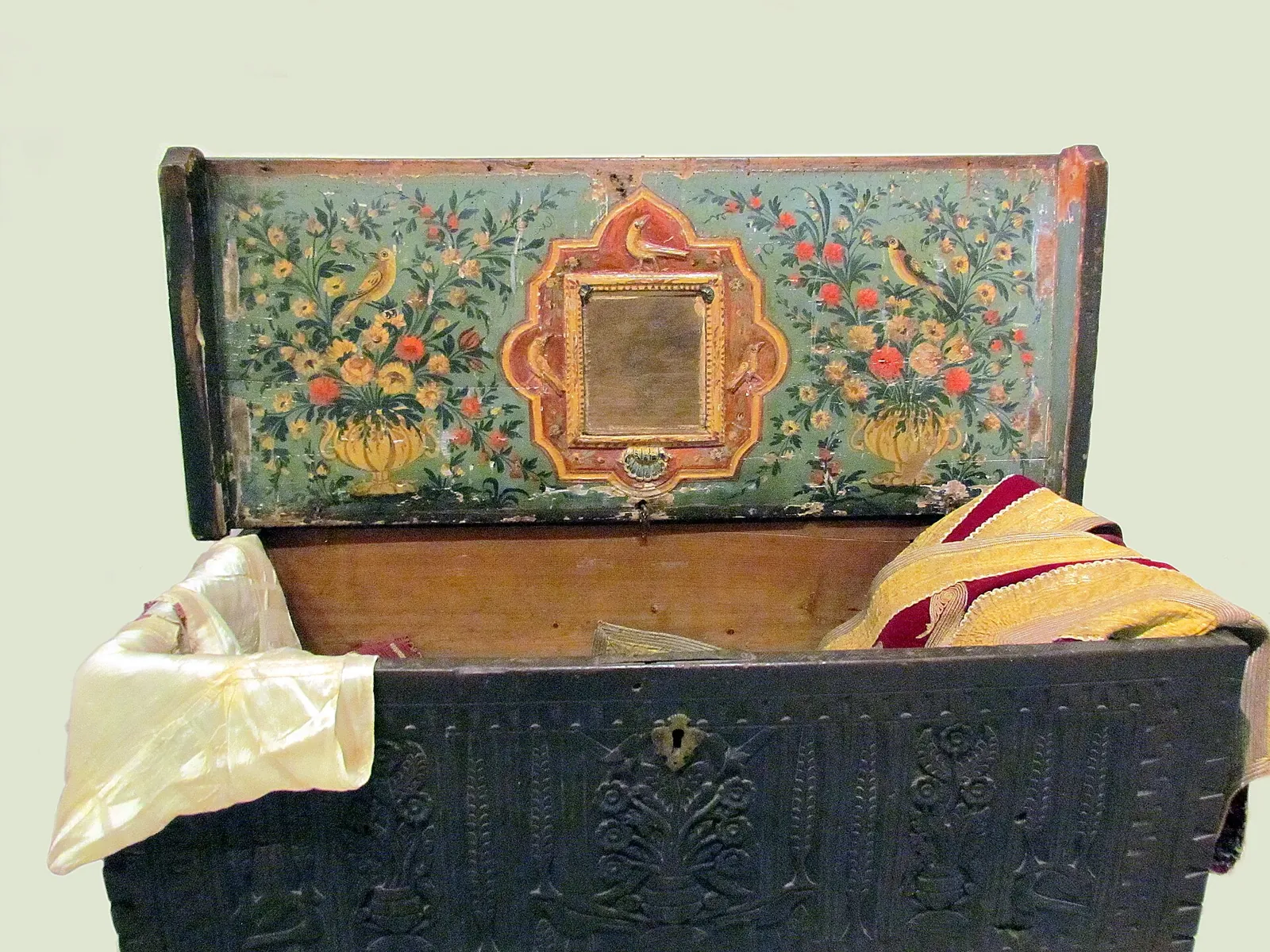
A dowry often took the form of things a household needed: linens, clothes, furniture, kitchenware. That idea survived as the trousseau, the collection of clothing and linens a bride brought to her marriage, and it shaped what guests felt they could give. A 19th-century American etiquette writer quoted by JSTOR Daily thought "gifts of utility" such as linens were bad form from anyone but a close friend, because they might suggest the bride's family could not afford a proper trousseau. Books, ornaments and embroidery were considered safer choices.
How guests became the givers
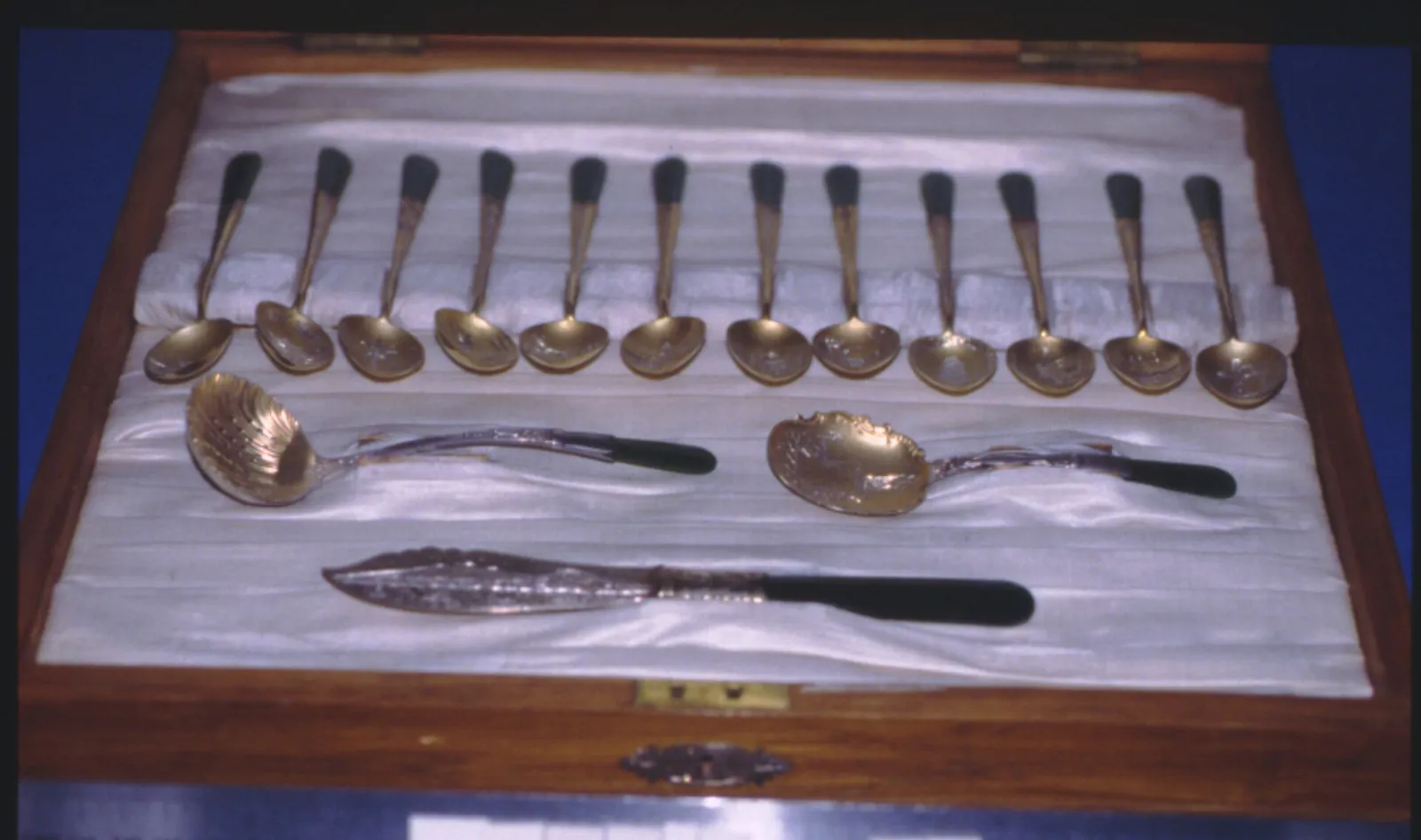
As marriage became more of a personal choice and less of a family contract, the obligation to equip the couple spread from the two families to the wider circle of friends. Historian Barbara Penner, writing about American weddings, dates the commercialization of the wedding to the mid-19th century, when merchants began promoting jewelry, flowers, confectionery and formal photographs, and guests in upper-middle-class and wealthy circles were expected to give fancy presents, often to the bride herself. In 1877 a Hartford jeweler published a catalog titled What Shall I Buy as a Present?, offering "bridal presents" from a silver-plated pickle spoon to a trunk of silverware. Even then, critics complained that gifts were becoming a matter of calculation.
The registry solves the duplicate problem
Once dozens of guests were buying china, silver and crystal for the same couple, duplicates became a real nuisance. According to the Chicago Architecture Center, Marshall Field's in Chicago was the first store in the world to offer a bridal registry, a service it introduced in 1924. Couples chose their patterns, and guests bought pieces that completed a set instead of a fourth gravy boat. The idea spread across department stores and later online, where couples can now register for anything from cookware to honeymoon experiences.
Money gifts in different cultures
In many cultures cash, not objects, is the normal wedding gift, and it carries its own etiquette.
- Japan. Guests traditionally give shūgi, money presented in a special decorated envelope rather than handed over directly. Nippon.com notes that many people use brand-new bills, which are seen as free of impurity, that the first digit of the amount is often odd, and that the cord on a wedding envelope is tied in a tight knot because a marriage is meant to happen once.
- Chinese and other East and Southeast Asian traditions. Red envelopes of money, best known from the Lunar New Year, also appear at weddings and births. Google Arts & Culture notes that red symbolizes good luck and prosperity in various Asian cultures and that amounts avoid the number 4, which sounds like the word for death.
- Many Western weddings today. Cash and checks, once considered too blunt by some etiquette writers, are now common, especially for couples who already have a full kitchen.
Whatever the form, the logic is the same as the old dowry: help the couple start their next chapter with a little more security.
Why do people give gifts for weddings today?
The economic need has faded for many couples, but the gift still does several jobs at once.
- It helps with real costs. A move, a home or a honeymoon is expensive, and pooled gifts add up.
- It shows public support. Giving says you back this marriage, close to the custom's original community role.
- It marks your relationship. Close friends and relatives usually give something more personal than acquaintances do.
- It returns hospitality. Many guests see it as a thank-you for being included, though etiquette does not require you to "cover your plate."
So if you are wondering why do you give gifts at a wedding you cannot attend, the answer is that the gift was never mainly about the party. It is about the marriage.
Modern wedding gifts that echo the old traditions
If you like the idea of a gift with some history behind it, these types connect to the customs above. Prices are typical US ranges.
A piece from the registry
Why it works: It is the direct descendant of the 1924 china-and-silver registry: the couple chose it, so it will be used and it will not duplicate someone else's gift.
Skip it if: everything affordable is gone; a contribution toward a larger item or cash is better than an off-list guess.
Cash or a check in a card
Why it works: Like shūgi and red envelopes, money lets the couple decide what they need most, whether that is rent, furniture or savings. Add a few warm lines so it feels personal.
Skip it if: the couple has asked for no cash, or you know they would find it awkward.
A contribution to a honeymoon or experience fund
Why it works: It is the modern version of helping a couple start married life, and many registries now offer it alongside household items.
Skip it if: you prefer to give something they can hold; pair a small object with a card instead.
Quality bed or table linens
Why it works: A nod to the trousseau, and genuinely useful. Good percale or linen sheets, or a tablecloth with napkins, last for years.
Skip it if: you do not know their bed size or style; check the registry or ask a family member first.
A serving piece meant to be inherited
Why it works: A solid wood board, a heavy serving bowl or a silver-plated cake knife echoes the silverware gifts of the 19th century and can be used at every family celebration.
Skip it if: the couple lives small or hates clutter; choose something consumable or experiential.
A family recipe book
Why it works: Collect recipes from both families in a printed or handwritten book. It carries the old idea of families investing in a new household, without any of the money.
Skip it if: the families are not close or would feel put on the spot to contribute.
A donation to a cause the couple supports
Why it works: Some couples set up a charity registry instead of asking for gifts. It turns your gift into support for something they care about.
Skip it if: they have not asked for donations; a gift in their name to a cause you chose can feel like it is about you.
A handwritten letter for the couple
Why it works: Whatever else you give, a letter about why you believe in them is the part of the gift they are most likely to keep.
Skip it if: never; it is the one element that suits every budget and every relationship.
How to choose a gift that fits the custom
- Start with what the couple asked for. A registry or a note about cash is the modern way of saying what the household needs.
- Respect their culture. If the couple follows a money-envelope tradition, follow its details too.
- Give in proportion to your budget. Nobody expects a dowry; a modest gift with a warm note is always appropriate.
Frequently asked questions
Why do people give gifts at weddings at all?
Because the custom grew out of families helping a new household get started. Dowry and bride price were the ancient forms; guests' presents and registries are the modern ones.
When did wedding registries start?
The Chicago Architecture Center credits Marshall Field's with introducing the first bridal registry in 1924, so couples could choose china, silver and crystal patterns.
Is it rude to give cash as a wedding gift?
No. Cash is the traditional wedding gift in many cultures, including Japan and many Chinese communities, and it is now common in the US and UK as well. Put it in a card with a personal message.
Do you have to give a gift if you do not attend the wedding?
It is customary to send a gift or at least a card if you were invited, because the gift celebrates the marriage rather than paying for your seat at the reception.
Sources
- Yale Law School, Avalon Project — The Code of Hammurabi, translated by L. W. King (laws 138, 160 and 164). avalon.law.yale.edu
- Musée du Louvre — Code de Hammurabi (collection record, dated to Hammurabi's reign, c. 1792–1750 BCE). collections.louvre.fr
- Wikipedia — Dowry (definitions of dowry, bride price and dower; Roman dos; Dowry Prohibition Act, 1961). en.wikipedia.org
- JSTOR Daily — Livia Gershon, When Weddings Went Commercial (2018), on Barbara Penner's research. daily.jstor.org
- Chicago Architecture Center — Macy's on State Street (formerly Marshall Field's). www.architecture.org
- Nippon.com — Shūgi and Kōden: Money Gifts Expressing Congratulations or Condolences. www.nippon.com
- Google Arts & Culture — 8 Things You Should Know About the Lucky Red Envelope. artsandculture.google.com
Image credits. Top image: Chest with bride's dowry (Kosovo & Metohija, Serbia) by Gmihail at Serbian Wikipedia, CC BY-SA 3.0, via Wikimedia Commons · In-article image: Presentation set (AM 1989.216-8) by Adolph Kohn, CC BY 4.0, via Wikimedia Commons
Spotted something out of date or a gift that's no longer available? Tell our editors — we review every correction.