Pet loss sympathy gifts that honor a beloved companion
Losing a pet is a real loss, and a small, sincere gesture tells a friend their grief is understood. Here are respectful sympathy gifts, from keepsakes to donations, with notes on timing and tone.
We independently research every pick. If you buy through our links we may earn a small commission, at no extra cost to you. Affiliate disclosure.
Quick answer
Good pet loss sympathy gifts are simple and personal: a handwritten card that uses the pet's name, a custom portrait or framed photo, a small engraved keepsake, a plant or garden stone in the pet's memory, or a donation to an animal shelter in their name. Keep the tone gentle, avoid suggesting a new pet, and follow the owner's lead on what feels right.
- Typical budget $15 – $80
- Best bets Cards, portraits, keepsakes, shelter donations
- Avoid "You can get another one" and anything too soon
For many people a pet is family, and the loss can hurt as much as any other bereavement. Yet pet grief is not always recognized by others, which can make it lonely. Cornell University's College of Veterinary Medicine notes that there is no "normal" way to grieve a pet and no set timeline. A sympathy gift does not need to fix anything. It only needs to say: I know this matters, and I remember them too.
Keepsakes with the pet's likeness
A custom pet portrait
Why it works: An illustrated or painted portrait from a favorite photo captures the pet's personality. Allow a few weeks for commissions, which also means it arrives when the first wave of sympathy has passed.
Skip it if: you do not have a good, clear photo; a framed print of their own best photo is the alternative.
A framed photo with the pet's name
Why it works: A simple frame engraved with the pet's name and years is affordable and quick to arrange.
Skip it if: the owner finds photos too painful right now; wait and offer it later.
A small photo book of memories
Why it works: Gather photos from friends and family who knew the pet. Owners often treasure images they have never seen.
Skip it if: you only have a handful of photos; a single framed print works better.
Memorial keepsakes and jewelry
Engraved memorial jewelry or a key ring
Why it works: A small paw-print pendant, a name tag charm or a key ring lets the owner carry a reminder every day.
Skip it if: you do not know whether they wear jewelry; a keepsake box is less personal to style.
A keepsake box for the collar and tags
Why it works: A wooden box gives the collar, tags, a favorite toy and photos a respectful home. Our pet memorial gifts guide covers more keepsake ideas.
Skip it if: they have already chosen an urn or memorial; do not duplicate it.
A memorial candle holder or lantern
Why it works: Lighting a candle in the evening can be a quiet ritual. A holder engraved with the pet's name lasts beyond the candle.
Skip it if: they have other pets or small children who could knock it over; a flameless candle is safer.
Living and garden memorials
An engraved garden stone
Why it works: A stone with the pet's name placed in a favorite sunny spot in the yard gives a lasting place to remember.
Skip it if: they rent or have no yard; a small indoor plaque works instead.
A tree, shrub or flowering plant
Why it works: Cornell's pet loss resources suggest planting a tree or flower as one way to honor a pet. A living plant grows with the memory. See our potted plant gifts for easy choices.
Skip it if: they have other pets; check that the plant is not toxic to cats or dogs before you give it.
Gifts that give back
A donation to a shelter or rescue in the pet's name
Why it works: A gift to the rescue where the pet came from, or a local shelter, turns grief into help for other animals. Many organizations send a card to the owner if you ask.
Skip it if: the owner has strong feelings about a particular organization; choose the one they support.
A heartfelt card that names the pet
Why it works: Using the pet's name and sharing a specific memory ("I'll always remember how Biscuit met me at the door") is the gift many owners value most. Our sympathy card messages can help with wording.
Skip it if: never; a card suits every situation.
What to say, and what to avoid
- Use the pet's name and acknowledge the bond.
- Share a specific memory if you have one.
- Check in a week or two later, and on the anniversary if you are close.
- Mention support if it seems welcome. Cornell runs a Pet Loss Support Hotline staffed by trained veterinary students (607-218-7457; hours vary seasonally, so check its website).
- Do not suggest getting a new pet, or give one as a gift.
- Do not ask about the details of the death or euthanasia decision.
- Do not compare their loss to the loss of a person or minimize it ("it was just a dog").
More ideas are in our sympathy gifts collection.
Frequently asked questions
Is it appropriate to give a gift when someone's pet dies?
Yes. A card or small gift is a kind way to acknowledge a loss that others may overlook. Keep it simple and personal.
How soon should you send a pet sympathy gift?
A card within the first week or two is ideal. Keepsakes such as portraits can arrive later, and many owners appreciate being remembered weeks afterward.
What do you write in a pet sympathy card?
Name the pet, acknowledge the bond, and share a memory if you have one: "Max was such a gentle soul. I know how much you loved each other." Avoid clichés that minimize the loss.
Are paw print kits a good sympathy gift?
They are very personal and depend on timing and the owner's wishes, so they are usually best left to the owner and their veterinarian. A portrait or keepsake box is a gentler gift from a friend.
Sources
- Cornell University College of Veterinary Medicine — Pet Loss Resources and Support. vet.cornell.edu
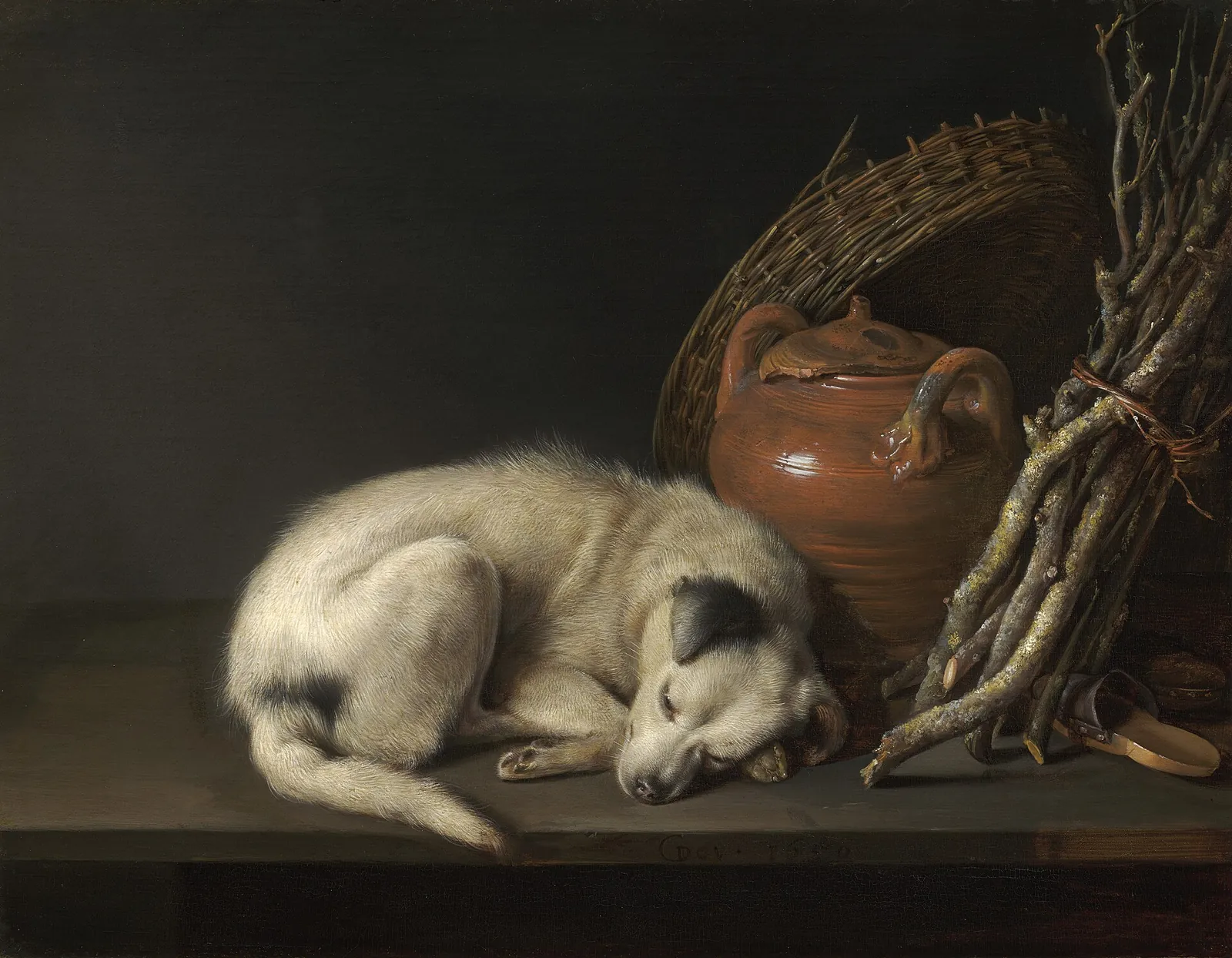
Image credits. Top image: 02. Dog at Rest Gerrit Dou by Gerrit Dou, Public domain, via Wikimedia Commons
Spotted something out of date or a gift that's no longer available? Tell our editors — we review every correction.