Handprint craft gifts: salt dough keepsakes and more
How to make a lasting salt dough handprint gift, plus quick painted handprint ideas, and why wet plaster of Paris is never safe for little hands.
Quick answer
The easiest lasting handprint gift is a salt dough handprint: flour, salt and water pressed into a disc, baked slowly by an adult, then painted and dated. Painted handprints on cardstock, canvas or a fabric tea towel are quicker alternatives. Use washable, non-toxic paint with the ACMI AP seal on skin, and never let a child put a hand into wet plaster of Paris, which heats up as it sets and has caused serious burns.
- Time 30 minutes hands-on, plus about 3 hours baking and drying
- Difficulty Easy
- Cost Under $10 for salt dough; $10 – $20 with a canvas or tea towel
- Makes 2 – 3 handprint discs, depending on hand size
Handprint crafts are popular gifts for parents and grandparents because they record something that changes fast: the size of a small hand at a particular age. The making takes minutes, but the best ones are kept for years, so it is worth adding a name and date and choosing a method that lasts.
Salt dough handprint keepsake
Salt dough is a simple mix of plain flour, table salt and water. One widely used recipe from the UK parenting site MadeForMums uses 400 g plain flour, 200 g salt and 200 ml water (roughly a 2:1:1 ratio by weight), rolled to about 1/2 cm and baked at the oven's lowest setting, around 100°C / 212°F, for about three hours. Recipes vary, so follow the one you are using.
- Plain (all-purpose) flour and table salt
- Water, added a little at a time
- A mixing bowl, rolling pin and baking sheet lined with parchment
- A bowl or saucer about 6 in across to cut a circle, and a blunt knife
- A straw or skewer to make a hanging hole (optional)
- Washable or acrylic craft paints with the ACMI AP seal, brushes
- A fine-tip permanent marker or paint pen for the name and date
- Clear varnish or sealer (applied by an adult) and ribbon
Mix the dough
Stir the flour and salt together, then add water gradually and knead until the dough is smooth and firm, not sticky. If it sticks to your hands, add a little flour; if it cracks, add a few drops of water.
Roll and cut
Roll the dough on a floured surface to about 1/2 cm thick. Place a bowl or saucer upside down and cut around it with a blunt knife. Lift the circle onto the lined baking sheet before printing, so it does not distort later.
Press the handprint
Have the child spread their fingers and press their hand straight down firmly, then lift it straight up. An adult can gently press each finger. If the print smudges, reroll and try again.
Add a hole and the date
If it will hang, poke a hole near the top with a straw. Press the date into the dough with a toothpick, or wait and write it on after painting.
Bake low and slow (adult step)
An adult bakes the pieces at the low temperature and time your recipe gives, checking that they are hard and dry. Pieces that are still soft can be left to air-dry for longer. The oven and baking sheet stay in adult hands.
Cool and paint
Once completely cool, paint the handprint first, then the background. Let it dry, then add the child's name, age and year with a fine marker or paint pen.
Seal and finish
Salt dough absorbs moisture from the air, so an adult should seal both sides with a clear varnish following the label (outdoors if it is a spray). Thread a ribbon through the hole.
Tip: Make two or three at the same session. A handprint for each grandparent, plus one to keep, takes no extra time.
Other handprint gift ideas
Painted handprint art
Brush washable paint onto the child's palm and press it onto cardstock or a small canvas. With a few strokes from a marker afterward, handprints become flowers, trees, animals or a wreath. Frame it with the date for a gift for a parent.
A handprint tea towel or apron
Use fabric paint on a pre-washed cotton tea towel or apron. Many fabric paints need heat-setting with an iron once dry; follow the paint's instructions, and leave the ironing to an adult.
Family handprint canvas
Each family member adds a handprint in a different color, overlapping from largest to smallest. It makes a good gift for grandparents and a lovely record of a whole family at one moment.
Handprint ornament
The salt dough method above, cut into a smaller circle or a star, becomes a hanging decoration. See DIY Christmas ornaments for more shapes.
Safety: paint, plaster and pets
- Paint on skin: use washable paint labeled non-toxic. The Art & Creative Materials Institute (ACMI) recommends products with its AP (Approved Product) seal for children in sixth grade and younger, certified by its toxicologists as non-toxic when used as intended. Products with the CL seal are not for young children. Labels that say "Conforms to ASTM D 4236" meet the US chronic hazard labeling standard for art materials; check for the AP seal as well. Wash hands right after printing.
- No hands in wet plaster: the UK National Society for Education in Art and Design (NSEAD) warns that plaster of Paris becomes hot as it sets, that hands and body parts should never be submerged in it until it hardens, and that this can cause severe burns. Plaster dust is also an irritant. Make prints in salt dough or clay instead, or use a casting kit made specifically for hands and follow its instructions exactly.
- Heat: the oven, irons and any spray sealer are adult jobs.
- Salt dough is not food: the ASPCA warns that pets can mistake salt dough for a treat and that the salt can cause dangerous salt poisoning. Keep dough and finished pieces out of reach of dogs and cats, including older ornaments.
Packaging a handprint gift
Wrap a salt dough handprint in tissue paper and place it in a small box, as it can chip if dropped. Add a tag with the child's name, age, and the date. A short poem or a line like "This is how small my hand was," followed by the year, is a classic touch. Paper prints look best in a simple frame or slipped into a card. Handprint pieces are among the best keepsake gifts because they are both personal and dated.
Frequently asked questions
How long does a salt dough handprint last?
Kept dry and sealed on both sides, salt dough pieces can last for many years. Moisture is the main enemy: unsealed dough can soften or crack, so store it in a dry place.
Can I air-dry salt dough instead of baking it?
Yes, though it can take a few days and thicker pieces may stay soft in the middle. Many people combine a shorter low bake with extra air-drying.
How do I get a clear baby handprint?
Work when the baby is calm or sleepy, press the open palm gently with your own hand over theirs, and lift straight up. For paint prints, a thin, even coat of paint works better than a thick one.
Is plaster of Paris safe for handprints?
Not for putting a hand into. Plaster heats up as it sets and has caused serious burns. Salt dough, air-dry clay, or kits designed for hand casting are safer choices.
Find more projects in gifts kids can make.
Sources
- MadeForMums — How to make salt dough handprints. madeformums.com
- NSEAD — Plaster of Paris (health and safety guidance). nsead.org
- Art & Creative Materials Institute — Approved Product (AP) Seal and classroom art materials safety. acmiart.org
- ASPCA — Crafting with Care: Pet Safety Tips for Holiday Arts and Crafts. aspca.org
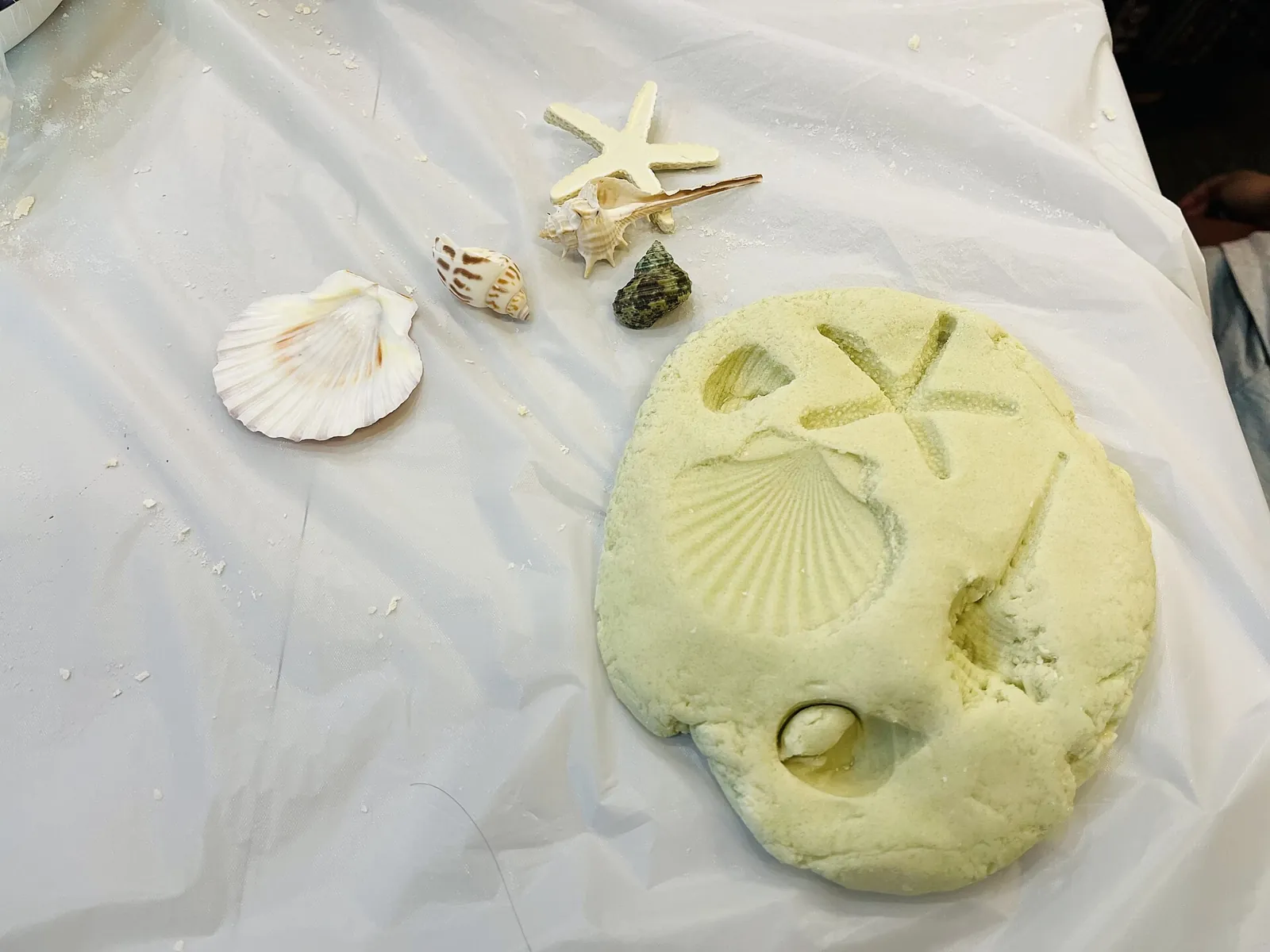
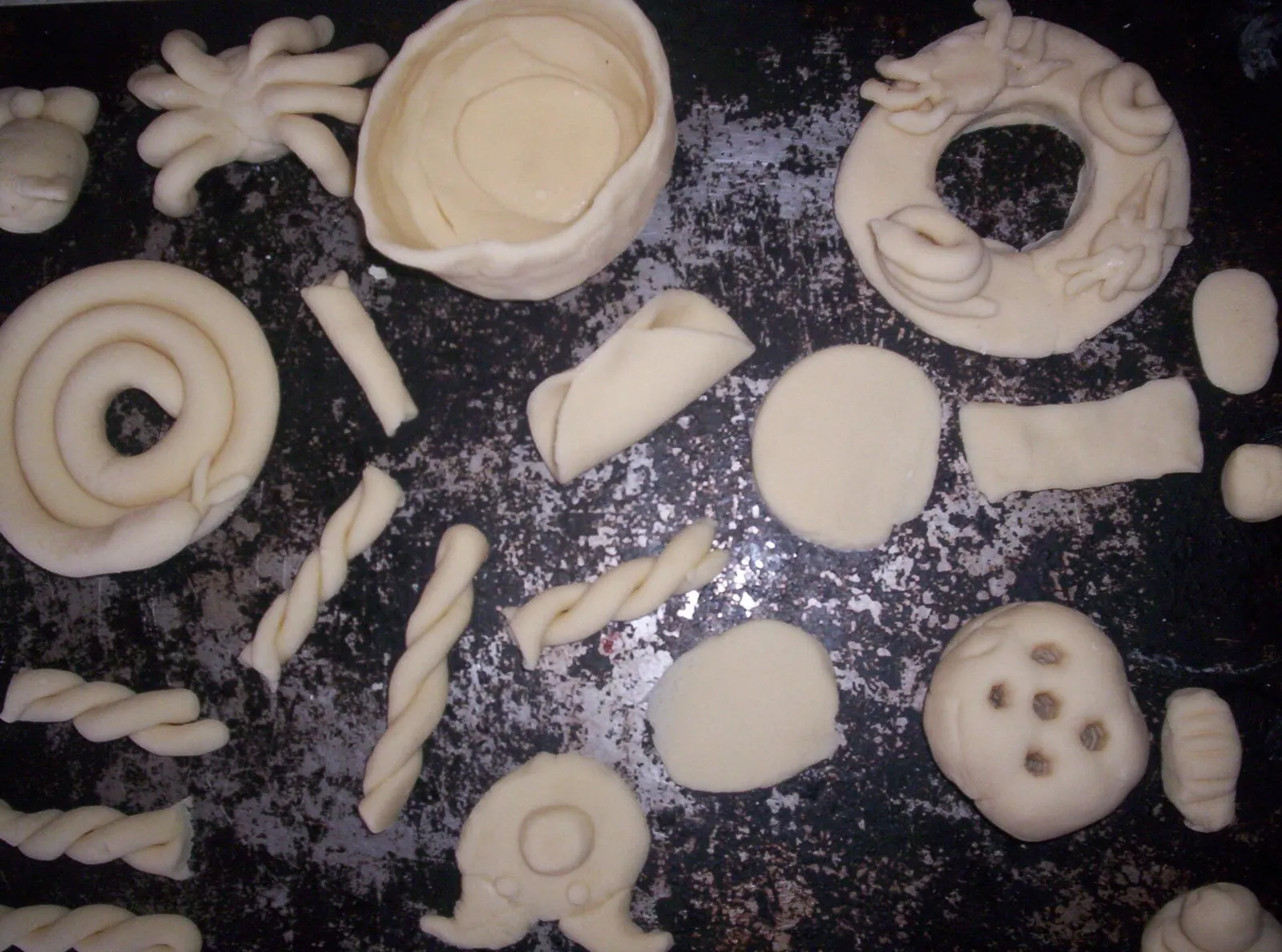
Image credits. Top image: 09.16.2022 salt dough shell fossils (25) by San José Public Library, CC BY-SA 2.0, via Wikimedia Commons · In-article image: Dough modelling by Unknown, Public domain, via Wikimedia Commons
Spotted something out of date or a gift that's no longer available? Tell our editors — we review every correction.