Gift Etiquette in Tajikistan: Hospitality, Bread, Tea and Navruz
Tajik hospitality centers on tea, bread and a generous table. Here is what to bring a host, the customs worth knowing, and how Navruz, weddings and funerals work.
We independently research every pick. If you buy through our links we may earn a small commission, at no extra cost to you. Affiliate disclosure.
Quick answer
Hospitality sits at the heart of Tajik social life. Guests are welcomed with "Khush omaded!" (Welcome), seated on cushions around a cloth or low table, and offered tea, fruit, nuts and bread, with food cooked for them whether it is mealtime or not. A modest gift for the household, such as sweets or dried fruit, is a polite gesture, but the bigger courtesies are removing your shoes, respecting elders, eating at least a little and treating bread with care. Pass things with your right hand. Navruz, around March 21, is the biggest family holiday, and at funerals visitors traditionally contribute money.
- Typical host gift $10 – $35
- Hands Give with the right hand; left on heart or supporting the right arm
- Bread Break with both hands; never upside down
- Main gift occasion Navruz (around March 21)
What to give
Socializing at home, and in large halls for weddings, memorials and birthdays, is an important part of Tajik life, and relatives visit each other often, especially on weekends. Published sources say much more about how Tajiks receive guests than about what guests bring, so the gift ideas below build on documented hospitality customs. Keep gifts modest and aimed at the household rather than one person.
For a host
Many traditional homes have a special room for entertaining guests, who sit on kurpacha, thick cushions spread on the floor. The host lays a dastarkhan, a cloth set with hot bread, sweets and tea, and meals often begin with dried fruit, nuts and halva before soup, meat and plov (also called osh or palav). A nicely packed box of sweets, dried fruit or something from your home region for the family fits naturally on that table.
For friends, in-laws and coworkers
The extended family is the center of Tajik society, and elders have the final word on family decisions. For in-laws and older relatives, choose a gift for the whole household. For children, a book or small toy is a warm gesture. A new baby is often not shown to visitors until 40 days after birth, when a cradle ceremony with a feast may be held, so wait to be invited.
Sweets or dried fruit and nuts
Why it works: Dried fruit, nuts and sweets already open many Tajik meals, so a nicely packed box fits naturally on the dastarkhan.
Skip it if: anything contains pork-derived gelatin.
A small item from your home country
Why it works: A craft, picture book or local food specialty gives your hosts something to talk about and suits a first visit.
Skip it if: it is showy or expensive; humility is valued.
A gift for the children
Why it works: A book or toy for the children is a warm way to honor a family without singling out an adult.
Skip it if: the family has a newborn under 40 days old; wait for the cradle ceremony or until you are invited.
For more ideas, see our food gifts.
What to avoid
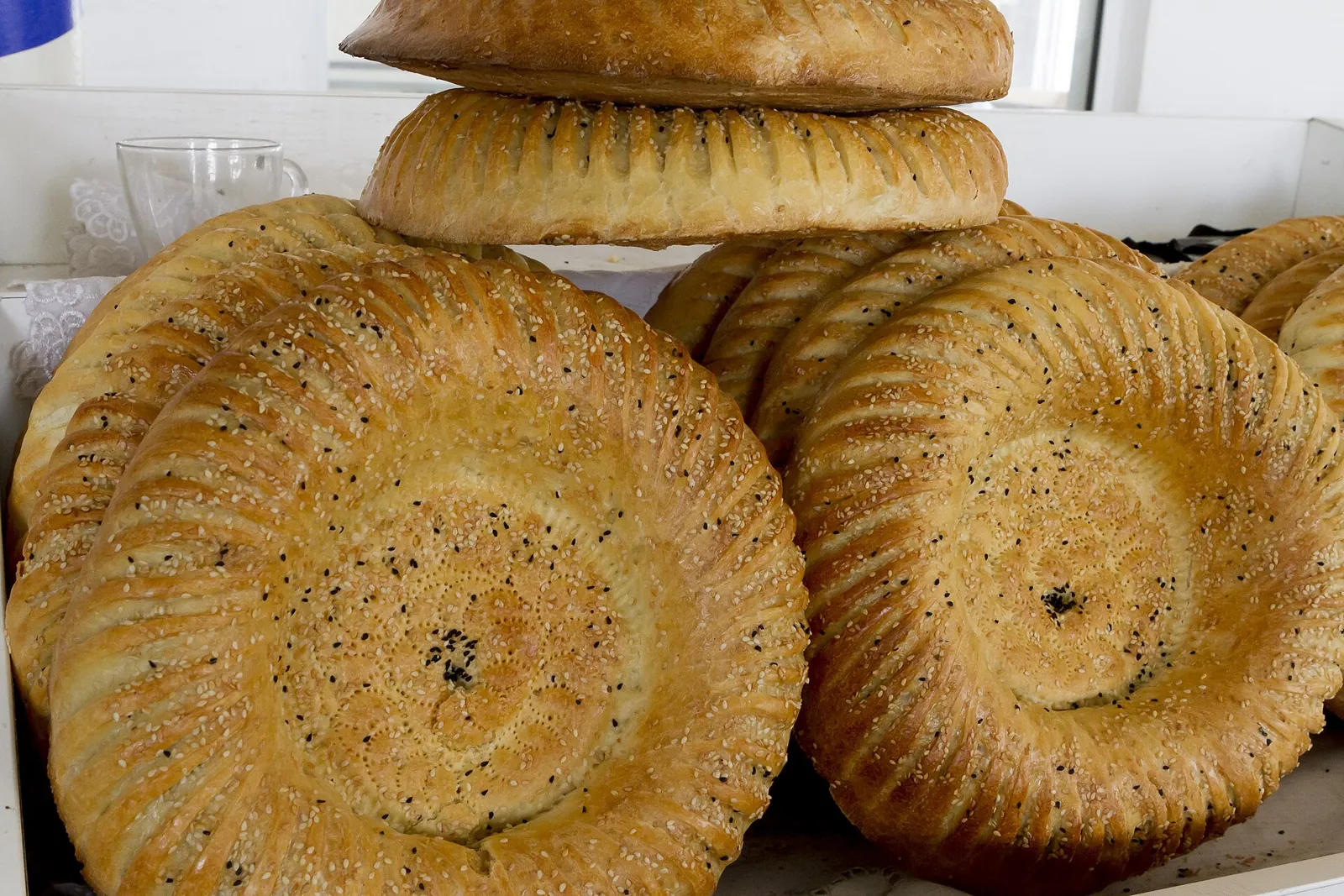
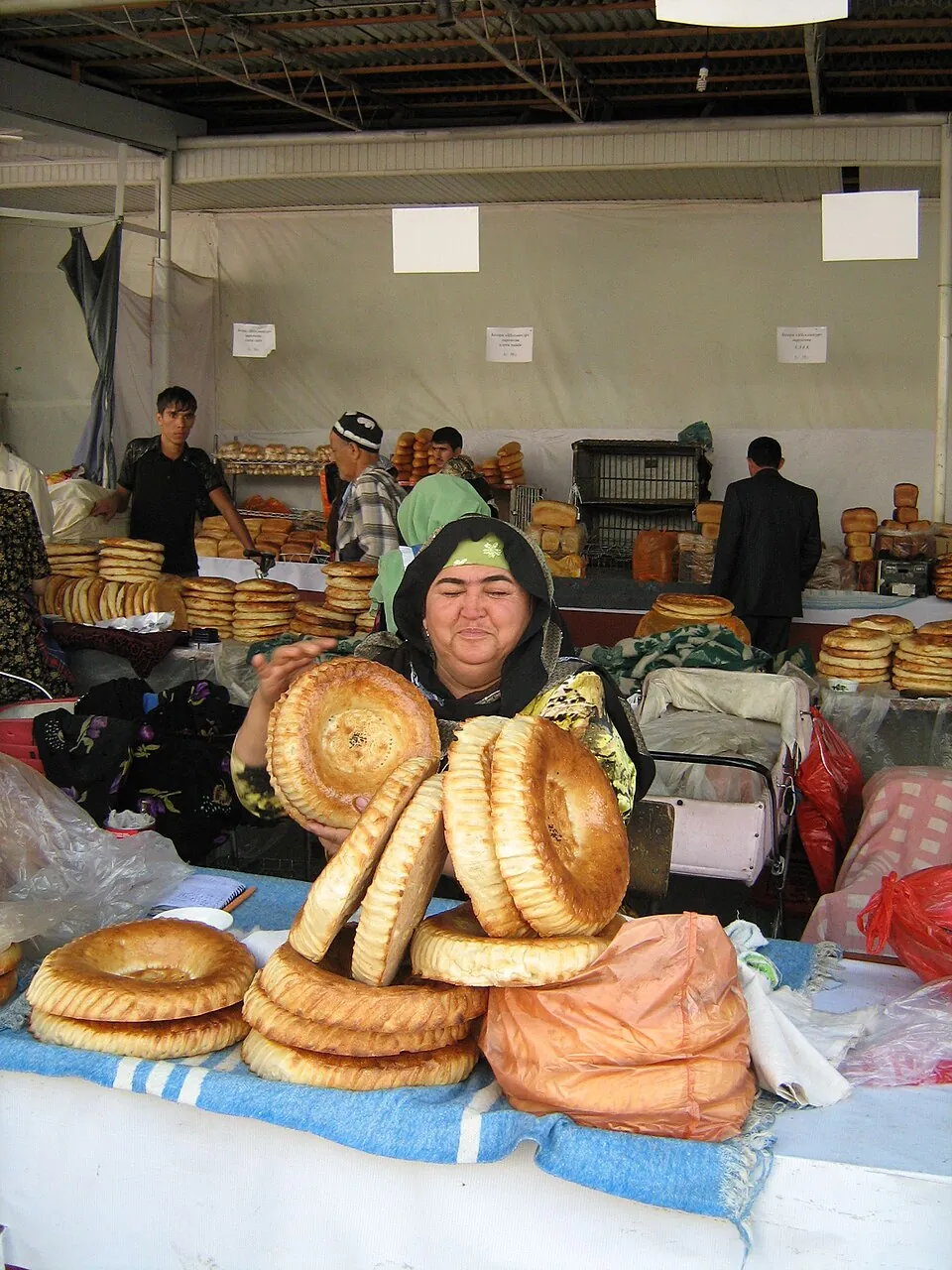
- Mistreating bread. Bread (non) is served at every meal and treated with great respect. Do not place it upside down, waste it or brush crumbs onto the floor; traditional etiquette says bread should be broken with both hands.
- Pork or pork products. Most Tajiks are Muslim and pork is not eaten.
- Assuming alcohol is welcome. Many Tajiks do not drink, although vodka is served with toasts at some special occasions. Do not give alcohol unless you know the person well.
- Pointing your feet at people. Pointing the sole of your shoe or foot at someone is improper, and so is pointing or beckoning with one finger; use the whole hand.
- Turning up uninvited as an outsider. Relatives drop by freely, but Tajik has expressions for an unwelcome, uninvited guest; wait for an invitation.
- Entering a home where only women are present. Men should wait until a male family member is there.
- Taking the seat of honor. It belongs to elders; let your host seat you.
How to give and receive
- Remove your shoes before entering a home.
- Greet with a hand on your heart. Many Tajiks place a hand over the heart with or instead of a handshake. In rural areas men usually do not touch women in public and greet them verbally.
- Use your right hand. Items are usually passed with the right hand while the left rests on the heart or supports the right arm, a respectful way to hand over a gift.
- Accept tea and food. Hosts offer tea, fruit and nuts, and guests are expected to eat at least a little.
- Be humble about your gift. Hospitality, humility and respect are considered essential, so present the gift simply, to your host or the eldest family member.
- Expect generosity in return. Tajik hospitality traditionally includes presenting gifts to an honored guest, and a well-known saying holds that if you like being a guest, you should like inviting guests, so return the invitation when you can.
Holidays and occasions
Navruz
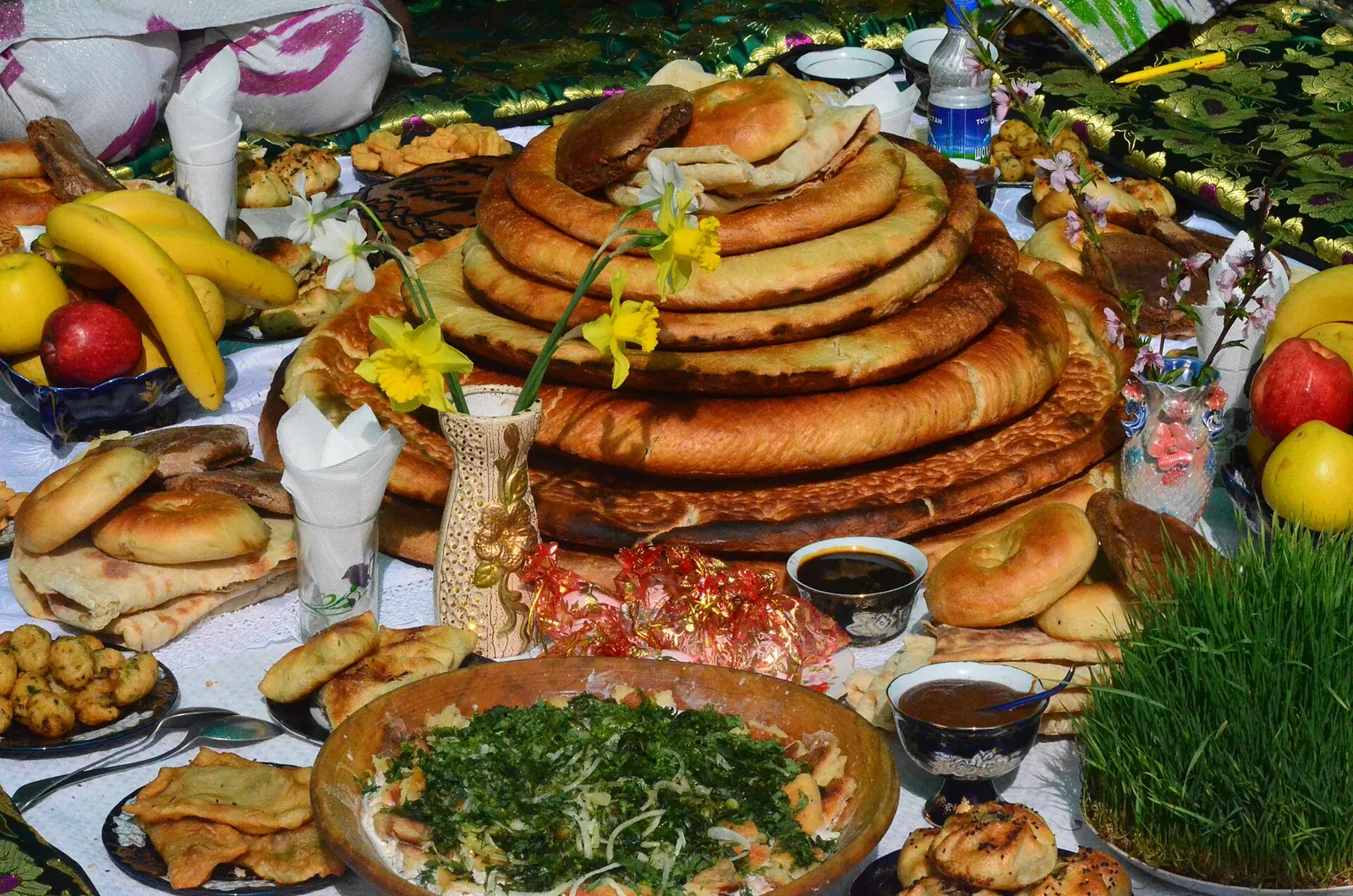
Navruz, meaning "new day," falls on March 21 or 22 as the farming season begins. It has pre-Islamic roots and is the largest holiday of the year. Families clean their homes, visit relatives, play games outdoors and serve special dishes, including sumalak, made from wheat sprouts. If you are invited, sweets or a gift for the household are appropriate.
Ramadan and the Eids
Many Tajiks fast during Ramadan (Ramazon) and break the fast at sunset with an evening meal. Id-i-Ramazon at the end of the month and Id-i-Qurbon, the Feast of the Sacrifice, are public holidays that follow the lunar calendar, so their dates change each year. Sweets for the household are a safe gift when visiting.
Weddings and family events
June through September is the traditional wedding season. Weddings (tui) can last three days, with a religious ceremony, civil registration and a dinner with abundant food, music and dancing; osh is served at most celebrations. Ask the family or a mutual friend what gift or contribution is customary. Families also celebrate a birth, when a mullo welcomes the child into the community, and a boy's circumcision, to which close friends and relatives are invited.
Funerals
Bereaved families hold an open house for two or three days and provide food to anyone who comes to honor the deceased. Visitors traditionally donate money to help with the costs. If you are close to the family, a discreet cash contribution is appropriate.
Business gifting
There is little reliable published guidance on Tajik business gifting. Treat business relationships with the same respect for hierarchy and hospitality: address senior people by title and name, accept tea, let senior people lead and expect relationship-building before decisions. A modest gift from your home country is a safe gesture at a first meeting or after an agreement. Avoid anything lavish, check your counterpart's gift policy, and follow anti-bribery laws, which apply in Tajikistan as elsewhere. Our business gifts guide has general advice.
Frequently asked questions
What should I bring to a Tajik home?
A modest gift for the household, such as sweets or dried fruit and nuts, or a small item from your home country. Hand it over with your right hand.
How should I treat bread in Tajikistan?
Never place it upside down, break it with both hands rather than wasting it, and gather any crumbs rather than brushing them on the floor.
When is Navruz in Tajikistan?
Navruz falls on March 21 or 22 and is the country's largest holiday.
Do Tajiks drink alcohol?
Most Tajiks are Muslim and many do not drink, though vodka and toasts appear at some special occasions. Do not give alcohol unless you know the person well.
What do you give at a Tajik funeral?
Visitors traditionally donate money to help the family with the costs of the open house that follows a death.
Compare customs with our guides to Uzbekistan and Iran, or browse all country guides.
Sources
- CultureGrams World Edition 2011 — Republic of Tajikistan (PDF, hosted by CIEE). ciee.org
- Countries and Their Cultures (Every Culture) — Culture of Tajikistan. everyculture.com
- Zamira Valieva — Mehmon and Ziyofat as the Components of Hospitality Concept in the Tajik Linguoculture (Atlantis Press, ASSEHR vol. 312, 2019). atlantis-press.com
- Wikipedia — Culture of Tajikistan. wikipedia.org
Image credits. Top image: Navruz table in Tajikistan by Ibrahim Rustamov, CC BY-SA 3.0, via Wikimedia Commons · In-article image: Bread market Dushanbe by Mr. Gadi Zafrir, CC BY-SA 3.0, via Wikimedia Commons
Spotted something out of date or a gift that's no longer available? Tell our editors — we review every correction.