Gift Etiquette in Peru: Host Gifts, Taboos and Holiday Customs
Fruit, chocolates or a good bottle make a welcome host gift in Peru. Here is what to bring, what to skip and how gifts work from Nochebuena to Fiestas Patrias.
We independently research every pick. If you buy through our links we may earn a small commission, at no extra cost to you. Affiliate disclosure.
Quick answer
Guests in Peru aren't expected to bring a gift, but a small one is welcome: fruit, chocolates, a potted plant or good-quality liquor. Avoid knives and scissors, which can suggest cutting ties. Wrap gifts nicely, and expect them to be opened when received. If there are children in the house, a small gift for them is appreciated. The biggest gift moment of the year is midnight on Christmas Eve.
- Host gift Fruit, chocolates, a potted plant or good liquor
- Avoid Knives and scissors
- Opening Usually on receipt
- Big gift moment Midnight on December 24
What to give
Peruvians often put people and relationships ahead of strict schedules, and hospitality is generous: hosts will almost always offer guests a drink, whether the visit was planned or not. Bringing a gift isn't required, but a thoughtful one shows appreciation. Cultural Atlas also notes that it is considered rude to turn down an invitation to someone's home.
For a host
Fruit, chocolates, a potted plant or a bottle of good-quality liquor are all suitable. Peru has a strong culinary culture, so something from your own region, such as a specialty food or sweets, makes a good talking point. If the family has children, bring something small for them too.
For friends and in-laws
For in-laws and close friends, a quality item for the home, a book or a food gift from your home country works well. Peruvian families value warmth over showiness, and Commisceo Global stresses that gifts should express appreciation rather than create a sense of obligation.
Fine chocolates or sweets
Why it works: Chocolates are one of the gifts both Cultural Atlas and Commisceo Global list as welcome.
Skip it if: you're arriving in a hot climate after a long trip; choose something that won't melt.
A basket of good fruit
Why it works: Fruit is a traditional, shareable host gift that suits any household.
Skip it if: you can't find quality produce near your host's home; chocolates are easier.
A bottle of good wine or liquor
Why it works: Good-quality liquor is listed as a welcome host gift and can be shared at the table.
Skip it if: you don't know whether your hosts drink.
A small gift for the children
Why it works: Bringing something for the host's children is a gesture many Peruvian families appreciate.
Skip it if: you don't know the children's ages; sweets or a family game are safer.
More ideas for edible gifts are in our food gifts guide.
What to avoid
- Knives, scissors and other sharp items. They may imply an intention to sever ties with the recipient.
- Gifts that look like pressure. In business especially, anything lavish can feel like it creates an obligation.
- Refusing a meal. Declining a drink is fine, but refusing a substantial meal can be taken as offensive. If you must decline a dish, give a tactful reason.
- Turning down an invitation casually. It's considered rude to decline an invitation to someone's home.
- Talking only to one person at the table. Include everyone in the conversation.
How to give and receive
- Wrap it nicely. Gifts are usually wrapped with care; see our gift wrapping ideas.
- Expect gifts to be opened on the spot. Peruvians tend to open gifts when they receive them, so be ready to explain why you chose it.
- Greet everyone when you arrive, and ask after the family's health.
- Let the host seat you. They may have a particular place in mind for you.
- Wait for the toast. Hosts often open the meal with "salud" or "buen provecho." Try what you're offered.
- Don't stress about arriving a little late to social events, which is common. Be on time for business.
Holidays and occasions
Christmas Eve and Christmas (December 24 and 25)
Nochebuena, Christmas Eve, is the main family celebration. Roast turkey is often the centerpiece of dinner, and hot chocolate with a slice of panetón (a sweet bread with dried fruit) is a beloved tradition. At midnight, people embrace, fireworks go off, and children gather around the tree to open their presents. Many families also attend a late Mass. In the run-up to Christmas, community and workplace chocolatadas share hot chocolate, panetón and gifts with people in need. A panetón or a box of chocolates makes an easy contribution if you're invited to a holiday gathering. See our Christmas gift guides for family ideas.
Fiestas Patrias (July 28 and 29)
Peru's national holidays mark independence, proclaimed by José de San Martín in 1821 (July 28), and honor the armed forces and national police (July 29). Homes, offices and schools display the flag through July, and there are flag-raising ceremonies and a military parade. Along with Christmas, it's one of the year's most important celebrations. It isn't a traditional gift-giving holiday, but if you're invited to a family gathering, a dessert or a bottle to share is a gracious gesture. Many private-sector employees also receive a legally required bonus, the gratificación, in July.
Birthdays and family milestones
Birthdays and family milestones are natural times for a personal gift. Keep it thoughtful and well presented rather than expensive; our birthday guides can help.
Business gifting
Gifts aren't usually expected in Peruvian business, especially early on. They become appropriate in social settings or once a relationship has developed. Keep them modest: a quality item from your home country, a book or a food gift. Commisceo Global puts it well: the aim should be warmth and appreciation, not influence.
Business etiquette is fairly formal. Use Señor or Señora with the surname and professional titles such as Doctor or Ingeniero until invited to use first names. Anti-bribery laws in Peru, and often in your home country, can apply to business gifts and hospitality, especially where public officials are involved. Respect both organizations' gift policies. Our business gifts section has general guidance.
Frequently asked questions
What should I bring to a Peruvian host?
Fruit, chocolates, a potted plant or a good bottle of liquor, plus something small for any children. A gift isn't required, but it's appreciated.
What gifts should I avoid in Peru?
Knives, scissors and other sharp items, which can suggest cutting ties, and anything so lavish it feels like it creates an obligation.
Do Peruvians open gifts in front of you?
Usually, yes. Gifts tend to be opened when they're received.
When do Peruvians open Christmas presents?
At midnight on Christmas Eve, when children gather around the tree after the family celebration.
Should I bring a gift to a business meeting in Peru?
Not usually. Wait until a relationship has developed, then keep the gift modest and in line with company policies.
Exploring more of South America? Read our guides to Chile and Colombia, or browse all country guides.
Sources
- Cultural Atlas — Peruvian Culture: Etiquette. theculturalatlas.org
- Commisceo Global — Peru Guide. commisceo-global.com
- Andina — Peruanos celebran la Navidad con cena familiar y brindis. andina.pe
- Wikipedia — Fiestas Patrias (Peru). en.wikipedia.org
- El Peruano — Julio 2026: lo que deben saber empleadores y trabajadores sobre gratificaciones y gestión de feriados. elperuano.pe
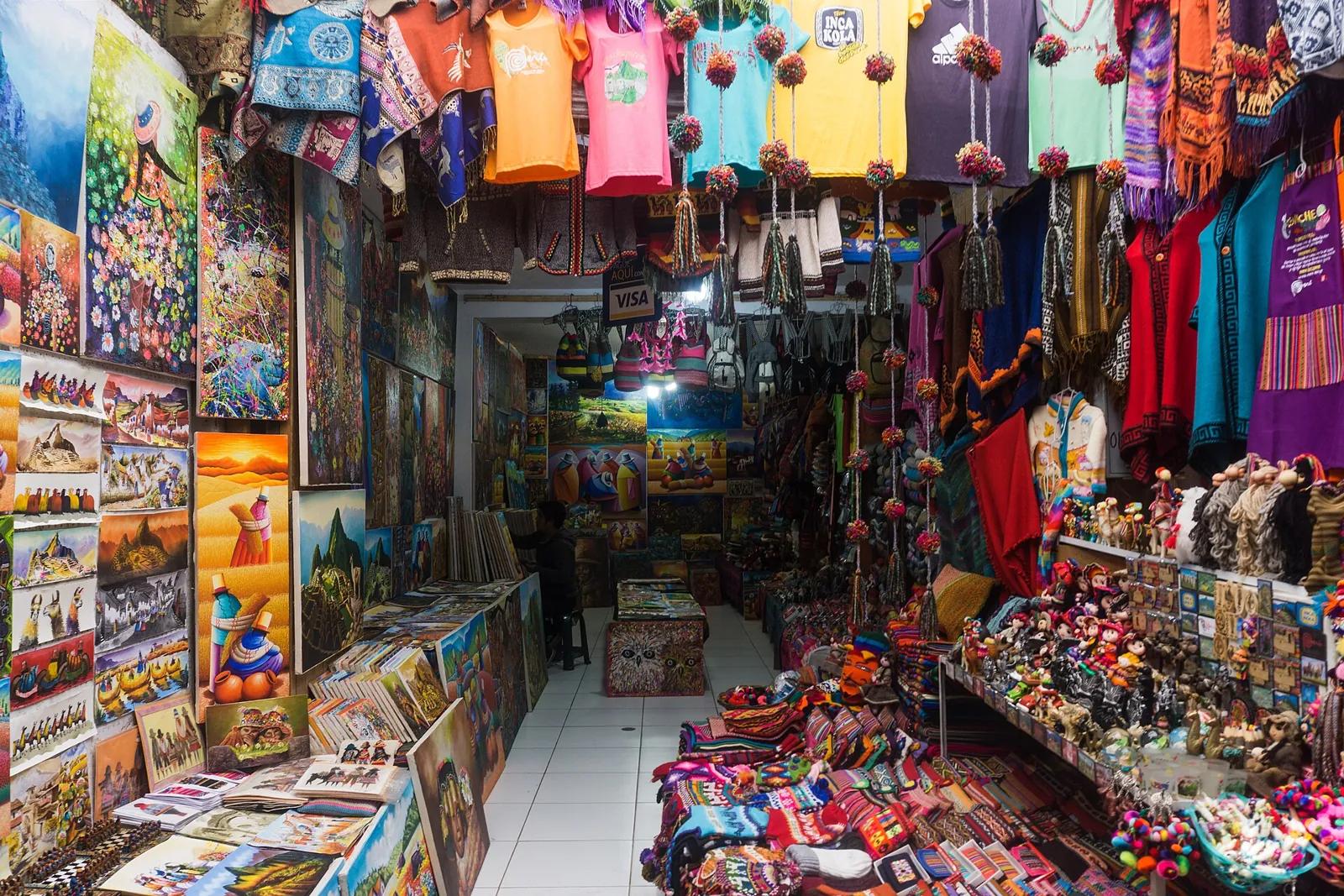
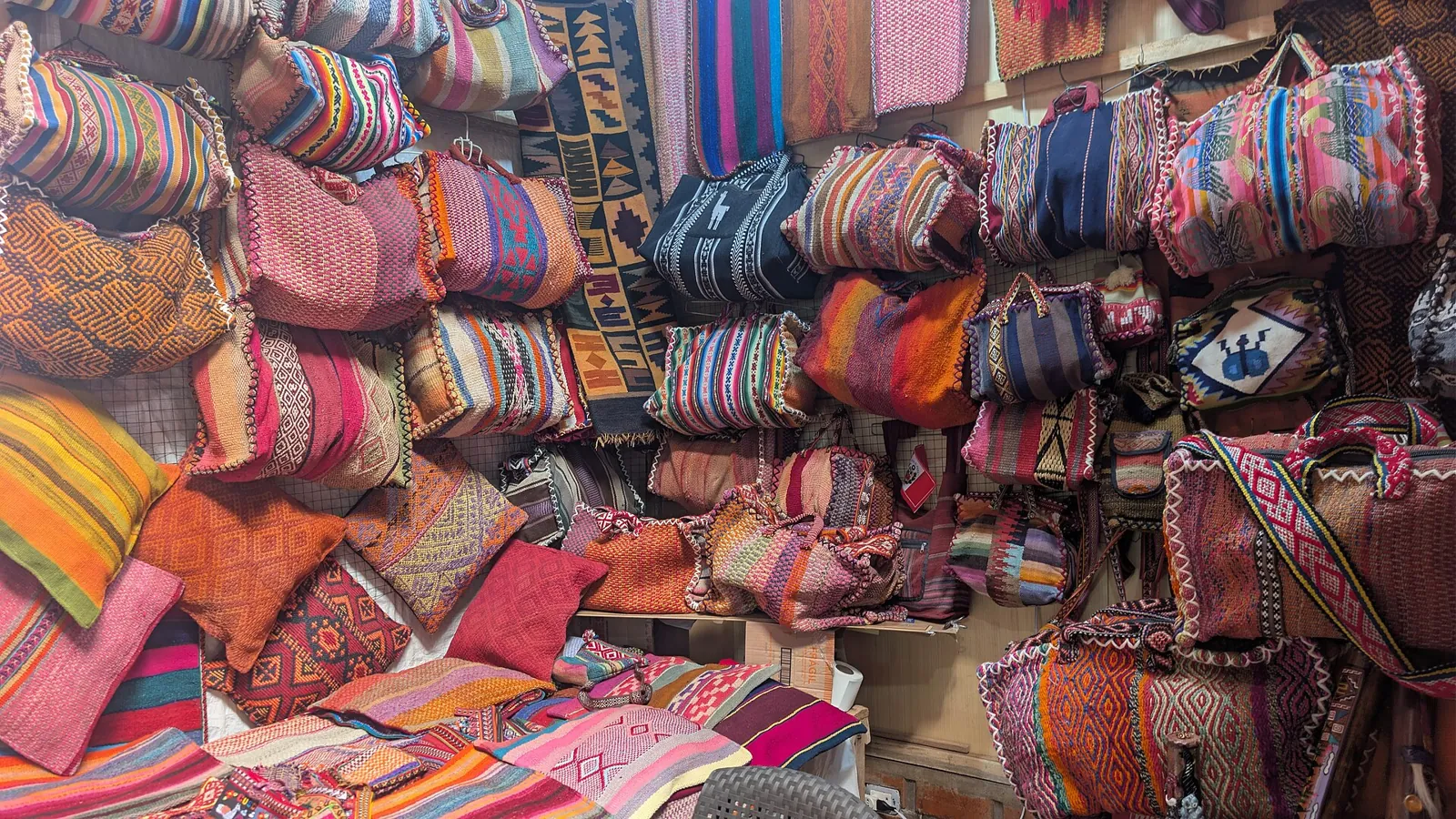
Image credits. Top image: Pisac market, Peru 2019-10-15 by Alexey Komarov, CC BY-SA 4.0, via Wikimedia Commons · In-article image: Andean textile bags stall at the Mercado Artesanal de Pisac in Cusco, Peru by H.dav.are, CC BY-SA 4.0, via Wikimedia Commons
Spotted something out of date or a gift that's no longer available? Tell our editors — we review every correction.




