Gift Etiquette in Namibia: Greetings, Host Gifts and Holidays
In Namibia a proper greeting matters as much as the gift. Here is what to bring a host, what to avoid, and how gifts fit Christmas, weddings and business meetings.
We independently research every pick. If you buy through our links we may earn a small commission, at no extra cost to you. Affiliate disclosure.
Quick answer
In Namibia, the greeting matters as much as the gift. Take time to say hello properly, shake hands and ask how people are before anything else. If you visit a home, bring something modest that can be shared, such as sweets, biscuits, coffee or a food specialty from your home country, and accept the food and drink you are offered. Christmas and Easter are the big family gatherings. In business, gifts are optional; personal relationships and well-planned meetings count for more.
- Host gift Sweets, biscuits, coffee or tea, a food gift from home
- First priority An unhurried greeting and handshake
- Good manners Accept food and drink when offered
- Big gift times Christmas, Easter, weddings
Namibia is home to many communities, including Ovambo, Kavango, Herero, Nama, Damara, San, Himba, Lozi, Afrikaans- and German-speaking Namibians and others, each with its own traditions. More than 90 percent of Namibians identify as Christian. English is the official language, but it is rarely a first language; Oshiwambo languages are the most common at home, and Afrikaans is often used between people of different backgrounds. Customs in Windhoek differ from those in rural homesteads, so watch your hosts and follow their lead.
What to give
Namibian hospitality centers on food and company rather than presents, and there are few fixed rules about what to bring. A modest, shareable gift is the safest choice and is easy for any host to accept.
For a host
Sweets, biscuits, a cake, good coffee or tea are all appropriate when you are invited to a home. Meat is highly valued and important occasions are often marked by slaughtering a goat or cow, so if you are invited to a braai (barbecue) or a celebration, ask whether you can contribute something to the meal.
For friends, in-laws and families with children
Many Namibian households are extended families, with relatives helping to raise children, so a gift that the whole household can enjoy goes further than a personal item. Books, school supplies or a game for children, or a quality item from your home country for elders, are thoughtful choices.
Sweets, biscuits or a cake
Why it works: It can be shared with everyone in the house, which suits large, extended households.
Skip it if: you are joining a big celebration; ask whether a contribution to the meal would be more useful.
Good coffee or tea
Why it works: A practical, everyday treat that doesn't feel extravagant.
Skip it if: you know your hosts prefer something else; a food specialty from home is just as welcome.
Books or school supplies for the children
Why it works: Useful for the family and a kind way to include the younger generation.
Skip it if: you don't know the children's ages; a family game or shareable treat is easier.
A food or craft specialty from your home country
Why it works: It shows you thought about the visit and gives you something to talk about.
Skip it if: it is flashy or expensive; modest gifts are easier to accept.
For more ideas that pack well, see our food gifts guide.
What to avoid
- Skipping or rushing the greeting. Greetings are especially important in Namibia, and going straight to business, or straight to handing over a gift, is considered impolite.
- Refusing food or drink. Turning down a meal or drink that is offered is considered impolite; accept at least a little.
- Showy or very expensive gifts. A lavish present can create an awkward sense of obligation; something modest and practical is easier to accept.
- Public displays of affection. Kissing or embracing in public is frowned upon, especially in rural areas, so keep greetings with your partner low-key.
- Handing out gifts in villages without asking. If you visit a traditional community, such as a Himba settlement, go with a local guide or community-run program and ask what is appropriate before giving anything or taking photos.
- Alcohol as a default gift. Attitudes vary by family and church; bring it only if you know your hosts drink.
How to give and receive
- Greet everyone. Shake hands, say hello and ask how people are. Namibian greetings acknowledge each person's presence, and a greeting should always be returned.
- Learn the handshake. A common informal greeting is a three-part handshake: a regular clasp, a thumb grip, then back to a regular clasp. Follow the other person's lead.
- Give with your right hand or both hands. This is a polite, safe default in many Namibian communities.
- Show respect to elders by greeting them first and letting them be served first.
- Accept leftovers graciously. In some communities leftover meat is sent home with guests after a celebration.
- Keep wrapping simple. A gift bag or plain paper is fine; our gift wrapping ideas cover easy options.
Holidays and occasions
Christmas (December 25) and Family Day (December 26)
Christmas and the following day, officially Family Day, are public holidays, and Christmas is one of the most popular times for Namibians to travel so families can gather. Food, small gifts for children and something for the household are all appropriate. Note that it is difficult to schedule business meetings from mid-December to mid-January because of the holiday season.
Easter (date varies)
Good Friday, Easter Monday and Ascension Day are public holidays, and Easter is another major time for family gatherings. Because Easter follows the church calendar, the dates change each year.
Weddings
Weddings are extremely important social events and usually mix old and new customs. Many Owambo couples marry in church and then walk out to guests singing praises, dancing and waving horsetail whisks. Celebrations often include slaughtering cattle or goats and sharing meat and other food. If invited, ask a family member what kind of gift or contribution is customary.
National holidays
Independence Day (March 21), Cassinga Day (May 4), Africa Day (May 25), Genocide Remembrance Day (May 28), Heroes' Day (August 26) and Human Rights Day (December 10) are civic holidays, marked with speeches, singing and dancing rather than gift exchange.
Business gifting
According to the US government's commercial guide, greetings and pleasantries come before any business discussion, personal relationships are important, and meetings with senior managers should be booked well in advance. Men usually wear suits and ties, and women wear business suits or dresses. English is the business language, though Afrikaans is widely used.
Gifts are not expected. If you want to give something, keep it modest: a book about your region, quality stationery or a food gift to share with the team. Avoid anything of significant value, especially for government officials. Anti-bribery laws in Namibia and in your home country can apply to gifts and hospitality, and many companies set their own limits, so check both organizations' policies first. Our business gifts section has general guidance.
Frequently asked questions
What should I bring to a Namibian host?
Something modest and shareable, such as sweets, biscuits, a cake, coffee or tea, or a food specialty from your home country.
How do Namibians greet each other?
With a handshake and an unhurried exchange of greetings and questions about wellbeing. A three-part handshake with a thumb grip is common in informal settings.
Is it rude to refuse food in Namibia?
Yes, refusing food or drink that is offered is considered impolite. Accept at least a small amount.
Should I bring gifts when visiting a Himba village?
Go with a local guide or community program and ask them first. Expectations differ from village to village, and arrangements are often made through the community rather than with individuals.
Do Namibians give gifts to business contacts?
It isn't expected. Greetings, relationships and well-planned meetings matter more; if you give something, keep it small.
Traveling further in the region? See our guides to South Africa and Germany, or browse all country etiquette guides.
Sources
- Wikipedia — Culture of Namibia. en.wikipedia.org
- Everyculture — Culture of Namibia. everyculture.com
- The Namibian — A Guide to Namibian Greetings. namibian.com.na
- International Trade Administration — Namibia Country Commercial Guide: Business Travel. trade.gov
- Wikipedia — Public holidays in Namibia. en.wikipedia.org
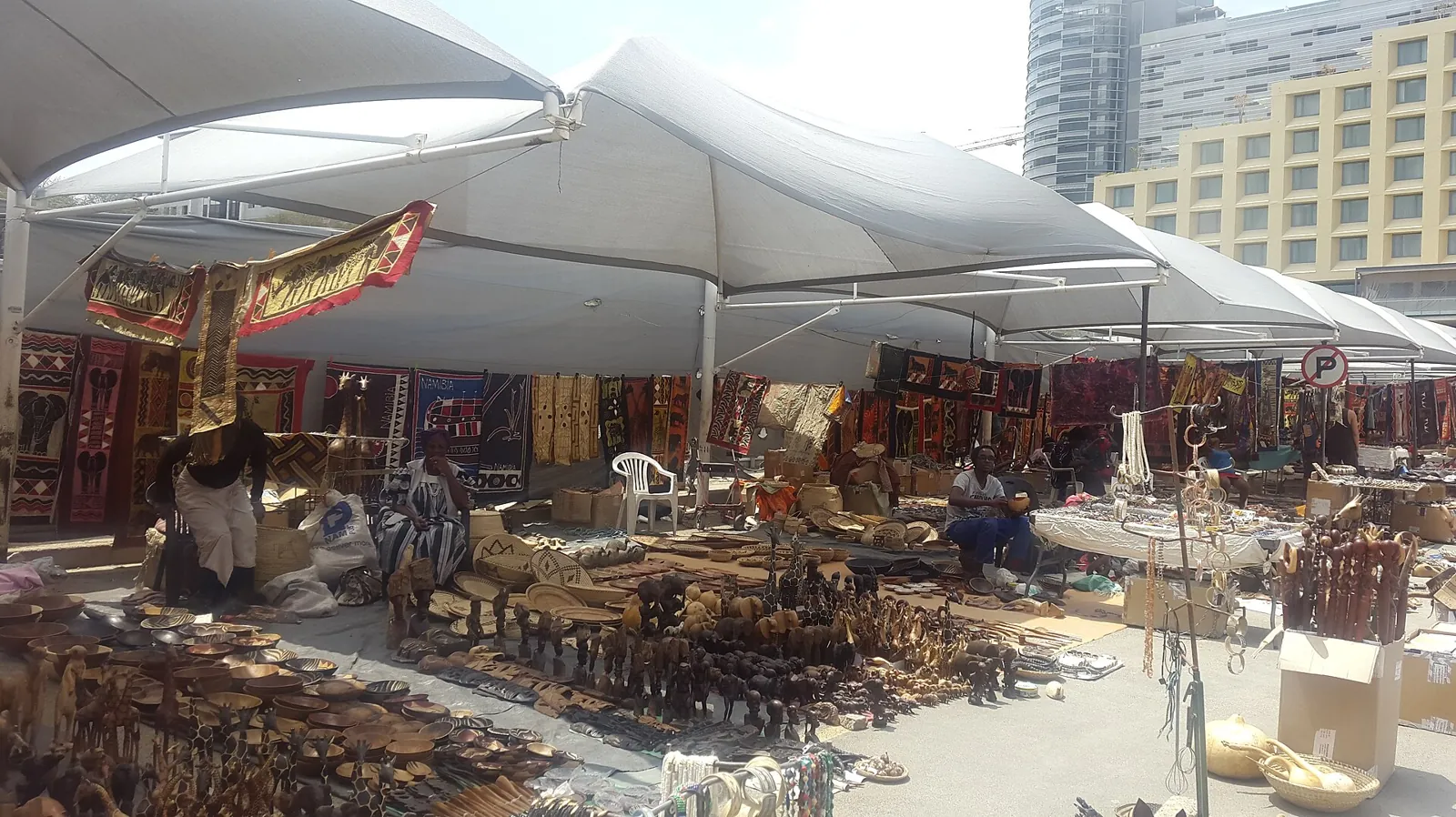
Image credits. Top image: Street Market in Namibia - Windhoek by Auchab, CC BY-SA 4.0, via Wikimedia Commons
Spotted something out of date or a gift that's no longer available? Tell our editors — we review every correction.



