Gift etiquette in Ethiopia: what to bring, avoid and how to give
Bring pastries, fruit or something from home, give with your right hand, and keep it modest. A practical guide to Ethiopian gift customs, holidays and business etiquette.
We independently research every pick. If you buy through our links we may earn a small commission, at no extra cost to you. Affiliate disclosure.
Quick answer
When you visit an Ethiopian home for the first time, bring a modest gift, ideally food such as pastries or fruit, or something from your own country. Hand it over with your right hand or both hands, and don't expect it to be opened in front of you. Keep the value moderate: gifts create an obligation to give back something similar, and an expensive present can embarrass your host. Don't bring alcohol unless you know your hosts drink.
- Safe host gift Pastries, fruit, flowers or a gift from home
- Typical budget $15 – $50
- Hands Right hand or both hands
- Main gift moments First visits, births, illness, mourning, Enkutatash
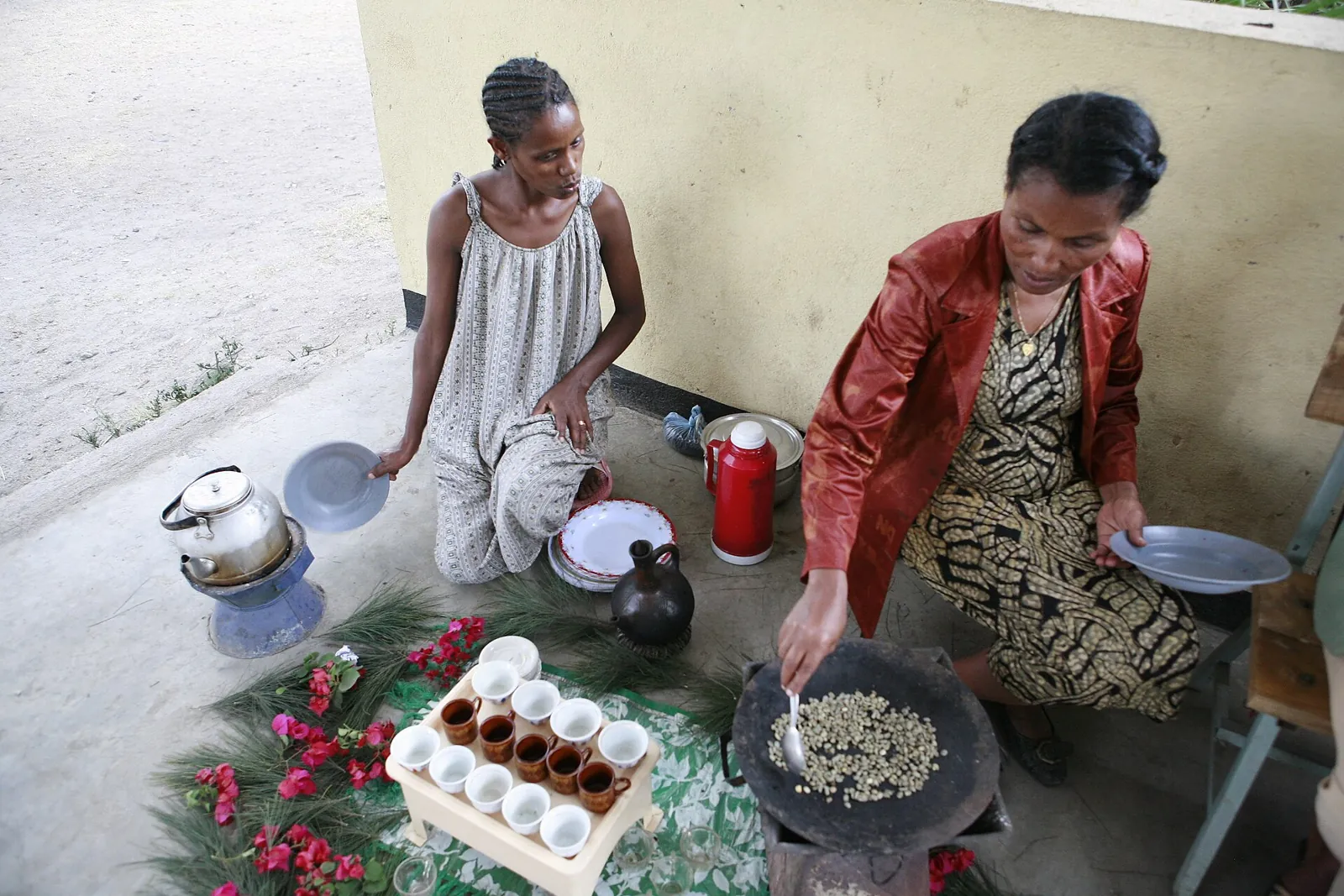
Ethiopia's two largest religious traditions are Ethiopian Orthodox Christianity and Sunni Islam, with Protestant, Catholic and traditional communities as well. Religion shapes what people eat and drink and when they celebrate, so a little knowledge of your hosts' background goes a long way. Hospitality is central: visits are how relationships are built, and coffee is almost always offered to guests.
What to give
Food is a reliable first-visit gift, and if you have traveled from abroad, something from your home country or a place you have visited is a thoughtful choice. Small gifts for children in the household are appreciated too. For more ideas that travel well, see our food gifts section.

Pastries, cake or a fruit basket
Why it works: Food is the classic gift for a first visit to an Ethiopian home, and pastries or fruit can be shared with the whole household.
Skip it if: your hosts are fasting and the pastries contain butter, milk or eggs. Many Orthodox Christians avoid animal products on Wednesdays, Fridays and during longer fasts, so fruit is the safer choice then.
A specialty from your home country or region
Why it works: Ethiopian etiquette guides specifically suggest bringing something from home when you visit from abroad. A regional food specialty, a craft item or a book with photos of your area gives you something to talk about over coffee.
Skip it if: it is expensive enough that your host would feel obliged to match it.
Flowers
Why it works: Flowers are listed among suitable gifts when you are invited to a home, and they are also the traditional gift of the Ethiopian New Year.
Skip it if: you are visiting a family in mourning; a practical or food gift is more helpful then.
Small gifts for the children
Why it works: A small gift for children is often appreciated and shows thought for the whole family.
Skip it if: you are not sure how many children live there; bring something easy to share, such as a book or a bag of sweets.
For in-laws, friends and coworkers
The same rule of modesty applies. With in-laws or a partner's family, pay special attention to elders: greet them first and choose something the whole household can enjoy. For coworkers, a shared treat from your home country works better than individual gifts.
What to avoid
- Alcohol for Muslim or many Protestant hosts. Muslims avoid alcohol and pork, and some Pentecostal Christians avoid alcohol too. Bring alcohol only if you know it is welcome.
- Lavish gifts. Gifts create an obligation to return something of similar value, and failing to reciprocate is considered very rude. An expensive gift can put your host in a difficult position, and in business it may look like an attempt at influence.
- Using your left hand alone. Pass and receive gifts, food and other objects with your right hand or both hands.
- Meat or dairy treats on fasting days. Many Orthodox Christians avoid meat and animal products on Wednesdays and Fridays and during longer fasts such as the Advent fast before Christmas. If you are unsure, choose fruit or a vegan option.
- Refusing food or coffee too quickly. Declining an offer to eat is considered rude, and turning down coffee or refreshments too fast can feel distant.
How to give and receive
- Use your right hand or both hands when offering and accepting a gift.
- Expect the gift to be set aside. Gifts are usually not opened when they are received, so do not take it as a lack of interest.
- Decline once, then accept. Hosts usually offer several times, and guests often decline at first and accept on the second or third offer. Likewise, repeat your own offers, since Ethiopians may politely refuse at first.
- Reciprocate in kind. If you receive a gift, plan to return one of similar value later.
- Remove your shoes before entering a home, church or mosque, and greet each person individually, starting with elders.
- Accept gursha graciously. A host may hand-feed you a choice morsel of food as a sign of respect or affection. Smile and accept it.
Meals are often shared from a common platter, with injera used to scoop up stews. Wash your hands first, eat from the part of the platter in front of you, and use your right hand. A meal may end with coffee, and it is polite not to rush off as soon as you have eaten.
Holidays and occasions
Ethiopia uses its own calendar, so several major holidays fall on different dates from their Western equivalents.
- Genna (Christmas), January 7. For Orthodox Christians the focus is church and family rather than presents. Many attend a long Christmas Eve service, and children may receive new clothes. It follows a 43-day Advent fast.
- Timkat (Epiphany), January 19 (January 20 in leap years). A three-day festival celebrating Jesus's baptism, with church processions.
- Fasika (Easter). The date varies each year and follows the Orthodox calendar; in 2026 it fell on April 12.
- Enkutatash (New Year), September 11 (September 12 in some years). The name is often translated as "gift of jewels." Traditionally, girls in new clothes go from house to house singing and handing out bouquets of yellow Adey Abeba flowers, and in cities many people exchange New Year cards instead.
- Meskel (Finding of the True Cross), late September.
- Eid al-Fitr and Eid al-Adha. Muslim communities celebrate both, and their dates move each year with the Islamic lunar calendar.
Gifts are also common at births, during illness and after a death. A gift for someone in mourning is called a firag. Food or practical help for the household is a considerate choice. For other ideas by occasion, browse our occasions guides.
Business gifting
Ethiopian business culture values titles, seniority and relationship-building. Greet the most senior person first, and use titles such as Ato (Mr.), Woizero (Mrs.) or Woizerit (Miss), along with Doctor or "Excellency" for officials where appropriate, until you are invited to be less formal. Ask about family and health before turning to business.
Gifts are not required in business, but a small, well-chosen item such as a book about your region or a desk item with your company logo is fine once a relationship exists. Avoid expensive gifts that could embarrass the recipient or suggest you are seeking influence, especially with government officials. Check your own company's gift policy and the anti-bribery laws that apply to you, such as the U.S. Foreign Corrupt Practices Act or the UK Bribery Act. Plan around Orthodox fasting periods and Ramadan when scheduling lunches. See our business gifts guide for low-risk ideas.
Frequently asked questions
What should I bring to an Ethiopian home?
Pastries, fruit or flowers are suitable, and food is a classic first-visit gift. A small gift for the children and something from your home country are also welcome.
Can I bring wine to an Ethiopian host?
Only if you know your hosts drink. Muslims avoid alcohol, and some Protestant and Pentecostal Christians do too, so food is the safer choice.
Do Ethiopians exchange gifts at Christmas?
Not much. Genna, on January 7, centers on church and family meals. Children may receive new clothes, but large present exchanges are not traditional.
Why didn't my Ethiopian host open my gift?
Gifts are usually not opened when they are received. It is a normal courtesy, not a sign that the gift is unwelcome.
Should I give something back after receiving a gift?
Yes. Gifts create an obligation to reciprocate with something of similar value, which is one reason modest gifts are best.
Planning a trip around the region? Our guide to gift etiquette in Eritrea covers a neighboring culture, and more destinations are in countries.
Sources
- Commisceo Global — Ethiopia: Language, Culture, Customs and Etiquette. commisceo-global.com
- The Cultural Atlas — Ethiopian Culture: Etiquette. theculturalatlas.org
- Why Christmas — Christmas in Ethiopia. whychristmas.com
- Wikipedia — Enkutatash. en.wikipedia.org
- Office Holidays — Public Holidays in Ethiopia in 2026. officeholidays.com
Image credits. Top image: Ethiopian Coffee Ceremony 011 by Steve Evans, CC BY 2.0, via Wikimedia Commons · In-article image: Addis Mercato, Adís Abeba, Etiopía, 2024-01-19, DD 33 by Diego Delso, CC BY-SA 4.0, via Wikimedia Commons
Spotted something out of date or a gift that's no longer available? Tell our editors — we review every correction.




