Gift etiquette in Dominica: host gifts, courtesy and Creole season
Modest gifts, a proper greeting and modest dress go a long way on Dominica. Here is how gifts fit into island life, from Creole Day to Christmas.
We independently research every pick. If you buy through our links we may earn a small commission, at no extra cost to you. Affiliate disclosure.
Quick answer
On Dominica, courtesy counts as much as any present. Keep gifts modest: a small item from your home country, a book or a thoughtful souvenir is better than something expensive. If you're staying with a host family or visiting a village contact, chocolates, a cookbook or practical household items are good choices, and goods are preferred over money. Greet everyone with "good morning" or "good afternoon," dress modestly off the beach, and enjoy Creole season in October and the Christmas séwinal serenades.
- Host gift Chocolates, a cookbook or household items
- Budget $10 – $35
- Give Goods, not money
- Big seasons Creole season (October), Independence (Nov 3), Christmas
What to give
Dominica, the "Nature Island," is not to be confused with the Dominican Republic. English is the official language, and Kwéyòl (French-based Creole) is widely spoken. Gift-giving is low-key, and modest, thoughtful gifts are preferred over flashy ones.
Good chocolates
Why it works: A simple, shareable treat for a host family or village contact.
Skip it if: it will sit in the heat for long; choose something shelf-stable.
A cookbook or book from home
Why it works: Books and cookbooks are suggested gifts for hosts and give you something to talk about.
Skip it if: it's heavy and you're traveling light; a smaller souvenir works too.
Practical household items
Why it works: Useful items are appreciated when you stay with a family, and goods are preferred to money.
Skip it if: you haven't asked what would be useful; check with your host or contact first.
A small souvenir from your country
Why it works: A modest item from home is personal and suits the island's low-key gifting style.
Skip it if: it's expensive or showy.
When you are the guest
Hospitality on Dominica runs both ways. When guests visit a home, in town or in the countryside, the household usually offers something to eat or drink, and on holidays and important religious occasions people visit homes throughout the day and are served food, desserts and drinks. Accepting at least a little is the polite response, and a small gift of your own is a natural way to return the kindness. Extended family ties are strong, resources are often shared, and many households have relatives overseas, so practical gifts that the whole household can use tend to be well received.
See our gift ideas hub for more small, packable options.
What to avoid
- Expensive or flashy gifts. Modest, thoughtful gifts fit better.
- Giving cash to host families or village contacts; goods are preferred.
- Skipping greetings. A "good morning" or "good afternoon" is the most basic courtesy, expected when you phone, visit a home or simply pass someone on the road, as well as when you enter a shop or board a minibus.
- Turning down food or drink at a home. Offering something is expected hospitality; take a little even if you are not hungry.
- Making a show of your gift in public. Privacy is valued, and many people keep what they carry out of sight; hand gifts over quietly at the home.
- Beachwear in town or at someone's home. It is considered disrespectful; topless sunbathing is not accepted.
- Photographing people or private property without asking.
How to give and receive
- Greet first. Use "good morning," "good afternoon" or the Kwéyòl "bonjou" (good morning) and "bonswè" (good evening); "mèsi" means thank you.
- Use "Sir" and "Ma'am" with older people in more formal settings.
- Follow the other person's lead on hugs and physical contact.
- Dress modestly in villages and at church, with covered shoulders and knee-length clothing, and wear closed shoes when visiting homes.
- Expect warmth once introduced. Newcomers may be watched with some reserve at first, but are usually treated warmly once someone introduces them.
- Plan around Sundays. Sunday is a quiet religious day, and many businesses close or shorten hours.
Holidays and occasions
Creole season and Independence
October is Creole season, building up to Independence Day on November 3 (Dominica became independent in 1978). Jounen Kwéyòl (Creole Day) falls on the last Friday of October, when many people wear national dress: the wob dwiyet, a gown of bright madras cloth, for women, and madras shirts or waistcoats with sashes for men. Traditional foods such as callaloo, codfish, breadfruit and cocoa tea are shared. The World Creole Music Festival is typically held in late October.
Christmas and séwinal
In the weeks before Christmas, some communities keep up séwinal, when bands of singers and jing ping musicians go from house to house at night to serenade families. Householders traditionally reward the performers with drinks and food. Christmas itself is a family occasion, and a homemade treat or something for the table is a good gift to bring. See our Christmas guides for ideas.
Carnival
Carnival (Mas Domnik) is celebrated on the Monday and Tuesday before Ash Wednesday, so it falls in February or early March and the date varies each year.
Religious feasts and All Saints Day
Roman Catholics make up a large majority of the population. Villages celebrate their patron saints' feasts at different times of year, and many fishing villages mark the Feast of Saint Peter and Saint Paul at the end of June. On All Saints Day (November 1) families visit cemeteries and light candles on the graves of loved ones. Holidays like these are when people move from house to house and are offered food and drink, so a cake or a box of sweets for the household is a thoughtful extra.
Business gifting
Gifts are not a standard part of business on Dominica. Arrive on time, greet everyone properly, expect brief small talk before business and use "Sir," "Ma'am" or a title and surname until invited to be less formal. If you'd like to thank a partner, a modest item from your company or home country, given after a deal or as a thank-you, is appropriate. Keep it low in value, follow both organizations' policies and remember that anti-bribery laws in your home country may apply.
Frequently asked questions
What should I bring to a host family on Dominica?
Chocolates, a cookbook or practical household items. Goods are preferred to money.
Is Dominica the same as the Dominican Republic?
No. Dominica is a separate, English-speaking island nation in the Eastern Caribbean.
When is Creole Day on Dominica?
Jounen Kwéyòl is held on the last Friday of October, during Creole season.
Should I accept food when visiting a Dominican home?
Yes. Offering food or drink to visitors is expected, and taking at least a little is the polite response.
What is séwinal?
A Christmas tradition in which bands of singers and musicians serenade households at night; hosts reward them with drinks and food.
Sources
- Countries and Their Cultures (Amy L. Paugh) — Culture of Dominica. everyculture.com
- Hello (travelwithhello.com) — Dominica Cultural Guide: Etiquette, Customs, and Tips. travelwithhello.com
- DOM767 — Creole Season. dom767.com
- The Sun (Dominica) — Séwinal a must for Atkinson folks. sundominica.com
- Wikipedia — Jounen Kwéyòl. en.wikipedia.org
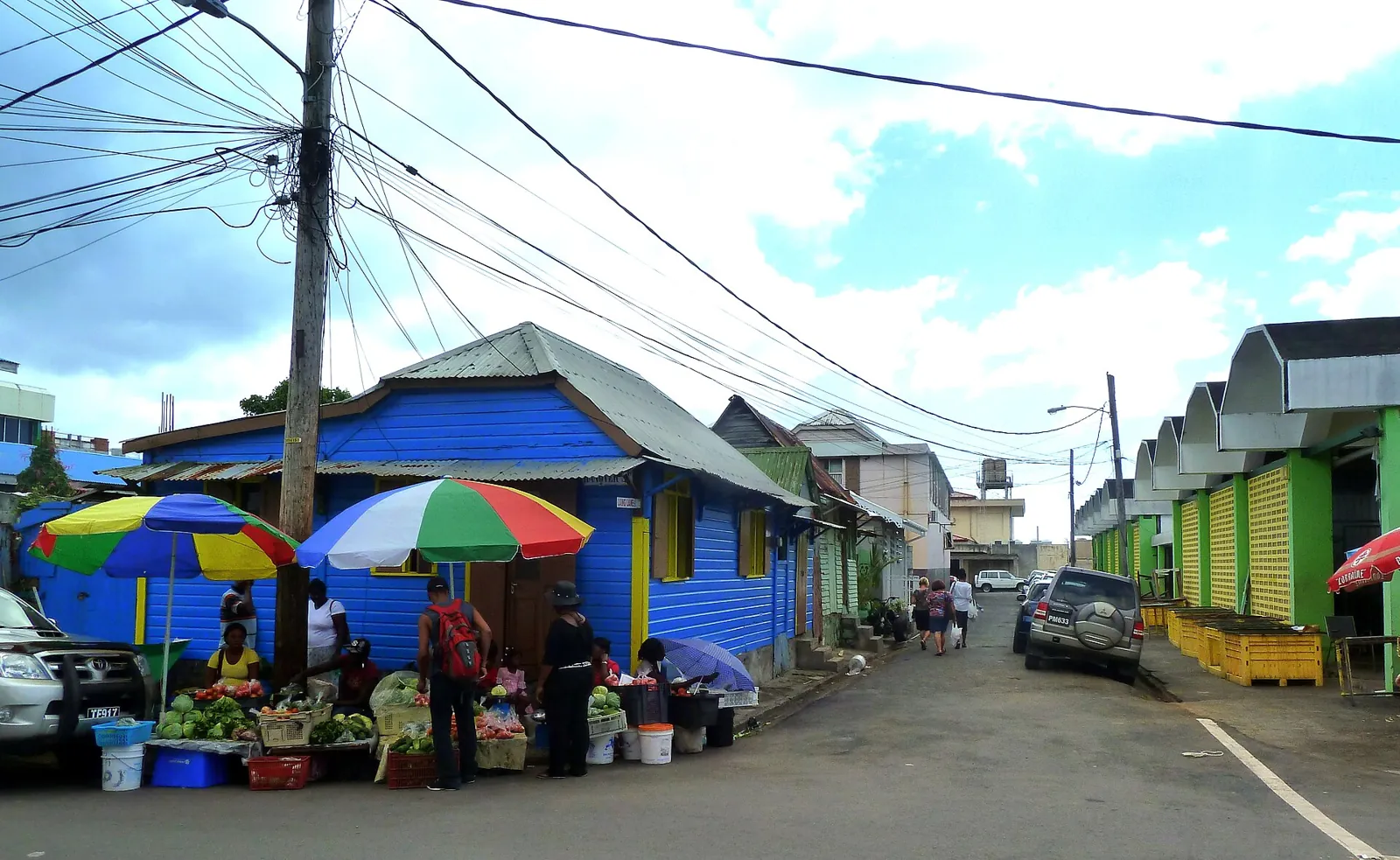
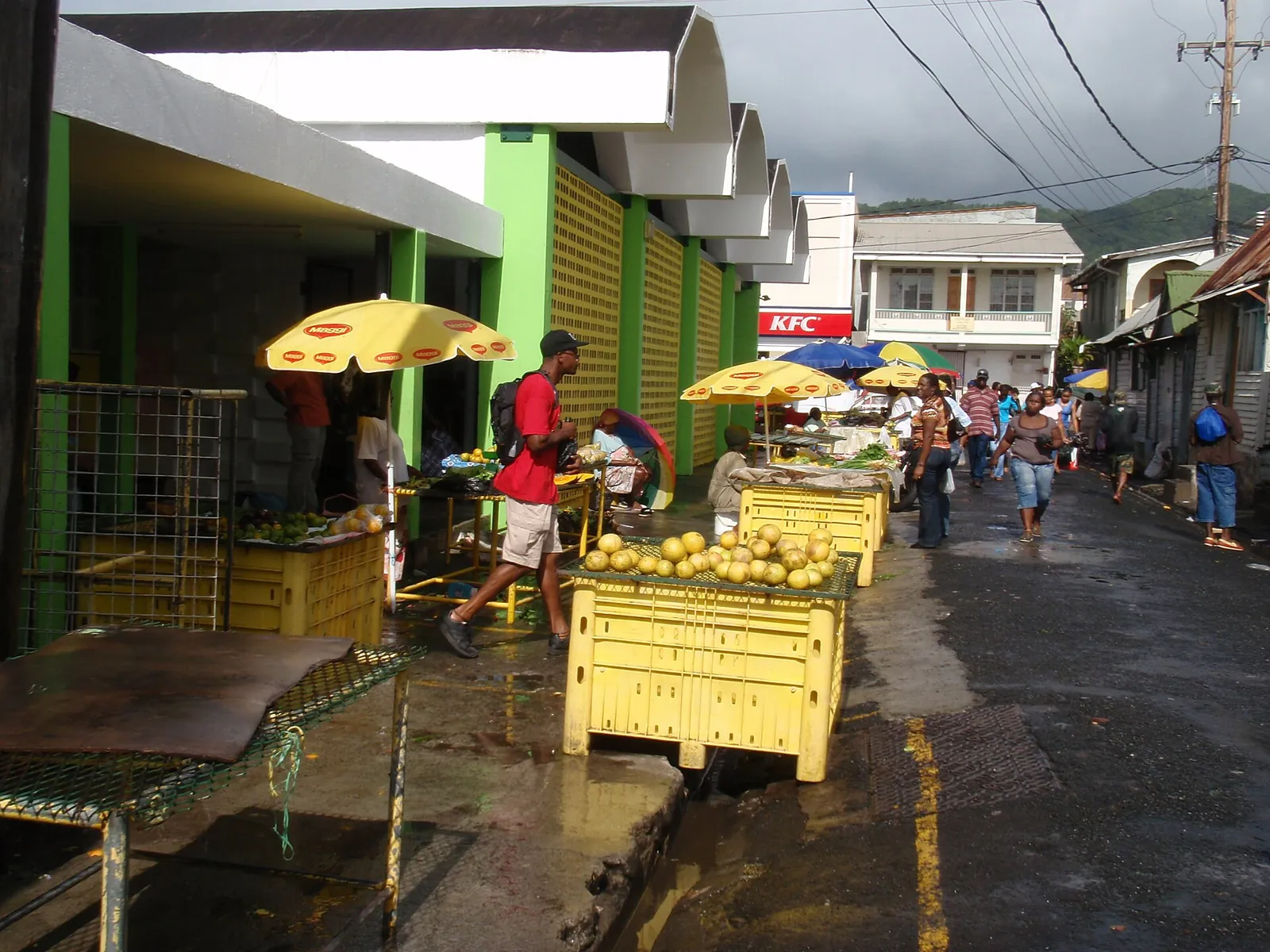
Image credits. Top image: Dominica, Karibik - Roseau – Market - Hanover Street Corner Laing Street - panoramio by giggel, CC BY 3.0, via Wikimedia Commons · In-article image: Produce Market, Roseau, Dominica by XeresNelro, CC BY-SA 4.0, via Wikimedia Commons
Spotted something out of date or a gift that's no longer available? Tell our editors — we review every correction.