Gift Etiquette in Mongolia: Host Gifts, Ger Manners and Tsagaan Sar
In Mongolia the thought counts more than the price. Here is what to bring a host, how to behave in a ger, and how gifts are exchanged at Tsagaan Sar.
We independently research every pick. If you buy through our links we may earn a small commission, at no extra cost to you. Affiliate disclosure.
Quick answer
In Mongolia, the thought behind a gift matters more than its price. Bring something modest, such as pastries, a book or a specialty from your home country, and offer it with your right hand. Avoid costly gifts, which can create a sense of obligation, and do not give alcohol unless you know it is welcome. Tsagaan Sar, the Lunar New Year, is the main gift-giving season, when visitors and hosts exchange presents.
- Safe host gift Pastries, sweets, a book or a specialty from home
- Typical budget $10 – $40
- How to hand it over With your right hand
- Main gift season Tsagaan Sar (Lunar New Year, date varies)
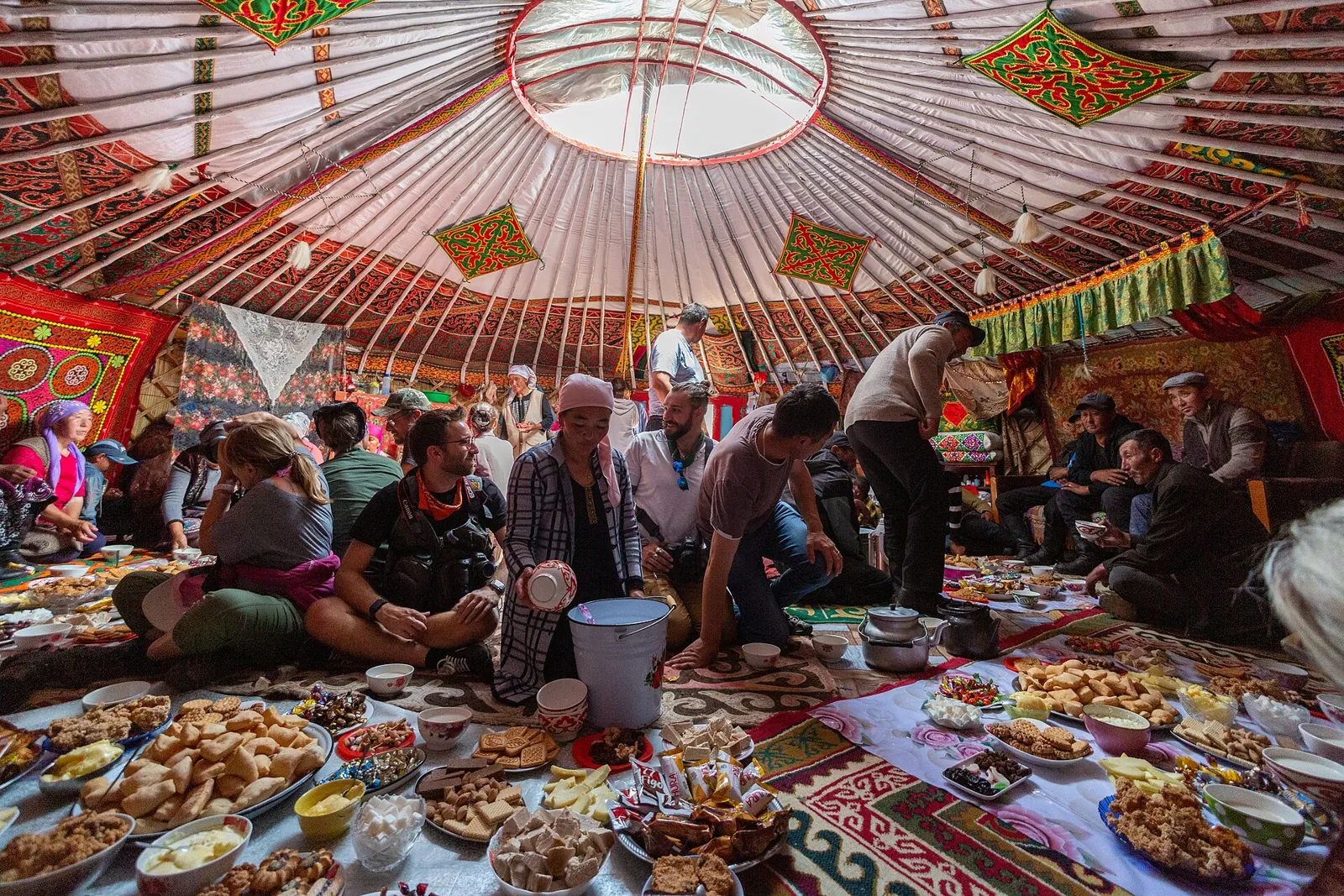
Hospitality has deep roots on the Mongolian steppe, where travelers arriving at a camp were traditionally offered food, drink and shelter as a matter of course. Today that generosity shows up in the bowl of milk tea you are handed soon after you arrive. A small gift is a way of returning the courtesy, and how you behave as a guest, especially in a ger (the traditional round felt tent), says just as much.
What to give
For a host
Modest, thoughtful items work best: pastries or sweets for the household, a book about your home region, or a food specialty from your country.
For friends, family and in-laws
At Tsagaan Sar, gift-giving is central, and gifts are exchanged when people visit one another. Choose something the family can use or share. If you are close to the family, ask what is customary in their household before buying anything elaborate.
Pastries, chocolates or sweets
Why it works: An easy, shareable host gift that fits any home visit.
Skip it if: You are heading to a remote camp in summer heat; choose something that travels well.
Food specialty from your home country
Why it works: Shows thought and starts conversation about where you are from.
Skip it if: It is alcohol and you do not know your host's preferences.
Illustrated book about your region
Why it works: A modest, lasting keepsake that suits colleagues and families alike.
Skip it if: The recipient does not read your language and the book is mostly text.
Quality pen or desk item
Why it works: A classic low-value business gift that will not be mistaken for an attempt to influence a decision.
Skip it if: It is a family visit; food is warmer.
What to avoid
- Expensive gifts. A costly gift can leave the recipient feeling obliged to return the favor.
- Alcohol, unless you know it is welcome. Preferences vary widely, and some people do not drink for health, religious or personal reasons.
- Giving a khadag without guidance. The khadag, a ceremonial silk scarf (usually blue, for the sky), is a respected gift for important occasions. Use one only with advice from a local friend.
- Stepping on the threshold of a ger. It is a traditional taboo said to bring misfortune; step over it.
- Pointing your feet toward people, the stove or religious objects.
- Refusing everything you are offered. Accept at least a little of the food or drink.
How to give and receive
- Offer the gift with your right hand, with a clear show of respect.
- Do not expect it to be opened right away. The recipient may open it later.
- Accept food and drink with your right hand, and try a little of everything.
- Drink in moderation. Vodka may appear at celebrations; a polite explanation is fine if you cannot drink.
- Thank go-betweens. If someone introduced you or helped arrange a visit, thank them too.
Visiting a ger or apartment
Step over the threshold without touching it, let your host show you where to sit (the seats of honor are traditionally toward the north), and do not rearrange anything. You will usually be offered süütei tsai, salted milk tea, soon after you arrive; accepting a little shows appreciation. In summer you may also be offered airag, fermented mare's milk. If you have dietary restrictions, mention them in advance, because alternatives may be limited outside the city.
Holidays and occasions
Tsagaan Sar
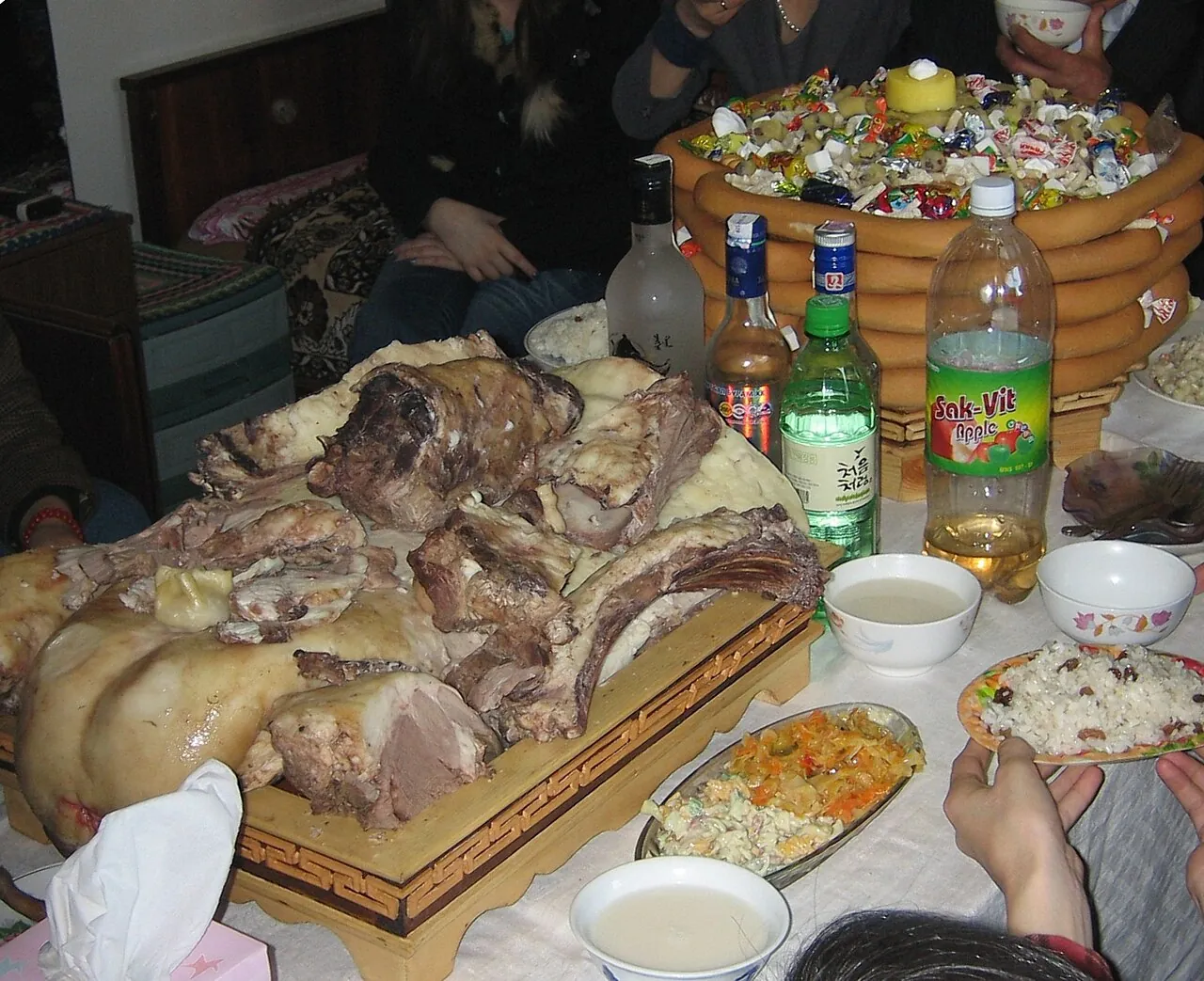
Tsagaan Sar, the Mongolian Lunar New Year, is celebrated on the first three days of the first lunar month, so the date changes every year (in 2026 it fell on February 18 to 20). Families clean their homes, dress in their best clothes and prepare large quantities of buuz, steamed dumplings, for visitors. Relatives often gather at the home of the eldest family member. In the traditional zolgokh greeting, a younger person supports an elder's elbows as a sign of respect, sometimes holding a blue khadag. Gift-giving is central to the holiday, and visitors and hosts exchange presents.
Naadam
The National Naadam Festival, held in Ulaanbaatar from July 11 to 13, centers on the "three games of men": wrestling, horse racing and archery. Regional Naadams take place through July and August. It is a time for gatherings and travel rather than gifts, and business slows down.
Business gifting
In business, greet the most senior person first and let your counterpart set the pace toward informality. Exchange business cards early. Modest gifts, such as company-branded items, books, pens or something from your home country, are a polite gesture; keep them small so they do not seem intended to influence a decision. Hospitality, including meals and toasts, builds goodwill, but it does not by itself mean a deal is agreed. Avoid cash, take extra care with public officials, and follow anti-bribery laws and your company's policy. Check schedules around Tsagaan Sar and Naadam. See our business gifts guide for general tips.
Frequently asked questions
What should I bring to a Mongolian home?
A modest gift such as pastries, sweets, a book or a specialty from your country. Offer it with your right hand.
Is alcohol a good gift in Mongolia?
Only if you know the recipient drinks. It is safer to choose food or a small keepsake.
What is a khadag?
A ceremonial silk scarf, usually blue, used to show respect and given on important occasions, including during Tsagaan Sar greetings. Ask a local friend before giving one.
When do Mongolians exchange gifts?
Mainly at Tsagaan Sar, the Lunar New Year, when relatives and friends visit one another and exchange presents.
What should I do when I enter a ger?
Step over the threshold without touching it, sit where your host directs, avoid pointing your feet at the stove or people, and accept at least a little milk tea.
Explore more guides by country.
Sources
- Commisceo Global — Mongolia culture guide. commisceo-global.com
- Wikipedia — Tsagaan Sar. en.wikipedia.org
- Wikipedia — Culture of Mongolia. en.wikipedia.org
- Wikipedia — Naadam. en.wikipedia.org
- Wikipedia — Khata. en.wikipedia.org
Image credits. Top image: Traditional meal inside a ger in remote Western Mongolia by Bfreeproductions, CC BY-SA 4.0, via Wikimedia Commons · In-article image: Tsagaan sar by User:Chinneeb, CC BY-SA 3.0, via Wikimedia Commons
Spotted something out of date or a gift that's no longer available? Tell our editors — we review every correction.




