Gift Etiquette in Finland: Host Gifts, Flowers and Christmas Eve
Finns appreciate modest, practical gifts and guests who arrive on time. Here is what to bring a Finnish host, which flowers to skip, and how Christmas Eve works.
We independently research every pick. If you buy through our links we may earn a small commission, at no extra cost to you. Affiliate disclosure.
Quick answer
Finnish gift etiquette is modest, thoughtful and practical. When invited to a home, bring flowers, good chocolates or wine, plus something small for young children. Give flowers in odd numbers and avoid white or yellow ones, which may be linked to funerals. Take your shoes off at the door and arrive on time. Gifts are usually opened when received, and the main family gift exchange happens on Christmas Eve.
- Typical host gift $10 – $35
- Main gift day Christmas Eve, December 24
- Flowers Odd numbers; avoid white or yellow
- Shoes Off at the door
What to give
In Finland, thoughtfulness counts for more than display. A small, useful gift chosen with care fits the culture far better than anything expensive or showy.
For a host
Flowers, good-quality chocolates or a bottle of wine are the standard gifts when you are invited to a Finnish home for dinner. When visiting a family for the first time, it is customary to bring small gifts for the hosts and their younger children. A cookbook or keepsake from your home region also goes down well.
For friends, in-laws and coworkers
Practical gifts that fit everyday life work best: something for the home, a book, or a food treat to share. Coffee and cake are commonly offered during visits, so quality coffee or a nice tin of cookies is a natural fit. For a summer cottage invitation, think practical: guests are expected to dress casually and help with chores, and a useful contribution is welcome.
A small bouquet
Why it works: Flowers are a classic Finnish host gift.
Skip it if: the bouquet has an even number of stems or is mostly white or yellow; choose an odd number in other colors. Potted plants are also discouraged.
Good chocolates
Why it works: Modest, easy to share and almost universally welcome.
Skip it if: you are tempted by a huge luxury box; keep it understated.
A bottle of wine
Why it works: A dinner host will appreciate it, and it can be saved for another day.
Skip it if: your hosts do not drink.
A picture book or small toy for the children
Why it works: Bringing a little something for younger children is customary on a first family visit, and picture books are popular.
Skip it if: it is noisy, messy or pricier than the gift for the hosts.
Need more ideas? Browse our food gifts.
What to avoid
- Expensive or showy gifts. Finns value modesty, and a lavish gift can feel awkward.
- Even numbers of flowers. Odd numbers are the norm for a gift bouquet.
- White or yellow flowers. These may be associated with funerals.
- Potted plants. Business culture guides advise against them as gifts.
- Wearing outdoor shoes inside. Shoes come off at the door; some guests bring indoor shoes to change into.
- Arriving late without warning. Punctuality signals respect. If you are delayed, call, even if it is only a few minutes.
- Treating sauna as a joke. Sauna is central to Finnish culture. Approach an invitation with respect and modesty, and never pressure anyone to join.
How to give and receive
- Hand it over simply. There are no rules about which hand to use. A handshake, eye contact and a few words are enough.
- Expect it to be opened. Gifts are generally opened when received.
- Wrap neatly but simply. Understated wrapping suits Finnish taste; no colors are flagged as taboo for wrapping.
- Wait to be seated and to start. Let your hosts show you where to sit, and do not begin eating until invited.
- Offer practical help. Hosts appreciate guests who lend a hand, especially at a summer cottage.
- Thank your hosts before leaving. A sincere, calm thank-you fits the culture.
Holidays and occasions
Christmas Eve (December 24)
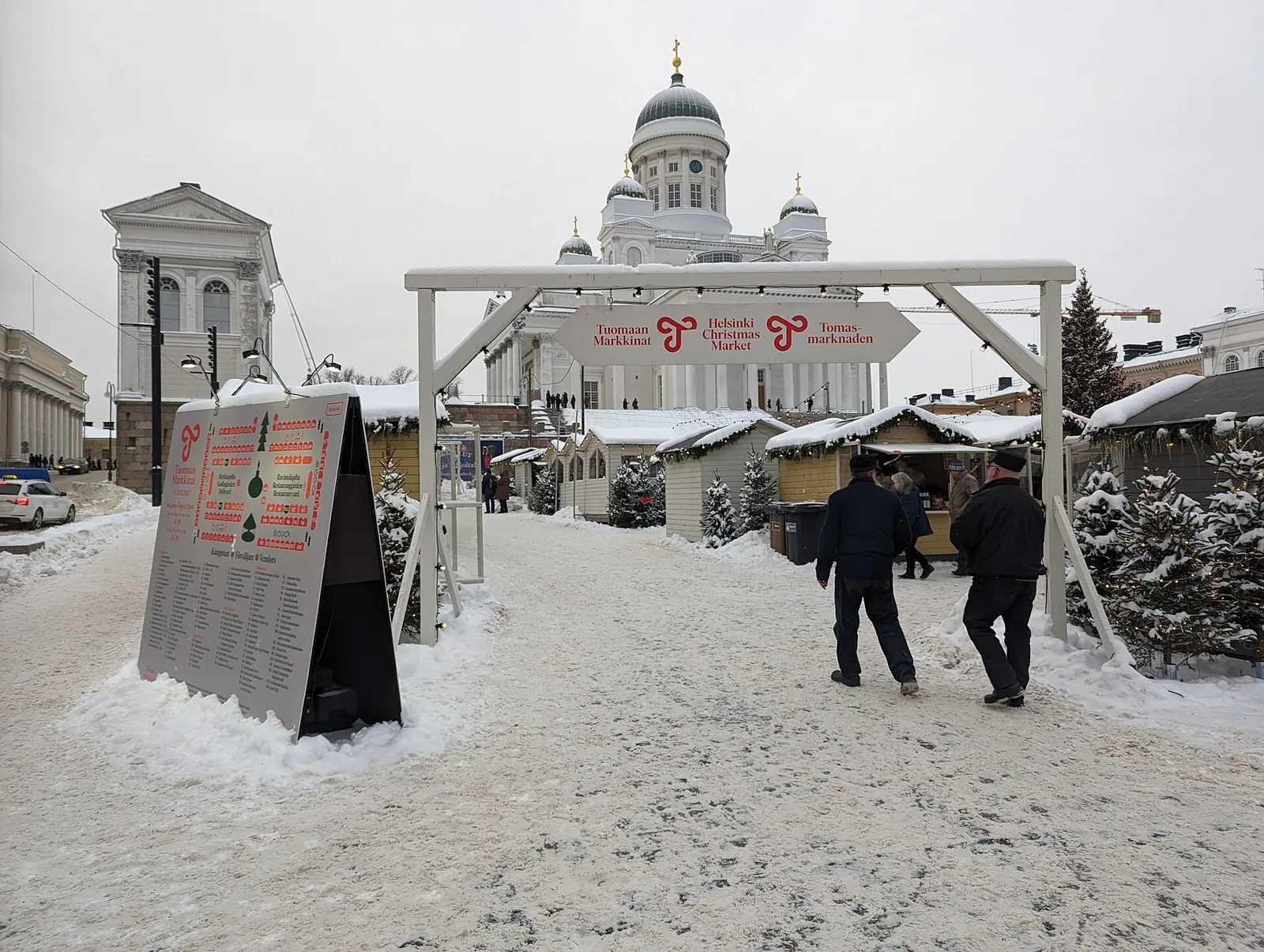
Christmas Eve is the heart of Finnish Christmas. Breakfast traditionally includes rice porridge, and at midday the Declaration of Christmas Peace is broadcast from Turku. Many families visit relatives' graves with candles in the afternoon, and some enjoy a Christmas sauna. Presents are opened after the early-evening meal, with the whole family watching. The gift-bringer is Joulupukki, whose name means "Christmas Goat" and who is said to live in Korvatunturi in Lapland. If you are a guest, a small gift for the hosts and the children fits the spirit. See our Christmas gift guides.
Name days
Finland has a name-day calendar, maintained by the University of Helsinki's Almanac Office, that assigns given names to almost every day of the year. A card, flowers or a small treat on someone's name day is a friendly gesture.
Midsummer (Juhannus)
Midsummer is a major summer celebration tied to lakes and cottages. If you are invited to a cottage, bring food or drink to share and be ready to help.
Birthdays
For a child's birthday party, small items such as picture books are a good choice. For adults, a modest gift and a card are typical. See our birthday gift ideas.
Business gifting
Finnish business culture is built on punctuality and keeping to agreed schedules, and the general preference for modest, practical gifts applies at work too. If you want to thank a partner, keep it modest: a book, a small item from your region or a shared treat for the team. Avoid anything that might look like it is meant to influence a decision.
Many Finnish companies and public bodies have strict rules on accepting gifts and hospitality, and anti-bribery laws apply. Check the recipient's policy, keep the value low and avoid giving during negotiations or tenders. Note that business slows down in summer, especially June to August, and around Christmas. See our business gifts guide for general advice.
Frequently asked questions
What should I bring to a Finnish home?
Flowers in an odd number, good chocolates or wine, plus a small gift for young children if there are any. Arrive on time and take your shoes off at the door.
Which flowers should I avoid in Finland?
Avoid even-numbered bouquets and white or yellow flowers, which may be associated with funerals. Potted plants are also not recommended as gifts.
When do Finns open Christmas presents?
On Christmas Eve, December 24, after the early-evening meal. Joulupukki may visit in person or leave gifts under the tree.
Are name days celebrated in Finland?
Yes. Almost every day in the calendar has names attached, and people may receive congratulations, a card or a small treat.
What should I do if I am invited to a sauna?
Treat it as a sign of trust. Ask discreetly about expectations, follow your hosts' lead and decline politely if you prefer; nobody should be pressured to join.
Heading elsewhere in the Nordics? Compare gift etiquette in Sweden or browse all country guides.
Sources
- Commisceo Global — Finland: Language, Culture, Customs and Etiquette. commisceo-global.com
- Fulbright Finland — Guide to coming to Finland: Social visits. fulbright.fi
- WhyChristmas.com — Christmas in Finland. whychristmas.com
- Wikipedia — Name day. en.wikipedia.org
Image credits. Top image: Joulutorttuja by Mysid, Public domain, via Wikimedia Commons · In-article image: Christmas market Helsinki - 20231214 - 07 by AleWi, CC BY-SA 4.0, via Wikimedia Commons
Spotted something out of date or a gift that's no longer available? Tell our editors — we review every correction.




